Frizzlife vs Waterdrop: which tankless reverse osmosis system should you buy?
The Frizzlife PD600-TAM3 and the Waterdrop G3P800 are both tankless under-sink reverse osmosis systems with a built-in TDS display, and the price tags make them look like different tiers of product.
They aren’t, once you check the certifications.
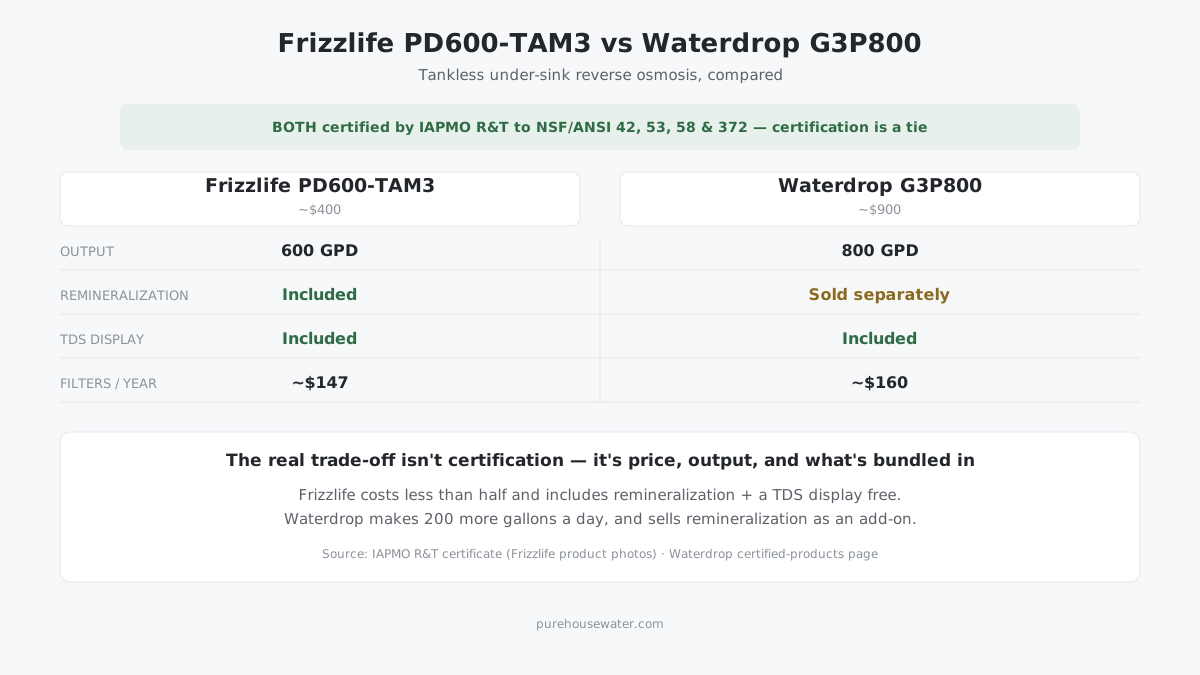
Both systems are certified by IAPMO R&T, an accredited certifying body, to the same four standards: NSF/ANSI 42, 53, 58, and 372. Neither shows up in NSF International’s own product database, because neither is certified by NSF directly. That’s normal for this category, not a red flag, and it’s true of both brands equally. (Waterdrop)
So certification isn’t the decision here. The real gap is price, output, and what’s included.
The Frizzlife PD600-TAM3 costs about $400 and throws in alkaline remineralization and a TDS readout most brands charge extra for. (Frizzlife)
The Waterdrop G3P800 costs about $900, makes 200 more gallons a day, and sells remineralization as a separate add-on. (Waterdrop)
One honest wrinkle worth knowing: Frizzlife’s own website is inconsistent about its own certification. Its product-page text says the PD600 is “tested to NSF/ANSI 42, 53, 58,” language that reads like it isn’t certified. But a photo in the same product’s gallery shows a real IAPMO certificate. The certification itself is genuine. Frizzlife’s own copy just doesn’t say so clearly.
Neither system is the wrong buy. This page lays out exactly what your money buys on each one, so you can decide which trade-off is yours to make.
Certification: a tie, once you check it
“Certified” gets thrown around loosely in reverse osmosis marketing, so it’s worth being precise here.
Testing means a lab ran the product through a standard’s steps and reported the results. The brand can then describe those results however it likes.
Certification is different. An accredited body checks the claims itself, keeps checking the product over time, and lists it somewhere a buyer can look it up.
IAPMO R&T is one of the accredited bodies that does this, alongside NSF International and WQA. A product certified by IAPMO R&T against an NSF/ANSI standard carries a real, independent certification — it just won’t show up if you only search NSF’s own database. (Waterdrop)
Both the Frizzlife PD600-TAM3 and the Waterdrop G3P800 are certified this way, to the same four standards. Frizzlife’s certificate is visible in its own product photos, issued to “Frizzlife Inc.” and covering NSF/ANSI 42, 53, 58, and 372.
Waterdrop states the same certification list on its own certified-products page.
Where Frizzlife trips itself up is consistency, not compliance. Its PD600-TAM3 product-page text describes the system as “tested to NSF/ANSI 42, 53, and 58,” which reads like a lab result, not a certification.
A shopper who reads only that sentence would reasonably conclude the system isn’t certified. It is — the certificate is right there in the product photos — but Frizzlife’s own writing doesn’t say so.
The specs, side by side
| Frizzlife PD600-TAM3 | Waterdrop G3P800 | |
|---|---|---|
| Output | 600 GPD (0.41 GPM) | 800 GPD |
| Filtration stages | 8-stage | Not disclosed as a stage count |
| Certification | IAPMO R&T, NSF/ANSI 42, 53, 58, 372 | IAPMO R&T, NSF/ANSI 42, 53, 58, 372 |
| Typical price | ~$400 | ~$900 |
| Filters per year | ~$147 | ~$160 |
| Remineralization | Built in, no extra cost | Sold separately |
| TDS display | Built in | Built in |
| Warranty | 1 year, extendable to 150% with registration | 1 year |
| Power required | Yes | Yes |
Both need a power outlet under the sink, both put a live TDS reading on the faucet, and both carry the same certification. Past that, they split on price, output, and what’s bundled in.
Price: Frizzlife is less than half
At around $400 against roughly $900, the Frizzlife costs less than half of what the Waterdrop does, and that’s before counting what Frizzlife bundles in for free.
$500 buys a lot in this category. It’s most of a second system, or years of filter changes on either one.
Since certification is equal, the honest question is narrower than it first looks: is the Waterdrop’s extra 200 GPD of output worth $500 to you?
What each system includes
The Frizzlife bundles two features Waterdrop treats as extras.
Alkaline remineralization adds calcium and magnesium back into the water after the membrane strips them out, which fixes the flat taste and slightly acidic pH that plain reverse osmosis water has.
On the PD600-TAM3, that stage is built in at no added cost. On the G3P800, remineralization is a separate filter you add and pay for.
Both systems put a real-time TDS reading on the faucet, so you can see the water quality without a separate meter.
What the Waterdrop adds that Frizzlife doesn’t is 200 more gallons a day of output. Nothing else in the certification or the core filtration separates them.
Running cost: close enough not to matter
Filter cost looks like it should favor Frizzlife, given the price gap on the system itself, but it mostly evens out.
Frizzlife’s four-filter kit runs about $147 a year, split across stages that last 12 to 24 months. (Frizzlife)
Waterdrop’s three-filter kit runs about $160 a year, on a similar 6-to-24-month replacement schedule. (Waterdrop)
A $13-a-year difference isn’t a reason to pick either one. Decide on price and output instead.
Output: 600 vs 800 gallons a day
The Waterdrop makes water faster, at 800 gallons a day against Frizzlife’s 600.
Both are tankless, so neither stores finished water; every glass comes straight from the membrane on demand. The GPD figure is really a measure of how fast the system keeps up when you’re drawing water continuously, filling a big pot or several glasses back to back.
For one to four people filling a glass or a coffee maker at a time, 600 GPD keeps up without you noticing a slowdown. If you regularly fill large pots or containers in one go, or the household is bigger, the extra 200 GPD on the Waterdrop is the more comfortable choice.
The case for each system
Frizzlife PD600-TAM3: best for price and included features
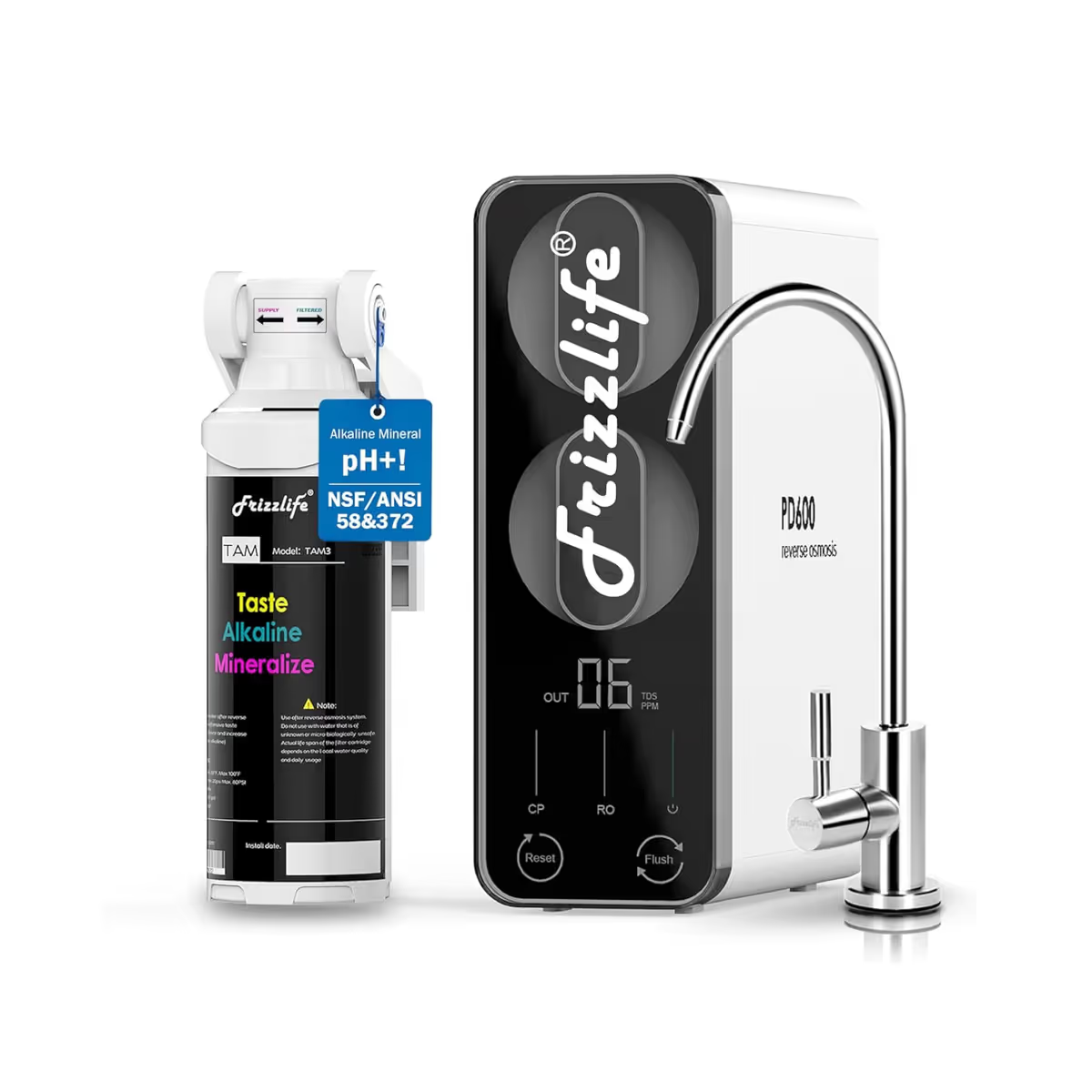
Who it’s for: anyone who wants a certified tankless system with remineralization and a TDS display included, at under half the price of the alternative.
It’s a tankless system rated at 600 GPD with 8-stage filtration, alkaline remineralization, and a TDS smart display built in, certified by IAPMO R&T to NSF/ANSI 42, 53, 58, and 372, and it lists for about $400. (Frizzlife)
Downside: its own product-page copy describes the certification vaguely, as “tested” rather than certified, so you have to look at the product photos to see the actual certificate. And 600 GPD is less output than the Waterdrop.
Skip it if: your household regularly needs more than 600 GPD of on-demand output, or the inconsistent certification language on Frizzlife’s own site is enough to make you want a brand that states it plainly.
Discount codeuse HUMONGOUSEARWIG at checkout to save 10%.
Check price at Frizzlife(opens on Frizzlife, external site)Waterdrop G3P800: best for faster output
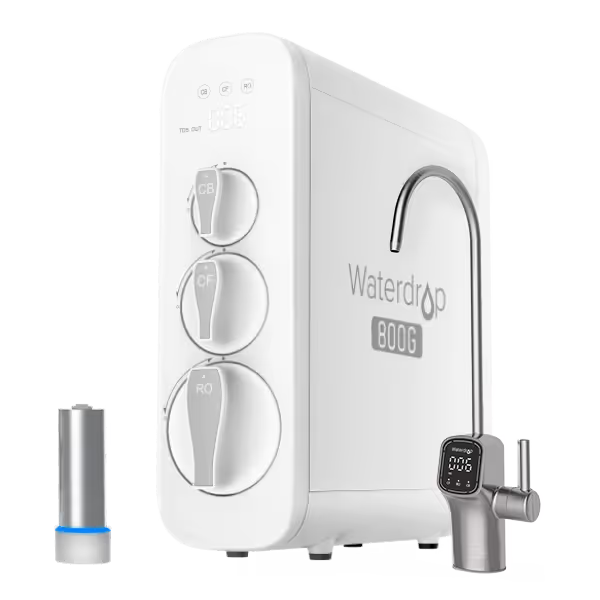
Who it’s for: anyone who wants the faster 800 GPD fill rate and is willing to pay roughly double, and add remineralization separately, for it.
It’s a tankless system rated at 800 GPD, certified by IAPMO R&T to NSF/ANSI 42, 53, 58, and 372, and it lists for about $900, though it’s frequently discounted. (Waterdrop)
Downside: the price is roughly double a comparably certified alternative, and remineralization is a separate filter you buy and add rather than something built in.
Skip it if: 600 GPD covers your household fine, or you want remineralization included from the start instead of as an add-on.
Check price at Waterdrop(opens on Waterdrop, external site)Choose Frizzlife if… choose Waterdrop if…
| Choose the Frizzlife PD600-TAM3 if… | Choose the Waterdrop G3P800 if… |
|---|---|
| The price gap matters more than the extra output | You regularly need the faster 800 GPD fill rate |
| You want remineralization and a TDS display included at no extra cost | You’re fine paying separately for a remineralization filter |
| 600 GPD covers how you use the tap | Your household draws water faster than 600 GPD keeps up |
| You don’t mind digging past vague product-page wording to confirm the certification | You want the certification stated plainly on the product page |
Either way, you’re getting a comparably certified tankless reverse osmosis system with a TDS display that will noticeably improve your drinking water. The honest difference is price, output, and what’s bundled in, not how trustworthy the water is.
Are these even the right shape for you?
Both of these are tankless systems, and tankless is the right call mainly when cabinet space is tight or you want water on demand without a bulky tank sitting under the sink.
If your cabinet has the room, a tank system like the iSpring RCC7 costs less up front, at around $230, with no power outlet required.
And if your only real water problem is chlorine taste or lead, a certified carbon filter may do the job without a membrane, a drain line, or an outlet at all.
Our under-sink reverse osmosis guide walks through tank vs tankless and when reverse osmosis isn’t the tool you need in the first place.
Frequently asked questions
Is Frizzlife or Waterdrop better?
Neither is better outright on water quality; both are certified by IAPMO R&T to the same standards, NSF/ANSI 42, 53, 58, and 372. The Frizzlife PD600-TAM3 costs about $400 and includes remineralization and a TDS display. The Waterdrop G3P800 costs about $900 and makes 200 more gallons a day, without remineralization included. Pick based on price and output, not certification.
Is Frizzlife actually certified?
Yes, though you wouldn’t know it from the product-page text alone. Frizzlife’s PD600-TAM3 page describes the system as “tested to NSF/ANSI 42, 53, and 58,” language that sounds like it isn’t certified. But the same product’s photo gallery shows a real IAPMO R&T certificate covering NSF/ANSI 42, 53, 58, and 372, issued to Frizzlife Inc. The certification is genuine; Frizzlife’s own copy just doesn’t state it clearly.
Is the Waterdrop G3P800 certified the same way?
Yes. Waterdrop states the G3P800 is certified by IAPMO R&T to NSF/ANSI 42, 53, 58, and 372, the same body and the same standards as the Frizzlife. Neither product appears in NSF International’s own database, because neither is certified by NSF directly, which is normal for IAPMO-certified products.
Does the price difference reflect a real quality gap?
Mostly no. Both are certified to the same standards. The Waterdrop’s higher price buys 200 more gallons a day of output; it does not buy a more trustworthy certification. Most of the price gap is output and brand positioning, not a difference in what an owner experiences drinking the water.
Do I need remineralization?
Only if the flat taste of reverse osmosis water bothers you. It’s a taste and pH preference, not a health requirement, since food supplies most of your minerals. The Frizzlife includes it; on the Waterdrop, you’d add a remineralization filter separately.
How much water do these systems waste?
Frizzlife states a 2:1 water-saving ratio and Waterdrop states a 3:1 pure-to-drain ratio; the two brands describe their drain ratios differently, so compare the current spec sheet for each rather than the number alone before you buy.
Still deciding on the shape? Start with our under-sink reverse osmosis guide, which covers tank vs tankless and when to skip reverse osmosis.
Comparing budget tank systems instead? Our iSpring vs APEC breakdown covers the other popular reverse osmosis matchup.
Not sure reverse osmosis is the right tool at all? The best reverse osmosis system guide routes you by what’s in your water.
How we researched this
We built this comparison from each brand’s own current product pages and photos, Waterdrop’s certified-products page, and published filter-replacement pricing for both systems. We identified Frizzlife’s IAPMO R&T certificate directly from the certification document shown in its own product photo gallery.
We don’t run these two systems side by side ourselves yet, so we don’t claim first-hand testing, and every figure here is attributed to its source.
Prices, GPD ratings, and certification status in this category change, so treat every number as approximate and confirm the current spec and certification status on the model before you buy.
When we name a merchant we may earn a commission if you buy through a link here, at no cost to you.