Best reverse osmosis system: how to choose by type
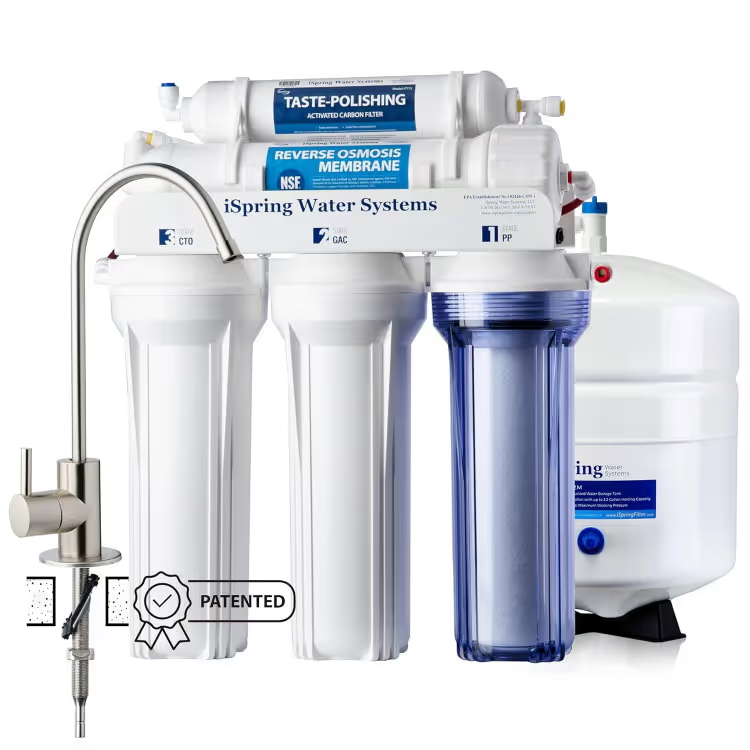
- Five-stage system rated around 50 gallons a day of purified water.
- Reduces arsenic, nitrate, lead, fluoride, and total dissolved solids.
- Installs DIY with the included drain saddle and faucet kit.
- Costs well under $300, with an RCC7AK remineralizing upgrade available.
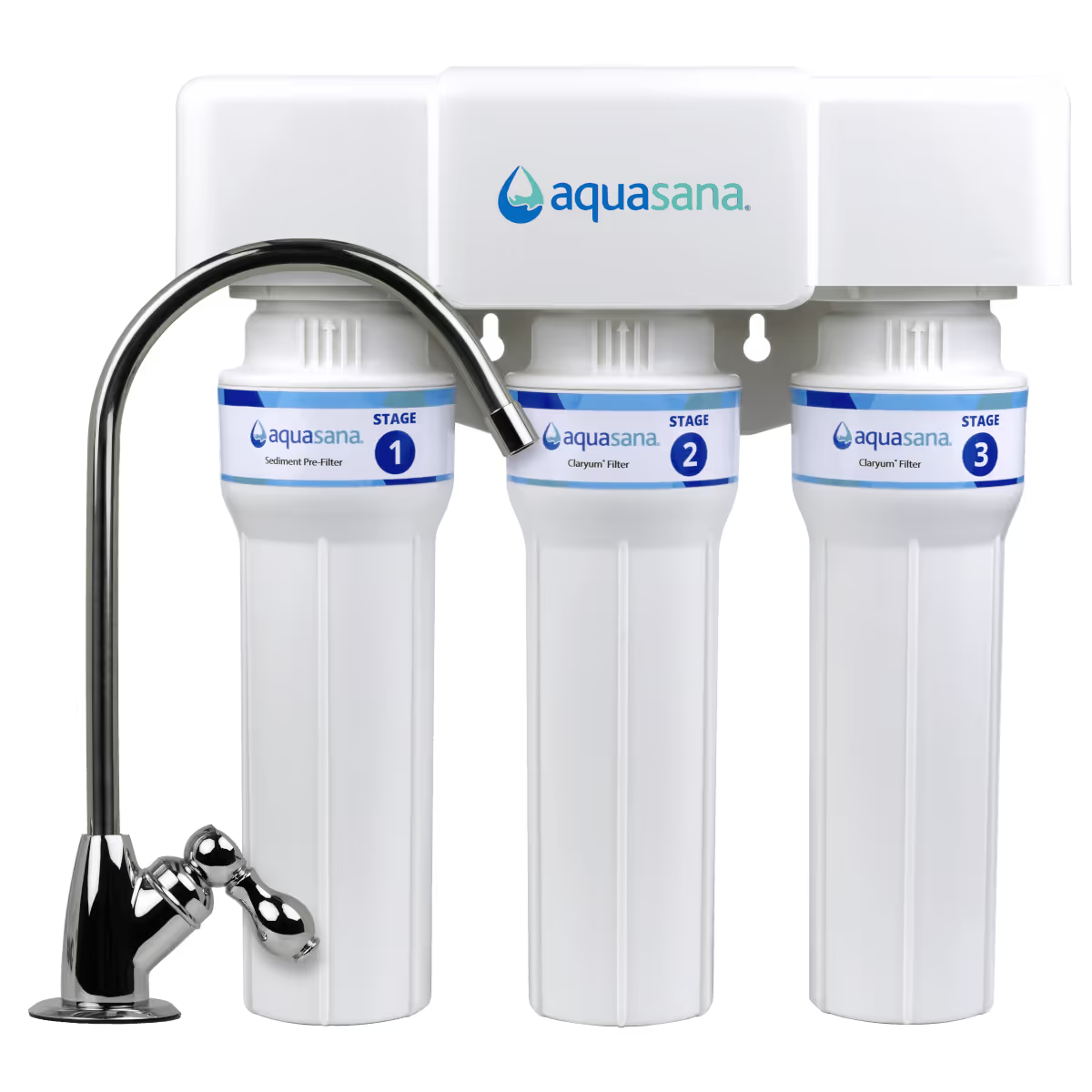
- Three-stage carbon filter removes chlorine, chloramine, lead, and PFOA/PFOS.
- Certified to NSF/ANSI 42, 53, and 401.
- Wastes no water and needs no storage tank.
- Leaves calcium and magnesium in, so the water doesn’t taste flat.
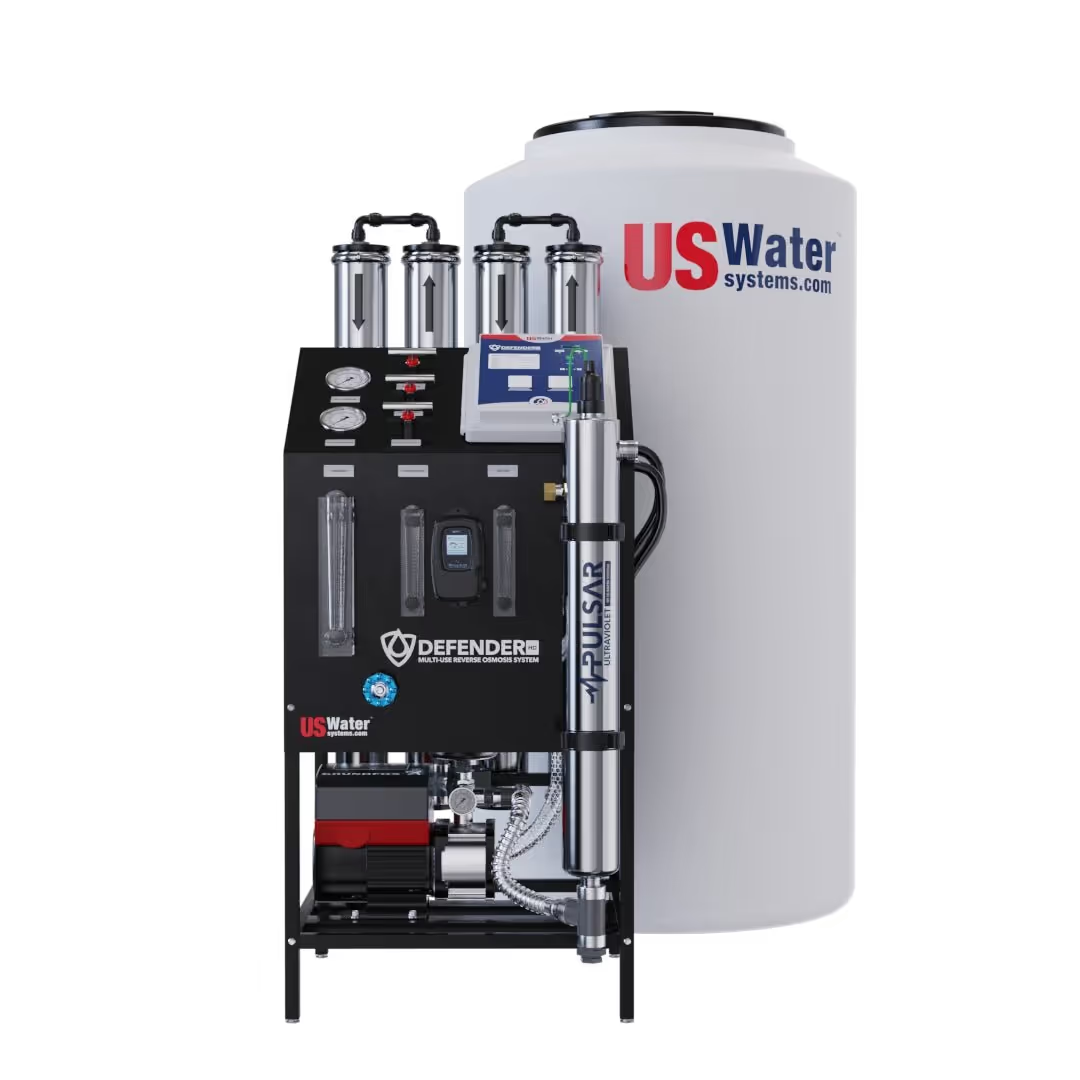
- Delivers reverse-osmosis-quality water to every tap in the house.
- Uses high-capacity membranes plus a storage tank and re-pressurizing pump.
- Requires professional installation and runs into several thousand dollars.
- Built for very poor source water, like high-TDS wells or seawater intrusion.
The best reverse osmosis system isn’t one product. It’s the right type, put where you actually need the water.
For most homes, that’s an under-sink reverse osmosis at the kitchen tap. The iSpring RCC7 is our budget default: it reduces arsenic, nitrate, lead, fluoride, and total dissolved solids for well under $300.
If your water’s only real problem is chlorine taste or lead, you may not need full reverse osmosis at all. A certified carbon filter like the Aquasana Claryum does that job cheaper. It keeps the minerals in, too, and wastes no water.
And if you genuinely need purified water at every tap, whole-house reverse osmosis exists. But it’s a specialist, expensive choice most people should skip.
Reverse osmosis is also the practical way to make purified water at home, the same category as the bottled “purified” and “distilled” jugs, without buying them by the case.
Here’s the mistake that costs people money: buying an “8-stage” system for the stage count, or a whole-house reverse osmosis they never needed. The real decision is a water test, the drain ratio, and the NSF/ANSI 58 claim list.
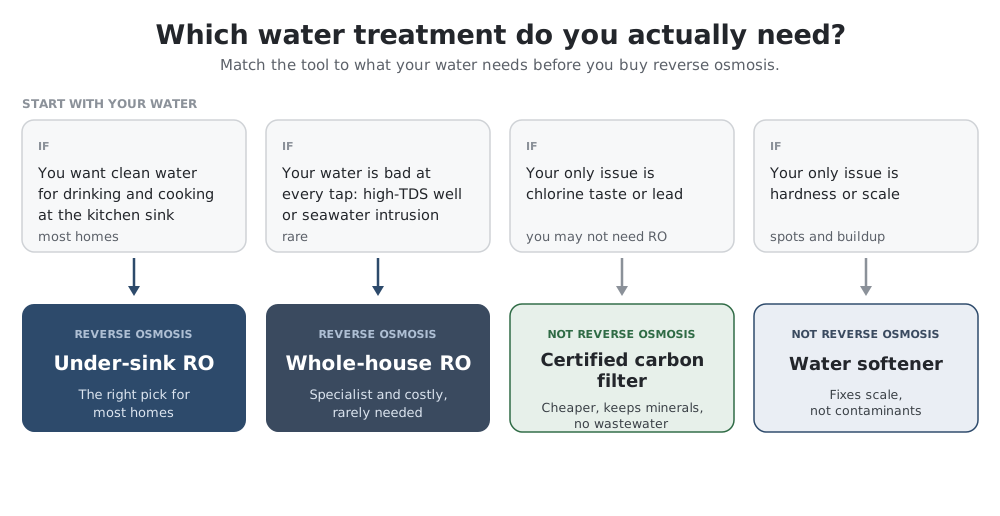
First decide: do you even need reverse osmosis?
Reverse osmosis is the most thorough point-of-use filter you can buy. That’s exactly why it’s overkill for some homes.
The membrane reduces roughly 95–99% of total dissolved solids. It also pulls out dissolved contaminants that a carbon filter physically can’t: lead, arsenic, nitrate, fluoride, chromium, and PFAS. (EPA)
So reverse osmosis earns its place when a water test shows those kinds of dissolved toxins, or a high TDS number.
But if your only complaint is a chlorine taste or hardness scale, reverse osmosis is the wrong tool. A carbon filter handles chlorine for far less. A softener handles hardness without wasting a drop.
Test your water first, or read your utility’s annual water-quality report. Then match the tool to what’s actually in it.
Here’s what reverse osmosis removes well, and what it doesn’t.
| Reverse osmosis handles this | Reverse osmosis doesn’t (or needs help) |
|---|---|
| Lead, arsenic, fluoride, nitrate | Bacteria on unsafe water (pair with UV) |
| PFAS (>90%), chromium, cadmium | Hardness scale (a softener is cheaper for that) |
| High TDS, salty/mineral taste | Dissolved gases like the rotten-egg sulfur smell |
| Chlorine and taste (via carbon stages) | Whole-home coverage from one under-sink unit |
Sources: EPA, NSF, Crystal Quest.
Then decide the type: under-sink, tankless, countertop, or whole-house
Once you know reverse osmosis is the right tool, the format is the real decision. It comes down to where you need the water and how much space you have.
Under-sink reverse osmosis is the mainstream pick. A set of filters and a small tank live in the cabinet under your kitchen sink and feed a dedicated faucet, giving you purified water for drinking and cooking.
Tankless under-sink reverse osmosis does the same job with no storage tank. It makes water on demand through a pump, which frees cabinet space and usually improves the drain ratio. It needs a power outlet.
Countertop reverse osmosis sits on the counter and plugs in, with no plumbing changes. That makes it the renter’s answer, though output and capacity are smaller.
Whole-house reverse osmosis treats every tap in the home. It’s the specialist choice for very poor source water. It needs large storage, a re-pressurizing pump, and a pro install, and it runs expensive.
This table maps your situation to the type.
| Your situation | Right reverse osmosis type | What to expect |
|---|---|---|
| Clean drinking/cooking water at the kitchen sink (most people) | Under-sink reverse osmosis | $150–$400; DIY-installable; filter changes twice a year |
| Renting or no plumbing changes allowed | Countertop reverse osmosis | $150–$300; plug-in; smaller output |
| Smallest footprint, high on-demand volume | Tankless under-sink reverse osmosis | $300–$500; needs an outlet; 400–800 gallons/day |
| Very poor source water at every tap | Whole-house reverse osmosis | Several thousand dollars; pro install; ongoing running cost |
| Only hardness or chlorine, no dissolved toxins | Not reverse osmosis — a softener or carbon filter | Cheaper, no wastewater, keeps minerals |
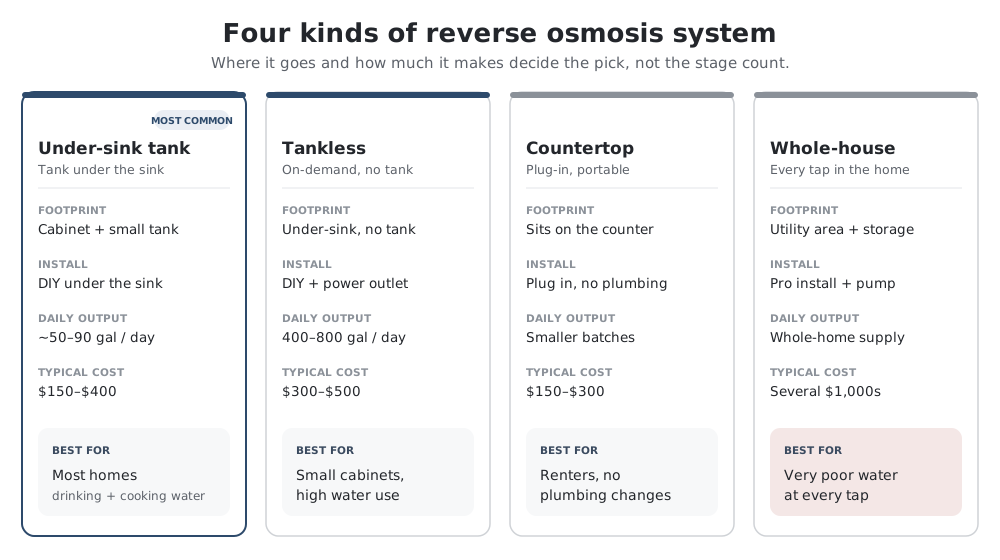
We go deep on the two that matter most in best under-sink reverse osmosis system and whole-house reverse osmosis.
The picks
iSpring RCC7 5-Stage
The RCC7 is a five-stage under-sink reverse osmosis, rated around 50 gallons a day. It reduces the dissolved toxins people buy reverse osmosis for: arsenic, nitrate, lead, fluoride, and total dissolved solids. (iSpring)
It’s a proven, widely owned design. Most people can install it themselves with the included drain saddle and faucet, which keeps the all-in cost low. Our step-by-step guide to installing an under-sink reverse osmosis system walks through the drain saddle, faucet hole, and startup flush if you want to see the job first.
If you want the minerals and pH added back, the RCC7AK variant adds a remineralization stage for a little more.
Discount codeuse REFISPRING at checkout to save on this order.
Why it scores 8.5i
Each sub-score is our assessment, weighted into the overall. It reflects published specifications, certification listings and warranty terms — not systems we ran ourselves. How we score
- Performance9/10
- A five-stage membrane that reduces the dissolved contaminants nothing else reliably touches — arsenic, nitrate, lead, fluoride, PFAS and total dissolved solids — at 75 gallons a day. Short of the top because it treats one tap and sends several gallons to the drain for each one it makes. Source ↗
- Value10/10
- About $230 for certified reverse osmosis is the value benchmark of the whole category: nothing else on this site removes as much for as little. The filters are commodity parts rather than proprietary cartridges, so the running cost stays low for the life of it. Source ↗
- Ownership6/10
- The most involved install of any drinking-water pick here: a faucet hole to drill, a drain saddle to tap and a pressurized tank to find room for. Then filters every six to twelve months and a membrane every two to three years. Source ↗
- Trust8/10
- Certified to NSF/ANSI 58, the standard written for reverse osmosis, and carrying the WQA Gold Seal against it. Held short of the top because iSpring's "over 1,000 contaminants" headline is broader than the certified claim list underneath it. Source ↗
Aquasana Claryum AQ-5300+
This isn’t a reverse osmosis system, and that’s the point. It’s a three-stage carbon under-sink filter that removes chlorine, chloramine, lead, and PFOA/PFOS while leaving calcium and magnesium in the water. (Aquasana)
Its trust signal is real certification. The Claryum line publishes NSF/ANSI 42, 53, and 401 claims, which cover taste, health contaminants like lead, and emerging contaminants like pharmaceuticals.
Because it isn’t reverse osmosis, it wastes no water and needs no tank. The water still tastes full instead of flat.
Why it scores 8.2i
Each sub-score is our assessment, weighted into the overall. It reflects published specifications, certification listings and warranty terms — not systems we ran ourselves. How we score
- Performance8/10
- Better than 96% of chlorine and chloramine, 99% of lead and 95% of PFOA and PFOS, poured at a fast 0.72 gpm with no tank and no pump. It is carbon, so fluoride, nitrate, arsenic and total dissolved solids are outside what it can do at all. Source ↗
- Value9/10
- Roughly $140 to $225 for that certified claim list, with no wastewater and no drain to plumb. The Claryum filter set every six months is the whole running cost. Source ↗
- Ownership7/10
- A DIY under-sink fit with its own faucet, so a hole gets drilled, and then a filter set twice a year. Owner reports of the fittings weeping over time and damaging the cabinet are the recurring complaint against it. Source ↗
- Trust9/10
- Certified to NSF/ANSI 42, 53 including P473, and 401 — taste, health contaminants, PFAS and emerging contaminants, each an actual listing with a claim list you can read. Source ↗
US Water Systems Defender
The Defender is a high-efficiency whole-house reverse osmosis built for exactly this: large-volume purified water for the entire home. It uses high-capacity membranes, a storage tank, and a pump that re-pressurizes the water for the house. (US Water Systems)
For a genuinely bad water supply, where nothing point-of-use is enough, it’s the right class of system.
Why it scores 7.8i
Each sub-score is our assessment, weighted into the overall. It reflects published specifications, certification listings and warranty terms — not systems we ran ourselves. How we score
- Performance9/10
- High-capacity membranes, a storage tank and a pump that repressurizes the house deliver reverse-osmosis-quality water at every tap. For a high-TDS well or seawater intrusion, where nothing point-of-use is enough, this is the right class of system. Source ↗
- Value8/10
- Several thousand dollars plus professional installation is what whole-house reverse osmosis costs, and this is a high-efficiency build of it, so the price is fair for the class. Whether a house needs the class at all is a separate question, and for almost every home the answer is no. Source ↗
- Ownership5/10
- Professional installation, a storage tank, a repressurization pump, membrane servicing and meaningful water to drain. This asks more of a house and of an owner than anything else on this site. Source ↗
- Trust8/10
- US Water Systems builds and supports this class of system as its main business and publishes full specifications for it, though no NSF/ANSI certification number is listed for the Defender itself. Source ↗
Skip reverse osmosis if your only problem is hardness or chlorine
If your water spots the glasses and scales the kettle, that’s hardness. A water softener fixes it without wasting water or stripping minerals from your drinking water.
If it just tastes and smells of chlorine, a carbon whole-house filter or a certified under-sink carbon filter handles that for far less than reverse osmosis.
Skip reverse osmosis here because a $30 carbon filter or a softener already solves the problem. Paying for a membrane, a drain line, and yearly filter changes on top of that is money and water down the drain.
The one spec most people miss: the drain ratio
Every reverse osmosis system sends some water to the drain to flush the contaminants off the membrane. How much is the drain ratio.
Older systems waste about 4 gallons for every gallon of purified water, a 4:1 ratio. That’s where the “reverse osmosis wastes too much water” reputation comes from. (Aquasana)
Modern efficient and tankless systems have cut that hard. They run 2:1, 1.5:1, or close to 1:1.
Here’s what that ratio costs you in real water. A household that draws about 3 gallons a day for drinking and cooking sends roughly 12 gallons a day to the drain on an old 4:1 unit, about 4,400 gallons a year.
Put the same household on a 1:1 system and that drain water drops to about 3 gallons a day, near 1,100 gallons a year. The efficient unit saves on the order of 3,300 gallons annually.
Lower is better. It’s the single biggest efficiency difference between two systems that otherwise look the same on paper, so check it before you compare stage counts.
The stage count itself is mostly marketing. The membrane does the real work, and “8-stage” mainly means more pre- and post-filters to buy, not cleaner water.
What NSF/ANSI 58 actually certifies (and what “NSF certified” hides)
If you want one quality filter, look for NSF/ANSI 58. It’s the standard written specifically for point-of-use reverse osmosis drinking systems. (NSF)
A system certified to 58 has verified TDS reduction, plus whatever specific contaminant claims it lists. That’s commonly lead, arsenic, fluoride, nitrate, chromium, and PFAS. (NSF)
It’s more stringent than NSF 42 or 53 because it tests the whole assembled system, pre-filters, membrane, post-filter, and tank, as one unit.
Here’s the catch worth knowing: certification is always per-contaminant. So “NSF certified” on a box can mean it’s only certified for chlorine taste, and removes none of your lead or arsenic.
So read the claim list. Match it to what your water test flagged, and verify the specific model in the NSF or WQA database rather than trusting the label.
What reverse osmosis costs to run
The purchase price is only part of it. Reverse osmosis has ongoing consumables you should budget for.
The sediment and carbon pre- and post-filters get changed about every 6 to 12 months. The reverse osmosis membrane lasts 2 to 3 years. (community reports; manufacturer specs)
In round numbers, expect roughly $50 a year for the pre/post filters. Add about $100 to $150 for a membrane every few years.
None of it is expensive, but it’s real. Factor it in when a tankless system’s sticker looks higher than a basic tank unit’s.
Why reverse osmosis water tastes flat, and whether to remineralize
If you’ve had reverse osmosis water and it seemed “flat” or slightly slick, that’s not a defect. The membrane strips out the calcium and magnesium that give water its taste, along with the contaminants.
Stripped of those minerals, reverse osmosis water also sits slightly acidic, around pH 5.5 to 6.5. That’s because pure water absorbs a little carbon dioxide from the air and has no bicarbonate to buffer it. (RKIN)
A remineralization stage, or drops, or an alkaline pitcher, adds a small amount of calcium and magnesium back. That restores the taste and nudges the pH up. (Culligan)
For anyone eating a normal diet, this is a taste and pH preference, not a nutrition fix. Food supplies the bulk of your minerals, and water is a minor source.
So remineralize if you don’t like the flat taste. Don’t do it because you’re worried the water is unhealthy.
Frequently asked questions
Is a reverse osmosis system worth it?
It’s worth it if a water test shows dissolved contaminants a carbon filter can’t remove, like lead, arsenic, nitrate, fluoride, PFAS, or a high TDS reading.
If your only issue is chlorine taste or hardness, a carbon filter or a softener is a better, cheaper fit.
Does reverse osmosis remove PFAS, lead, and arsenic?
Yes. The EPA reports high-pressure membranes like reverse osmosis are typically more than 90% effective at removing a wide range of PFAS. Reverse osmosis also reduces lead and is the most widely recommended point-of-use method for arsenic.
Does reverse osmosis remove fluoride?
Yes, though at a slightly lower rate than TDS, generally in the 85 to 95% range. Carbon filters do not remove fluoride. So reverse osmosis is the right home technology if fluoride reduction is your goal.
Is reverse osmosis water bad for you because it strips minerals?
No. It does remove calcium and magnesium. But for anyone eating a normal diet, food, not water, supplies the bulk of those minerals. It’s a taste and pH question you can fix with a remineralization stage, not a health problem.
How much water does a reverse osmosis system waste?
Older systems waste about 4 gallons per gallon produced. Modern efficient and tankless systems run closer to 2:1 or even 1:1. Check the drain ratio on any model you’re comparing.
Tank or tankless reverse osmosis, which is better?
A tank gives you a fast, full stream on demand but takes up cabinet space. A tankless system saves space and usually has a better drain ratio, but makes water more slowly and needs a power outlet. Neither is universally better. Pick by your space and how much water you draw at once.
Do I need whole-house reverse osmosis or just under the sink?
Almost everyone needs only under-sink reverse osmosis, at the kitchen tap for drinking and cooking. Whole-house reverse osmosis is a specialist, expensive choice for very poor source water at every tap. You don’t need reverse-osmosis-quality water in your shower or toilet.
How often do you change reverse osmosis filters, and what does it cost?
Change the sediment and carbon filters every 6 to 12 months and the membrane every 2 to 3 years. That comes to roughly $50 a year plus about $100 to $150 for a membrane every few years.
Ready to pick a unit? Start with best under-sink reverse osmosis system for the mainstream choice.
Wondering if you need reverse osmosis everywhere? Read whole-house reverse osmosis before you spend the money.
Not sure reverse osmosis is even the right tool? The home water filtration system guide routes you by what’s actually in your water.
How we researched this
We built this guide from the EPA’s drinking-water treatment guidance, the NSF/ANSI 58 standard and NSF’s certification library, manufacturer spec sheets (iSpring, Aquasana, US Water Systems), and independent explainers on remineralization and reverse osmosis efficiency.
We don’t run these systems ourselves yet, so we don’t claim first-hand testing. Every figure here is attributed to its source.
Prices and drain ratios in this category move fast. Treat every number as approximate and confirm the current spec on the model before you buy.
When we name a merchant we may earn a commission if you buy through a link here, at no cost to you.
Sources
- EPA — Reducing PFAS in Drinking Water with Treatment Technologies
- NSF — NSF/ANSI 58: Reverse Osmosis Drinking Water Treatment Systems
- ANSI Blog — NSF/ANSI 58-2022: Reverse Osmosis for Drinking Water
- Crystal Quest — What Does Reverse Osmosis Remove?
- Aquasana — Does Reverse Osmosis Remove PFAS?
- RKIN — Why Does Reverse Osmosis Water Taste Flat?
- Culligan — How to Remineralize Reverse Osmosis Water
- US Water Systems — Defender Whole House Reverse Osmosis System