Distilled vs purified water: what’s the difference, and which should you drink?
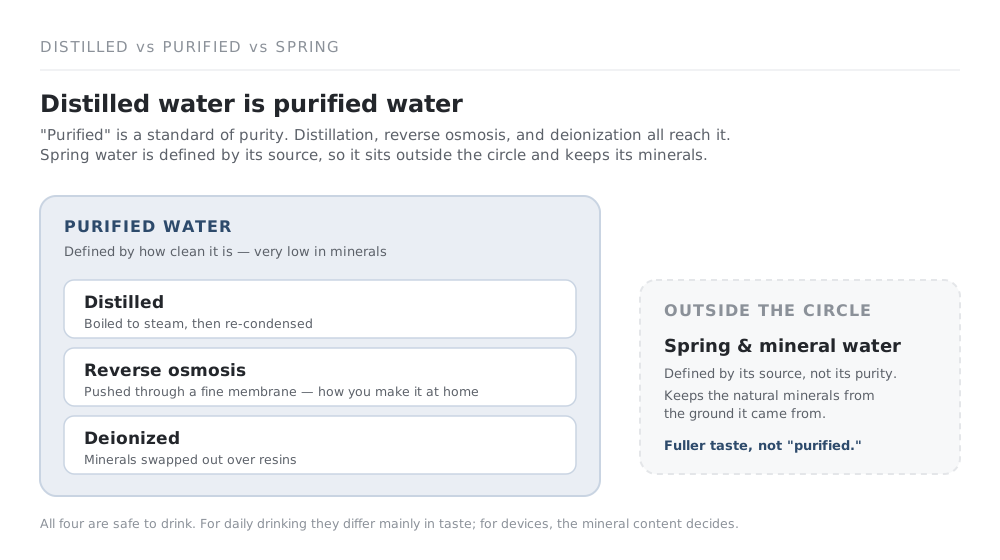
Distilled water is purified water.
Distillation is one of the methods the U.S. Food and Drug Administration lists for making purified water, alongside reverse osmosis and deionization, so the two labels aren’t rival choices. (FDA, 21 CFR 165.110)
“Purified” tells you how clean the water is; “distilled” tells you how it got that way.
That one distinction clears up most of the confusion on the store shelf, and it changes the real question from “which is better?” to “which do I need for this particular job?”
Is purified water the same as distilled water?
Yes, in the sense that distilled water is one kind of purified water.
The FDA defines purified water as water “produced by distillation, deionization, reverse osmosis, or other suitable processes” that meets the U.S. Pharmacopeia standard for purified water. (FDA, 21 CFR 165.110)
So “purified” is the umbrella term, and distillation is one of the processes that fits under it.
A jug labeled “distilled” and a jug labeled “purified” can hold nearly identical water; the distilled label just tells you the method used was boiling and re-condensing.
Reverse-osmosis water and deionized water are purified water too, by the same rule.
The one common label that is not purified water is spring water, and that trips a lot of people up.
Distilled, purified, reverse-osmosis, and spring water, side by side
Here’s how the four labels you see most often actually compare.
| Distilled | Purified (general) | Reverse osmosis (RO) | Spring | |
|---|---|---|---|---|
| How it’s made | Boiled to steam, then re-condensed; minerals and most contaminants stay behind | Any process that meets the purity standard — distillation, deionization, or RO | Forced through a membrane fine enough to block dissolved solids and contaminants | Collected from an underground formation that flows naturally to the surface |
| Is it “purified”? | Yes — one type of purified water | This is the umbrella term | Yes — one type of purified water | No — defined by source, not purity |
| Minerals left | Essentially none | Very low by definition | Very low (most dissolved solids removed) | Natural minerals kept |
| Taste | Flat, no minerals | Flat to neutral | Clean, slightly flat | Fuller, minerals carry flavor |
| Named for its… | Process (distillation) | Purity standard (USP) | Process (reverse osmosis) | Source (a spring) |
| Best for | CPAP, irons, batteries, labs | Everyday drinking and cooking | Everyday drinking; makes purified water at home | Drinking, for natural minerals and taste |
| Safe to drink? | Yes | Yes | Yes | Yes |
The FDA definitions of purified, spring, and mineral water come from the federal bottled-water rules; the taste and mineral notes follow from how each is made. (FDA, 21 CFR 165.110)
The takeaway is that distilled, purified, and RO water are close cousins, all very low in minerals, while spring water is the outlier that keeps what nature put in it.
If you want to make purified water at home instead of buying it, that’s what a reverse osmosis system does, and the reverse osmosis system guide walks through how to choose one.
How each type is made
The method behind the label is what sets the mineral content, so it’s worth a quick look.
Distilled. Water is boiled until it turns to steam, and the steam is cooled back into liquid in a separate chamber.
The dissolved minerals, salts, and most contaminants can’t ride along with the steam, so they’re left behind in the boiling tank. (CDC)
The result is water with almost nothing dissolved in it.
Reverse osmosis. Water is pushed under pressure through a membrane with pores so fine that dissolved solids and most contaminants can’t pass through.
The clean water goes to your glass, and the rejected material rinses down the drain.
RO removes most of the total dissolved solids, which is why RO water lands in the same low-mineral range as distilled.
Deionization. Water passes over resins that swap dissolved mineral ions for hydrogen and hydroxide, which combine into plain water.
It’s common in labs, and it’s another FDA-listed way to make purified water. (FDA, 21 CFR 165.110)
Spring water. This one isn’t purified at all.
It’s collected from an underground source that flows to the surface, then usually filtered lightly and disinfected, but it keeps its natural minerals on purpose. (FDA, 21 CFR 165.110)
That’s why spring water tastes fuller and reads higher on a dissolved-solids meter.
What the labels legally mean
The FDA sets a standard legal definition for each bottled-water label, so the words on the jug actually mean something specific.
- Purified water: produced by distillation, deionization, reverse osmosis, or another suitable process, and clean enough to meet the U.S. Pharmacopeia purified-water standard. It can also be labeled by its method, so “distilled water” and “reverse osmosis water” are legal names for purified water. (FDA, 21 CFR 165.110)
- Spring water: “water derived from an underground formation from which water flows naturally to the surface,” collected at the spring or through a borehole feeding it. (FDA, 21 CFR 165.110)
- Mineral water: water with at least 250 parts per million of total dissolved solids from a protected underground source, with no minerals added. (FDA, 21 CFR 165.110)
- Artesian water: water from a well that taps a confined aquifer where the water level sits above the top of that aquifer. (FDA, 21 CFR 165.110)
The U.S. Pharmacopeia standard the FDA points to sets an extremely low limit on what can stay dissolved in the water, which is why purified water of any method reads near zero on a dissolved-solids meter. (FDA, 21 CFR 165.110)
So when a label just says “purified,” check for a method word next to it if the mineral content matters for your use.
Which water for which job
For drinking, distilled and purified are interchangeable; for machines and tanks, the mineral content is the deciding factor.
Here’s the plain-English version of which to reach for.
| Use | Best water | Why |
|---|---|---|
| Everyday drinking | Purified, RO, spring, or filtered tap | All safe; pick on taste and cost |
| CPAP or humidifier | Distilled | Near-zero minerals means no scale in the tank or hose |
| Steam iron | Distilled | Most iron makers recommend it, since minerals can clog the steam vents |
| Car or marine battery | Distilled or deionized | Battery guidance calls for mineral-free water to avoid deposits |
| Aquarium (fish) | Distilled or RO, remineralized first | Zero-mineral water stresses fish, so add a remineralizer |
| Baby formula | Distilled or purified (low fluoride) | Safe for mixing; follow your pediatrician |
| Houseplants | Distilled or filtered for sensitive plants | Some tropicals react to tap minerals and chlorine |
| Ice and cooking | Filtered, purified, or spring | Taste preference; any safe water works |
For any device that needs mineral-free water, distilled is the safe default, and purified or RO water is the next-best stand-in because it’s also very low in minerals.
The CDC and the major CPAP makers, including ResMed, Philips Respironics, and Fisher & Paykel, point to distilled water for humidifier chambers, to keep minerals and microbes out of the tank. (CDC)
For mixing baby formula, the CDC notes that water labeled purified, distilled, deionized, or demineralized carries little or no fluoride, so using it at least some of the time can lower an infant’s already-low risk of mild dental fluorosis. (CDC)
Is distilled water safe to drink?
Yes, distilled water is safe to drink.
The only real downside people notice is the taste, which is flat because there are no minerals in it to carry flavor.
You may have read that distilled or reverse-osmosis water “leaches minerals from your body,” and that worry doesn’t hold up for a normally nourished person.
The World Health Organization has studied low-mineral drinking water, and its focus is on remineralizing large community supplies that run on desalinated or demineralized water, not on the occasional jug of distilled water you drink. (WHO)
The reason is simple: most of the calcium and magnesium you take in comes from food, not water, so drinking mineral-free water doesn’t create a deficiency when you’re eating a normal diet. (WHO)
The WHO does note that water minerals may carry a modest heart-health benefit, which is a fair reason to prefer mineral-containing water for daily drinking if you like the taste. (WHO)
For most people the honest answer is that distilled is safe, tastes flat, and isn’t the most enjoyable choice for everyday drinking.
Spring water vs purified water: which is healthier?
Neither is clearly healthier for a healthy adult; they’re safe waters that differ in minerals and taste.
Spring water keeps the natural calcium and magnesium from the ground it came from, which gives it a fuller taste and a small mineral contribution. (USGS)
Purified water has those minerals removed, so it tastes cleaner and flatter and gives you essentially none.
Because food is where you get most of your minerals, the difference between the two for a well-fed adult comes down to taste and price more than health. (WHO)
If you like minerals and taste, spring water fits; if you want the lowest possible contaminants, purified or RO fits.
Spring water is also usually the priciest bottled type, which is worth weighing if you’re buying it by the case.
How to make purified water at home
If you drink purified water every day, buying jugs adds up fast, and there’s a cheaper way to have it on tap.
A reverse-osmosis system makes purified water at your sink by pushing your tap water through that fine membrane, so you get low-mineral, low-contaminant water without hauling bottles home. (EPA)
It’s the practical home version of “purified water,” and it works out far cheaper per gallon over a few years than bottled.
Countertop water distillers exist too, but they’re slow, use electricity, and treat small batches, so most households that want purified water on tap choose RO. (EPA)
To pick a system, start with the reverse osmosis system guide, or compare full drinking-water setups in the best drinking water filtration system guide.
How to decide
Here’s the whole page in one short fork.
- You just want clean water to drink every day: purified, RO, spring, or filtered tap all work, so pick on taste and cost. The cheapest long-run source of purified water at home is an RO system.
- You’re feeding a device (CPAP, steam iron, or battery): use distilled for its near-zero minerals.
- You’re filling an aquarium: use distilled or RO water, remineralized first for the fish.
- You’re mixing baby formula: distilled or purified (low fluoride) is fine; ask your pediatrician.
- You care most about natural minerals and taste: spring or mineral water fits.
Still weighing all your options? The best water to drink guide compares tap, filtered, bottled, and every purified type in one place.
Frequently asked questions
Is purified water the same as distilled water?
Distilled water is one type of purified water. Distillation is one of the FDA-listed methods for making purified water, along with reverse osmosis and deionization, so they aren’t separate or competing categories.
What’s the difference between distilled, purified, spring, and reverse-osmosis water?
Distilled, purified, and RO water are all very low in minerals, and they differ mainly in the method used. Spring water is defined by its natural underground source and keeps its minerals, so it isn’t purified water.
Is distilled water safe to drink?
Yes. It’s safe; it just tastes flat because it has no minerals. For anyone eating a normal diet, food supplies the minerals your body needs, so mineral-free water doesn’t cause a deficiency.
Does distilled or reverse-osmosis water leach minerals from your body?
Not in any meaningful way for a normally nourished person. Most of your calcium and magnesium comes from food, and the WHO’s low-mineral-water research is about remineralizing community water supplies, not about drinking a jug of distilled water.
Which is healthier, spring water or purified water?
Both are safe, and neither is clearly healthier for a healthy adult. Spring water gives you natural minerals and a fuller taste; purified water gives you the lowest minerals and contaminants. The choice is mostly taste and cost.
Can I use purified water instead of distilled in my CPAP or steam iron?
Distilled is the standard choice because it has essentially no minerals to leave scale behind. Purified or RO water is much lower in minerals than tap and works better than tap in a pinch, but distilled is what most manufacturers recommend.
Can I use distilled or purified water in a fish tank?
What water should I use for baby formula?
Distilled or purified water is fine for mixing formula, and its low fluoride content can slightly lower the risk of mild dental fluorosis. Follow your pediatrician’s guidance.
How do I make purified water at home?
A reverse-osmosis system is the usual answer. It makes low-mineral, low-contaminant water at your sink, which is the same category as bottled purified water, and it costs far less per gallon over time than buying jugs.
Is reverse-osmosis water the same as purified water?
Yes. Reverse osmosis is one of the FDA-listed methods for making purified water, so RO water is purified water.
Is spring water purified?
No. Spring water is defined by its source rather than its purity, and it keeps its natural minerals, so it doesn’t meet the FDA’s purified-water definition.
Trying to pick a daily drinking water? The best water to drink guide lays out tap, filtered, bottled, and every purified type side by side.
Want purified water on tap instead of by the jug? See the reverse osmosis system guide or compare full setups in the best drinking water filtration system guide.
How we researched this
We built this guide from federal bottled-water rules and public health sources.
The FDA’s bottled-water regulation (21 CFR 165.110) provides the legal definitions of purified, distilled, spring, mineral, and artesian water.
The CDC covers distilled water for CPAP machines and for mixing infant formula, and the WHO’s research informs the section on low-mineral water and health.
We don’t lab-test bottled waters in-house, so we don’t claim to.
Sources
- US FDA — 21 CFR 165.110, Bottled water (definitions)
- World Health Organization — Calcium and magnesium in drinking-water / health risks of demineralized water
- CDC — Community Water Fluoridation FAQ (infant formula)
- CDC — About Bottled Water Safety
- CDC — Preventing Waterborne Germs at Home (CPAP and humidifiers)
- US EPA — Overview of Drinking Water Treatment Technologies
- USGS Water Science School — Hardness of water