Best water to drink: a plain guide to every type
The best water to drink is safe water you’ll actually drink enough of.
For most people that’s tap water that meets federal safety standards, filtered if you want to fix the taste or remove a specific local contaminant like lead or chlorine.
The fancier categories on the shelf (spring, mineral, distilled, purified, alkaline) mostly come down to taste, convenience, or marketing, and for a healthy adult they rarely beat safe tap or filtered water on health.
The catch that trips people up is that “purified” and “distilled” describe how water was cleaned, while “spring” and “mineral” describe where it came from, so they aren’t ranked on one scale.
This guide sorts every common type of drinking water: what it actually is, whether it’s safe, whether it’s “healthier,” and who each one is for. Then it points you to how you’d make the good option at home.
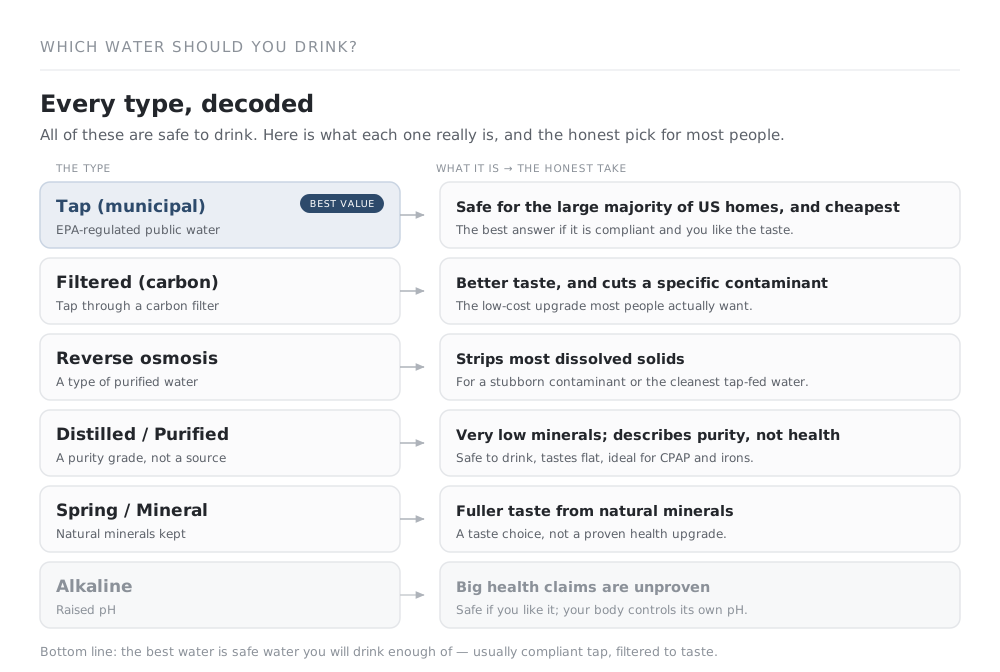
Every type of drinking water, decoded
Here’s the whole shelf in one table: what each type is, whether it’s safe, its mineral content, and who it’s for.
| Water type | What it actually is | Safe to drink? | Minerals / “healthy”? | Who it’s for |
|---|---|---|---|---|
| Tap (municipal) | Public water treated and regulated under the Safe Drinking Water Act | Yes, for the large majority of US systems | Keeps natural minerals; safe baseline. Quality varies by town | Almost everyone; cheapest option |
| Filtered (carbon) | Tap run through a carbon filter — pitcher, faucet, or under-sink | Yes | Keeps minerals; improves taste; can cut lead and other contaminants if certified | Anyone who dislikes tap taste or wants a specific contaminant reduced |
| Reverse osmosis (RO) | Tap forced through a fine membrane that strips most dissolved solids | Yes | Near-zero minerals; a type of purified water | Homes with a stubborn contaminant or who want the cleanest tap-fed water |
| Distilled | Boiled to steam and re-condensed, leaving minerals behind | Yes | Essentially mineral-free; flat taste; a type of purified water | Appliances (CPAP, irons); overkill for daily drinking |
| Purified | Any water cleaned by distillation, deionization, or RO to a purity standard | Yes | Very low minerals by definition; describes purity, not health | Anyone wanting a defined low-impurity standard |
| Spring | Bottled water from an underground source that flows to the surface | Yes | Natural minerals; taste varies by source | People who prefer the taste |
| Mineral | Bottled water with at least 250 ppm of dissolved minerals from a protected source | Yes | Higher natural minerals; a minor intake contributor | People who like the taste or want extra minerals from water |
| Alkaline | Water with a raised pH, naturally or from an ionizer | Yes for most people | Health claims are largely unproven | People who like the taste |
Notice the pattern: the differences that actually matter come down to safety, mineral content, and taste, and for a healthy adult none of the fancy categories clearly beats safe tap or a simple filter.
The rest of this guide takes the questions behind that table one at a time.
Is tap water safe to drink?
For most of the United States, yes.
Public tap water is regulated by the EPA under the Safe Drinking Water Act. The EPA reports that over 92% of people served by community water systems get water meeting all health-based standards all the time. (EPA)
Your local quality can still vary, so the way to know yours is to read your utility’s annual water-quality report, called the Consumer Confidence Report, which lists exactly what’s in your water.
If you’re on a private well, that safety net doesn’t apply, because private wells aren’t regulated, so you need to test your own water to know what’s in it.
Tap water also keeps the natural calcium and magnesium your source water carries, which most bottled purified waters have removed.
So for a compliant city supply you like the taste of, tap is the best-value answer, and everything below is about taste preferences or fixing a specific problem.
Is bottled water safer or healthier than tap?
Not automatically, and often it’s the same water.
The FDA regulates bottled water using standards based on the EPA’s rules for tap water, so the safety bar is broadly the same. (CDC)
A lot of bottled water is simply purified municipal tap water, sold at a large markup.
Bottled water earns its place for travel, emergencies, or when your tap is unsafe or unavailable.
As a daily habit, though, it’s expensive, and a home filter almost always beats it on cost per gallon.
Here’s roughly what each option costs, using the EPA’s national average for tap water and typical prices for the rest.
| Where your water comes from | Rough cost per gallon | A year of drinking water |
|---|---|---|
| Tap | about $0.006 | about $2 |
| Carbon-filtered tap (pitcher or under-sink) | about $0.10–0.30 | about $40–110 |
| Reverse osmosis at home | about $0.10–0.25 | about $40–90 |
| Bottled (jugs or cases) | about $1–2 | about $370–730 |
Tap water is anchored to the EPA WaterSense national average of $6.06 per 1,000 gallons; a year assumes about a gallon of drinking and cooking water a day. (EPA WaterSense)
The filter and bottled numbers are ballpark estimates from typical cartridge and retail prices, but the gap is the point: bottled water runs hundreds of times the cost of tap, and even a filter pays for itself fast against a daily bottled habit.
What does “purified” water actually mean?
“Purified” describes a cleaning process, not a health grade.
Under FDA rules, purified water is water cleaned to a defined purity standard. (FDA, 21 CFR 165.110)
It can be cleaned by distillation, deionization, or reverse osmosis, and any of those methods counts.
That means distilled water and reverse-osmosis water are both types of purified water, not competitors to it. (CDC)
The label tells you the water is very low in dissolved solids, not that it’s a nutritional upgrade over safe tap.
If you’re specifically weighing the labels against each other, the distilled vs purified water guide breaks down how each is made and which to use for drinking versus appliances.
Do the minerals in water matter? (distilled and RO)
They matter a little, and for most people the effect is small.
Distilled and reverse osmosis water are safe to drink, and their main quirk is a flat taste, because there are no minerals left to carry flavor.
You may have seen the claim that distilled or RO water “leaches minerals out of your body,” and that’s overstated for a normally nourished person.
Most of the calcium and magnesium you take in comes from food, so drinking low-mineral water doesn’t create a deficiency when your diet is normal. (WHO)
The World Health Organization does recommend minimum mineral levels for water used as a community’s long-term sole supply. (WHO)
It also notes that water minerals may carry a small heart-health benefit.
So if you like the taste, there’s a fair case for mineral-containing water day to day.
That’s a different thing from the internet’s “it strips your body” claim, which the evidence doesn’t support.
If you drink RO or purified water daily and want the taste and minerals back, a remineralization stage adds a little calcium and magnesium after filtering.
Is spring or mineral water healthier?
They’re safe and they carry natural minerals, though “natural” mostly describes the source and the taste.
Spring water is an FDA category defined by its source: water from an underground formation that flows to the surface on its own. (FDA, 21 CFR 165.110)
Mineral water is defined by content, with at least 250 parts per million of naturally present dissolved minerals, and no minerals may be added. (FDA, 21 CFR 165.110)
Both keep the calcium and magnesium from the ground they came from, which gives them a fuller taste and a small mineral contribution. (USGS)
For a healthy adult eating a normal diet, that difference comes down to taste and price more than health.
If you enjoy the taste, they’re a fine choice; just know you’re paying mainly for taste and packaging.
Is alkaline water good for you?
For most people it’s safe to drink, but the big health claims aren’t backed by strong evidence.
Alkaline water has a raised pH, either from its source or from an ionizer, and it’s marketed for everything from better hydration to disease prevention.
The trouble is that your body tightly regulates its own blood pH, so drinking alkaline water doesn’t meaningfully change it. Reviews of the research have not found solid support for claims like disease prevention, stronger immunity, or anti-aging. (Frontiers in Medicine)
One systematic review compared alkaline and other specialty waters to ordinary mineral water in healthy people. (Reviews on Environmental Health)
It found no significant difference in the health markers it measured.
If you like how it tastes, there’s no harm for most people; just don’t expect the health benefits the marketing promises.
If you’re weighing an alkaline water machine, the alkaline water machine guide covers what an ionizer actually does, what one costs, and when a filter is the smarter buy.
Should you filter your tap water, and which filter?
If your tap is safe but you want better taste or a specific contaminant gone, a filter is the right, low-cost upgrade.
Match the filter to the job using the independent NSF/ANSI certifications, which tell you what a filter is actually verified to reduce. (NSF)
- Carbon filter, NSF/ANSI 42: reduces chlorine taste and odor; the fix for “my tap tastes like a pool.”
- Carbon filter, NSF/ANSI 53: reduces health contaminants like lead and many chemicals.
- Reverse osmosis, NSF/ANSI 58: strips most dissolved solids and handles stubborn contaminants like nitrate, arsenic, and high TDS.
For most homes, a certified carbon filter fixes taste and common contaminants cheaply, so start with the best drinking water filtration system guide.
For a stubborn contaminant, or if you just want the cleanest possible tap-fed water, reverse osmosis is the step up, and the reverse osmosis system guide walks through choosing one.
What about fluoride in tap water?
Fluoride in US tap water is regulated, and the levels used for dental health are far below the enforceable safety limit.
The EPA sets an enforceable limit of 4.0 mg/L for fluoride and a secondary, cosmetic guideline of 2.0 mg/L to guard against tooth mottling. (EPA)
The level public health agencies recommend for community water fluoridation is 0.7 mg/L, well under both. (CDC)
If you’d rather reduce fluoride anyway, for example when mixing infant formula, reverse osmosis is the home method that removes it, since ordinary carbon filters mostly don’t.
How to decide
Here’s the whole guide as one short fork.
- Start by checking your tap. Read your utility’s annual water-quality report, or test your well. If it’s safe and you like the taste, tap is the best-value answer.
- Tap is safe but tastes off, or you want lead or PFAS reduced. A certified carbon filter is the low-cost fix. → best drinking water filtration system
- You have a stubborn contaminant or want the cleanest water. Reverse osmosis removes most dissolved solids. → reverse osmosis system
- You’re weighing distilled vs purified for drinking or an appliance. → distilled vs purified water
- You just prefer the taste of spring, mineral, or alkaline water. That’s a fine personal choice, driven by taste rather than any health difference.
Well versus city changes only the first step: city readers start with the water report and usually a carbon filter, while well owners must test first, because private wells aren’t regulated.
Frequently asked questions
What is the best water to drink?
The best water to drink is safe water you’ll drink enough of. For most people that’s tap water that meets EPA standards, filtered if you want better taste or a specific contaminant removed. The fancier bottled categories are mostly taste and convenience, not a health upgrade.
Is tap water safe to drink?
For the large majority of US public water systems, yes. The EPA reports that over 92% of people on community systems get water meeting all health-based standards. Check your utility’s annual report for your local details, and test your water if you’re on a private well.
Is bottled water safer or healthier than tap?
Not automatically. The FDA regulates bottled water to standards based on the EPA’s tap-water rules, and much bottled water is purified municipal tap water. Compliant tap water is safe and far cheaper.
What is purified water, and is it good for you?
Purified water is water cleaned by distillation, deionization, or reverse osmosis to a purity standard. It’s safe and very low in dissolved solids, but “purified” describes how impurities were removed, not that the water is healthier than safe tap.
Is distilled water safe to drink?
Yes. It’s safe; it just tastes flat because it has no minerals. For anyone eating a normal diet, food supplies the minerals your body needs, so mineral-free water doesn’t cause a deficiency.
Is spring or mineral water healthier than regular water?
Both are safe and carry natural minerals, and neither is clearly healthier for a healthy adult. The difference is mostly taste and price rather than a measurable health benefit.
Is alkaline water good for you, or is it a scam?
It’s safe to drink for most people, but the major health claims aren’t supported by strong evidence, and your body regulates its own pH. If you like the taste, enjoy it; just don’t count on a health benefit.
Should I filter my tap water, and which filter?
If your tap is safe but you want better taste or a specific contaminant removed, a filter is a good, low-cost upgrade. Use a carbon filter certified to NSF/ANSI 42 for taste or 53 for health contaminants, and step up to reverse osmosis for stubborn contaminants like nitrate or arsenic.
Does the type of water I drink actually matter for my health?
For a healthy adult with safe water, not much. Once your water is safe to drink, the differences between types are mostly taste and cost. Drinking enough water matters more than which safe type you choose.
Ready to improve your water at home? Compare home setups in the best drinking water filtration system guide, or see the reverse osmosis system guide for the cleanest tap-fed water.
Still deciding between the bottled labels? Read distilled vs purified water.
How we researched this
We built this guide from federal regulations and public health sources.
The EPA’s Safe Drinking Water Act pages cover tap-water safety and fluoride limits, and the FDA’s bottled-water rule (21 CFR 165.110) provides the definitions of purified, distilled, spring, and mineral water.
The CDC covers bottled-water safety and fluoridation, the WHO informs the section on water minerals, and NSF explains the filter certifications.
For alkaline water, we relied on peer-reviewed reviews rather than marketing claims.
We don’t lab-test waters or filters in-house, so we don’t claim to.
Sources
- US EPA — Safe Drinking Water Act
- US EPA — Fluoride in Drinking Water
- US EPA — Secondary Drinking Water Standards
- US FDA — 21 CFR 165.110, Bottled water (definitions)
- CDC — About Bottled Water Safety
- CDC — Community Water Fluoridation FAQ
- World Health Organization — Calcium and magnesium in drinking-water: public health significance
- USGS Water Science School — Hardness of water
- NSF — NSF/ANSI 42, 53 and 401: Filtration Systems Standards
- Frontiers in Medicine — review of alkaline water health claims
- Reviews on Environmental Health — systematic review of specialty vs mineral water