Best under sink water filter: carbon or reverse osmosis?
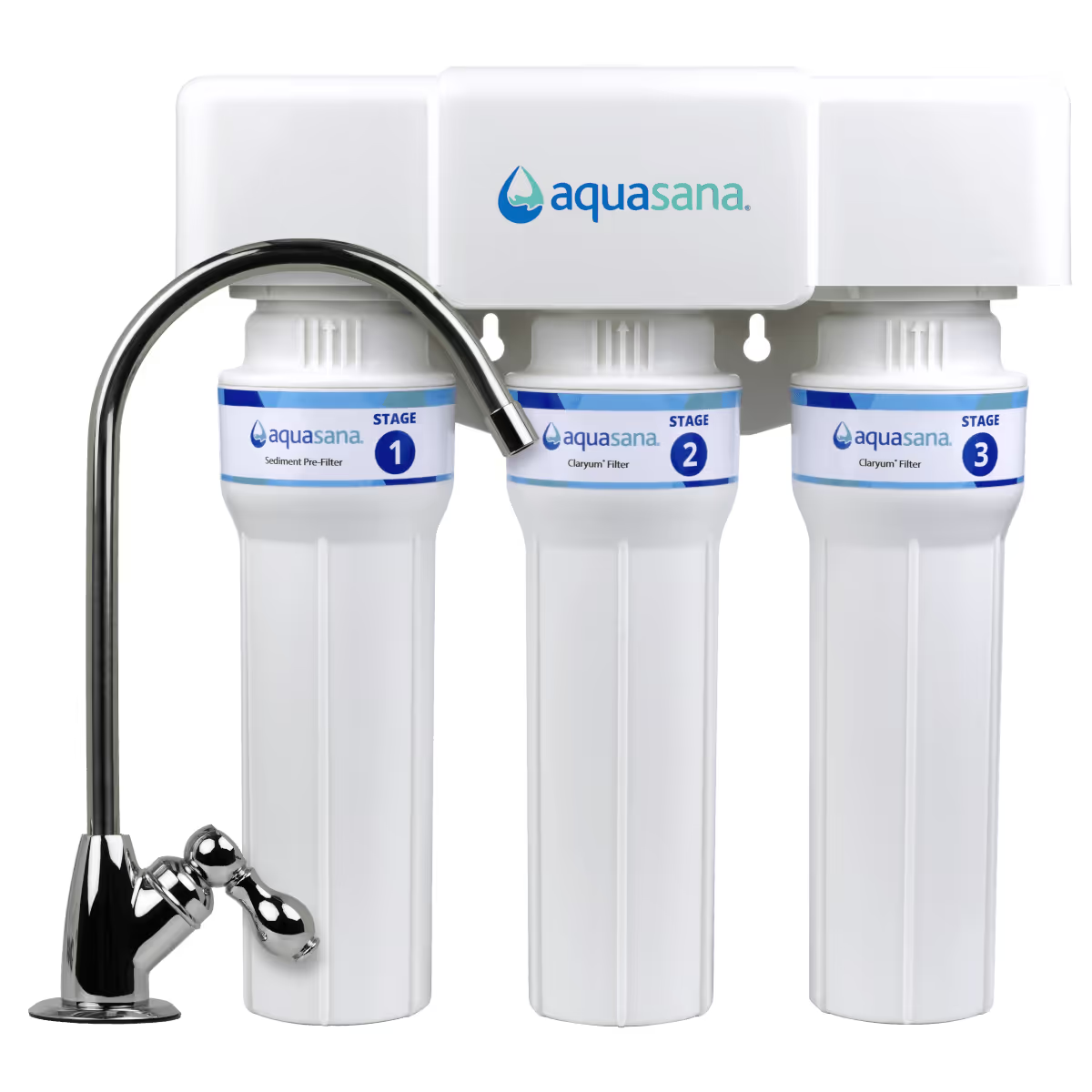
- Reduces more than 96% of chlorine and chloramine, and 99% of lead.
- Certified to NSF/ANSI 42, 53, and 401.
- Delivers 0.72 gallons per minute with no tank or pump needed.
- Filter lasts about six months or 800 gallons, priced $140 to $225.
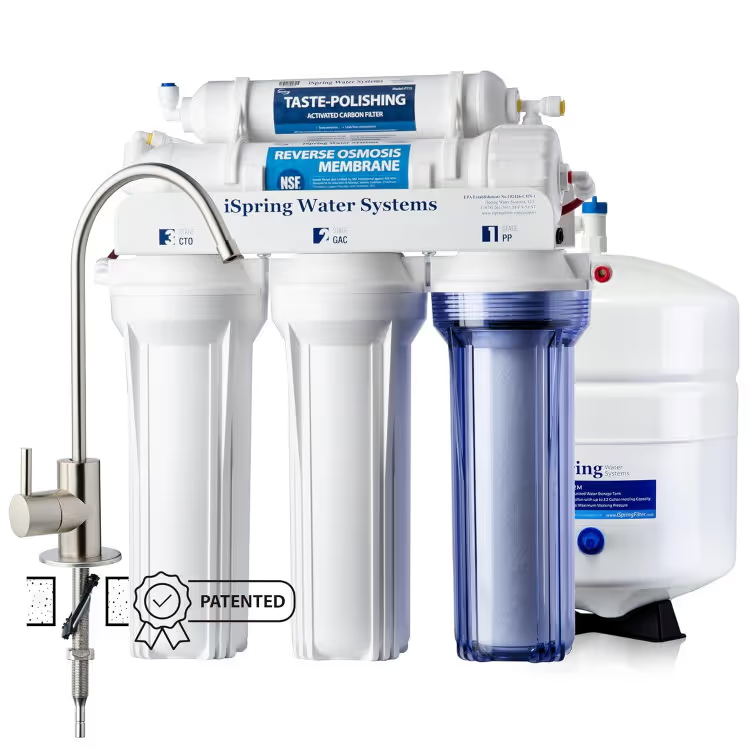
- Five-stage reverse osmosis rated at 75 gallons per day.
- Certified to NSF/ANSI 58, reducing PFAS, fluoride, and arsenic.
- Removes up to 98% of lead along with dissolved TDS.
- Lists for about $230 and installs with its own dedicated faucet.
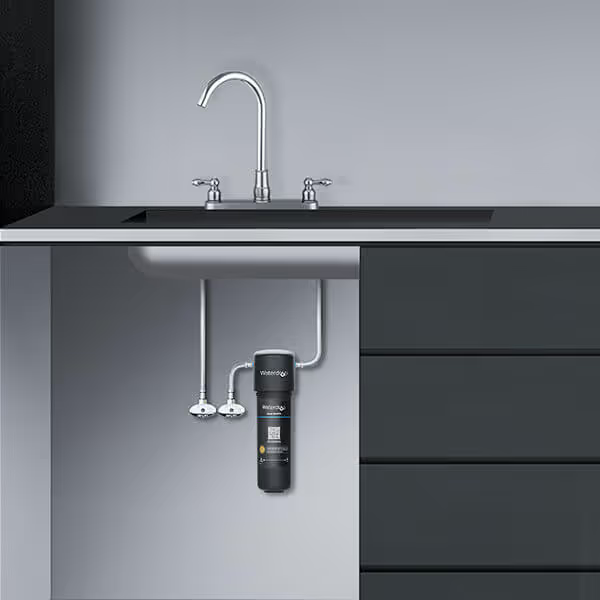
- Taps your existing faucet, so there’s no dedicated faucet to drill.
- Certified to NSF/ANSI 42 for chlorine, taste, and odor.
- Installs in about 15 minutes with a quick-connect fitting.
- Costs around $50 and comes off just as fast when you move.
An under-sink water filter is the cheapest way to get clean drinking water at the tap you actually drink from.
The choice that matters is which of two very different kinds you need: a carbon filter or reverse osmosis.
They look similar under the cabinet and cost about the same. They remove very different things.
A carbon filter is the right call for most city homes. It strips chlorine, bad taste, and (if certified) lead, at full tap speed, with no wastewater, for about $140 to $225.
Reverse osmosis is the answer when your water has dissolved contaminants carbon can’t touch: fluoride, nitrate, arsenic, or high TDS. It removes far more, but it runs slower and sends some water to the drain.
The single most expensive mistake buyers make is picking the wrong one: paying for reverse osmosis they don’t need, or buying carbon that never removes the contaminant they actually have.
So this guide sorts you into the right kind first, then names a certified pick for each.
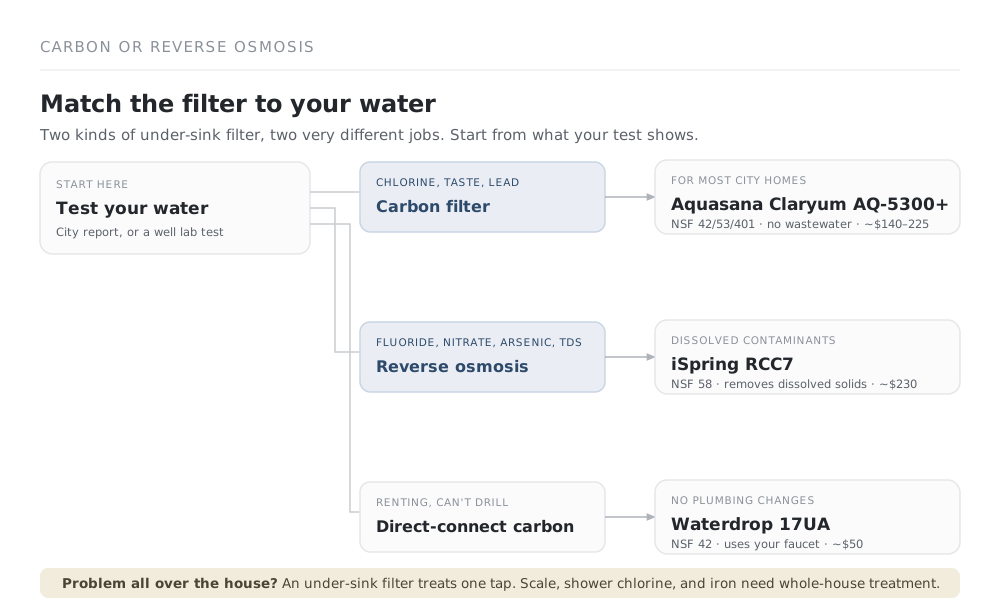
First: carbon or reverse osmosis?
This is the whole decision, and most buying guides skip it. Get this right and the specific model barely matters.
A carbon filter works by adsorption. Water passes through a block of activated carbon that grabs chlorine, organic chemicals, and odor. Add an ion-exchange layer and a certified carbon block also reduces lead and cysts.
A reverse osmosis system works by pressure. It pushes water through a membrane with pores so fine that dissolved solids get left behind: fluoride, nitrate, arsenic, salts, and the rest.
That difference in how they work is why they remove such different things. Here’s the quick read.
| Choose a carbon filter if… | Choose reverse osmosis if… |
|---|---|
| You’re on city water and want to fix chlorine, taste, and odor | Your test shows fluoride, nitrate, arsenic, or high TDS |
| You want full tap speed and no wastewater | You need the broadest possible contaminant removal |
| Your only metal concern is lead (with an NSF 53 certified filter) | You’re on a well with dissolved contaminants at the kitchen tap |
| You want the simplest install and the lowest running cost | You’re willing to trade some speed and a little wasted water for it |
| You rent or want to keep your existing faucet | You have room for a tank and a drain connection |
If both columns describe you, reverse osmosis wins, because it also removes what carbon removes. If only the left column fits, carbon is the smarter buy and reverse osmosis would waste your money.
Test your water before you spend
You can’t match a filter to your water until you know what’s in it.
City homes get a free head start: your utility mails a Consumer Confidence Report every year that lists what’s in the supply. Read it for chlorine or chloramine, lead, and anything flagged.
Well owners have no report, so a lab test is the only way to know. Send a sample to a state-certified lab and ask for the drinking-water panel. (EPA)
Then buy by the test. If it’s just chlorine and taste, carbon is enough. If it flags fluoride, nitrate, arsenic, or high TDS, you need the membrane.
What each type actually removes
Certification is contaminant-specific, so “removes contaminants” on a box means nothing on its own. This is what the two types do, matched to the standard that proves it.
| Contaminant | Carbon filter | Reverse osmosis |
|---|---|---|
| Chlorine, taste, odor | Yes (NSF 42) | Yes |
| Lead | Only if certified to NSF 53 | Yes (NSF 58) |
| Cysts (Giardia, Crypto) | Only if certified to NSF 53 | Yes |
| VOCs, some pesticides | Only if certified to NSF 53 | Yes |
| PFAS (PFOA, PFOS) | Only if certified to NSF 53 | Yes (NSF 58) |
| Fluoride | No | Yes |
| Nitrate | No | Yes |
| Arsenic | No | Yes |
| High TDS / dissolved salts | No | Yes |
Carbon is “generally ineffective” at removing dissolved solids and does not remove fluoride; reverse osmosis is the standard home technology for those. (CDC, EPA)
The picks
Aquasana Claryum AQ-5300+
This is a three-stage carbon and ion-exchange filter, certified to NSF/ANSI 42, 53, and 401. It reduces more than 96% of chlorine and chloramine, 99% of lead, and 95% of PFOA and PFOS, and it lists for about $140 to $225. (Aquasana)
Because it isn’t reverse osmosis, it keeps your calcium and magnesium, wastes no water, and delivers a fast 0.72 gallons per minute with no tank and no pump. The filter runs about six months or 800 gallons. It’s the strongest product in Aquasana’s lineup; our Aquasana water filter review weighs it against their whole-house and shower filters.
iSpring RCC7
The RCC7 is a five-stage under-sink reverse osmosis system rated at 75 gallons per day and certified to NSF/ANSI 58, the standard written for reverse osmosis. It lists for about $230. (iSpring)
iSpring says it reduces up to 99% of more than 1,000 contaminants, including PFAS, fluoride, arsenic, and up to 98% of lead. It installs with its own faucet and a drain connection, and most handy owners fit it in an afternoon.
Discount codeuse REFISPRING at checkout to save on this order.
a direct-connect carbon filter
A direct-connect filter like the Waterdrop 17UA taps your existing cold-water line and runs through your regular faucet, so there’s no dedicated faucet to drill and no drain to tap. It’s certified to NSF/ANSI 42 for chlorine, taste, and odor, and it lists for around $50. (Waterdrop)
It installs in about 15 minutes with a quick-connect fitting, comes off just as fast when you move, and the cartridge lasts far longer than a water filter pitcher.
If you’d rather not connect anything under the cabinet at all, a faucet-mounted filter clamps straight onto the spout, though its smaller cartridge needs changing more often.
Skip any filter that’s “tested to NSF” but not certified
A listing that says “NSF-tested,” “tested to NSF standards,” or “NSF-grade” is telling you the maker ran its own test and chose not to earn certification. That’s different from a product an accredited body tested and continues to audit. (NSF)
Skip it because without real certification you have no independent proof the filter removes what the box claims. A high stage count doesn’t fix that. The certified claim list is the fact; everything else is marketing.
What “certified” actually means here
The certification label is the one part of the box you can trust, once you know how to read it. Four numbers matter for under-sink filters.
- NSF/ANSI 42 covers looks and taste: chlorine, odor, and particulate. It’s an aesthetic claim, not a health one.
- NSF/ANSI 53 covers health contaminants: lead, cysts, VOCs, and now PFAS.
- NSF/ANSI 58 covers reverse osmosis systems specifically, including TDS reduction.
- NSF/ANSI 401 covers emerging contaminants like pharmaceuticals and pesticides.
Two traps catch buyers here.
First, watch for NSF/ANSI 372. That certifies the filter’s own parts are lead-free, which is about the hardware, not about removing lead from your water. A 372 badge is not a lead-removal claim.
Second, the old P473 standard for PFAS has been retired and folded into 53 and 58. If a page still sells “P473 certified” as a current, separate credential, its information is dated.
The rule that cuts through all of it: get a water test, then match the filter’s certified claim list to the contaminants you actually have. (NSF)
When an under-sink filter is the wrong tool
An under-sink filter is point-of-use. It treats one tap, which is exactly right for drinking water and wrong for anything else.
It cannot fix a problem you have all over the house. If any of these is your real issue, an under-sink filter won’t solve it.
- Chlorine smell in the shower. You breathe and absorb it there too, so that needs a whole-house carbon filter.
- Hard-water scale on fixtures, glassware, and the water heater needs a softener, not a drinking-water filter.
- Iron staining, the orange marks on well-water sinks and tubs, needs whole-house iron treatment, because dissolved iron has to be oxidized before it can be filtered.
- Sediment clogging fixtures throughout the home needs a whole-house sediment filter at the point of entry.
For any of those, start with the home water filtration guide, which routes you to the right whole-house system.
Install reality: what each type takes
Both types are DIY-friendly, but reverse osmosis asks more of you and your plumbing.
A carbon filter taps the cold-water line and mounts to the cabinet wall. There’s no drain to connect. Direct-connect models use your existing faucet; others include a dedicated faucet you drill for. Plan on 15 to 30 minutes.
A reverse osmosis system adds three things: a drain saddle clamped to the drainpipe, a dedicated faucet hole drilled in the counter or sink deck, and space for the tank.
It’s still a doable afternoon project, though it has more connections and more chances to leak. Our reverse osmosis installation guide covers each step.
Measure your cabinet depth before you buy. A multi-stage reverse osmosis system is a poor fit under about 12 inches, while a compact carbon filter fits almost anywhere.
Check your water pressure too. Reverse osmosis needs a decent supply pressure to work well, and a low-pressure home may need a booster pump or a tankless unit that has one built in.
Renters have a clear default. A direct-connect carbon filter makes no permanent changes and comes off in minutes, so it’s the safe choice when you can’t drill.
What it costs over five years
The sticker price is only the start. Both types need replacement cartridges, and reverse osmosis adds more of them plus a little wasted water.
Here’s the rough five-year cost for a single kitchen tap. Treat these as general estimates; your real numbers depend on the model, your water, and how much you use.
| Cost over 5 years | Direct-connect carbon | Certified carbon (AQ-5300+) | Under-sink reverse osmosis (RCC7) |
|---|---|---|---|
| Upfront | ~$50 | ~$180 | ~$230 |
| Replacement filters | ~$75 | ~$350 | ~$400 |
| Wasted water | none | none | modest (drain ratio) |
| Five-year total | ~$125 | ~$530 | ~$630 |
The takeaway: carbon costs less to buy and less to keep. A certified carbon filter runs one cartridge about every six months.
Reverse osmosis feeds carbon pre and post filters every 6 to 12 months and a membrane every 2 to 3 years, so its running cost sits higher.
There’s a water cost with reverse osmosis too. Every reverse osmosis system sends some water to the drain to flush the membrane, the drain ratio the maker prints on the spec sheet.
Older units wasted about 4 gallons for every gallon made; modern under-sink systems do far better, from 3:1 down to about 1:1. At a single tap, that waste is small.
Frequently asked questions
Does an under-sink water filter remove fluoride?
Only reverse osmosis does. A carbon filter does not remove fluoride, no matter how many stages it has. If your test flags fluoride, you need a reverse osmosis system (or a dedicated activated-alumina fluoride filter).
Does an under-sink filter remove lead?
A carbon filter removes lead only if it’s certified to NSF/ANSI 53 for lead; many are. Reverse osmosis removes lead under NSF/ANSI 58. Watch out for an NSF 372 badge, which certifies the filter’s parts are lead-free and is not a claim that it removes lead from your water.
Do I need a plumber to install one?
Usually not. A carbon filter is a 15 to 30 minute job with no drain connection. Reverse osmosis takes longer because of the drain saddle and the faucet hole, but most handy owners still do it themselves. A plumber can fit either in about an hour if you’d rather not.
Will an under-sink filter lower my water pressure?
A carbon filter barely affects flow; a certified one still delivers around 0.7 gallons per minute or more. Reverse osmosis is slower by design, because it fills a tank and draws from it, and a low-pressure home makes that worse.
How often do I change the filter?
A carbon cartridge lasts about six months or 800 gallons, depending on the model. Reverse osmosis pre and post filters last 6 to 12 months, and the membrane 2 to 3 years. Every manufacturer prints a schedule; follow it.
Is the reverse osmosis wastewater worth it?
Only if you need what reverse osmosis removes, like fluoride, nitrate, arsenic, or high TDS. If so, choose a modern system with a 1:1 or 2:1 drain ratio to cut the waste. If your only issue is chlorine or taste, a carbon filter wastes nothing and does the job.
Will it fit under my sink?
Measure the cabinet depth first. A multi-stage reverse osmosis system needs roughly 12 inches or more; a compact single-stage or direct-connect carbon filter fits almost any cabinet.
Well water or city water, does it change the pick?
Yes. City water is usually a carbon job, chlorine and taste. Well water more often needs reverse osmosis at the tap for nitrate or arsenic, and frequently a whole-house system upstream for iron, sediment, or hardness that an under-sink filter can’t reach.
Ready to commit to reverse osmosis? Our under-sink reverse osmosis guide covers tank versus tankless and names certified picks.
Comparing every drinking-water format, not just under-sink? See best drinking water filtration system.
Still deciding whether an under-sink unit is even the right format for you? Compare all five in the five kinds of water filtration device.
Problem showing up all over the house, not just the kitchen? Start with the home water filtration guide.
How we researched this
We built this guide from the NSF/ANSI standards, EPA and CDC guidance on home water treatment, and manufacturer spec sheets and certification listings for each product named (Aquasana, iSpring, Waterdrop).
We don’t run these systems ourselves yet, so we don’t claim first-hand testing, and every figure here is attributed to its source.
Prices, filter lives, and certifications in this category change, so treat every number as approximate and confirm the current spec and NSF/ANSI listing on the model before you buy.
When we name a merchant we may earn a commission if you buy through a link here, at no cost to you.
Sources
- NSF — What is NSF certification? (certified vs tested to a standard)
- NSF — Standards for Water Treatment Systems
- CDC — Choosing home water filters & other treatment systems
- EPA — Protect your home’s water (private wells)
- EPA — Reducing PFAS in drinking water with treatment technologies
- Aquasana — Claryum 3-Stage Max Flow under-sink filter (AQ-5300+)
- iSpring — RCC7 5-stage under-sink reverse osmosis, certified to NSF/ANSI 58, 75 GPD
- Waterdrop — 17UA direct-connect under-sink filter