Water filtration device: the 5 kinds, and which one you need
A water filtration device is any unit that cleans your drinking water by removing contaminants from it. That covers a lot of ground, from a $30 pitcher you fill at the sink to a $2,000 system wired into your main water line.
If you have searched the term, you have probably hit a wall of articles listing “10 types of water filters.” Those lists mix two different questions together, which is why they leave you more confused than when you started.
So here is the plain version. You really only shop for five kinds of device. The choice between them comes down to two questions: how much water you need to treat, and what your water test says is wrong with it.
This guide sorts you into the right kind, then points you to the specific pick for it.
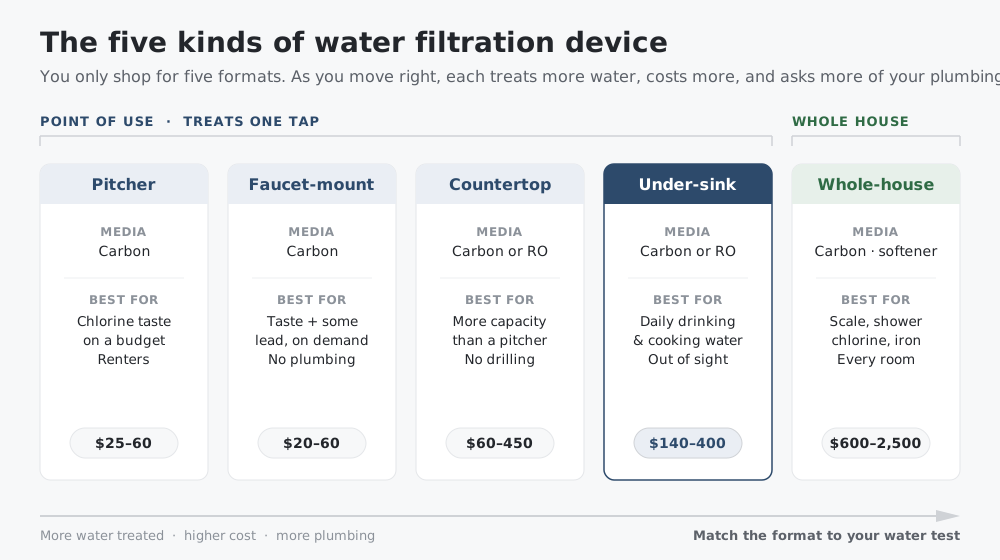
The five kinds of water filtration device
Every device you can actually buy falls into one of these five formats. Here is what each one is, what it fixes, and the rough price.
| Device | Where it treats | Best for | Rough cost |
|---|---|---|---|
| Pitcher | A jug you fill by hand | Chlorine taste on a budget, renters, one or two people | $25–$60 |
| Faucet-mount | Screws onto your tap | Taste and some lead, on demand, no plumbing | $20–$60 |
| Countertop | Sits on the counter, hooks to the faucet | More capacity than a pitcher, still no drilling | $60–$450 |
| Under-sink | Plumbed into the cold line in the cabinet | Daily drinking and cooking water, out of sight | $140–$400 |
| Whole-house | Installed where water enters the home | Problems in every room: scale, shower chlorine, iron | $600–$2,500 |
Read that table top to bottom and you can see the pattern. As you go down the list, the device treats more water, costs more, and asks more of your plumbing. A pitcher treats one jug at a time and needs no tools. A whole-house system treats every tap and usually needs a plumber.
Why the “10 types of filter” lists confuse you
Here is the thing those long lists get wrong for a beginner. They are answering a different question than the one you are asking.
When an article lists carbon, reverse osmosis, UV, ion exchange, ceramic, and distillation, it is describing the filter media: the technology working inside the device. When you shop, you are choosing the device format: the pitcher, the under-sink box, the whole-house tank.
Those are two separate decisions, and they stack. A pitcher usually holds carbon media. An under-sink unit might hold carbon, or it might be reverse osmosis. A whole-house system could be carbon, a softener, or both. So the media list alone can never tell you what to buy.
The two that matter most inside your device are simple to keep straight:
- Activated carbon is the workhorse. It grabs chlorine, bad taste, odor, and, if the filter is certified for it, lead. Most pitchers, faucet-mounts, and basic under-sink filters are carbon.
- Reverse osmosis pushes water through a fine membrane and removes far more: fluoride, nitrate, arsenic, and dissolved salts that carbon leaves behind. It shows up in the better countertop and under-sink units.
Once you know which media you need, the format is a practical choice about space, budget, and how much water you want treated. So settle the media question first, with a water test.
Want a plain-language definition of any media those lists throw at you? Our glossary has a short entry for each one, including UV, ion exchange, ceramic, and distillation.
Test your water, then match the device
You cannot pick the right device until you know what is actually in your water. Buying blind is how people end up with a filter that never touches their real problem.
If you are on city water, your utility mails a Consumer Confidence Report every year. It lists what is in the supply. Read it for chlorine or chloramine, lead, and anything it flags. Most city homes come down to taste and maybe lead, which carbon handles.
If you are on a well, no one tests it for you. Send a sample to a state-certified lab and ask for the drinking-water panel. (EPA) Wells more often turn up nitrate, arsenic, or iron, which changes the answer.
Then buy by the result:
- Chlorine, taste, or odor only? Carbon is enough. A pitcher, faucet-mount, or carbon under-sink filter fixes it.
- Lead? You need carbon certified to NSF/ANSI 53 for lead, or reverse osmosis.
- Fluoride, nitrate, arsenic, or high TDS? Carbon cannot remove those. You need reverse osmosis.
- Bacteria from an unsafe well? That is a UV disinfection job, usually whole-house, on top of filtration.
Carbon is generally ineffective at dissolved solids and does not remove fluoride; reverse osmosis is the standard home fix for those. (CDC)
Which device fits your situation
You have your water result and you know carbon from reverse osmosis. Now match the format to how you live. This table sends you to the full guide for each path.
| Your situation | The device to get | Go deeper |
|---|---|---|
| Renting, tight budget, just want better-tasting water | Pitcher or faucet-mount carbon filter | Best drinking water systems |
| You drink and cook filtered water every day | Under-sink carbon or reverse osmosis filter | Best under-sink water filter |
| Your test shows fluoride, nitrate, arsenic, or high TDS | Under-sink reverse osmosis | Reverse osmosis systems |
| No plumbing allowed, but you want more than a pitcher | Countertop filter | Best drinking water systems |
| Chlorine in the shower, scale on fixtures, or iron stains | Whole-house system | Home water filtration guide |
If you are torn between a simple carbon filter and reverse osmosis for the kitchen, the under-sink filter guide walks through that one decision in detail. It is the choice that trips up the most buyers.
What each kind costs to run
The sticker price is only the start. Every device needs replacement cartridges, and reverse osmosis adds a little wasted water. Here is the rough yearly picture for a typical home. Treat these as general estimates; your real numbers depend on the model and how much water you use.
| Device | Upfront | Replacement filters per year |
|---|---|---|
| Pitcher | $25–$60 | $60–$120 |
| Faucet-mount | $20–$60 | $40–$100 |
| Countertop carbon | $60–$200 | $50–$120 |
| Under-sink carbon | $140–$225 | $60–$90 |
| Under-sink reverse osmosis | $200–$400 | $70–$120 |
| Whole-house | $600–$2,500 | $100–$300 |
Two things stand out. First, a cheap pitcher can cost more per year than an under-sink filter, because you replace its small cartridge so often.
Here is the math that surprises people. A family of four that drinks and cooks with filtered water burns through a pitcher cartridge (about 40 gallons) every week or two, so 30 to 40 cartridges a year at roughly $6 each is $180 to $240 in filters alone. An under-sink carbon cartridge treats about 800 gallons and costs around $60, and two a year cover the same family for about $120. The pitcher looks cheaper on the shelf and turns out to be the pricier habit if you filter a lot of water.
Second, reverse osmosis sends some water to the drain to clean its membrane, the drain ratio on the spec sheet. At a single tap the amount is small, but it is a real cost that carbon filters do not have.
When one device is not enough
A pitcher, faucet-mount, countertop, or under-sink filter is point-of-use. It cleans the water at one spot, which is perfect for the water you drink and cook with.
None of them can fix a problem you have all over the house, because they only treat that one tap. If any of these is your real issue, you need whole-house treatment instead:
- Chlorine smell in the shower. You breathe and absorb it while you bathe, so a single kitchen filter never reaches it. This calls for a whole-house carbon filter.
- Scale on faucets, glassware, and inside the water heater is a hard-water problem for a softener, not a drinking-water device.
- Iron stains, the orange marks on well-water sinks and tubs, need whole-house iron treatment that oxidizes the iron before filtering it.
For any of those, start with the home water filtration guide. It routes you to the right whole-house system by the problem you are trying to solve.
Frequently asked questions
What is a water filtration device?
It is any unit that removes contaminants from your water. The term covers everything from a countertop pitcher to a whole-house system plumbed into your main line. They differ in how much water they treat and what contaminants they remove.
What is the best water filtration device for home use?
There is no single best one, because it depends on your water and your home. For most city renters, a carbon pitcher or faucet-mount filter handles chlorine taste for under $50. For a household that drinks filtered water daily, an under-sink filter pays off. If your test shows dissolved contaminants like fluoride or arsenic, that under-sink unit should be reverse osmosis.
What is the difference between a water filter and a water filtration device?
There is none in everyday use. People say “water filter,” “filtration device,” and “filtration system” to mean the same thing: a unit that cleans your water. “System” tends to describe the larger under-sink and whole-house units, while “filter” often means a simpler pitcher or cartridge.
Do I need a device for the whole house or just the kitchen?
Match it to the problem. If you only want better drinking and cooking water, a point-of-use device at the kitchen tap is cheaper and simpler. If your issue shows up in other rooms, like scale on fixtures or chlorine in the shower, you need a whole-house system.
Which water filtration device removes the most contaminants?
Reverse osmosis removes the widest range at a single tap, including fluoride, nitrate, arsenic, and dissolved salts that carbon cannot touch. A whole-house system treats every tap but is usually carbon or a softener, so it targets fewer dissolved contaminants than reverse osmosis does at the kitchen.
How much does a water filtration device cost?
Anywhere from about $25 for a basic pitcher to $2,500 for a whole-house system installed. A good under-sink filter, the sweet spot for daily drinking water, runs roughly $140 to $400 before filters.
Do these devices need certification?
Look for an NSF/ANSI certification that matches your contaminant: NSF 42 for chlorine and taste, NSF 53 for lead and other health contaminants, and NSF 58 for reverse osmosis. Certification is contaminant-specific, so a badge only counts if it covers the thing you need removed.
Ready to pick a specific unit for the kitchen tap? Start with the best under-sink water filter guide.
Want to compare every drinking-water format side by side? See best drinking water filtration system.
Have a problem showing up in more than one room? The home water filtration guide routes you to the right whole-house system.
How we researched this
We built this guide from EPA and CDC guidance on home water treatment and the NSF/ANSI certification standards, plus published price and cartridge-life ranges for each device format.
We don’t run these devices ourselves yet, so we don’t claim first-hand testing, and every figure here is a general estimate you should confirm against the specific model and its current NSF/ANSI listing before you buy.
When we name a merchant we may earn a commission if you buy through a link here, at no cost to you.