Best whole house carbon filter: match the media to your city water
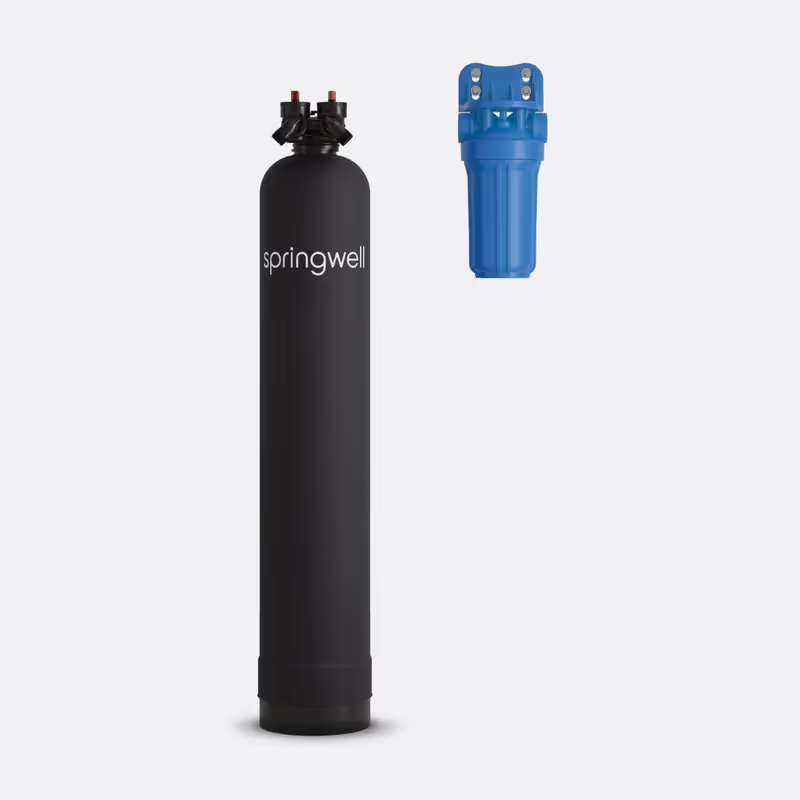
- Catalytic coconut-shell carbon plus KDF media handles both chlorine and chloramine.
- Rated for about 1,000,000 gallons, roughly ten years, before a media change.
- Flow rate holds around 9 GPM and up with minimal pressure drop.
- Costs about $1,040, with component-level rather than full-system NSF certification.
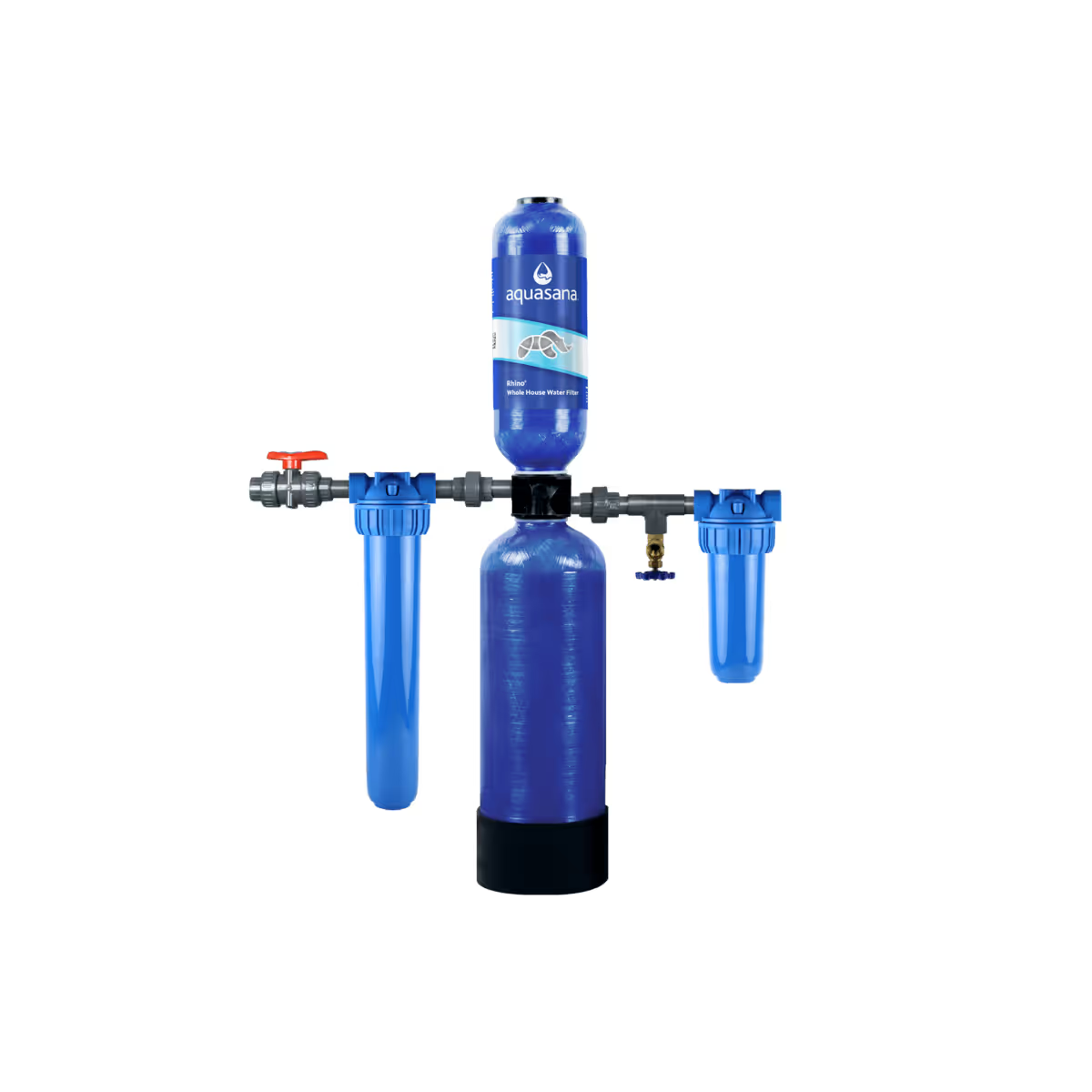
- Independently tested to NSF/ANSI 42: up to 97% chlorine and up to 83% chloramine reduction.
- Rated for 1,000,000 gallons, or up to 10 years, before a media change.
- Housing is certified to NSF/ANSI 61.
- Costs around $1,000 and up, more with add-ons like a UV lamp or post-filter.
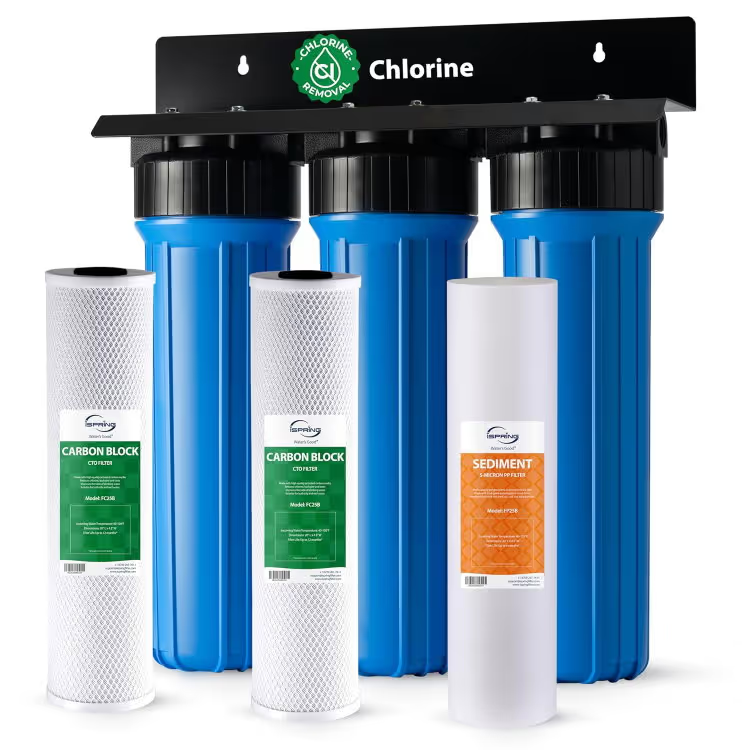
- 3-stage cartridge system with a sediment filter and two coconut-shell carbon blocks.
- Cuts up to 99% of chlorine along with rust, sediment, and odor.
- Handles flow up to 15 GPM and costs about $250.
- Cartridges last about 100,000 gallons, roughly a year, and are easy to swap yourself.
A whole-house carbon filter is how you get the chlorine taste and smell out of every tap in a city home.
It sits where the water line enters the house, so your shower, your laundry, and your kitchen all run cleaner-tasting water.
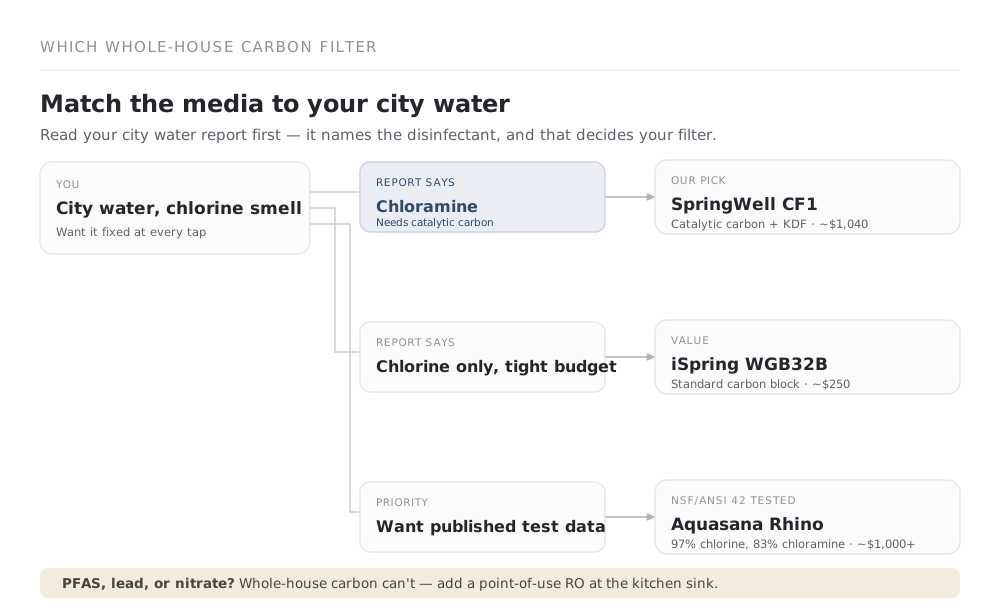
For most city homes, our pick is the SpringWell CF1, at about $1,040.
It uses catalytic carbon plus KDF media, so it handles both chlorine and the harder-to-remove chloramine, and the main tank is rated for about a million gallons.
If you want a system that publishes independent test numbers, the Aquasana Rhino is tested to NSF/ANSI 42, and its Chloramines model adds upgraded catalytic carbon.
If you’re on a budget, the iSpring WGB32B cartridge system removes up to 99% of chlorine for a few hundred dollars.
One fact decides which of these is right for you: whether your city disinfects with chlorine or chloramine. Read your water report first.
First: what a whole-house carbon filter actually fixes
A whole-house filter treats the water for the entire home at the point where the main line comes in.
Carbon is very good at a specific list of problems, and it does nothing for a second list. Knowing the difference saves you from buying the wrong tool.
Carbon handles the taste-and-chemical problems in city water. It removes chlorine, the chlorine taste and smell, disinfection byproducts like trihalomethanes, and many pesticides, herbicides, and industrial chemicals called VOCs. This is the classic reason a city home wants one: the water smells like a pool, and carbon fixes that everywhere at once.
Carbon does not soften water, and it barely touches dissolved minerals. If your problem is scale on the faucets and spotty glasses, that’s hardness, and you need a water softener, not a carbon filter. The two do different jobs, and many homes run both.
Carbon is unreliable for the health contaminants people worry about most. For PFAS at the parts-per-trillion level, for lead, and for nitrate, a whole-house carbon tank usually can’t guarantee the job, because the water moves through it too fast for enough contact. We’ll come back to the right tool for those below.
One more practical point: this is plumbed equipment, so it’s for homeowners. A whole-house filter gets installed on the main line, which usually means a plumber and a permanent fitting. If you rent, or you only care about drinking water, a point-of-use filter at the kitchen sink is the better path.
The one thing that decides your filter: chlorine or chloramine
This is the part most buying guides skip, and it’s the part that matters most.
Cities disinfect their water in one of two ways, and the two call for different carbon.
Chlorine is the traditional disinfectant. Standard activated carbon removes it quickly and thoroughly, so almost any carbon filter handles a chlorinated supply.
Chloramine is chlorine combined with ammonia, and more cities use it every year because it lasts longer in the pipes. The catch is that ordinary carbon barely removes it. In real filters, standard carbon takes out less than 20% of chloramine, while catalytic carbon removes 95% or more at the same speed. (WC&P Online)
So the buying rule is simple.
If your city uses chloramine and you buy a standard carbon filter, you’ve wasted your money, because the chloramine sails right through.
You don’t have to guess which one you have. Every city mails or posts an annual water quality report, sometimes called a Consumer Confidence Report, and it names the disinfectant. Find that line before you shop, and match the filter to it.
The picks below are labeled for exactly this, so you can buy the right media the first time.
“Certified” means less here than you’d think
You’ll see “NSF certified” on nearly every whole-house filter page, so it’s worth knowing what it usually means.
A full-system NSF/ANSI certification tests the finished product, as sold, against a specific contaminant claim. It’s the gold standard, and almost no whole-house carbon system carries it.
What these systems carry instead is component-level or partial certification, and there are three flavors you’ll actually see.
- Housing certified to NSF/ANSI 61. This means the tank and fittings are safe materials that won’t leach into your water. It says nothing about filtering performance.
- Media certified to NSF/ANSI 42. This means the carbon or KDF media meets the aesthetic standard for chlorine and taste. It’s a real result, but it certifies the media, not your whole assembled system.
- Independent testing to a standard, without the certification. A brand pays a lab to test its system to NSF/ANSI 42 and publishes the numbers, but doesn’t carry the ongoing certified mark.
Aquasana is a good example of that last one: it says the Rhino is independently tested to NSF/ANSI 42 and reduces up to 97% of chlorine and up to 83% of chloramine over its life. (Aquasana)
None of this makes these systems bad. It means you should read a removal percentage as the brand’s own lab result, and lean toward companies that publish real, specific numbers over ones that just say “NSF.”
The picks
SpringWell CF1
| Spec | Value |
|---|---|
| Media | Catalytic coconut-shell carbon + KDF |
| Handles | Chlorine, chloramine, VOCs, some PFAS |
| Capacity | ~1,000,000 gallons (~10 years) |
| Flow rate | ~9 GPM and up, minimal pressure drop |
| Certification | Component-level (housing, media); not full-system NSF |
| Price | ~$1,040 |
| The SpringWell CF1 is the one to get for most city homes, because it already uses catalytic carbon, so it covers you whether your city runs chlorine or chloramine. (SpringWell) |
It pairs that catalytic carbon with KDF media and a sediment pre-filter, and the main tank is rated for roughly a million gallons or about ten years before a media change. It’s built to keep close to full house pressure, so you won’t notice a weak shower. (SpringWell)
Why it scores 8.7i
Each sub-score is our assessment, weighted into the overall. It reflects published specifications, certification listings and warranty terms — not systems we ran ourselves. How we score
- Performance9/10
- It ships with catalytic carbon as standard, so it covers chlorine and the harder-to-strip chloramine without model-shopping, and pairs that with KDF media and a sediment pre-filter. Rated around 9 gpm with little pressure drop, and about a million gallons before the media is due — roughly a decade for a one-to-three-bathroom house. Source ↗
- Value9/10
- About $1,040 sold direct, with no dealer margin, for ten years of whole-house carbon. The only recurring cost is the sediment pre-filter, which puts the running bill in the tens of dollars a year rather than the hundreds. Source ↗
- Ownership9/10
- One permanent cut-in on the main line, then a pre-filter change and nothing else until the media is due about ten years later. No salt, no drain line and no chemical to refill. Source ↗
- Trust7/10
- The certification is component-level, on the housing and the media, rather than a full-system NSF/ANSI 42 or 53 listing, so the system-level reduction figures are SpringWell's own lab data. The lifetime warranty on tank and valve is the counterweight. Source ↗
Aquasana Rhino
| Spec | Value |
|---|---|
| Media | Activated + catalytic carbon (Chloramines model) |
| Tested to | NSF/ANSI 42: up to 97% chlorine, up to 83% chloramine |
| Capacity | 1,000,000 gallons (up to 10 years) |
| Housing | Certified to NSF/ANSI 61 |
| Price | ~$1,000+, more with add-ons |
| The Aquasana Rhino is the pick if you want numbers you can check, because Aquasana publishes independent NSF/ANSI 42 test results: up to 97% chlorine reduction and up to 83% chloramine over the life of the system. (Aquasana) |
If your city chloraminates, buy the Rhino Chloramines model specifically, which swaps in upgraded catalytic carbon with more surface area to handle chloramine for longer than the standard Rhino. (Aquasana)
Why it scores 7.7i
Each sub-score is our assessment, weighted into the overall. It reflects published specifications, certification listings and warranty terms — not systems we ran ourselves. How we score
- Performance8/10
- Published NSF/ANSI 42 test results of up to 97% chlorine reduction across a million gallons are the strongest checkable numbers in the category. The base model manages only up to 83% on chloramine, so a chloraminated supply needs the separate Rhino Chloramines version, and the 7 gpm rating shows as pressure drop when two fixtures run at once. Source ↗
- Value7/10
- Around $999 for the base system, but the add-ons that make it complete — UV lamp, post filter, the salt-free module — can push the real spend past $2,000, and the ten-year warranty only applies if a professional installs it. Source ↗
- Ownership7/10
- A million gallons on the main tank means roughly a decade before a media change, offset by a pre-filter swap every six months and a warranty that drops from ten years to one if you fit it yourself. Source ↗
- Trust9/10
- Aquasana publishes independent NSF/ANSI 42 test figures rather than a marketing percentage, and the tank itself is certified to NSF/ANSI 61. Naming the 83% chloramine result in its own literature is the kind of disclosure most of this category avoids. Source ↗
iSpring WGB32B
| Spec | Value |
|---|---|
| Type | 3-stage cartridge (sediment + 2 carbon block) |
| Removes | Up to 99% chlorine, sediment, taste, odor |
| Capacity | ~100,000 gallons (~1 year) |
| Flow rate | Up to 15 GPM |
| Price | ~$250 |
| The iSpring WGB32B is the value pick, a three-stage cartridge system with a sediment filter and two coconut-shell carbon blocks that cut up to 99% of chlorine along with rust, sediment, and odor. (iSpring) |
At around $250 it’s a fraction of the tank systems, and the standard cartridges make it easy to service yourself.
Discount codeuse REFISPRING at checkout to save on this order.
Why it scores 7.8i
Each sub-score is our assessment, weighted into the overall. It reflects published specifications, certification listings and warranty terms — not systems we ran ourselves. How we score
- Performance8/10
- Up to 99% of chlorine along with sediment, rust and odour, at up to 15 gpm — the job it is built for, done well. It runs standard carbon block rather than catalytic, so chloramine largely passes through, and the cartridges hold about 100,000 gallons. Source ↗
- Value9/10
- About $250 buys whole-house chlorine and sediment removal, a fraction of what a tank system costs, and the cartridges are standard Big Blue parts rather than proprietary ones. Source ↗
- Ownership7/10
- Three cartridges anyone can swap with the wrench supplied, but that is a job roughly once a year rather than a media change once a decade. It mounts on a bracket and needs no drain or power. Source ↗
- Trust6/10
- iSpring publishes reduction percentages for the cartridges, and no full-system NSF/ANSI listing is published for the WGB32B, so the whole-house figures rest on the manufacturer's own data. Source ↗
Skip whole-house carbon if your real problem is PFAS, lead, or nitrate
Skip it because the water moves through a whole-house tank too fast for carbon to reliably capture those. Independent testing shows whole-house carbon reducing PFAS anywhere from 0% to 73%, depending on the media, flow, and upkeep, which is too unreliable to trust for a health contaminant. (Minnesota Department of Health)
The dependable fix for PFAS, lead, and nitrate is a point-of-use reverse osmosis system at the kitchen sink, where the water sits under pressure against a membrane certified to remove them. Our reverse osmosis guide covers the certified picks, and many homes pair a whole-house carbon filter for taste with an under-sink reverse osmosis for drinking water. If PFAS is your specific worry, our water filters for PFAS guide covers the certified carbon and reverse osmosis picks, and if lead is the concern, our lead water filter guide names the point-of-use picks certified to remove it.
What a whole-house carbon filter costs to run
The purchase price is only part of the picture, so plan for the running costs before you commit.
Sediment pre-filters are the routine job. Both tank systems and cartridge systems use a sediment filter ahead of the carbon to protect it, and that pre-filter needs changing every 6 to 9 months. It’s a cheap part, usually $20 to $40.
The carbon itself depends on the design. On a tank-based system like the SpringWell or Aquasana, the media lasts about a million gallons, or roughly ten years, which is the big selling point. On a cartridge system like the iSpring, the carbon blocks last about a year before you swap them, so budget for annual replacements.
Installation is a real line item. A whole-house system taps your main line, so unless you’re comfortable with plumbing, factor in a plumber. That’s a one-time cost, but it’s part of the true price.
Add it up and the tank systems cost more up front but very little per year, while the budget cartridge system costs little up front but more in yearly filters and your time.
Whole-house carbon vs point-of-use reverse osmosis: who does what
These two get compared, but they aren’t really rivals. They solve different problems, and plenty of homes use both.
A whole-house carbon filter treats every tap. Its job is taste, smell, chlorine, and chloramine across the whole house, so your showers and laundry get filtered water too. It’s a comfort-and-chemistry upgrade for city water.
A point-of-use reverse osmosis system treats one tap, usually the kitchen. Its job is the thorough removal of dissolved health contaminants like PFAS, lead, nitrate, and arsenic from your drinking and cooking water.
So the honest answer for many city homes is both: carbon on the main line for whole-house taste and chlorine, and an under-sink reverse osmosis at the kitchen for the water you drink. Start with your water report and test results, and buy the tool that matches what you actually have.
Frequently asked questions
Do I need a whole-house carbon filter if I’m on city water?
You benefit from one if your water smells or tastes like chlorine and you want that fixed at every tap, not just the kitchen. It’s a comfort and taste upgrade. If you only care about drinking water, a point-of-use filter costs far less. If your concern is a health contaminant like PFAS or lead, carbon is the wrong tool.
What’s the difference between a carbon filter and catalytic carbon for city water?
Standard carbon removes chlorine well but removes very little chloramine, under 20% in real filters. Catalytic carbon is treated to break chloramine down and removes 95% or more. If your city uses chloramine, you need catalytic carbon; if it uses plain chlorine, standard carbon is fine.
How do I know if my city uses chlorine or chloramine?
Read your city’s annual water quality report, also called a Consumer Confidence Report, which every utility publishes and which names the disinfectant. You can also call your water utility and ask. Do this before buying, because it decides which filter you need.
Are whole-house carbon filters NSF certified?
Almost none are certified as a complete system. Most carry component-level certification, such as an NSF/ANSI 61 housing and NSF/ANSI 42 media, or the brand independently tests the system to NSF/ANSI 42 and publishes the numbers. Read any removal percentage as the brand’s own lab result.
Will a whole-house carbon filter remove PFAS or lead?
Not reliably. Whole-house carbon has too little contact time to guarantee PFAS or lead removal, and testing shows PFAS reduction ranging from 0% to 73%. For those contaminants, use a certified point-of-use reverse osmosis system at the kitchen sink instead.
How much does a whole-house carbon filter cost to run each year?
On a tank system, very little: a sediment pre-filter change every 6 to 9 months, and a media refill only once a decade. On a budget cartridge system, budget for new carbon cartridges about once a year. Add a plumber’s fee for the one-time installation on either.
Not sure a whole-house system is where to start? The home water filtration guide routes you from your water problem to the right system.
Dealing with scale and spotty glasses too? That’s hardness, and a water softener is the fix, often paired with carbon.
Need PFAS, lead, or nitrate gone from your drinking water? Start with our reverse osmosis guide.
Trying to remove fluoride? Standard carbon doesn’t touch it; see which methods do in our fluoride water filter guide.
How we researched this
We built this guide from the NSF/ANSI standards, published catalytic-carbon and chloramine research, the Minnesota Department of Health’s guidance on home PFAS treatment, and the manufacturer spec sheets and independent lab reviews for each system named (SpringWell, Aquasana, iSpring).
We don’t run these systems ourselves yet, so we don’t claim first-hand testing, and every figure here is attributed to its source.
Prices, certifications, and capacities in this category change, and removal percentages come from each brand’s own or a lab’s testing, so treat every number as approximate and confirm the current spec on the model before you buy.
When we name a merchant we may earn a commission if you buy through a link here, at no cost to you.
Sources
- WC&P Online — Reduction of Chloramines in Drinking Water Using Catalytic Carbon
- Aquasana — Rhino Whole House Water Filter (NSF/ANSI 42 testing, chlorine & chloramine figures)
- Aquasana — Rhino Chloramines Whole House Water Filter (upgraded catalytic carbon)
- iSpring — WGB32B 3-Stage Whole House Water Filter (chlorine reduction, capacity, flow)
- Minnesota Department of Health — PFAS and Home Treatment of Water