Water filters for PFAS: what actually removes forever chemicals
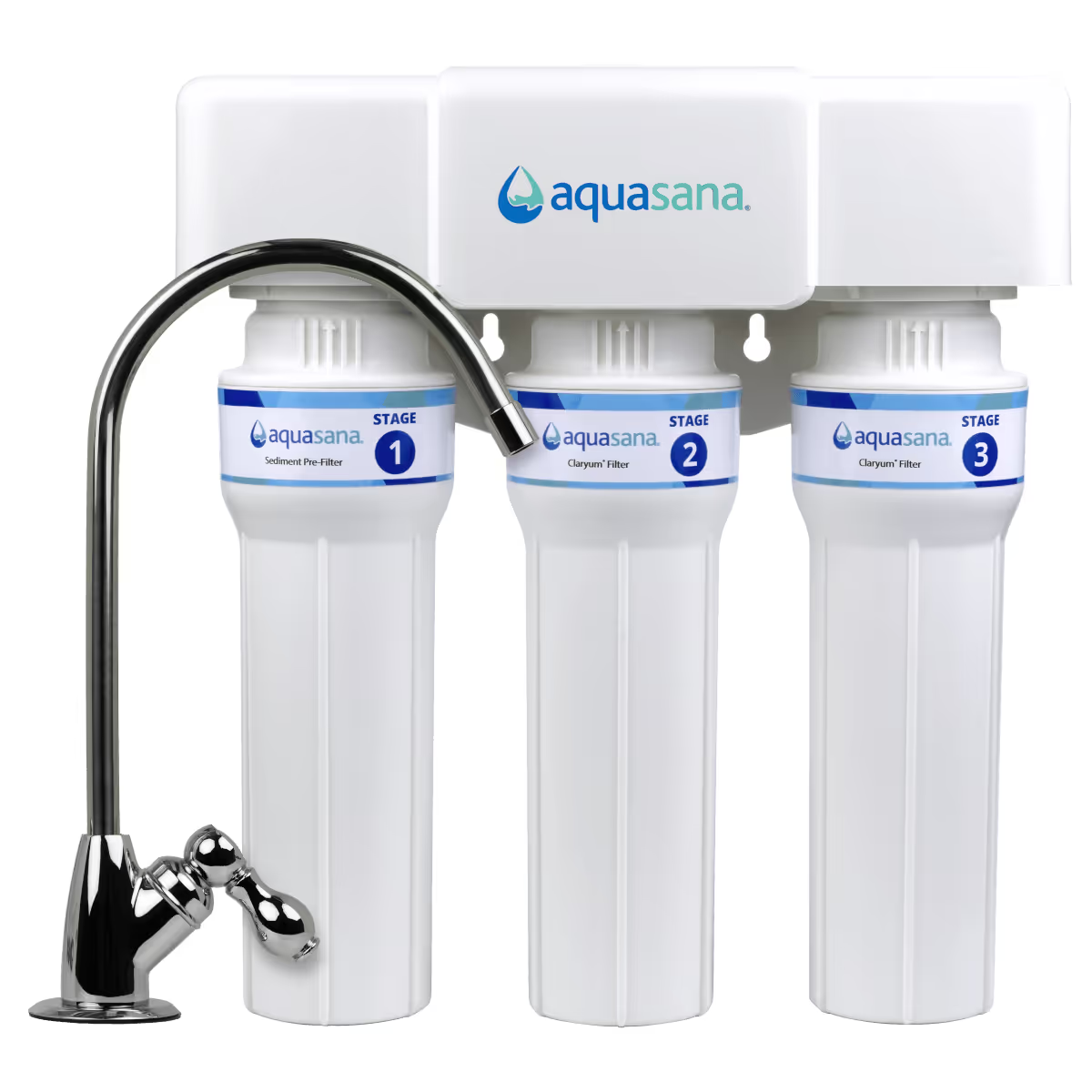
- A three-stage carbon block that installs under the sink with its own faucet.
- Certified to NSF/ANSI 42, 53, and 401, covering PFOA and PFOS, lead, and chlorine.
- Rated for about 95% PFOA/PFOS reduction and 99% lead reduction.
- Priced around $150 to $225, with a filter change about twice a year.
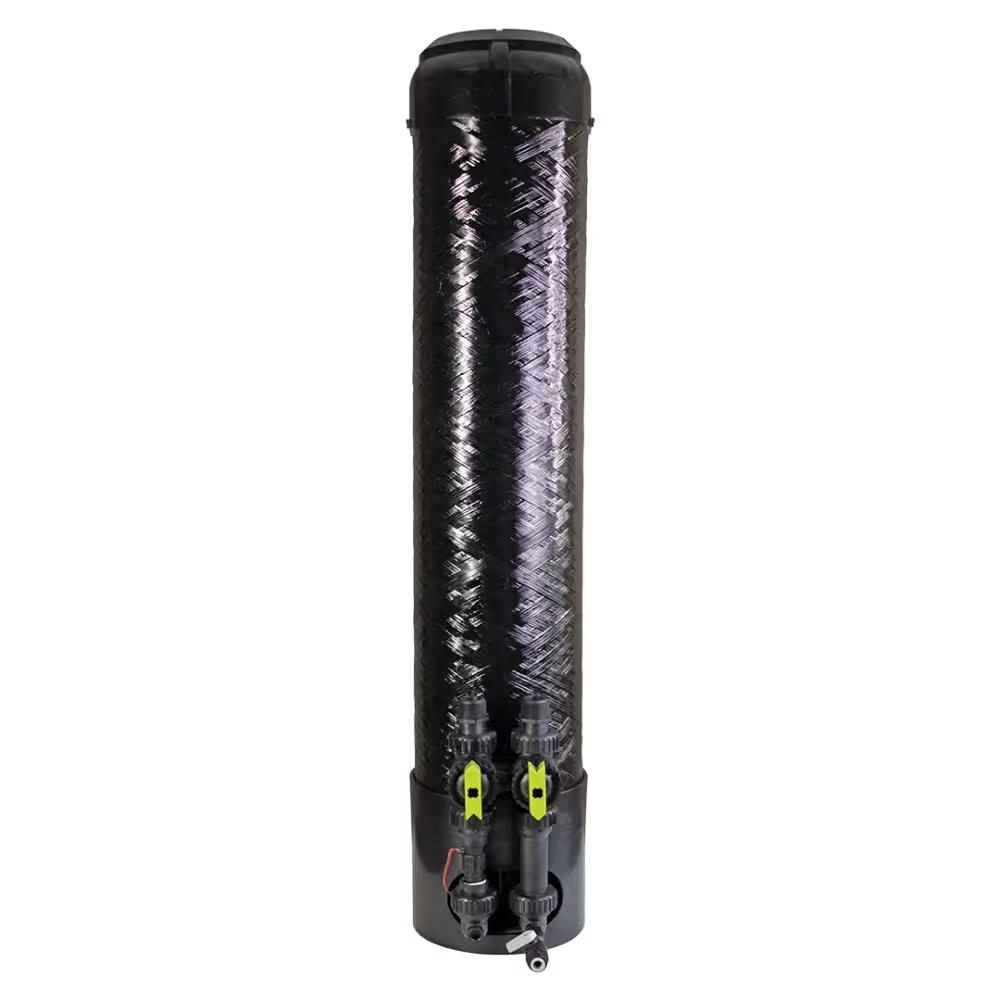
- A whole-house filter using ATOMUS PF8 adsorption media made specifically for PFAS.
- Rated to drive PFOA, PFOS, GenX, and both short- and long-chain PFAS below 1 part per trillion.
- The media itself carries NSF/ANSI 53, 61, and 372 certifications.
- One cartridge lasts about 350,000 gallons, at roughly 7 GPM with no backwashing.
If you want PFAS out of your water, the two filters proven to do it are reverse osmosis and a carbon or ion-exchange filter certified to remove PFOA and PFOS.
A basic Brita-style pitcher is not one of them, at least not reliably.
That is the part most guides skip, so it is the first thing worth saying plainly.
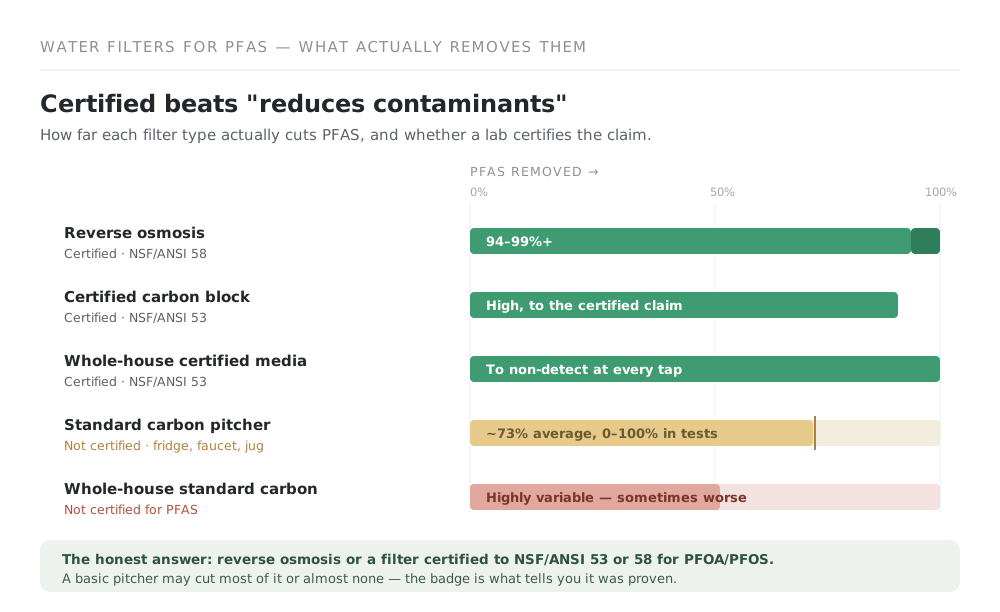
When independent researchers tested filters people actually own, reverse osmosis cut PFAS by 94% or more, while ordinary carbon pitcher and faucet filters averaged around 73% and ranged from near-total removal to none at all. (Duke and NC State, 2020)
So the honest fix is a filter that a lab has certified for the job, not one that only says it “reduces contaminants.”
For most people, that means a certified filter at the kitchen sink, where you draw the water you drink and cook with.
To cover every tap in the house, it means a whole-house filter built with a certified PFAS media, which works well but costs much more.
Find your situation below, then read the pick that matches it.
What are PFAS, and why is your filter the practical fix
PFAS are a large family of man-made chemicals used since the 1940s in nonstick coatings, stain and water repellents, firefighting foam, and food packaging.
They are often called “forever chemicals” because they resist breaking down, so they build up in water, soil, and the human body over time. (EPA)
In 2024 the EPA set the first national drinking-water limits for them, capping PFOA and PFOS at 4 parts per trillion, with a health goal of zero. (EPA)
In 2025 the agency kept those two limits but pushed the deadline for public water systems to comply back to 2031, and moved to roll back the limits it had set for four other PFAS. (EPA)
The practical takeaway from all of that: if PFAS worries you, your utility has years left to act, and a private well has no one testing it at all.
A filter at your own tap is the part you control now.
Which situation are you?
The right PFAS filter depends on one question first: do you want to treat only the water you drink, or every tap in the house?
Find the row that fits, and the pick below handles it.
| Your situation | What removes PFAS | Our pick |
|---|---|---|
| You mainly want safe drinking and cooking water | Certified carbon block under the sink | Aquasana Claryum AQ-5300+ |
| Your test shows PFAS plus arsenic, nitrate, or fluoride | Under-sink reverse osmosis | iSpring RCC7 |
| You want every tap in the house treated | Whole-house filter with a certified PFAS media | SpringWell Whole-Home PFAS Filter |
| You only own a Brita or similar pitcher | Not a reliable fix on its own | Upgrade to a certified filter |
Most homes only need to treat the kitchen tap, because that is where drinking and cooking water comes from.
A whole-house PFAS filter matters when you also want it out of your shower and laundry, or when everyone in the house drinks from more than one tap.
Test before you spend, because PFAS is invisible
You cannot see, smell, or taste PFAS, and no test strip detects it, so a lab test is the only way to know what you have.
On city water, start free: look up your utility’s annual water quality report, and check the EPA’s national testing data, which now lists PFAS results for many public systems. (EPA)
On a private well, no agency tests it for you, so a certified PFAS lab panel is the only reliable read. It runs roughly $200 to $300, more than a general well test because PFAS analysis is specialized.
A test tells you two things worth the money: whether you have a PFAS problem at all, and, later, whether your filter is actually working.
We don’t run these systems ourselves yet, so every figure here comes from a manufacturer spec, an NSF/ANSI standard, or a government or university source, and we say which.
The picks
Aquasana Claryum AQ-5300+
| Spec | Value |
|---|---|
| Type | Under-sink 3-stage carbon block |
| Handles | PFOA/PFOS, lead, chlorine, chloramine |
| Certification | NSF/ANSI 42, 53 (incl. PFOA/PFOS), 401 |
| Wastewater | None |
| Maintenance | Claryum filter set ~every 6 months |
| Price | ~$150–225 |
The Claryum is the easiest honest answer for most people, because it carries a real NSF/ANSI 53 certification for PFOA and PFOS rather than a maker’s “reduces PFAS” claim.
It fits under the sink, runs at close to normal tap speed, and sends nothing down the drain, so it wastes no water the way reverse osmosis does.
iSpring RCC7 reverse osmosis
| Spec | Value |
|---|---|
| Type | Under-sink 5-stage reverse osmosis |
| Handles | PFAS, arsenic, nitrate, lead, fluoride, dissolved solids |
| Certification | NSF/ANSI 58 |
| Wastewater | Several gallons to drain per gallon made |
| Maintenance | Filters every 6–12 months; membrane every 2–3 years |
| Price | ~$210 |
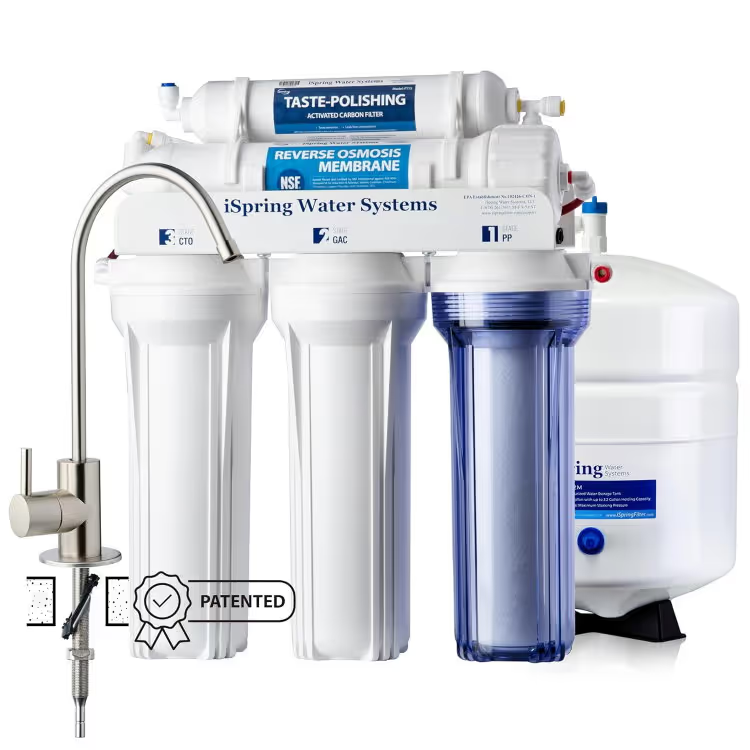
Reverse osmosis pushes water through a membrane whose pores are too fine for PFAS and most dissolved contaminants to pass, which is why it is the one filter type that handles PFAS, arsenic, and nitrate at once. (CDC)
The RCC7 is the value benchmark for that, a five-stage unit that costs a fraction of a whole-house system and installs under most sinks in an afternoon. For how tank and tankless RO units compare, see our under-sink reverse osmosis picks.
Discount codeuse REFISPRING at checkout to save on this order.
SpringWell Whole-Home PFAS Filter
| Spec | Value |
|---|---|
| Type | Whole-house PFAS filter (ATOMUS PF8 media) |
| Handles | PFOA, PFOS, GenX, short- and long-chain PFAS |
| Certification | NSF/ANSI 53, 61, 372 (media) |
| Flow rate | ~7 GPM |
| Maintenance | Cartridge ~every 350,000 gallons; no salt or backwash |
| Price | Around $1,500–1,900 (verify current price) |
This is the pick when you want PFAS gone from every tap, because it treats the water where it enters the house rather than at one sink.
Its ATOMUS PF8 media is one of the few whole-house options with a certified PFAS claim, and SpringWell rates it to non-detect, below 1 part per trillion, which is well under the EPA’s 4 part-per-trillion limit.
It is a single-purpose unit, so it targets PFAS and leaves chlorine, hardness, and iron alone.
Skip a standard pitcher or basic carbon filter for PFAS
A standard carbon filter is built for chlorine and taste, and its performance on PFAS is a coin toss, which is why it is a pick to avoid here rather than rely on.
In the Duke and NC State study, ordinary activated-carbon filters, the kind in most pitchers, fridges, and faucet mounts, removed about 73% of PFAS on average, but individual filters ranged from nearly complete removal to none at all. (Duke and NC State, 2020)
The same study found that some whole-house systems using standard carbon were so inconsistent that a few actually raised PFAS levels in the treated water.
None of these carry an NSF/ANSI 53 certification for PFOA and PFOS, so there is no verified claim behind them.
If a pitcher is all you have room or budget for, choose one specifically certified to NSF/ANSI 53 for PFOA and PFOS, and treat that certification as the whole point.
What “certified to remove PFAS” actually means
You will see “removes PFAS” and “reduces up to 99%” on many product pages, and the words carry very different weight depending on whether a lab stands behind them.
A certification means an independent body verified the claim against a written standard. A marketing number can come from a single test the manufacturer ran once, under conditions you never see.
Two NSF/ANSI standards are the ones that count for PFAS.
- NSF/ANSI 53 covers filters that use activated carbon or ion-exchange media, like an under-sink carbon block. The PFAS test challenges the filter with a high dose and confirms it brings PFOA and PFOS down below a set limit.
- NSF/ANSI 58 covers reverse osmosis systems, and includes an optional PFOA/PFOS reduction claim a unit can be certified against.
There is one more wrinkle worth knowing. Filters certified under the older protocol were tested to reduce PFOA and PFOS from 1,500 parts per trillion down to 70 or below; a newer version tests a broader “total PFAS” mix and requires reduction to 20 or below. (NSF)
So the practical check is simple: look for NSF/ANSI 53 or 58 with PFOA/PFOS named in the claim, and confirm it in the free NSF, WQA, or IAPMO listing rather than trusting the badge on the box.
What PFAS removal really costs
Cleaning PFAS from your water can cost under $200 or well over $1,500, and the gap is entirely about how much of the house you treat.
| Option | Buy | Yearly upkeep | Treats |
|---|---|---|---|
| Certified carbon block (under-sink) | ~$150–225 | ~$60–130 in filters | Kitchen tap |
| Under-sink reverse osmosis | ~$200–300 | ~$100–200 in filters + membrane | Kitchen tap |
| Whole-house certified PFAS filter | ~$1,500–1,900 | Cartridge every ~350,000 gal | Every tap |
| Standard pitcher (not recommended) | ~$30–45 | ~$100+ in cartridges | Kitchen tap, unreliably |
Ranges from current manufacturer pricing for each system named; treat them as estimates, not a quote.
The lesson in that table is that treating only the water you drink is cheap, and treating the whole house is not.
Since PFAS matters most in the water you swallow, a certified filter at the kitchen sink gives you the biggest health return for the least money.
Move up to a whole-house PFAS filter when you have a specific reason to want it out of every tap, and the budget to match.
Frequently asked questions
Do Brita or other pitcher filters remove PFAS?
Not reliably. Standard activated-carbon pitchers removed about 73% of PFAS on average in independent testing, but results ranged from near-total to none, and they carry no NSF/ANSI 53 certification for PFOA and PFOS. If you want a pitcher, choose one specifically certified for PFAS.
Does reverse osmosis remove PFAS?
Yes, and it is one of the most effective options. Reverse osmosis reduced PFAS by 94% or more in independent testing, and it also removes arsenic, nitrate, and fluoride. The tradeoff is that it wastes several gallons down the drain for each gallon it makes and treats only the tap it is installed on.
What certification should I look for on a PFAS filter?
NSF/ANSI 53 for carbon and ion-exchange filters, or NSF/ANSI 58 for reverse osmosis, with PFOA and PFOS named in the claim. Confirm the listing in the free NSF, WQA, or IAPMO database rather than trusting the “removes PFAS” text on the package.
Do I need a whole-house PFAS filter or just an under-sink one?
For most people, an under-sink filter at the kitchen is enough, because that is where you draw drinking and cooking water. A whole-house PFAS filter makes sense when you also want it out of the shower and laundry, or when the household drinks from several taps.
How do I test my water for PFAS?
With a certified laboratory panel, which runs roughly $200 to $300. No test strip or home kit detects PFAS. On city water, check your utility’s water quality report and the EPA’s national PFAS testing data first, since both are free.
Is PFAS in my water dangerous at low levels?
The EPA set its PFOA and PFOS limits at 4 parts per trillion with a health goal of zero, reflecting concern about long-term exposure rather than immediate harm. Whether to filter is a personal decision; testing first tells you if you have measurable levels at all.
Does boiling water remove PFAS?
No. Boiling does not break down PFAS, and because it removes some water as steam, it can slightly concentrate what is left. Filtration with reverse osmosis or a certified carbon filter is the way to reduce it.
Not sure which type of system you need yet? The best drinking water filtration system guide routes you from your water problem to the right point-of-use option.
Worried about lead too? Our lead water filter guide covers filters certified to NSF/ANSI 53 for lead.
On a budget or dealing with fluoride? See the fluoride water filter guide, since most filters do not remove fluoride at all.
How we researched this
We built this guide from EPA guidance and drinking-water rules on PFAS, NSF/ANSI standards documentation, the 2020 Duke and NC State study of point-of-use filters published in Environmental Science and Technology Letters, and the manufacturer specifications and certification listings for each system named. We also read owner reports across water-treatment communities.
We don’t run these systems ourselves yet, so we don’t claim first-hand testing, and every figure here is attributed to its source.
Prices, certifications, and removal figures change, and manufacturers’ own numbers come from their testing, so treat every figure as approximate and confirm the current spec and certification listing before you buy.
When we name a merchant we may earn a commission if you buy through a link here, at no cost to you.
Sources
- EPA — Per- and Polyfluoroalkyl Substances (PFAS) drinking water regulation
- EPA — Announcement keeping PFOA/PFOS limits, extending compliance to 2031
- EPA — Our current understanding of the human health and environmental risks of PFAS
- Duke & NC State — Assessing the Effectiveness of Point-of-Use Residential Drinking Water Filters for PFAS (2020)
- NSF — Forever chemicals and the advancement of filtration standards
- CDC — About Home Water Treatment Systems