Lead filter for water: which ones are actually certified to remove lead?
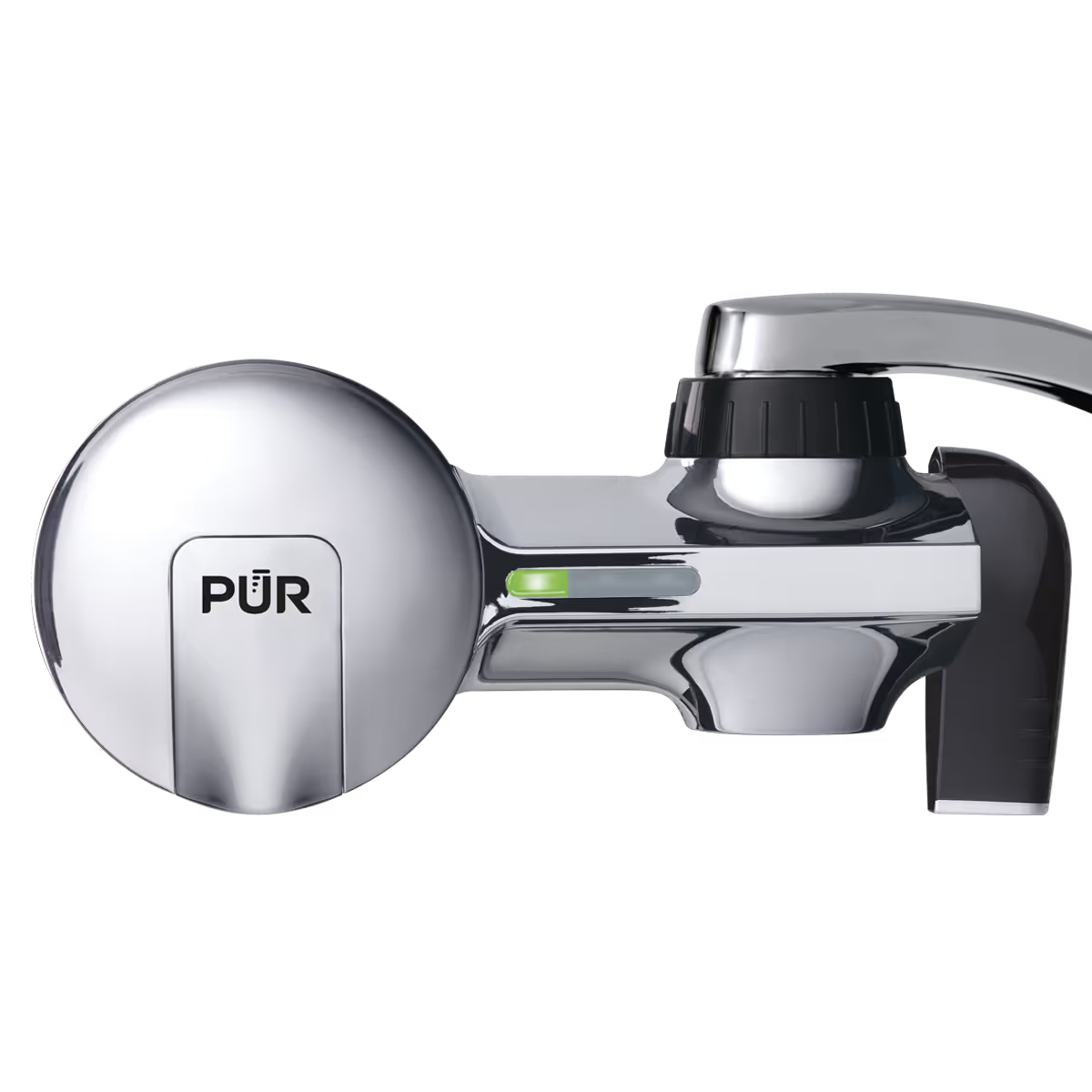
- Certified by NSF and WQA under NSF/ANSI 53 to reduce lead, and NSF/ANSI 42 for chlorine.
- Clamps on tool-free in a couple of minutes; a change-light tracks the cartridge.
- About $25 to $35 for the unit, the cheapest verifiable lead filter here.
- Keeps the minerals a reverse osmosis system would strip out.
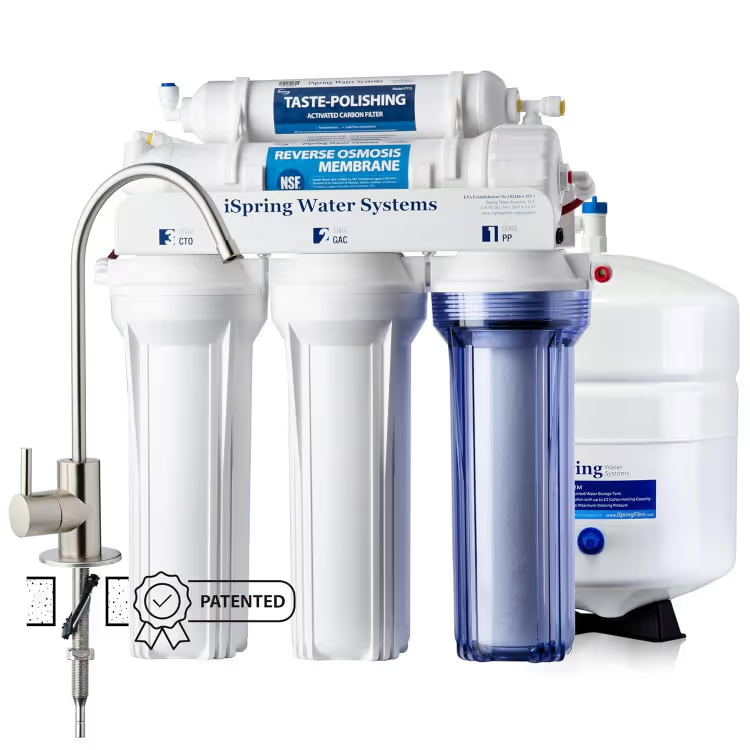
- Five-stage reverse osmosis, certified to NSF/ANSI 58, the RO standard.
- Reduces up to about 99% of lead, plus arsenic, fluoride, nitrate, and total dissolved solids.
- Runs roughly $230, the value benchmark for certified RO.
- Filters are commodity parts, so the running cost stays low.
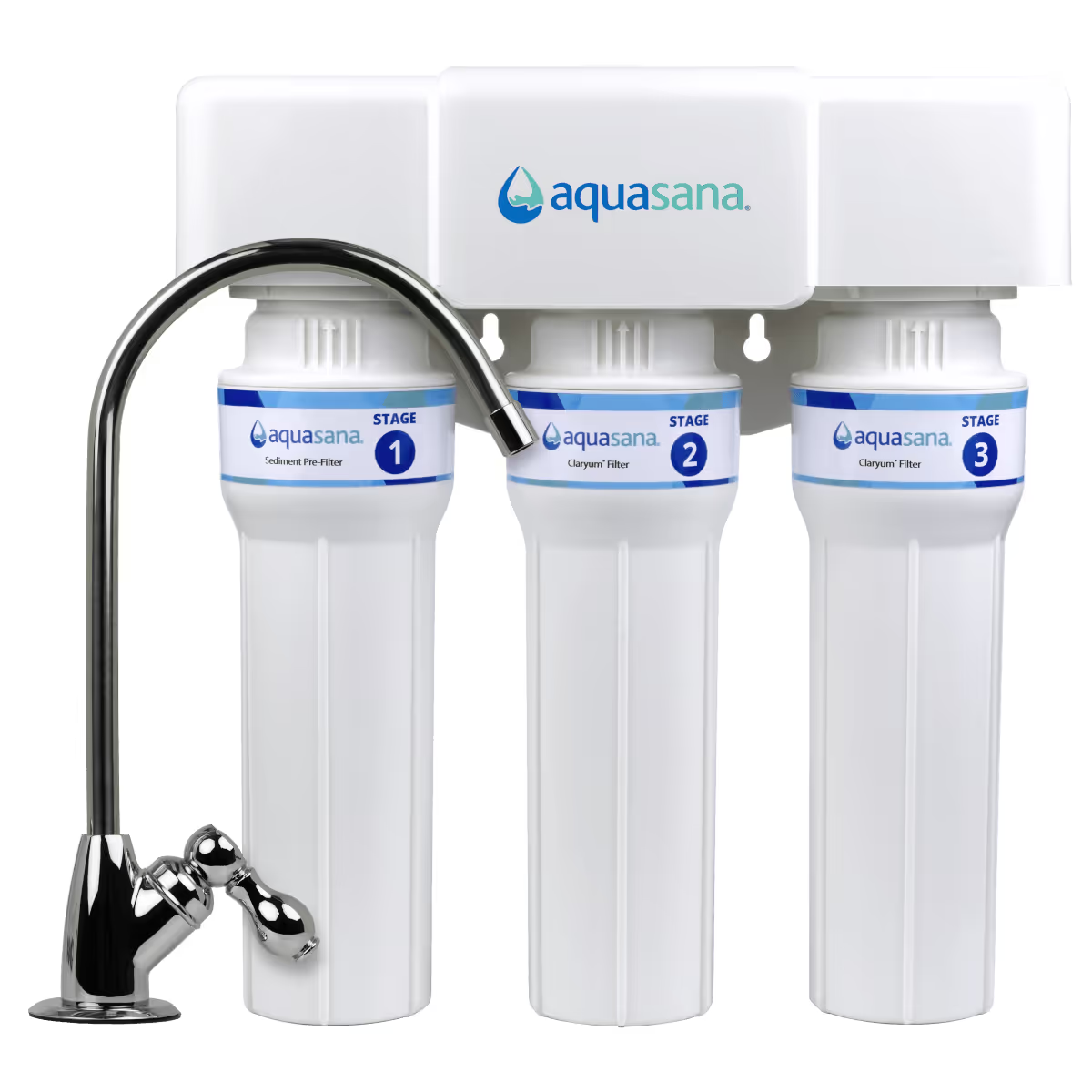
- Certified to NSF/ANSI 42, 53, and 401, so lead, chlorine, and trace pharmaceuticals are all in the listing.
- Reduces 99% of lead and 95% of PFOA and PFOS, without stripping minerals like RO does.
- Cartridge lasts about 800 gallons, far longer than any faucet or pitcher filter.
- Installs under the sink with its own faucet, no drain connection needed.
If lead is your reason for buying a water filter, one thing decides the whole purchase: is the filter certified to remove lead, or just marketed for it?
That sounds like a small distinction. It isn’t. Most filters sold for drinking water improve taste and cut chlorine, and do nothing at all for lead. Plenty of them still put “lead” somewhere on the box.
There is no safe level of lead in drinking water. The EPA sets the health goal at zero and the action level at 15 parts per billion, so a filter you can actually trust matters more here than with taste or smell.
The good news: telling a real lead filter from a hopeful one is easy once you know the two certifications that count. This guide covers how to read them, then names a certified pick for each kind of buyer and budget.
Most filters improve taste. Very few remove lead.
Here’s the part the marketing blurs.
A pitcher or faucet filter that makes your water taste better is doing its main job with activated carbon, which is genuinely good at chlorine, odor, and taste. None of that means it reduces lead.
Lead removal is a separate, harder job. A carbon filter can do it, but only if the carbon block is engineered and certified for it. Many aren’t, and they never claim to be.
So the filter aisle splits in two:
- Filters certified to remove lead, which have been independently tested and listed in a public database.
- Filters that clean up taste and chlorine, some of which hint at lead without any certification behind the hint.
The rest of this guide is about staying on the right side of that line.
Certified for lead, or just marketed for it?
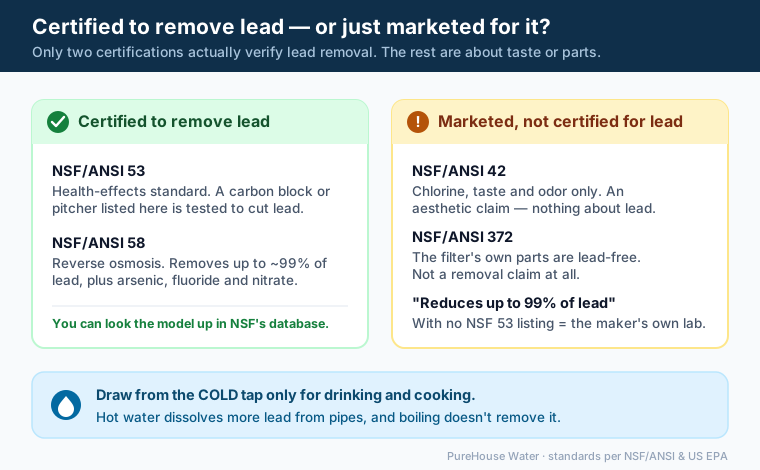
Two NSF/ANSI certifications verify that a filter actually removes lead. Two others get used to imply it without saying it.
The two that mean lead removal:
- NSF/ANSI 53 is the health-effects standard for filters and pitchers. To earn it for lead, a filter is tested with challenge water holding 150 ppb of lead, ten times the EPA’s action level, and must bring it below the pass mark. (NSF) The listing is public and the factory is re-inspected every year.
- NSF/ANSI 58 is the standard written for reverse osmosis. A system certified to 58 is verified to reduce lead, and usually a long list of dissolved contaminants with it.
The two that don’t:
- NSF/ANSI 42 covers chlorine, taste, and odor. It’s an aesthetic standard, and a filter can carry it proudly while removing no lead whatsoever.
- NSF/ANSI 372 certifies that the filter’s own parts are lead-free. That’s about the hardware not adding lead, not about taking lead out of your water. A 372 badge is not a lead-removal claim.
And then there’s the phrase with no standard behind it at all: “reduces up to 99% of lead.” When a product says that but carries no NSF 53 or 58 listing, the number comes from the maker’s own lab. It may be honest, but you have no independent proof and no yearly audit.
The badge decoder (what actually verifies lead removal)
This is the table worth keeping. It’s the difference between a filter you can look up and one you’re trusting on faith.
| What’s on the box | What it actually certifies | Proof it removes lead? |
|---|---|---|
| NSF/ANSI 53 | Reduces health contaminants, lead included, to a tested limit | Yes (the lead certification) |
| NSF/ANSI 58 | Reverse osmosis performance, lead included | Yes, for RO systems |
| NSF/ANSI 42 | Chlorine, taste, and odor only | No |
| NSF/ANSI 372 | The filter’s own parts are lead-free | No |
| “Reduces up to 99% of lead” (no NSF listing) | The manufacturer’s own testing | No independent proof |
| “Tested to NSF standards” (not certified) | The maker tested it, no third party listed it | No independent proof |
The rule that falls out of it is short. If you’re buying because of lead, buy a filter certified to NSF/ANSI 53 or 58 for lead, and confirm the exact model in NSF’s public database before you check out. Certifications get updated and models get retired, so the listing is the last word, not the box.
Reverse osmosis removes the most
If you want the most thorough answer to lead, and you have room under the sink, reverse osmosis is it.
An RO membrane blocks particles far smaller than a lead ion, so a certified system reduces up to about 99% of lead. The EPA puts the figure as high as 99.1%. (EPA basic information on lead)
RO also removes the dissolved contaminants carbon leaves behind, including arsenic, fluoride, and nitrate. If your water report flags any of those alongside lead, RO stops being one option among several and becomes the one that covers all of it.
The trade-offs are real. An under-sink RO system needs a drain connection and its own small faucet, sends a few gallons to the drain for each one it makes, and strips the harmless minerals along with the lead. For most homes worried only about lead, a certified carbon filter is simpler. For a home with several contaminants, RO earns the extra plumbing. Our under-sink reverse osmosis guide covers tank-versus-tankless and sizing.
The picks
Every pick below is certified to reduce lead under NSF/ANSI 53 or 58. We start with the certified pick that fits the most homes, then step up to the ones that remove more or cost less per gallon.
PUR PLUS Faucet Mount
For most people buying because of lead, this is the pick. It’s a point-of-use filter you can install yourself, certified to NSF/ANSI 53 for lead, and you can verify the exact model in NSF’s database. PUR leans harder than any other faucet brand on carrying both the NSF and WQA marks, so the lead claim is one you can look up. (PUR)
Why it scores 8.6i
Each sub-score is our assessment, weighted into the overall. It reflects published specifications, certification listings and warranty terms — not systems we ran ourselves. How we score
- Performance9/10
- Certified for lead and chlorine along with dozens of other substances, which is the fullest job any filter clamped to a spout can do. Short of a 10 because the cartridge holds only 100 gallons and the flow drops noticeably as it fills. Source ↗
- Value9/10
- Twenty-five to thirty-five dollars for a filter carrying both an NSF and a WQA listing, with a change-light that tracks the cartridge so the running cost is never a guess. Source ↗
- Ownership7/10
- It goes on tool-free in a couple of minutes. Then 100 gallons is roughly three months, many owners swap it sooner than the light says, and it will not fit a pull-down sprayer at all. Source ↗
- Trust9/10
- Certified by both NSF and WQA under NSF/ANSI 42 and 53. PUR leans harder on carrying both marks than any other faucet brand, so the lead claim is one you can look up rather than take on faith. Source ↗
iSpring RCC7 Under-Sink Reverse Osmosis
Reverse osmosis is the most thorough fix for lead, and the RCC7 is the one that delivers it without a premium price. It’s certified to NSF/ANSI 58, carries the WQA Gold Seal against that standard, and reduces the dissolved contaminants that carbon can’t. (iSpring)
Discount codeuse REFISPRING at checkout to save on this order.
Why it scores 8.5i
Each sub-score is our assessment, weighted into the overall. It reflects published specifications, certification listings and warranty terms — not systems we ran ourselves. How we score
- Performance9/10
- A five-stage membrane that reduces the dissolved contaminants nothing else reliably touches — arsenic, nitrate, lead, fluoride, PFAS and total dissolved solids — at 75 gallons a day. Short of the top because it treats one tap and sends several gallons to the drain for each one it makes. Source ↗
- Value10/10
- About $230 for certified reverse osmosis is the value benchmark of the whole category: nothing else on this site removes as much for as little. The filters are commodity parts rather than proprietary cartridges, so the running cost stays low for the life of it. Source ↗
- Ownership6/10
- The most involved install of any drinking-water pick here: a faucet hole to drill, a drain saddle to tap and a pressurized tank to find room for. Then filters every six to twelve months and a membrane every two to three years. Source ↗
- Trust8/10
- Certified to NSF/ANSI 58, the standard written for reverse osmosis, and carrying the WQA Gold Seal against it. Held short of the top because iSpring's "over 1,000 contaminants" headline is broader than the certified claim list underneath it. Source ↗
Aquasana Claryum AQ-5300+
This is the middle path between a faucet filter and full reverse osmosis. It’s an under-sink carbon block certified for lead under NSF/ANSI 53, with more flow and a longer cartridge than the tap-mounted options, and it doesn’t waste water or remove minerals. (Aquasana)
Why it scores 8.2i
Each sub-score is our assessment, weighted into the overall. It reflects published specifications, certification listings and warranty terms — not systems we ran ourselves. How we score
- Performance8/10
- Better than 96% of chlorine and chloramine, 99% of lead and 95% of PFOA and PFOS, poured at a fast 0.72 gpm with no tank and no pump. It is carbon, so fluoride, nitrate, arsenic and total dissolved solids are outside what it can do at all. Source ↗
- Value9/10
- Roughly $140 to $225 for that certified claim list, with no wastewater and no drain to plumb. The Claryum filter set every six months is the whole running cost. Source ↗
- Ownership7/10
- A DIY under-sink fit with its own faucet, so a hole gets drilled, and then a filter set twice a year. Owner reports of the fittings weeping over time and damaging the cabinet are the recurring complaint against it. Source ↗
- Trust9/10
- Certified to NSF/ANSI 42, 53 including P473, and 401 — taste, health contaminants, PFAS and emerging contaminants, each an actual listing with a claim list you can read. Source ↗
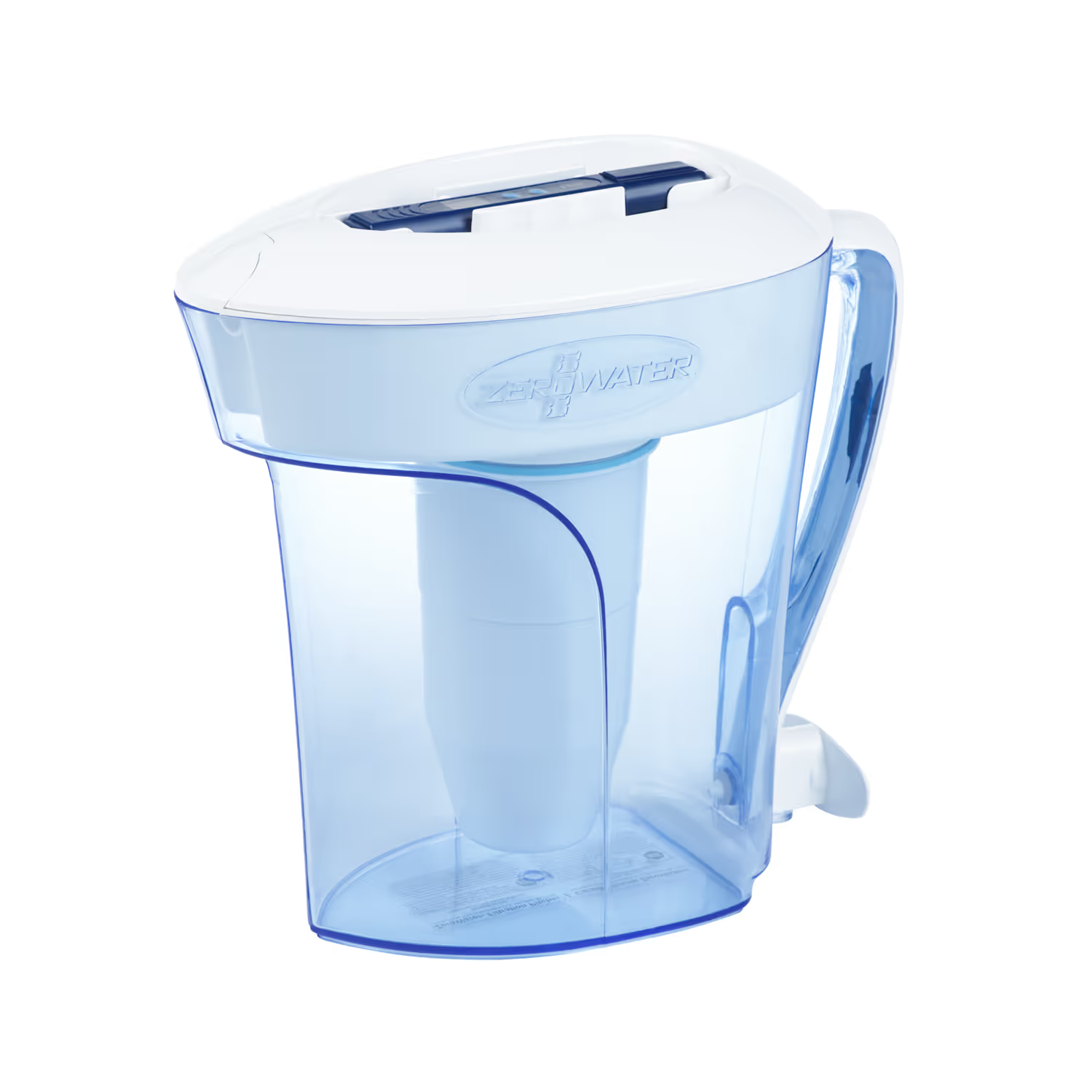
ZeroWater 5-Stage Filter Pitcher
If you rent, travel, or just want to start filtering lead this week, a certified pitcher is the least you can buy and still verify. The ZeroWater filter family is listed to NSF/ANSI 53 for lead, and the included meter takes the guesswork out of when to change it. (ZeroWater)
Why it scores 7.6i
Each sub-score is our assessment, weighted into the overall. It reflects published specifications, certification listings and warranty terms — not systems we ran ourselves. How we score
- Performance7/10
- Certified reduction of lead, hexavalent chromium, mercury and PFOA/PFOS is more than the pitcher format usually manages. It holds a few cups, filters slowly, and cannot touch arsenic, nitrate or fluoride, so it screens rather than solves. Source ↗
- Value8/10
- About $40 is the cheapest certified entry to filtered drinking water anywhere on this site. The short cartridge life pulls the other way: on hard or high-TDS water the cost per gallon ends up the highest of any pick here. Source ↗
- Ownership7/10
- Nothing to plumb and nothing to drill, and the built-in TDS meter says plainly when the cartridge is spent. On hard water that is often, and refilling a pitcher is a daily job rather than a yearly one. Source ↗
- Trust9/10
- The filter family carries IAPMO certification to NSF/ANSI 42, 53 and 401 — an actual listing, where most pitchers on the shelf rely on "tested to" language instead. Source ↗
Skip the filters marketed for lead but not certified for it
Two kinds of product invite a lead buyer and don’t deliver. Standard pitchers and faucet filters sold on taste often carry only NSF/ANSI 42, which is chlorine and odor, not lead. And a wave of stainless-steel and “premium” filters advertise “up to 99% lead” on the strength of their own testing, with no NSF 53 listing behind the claim.
Skip them because the certification is the entire point when the contaminant is lead. A $30 PUR or Brita gives you a claim you can verify in NSF’s database; an uncertified filter gives you a nicer housing and a marketing number. If a product doesn’t appear in NSF’s certified-products database under standard 53 or 58 for lead, treat it as a taste filter, whatever the box says.
Which format fits your situation
All four picks are certified for lead. They differ in what else they remove, how much work they are, and what they cost to run.
| Removes lead | Also removes | Install | Rough cost | Best for | |
|---|---|---|---|---|---|
| iSpring RCC7 (RO) | Yes (NSF 58) | Arsenic, fluoride, nitrate, TDS | Under-sink, drilled faucet + drain | ~$230 + filters | The most thorough fix |
| Aquasana Claryum (under-sink carbon) | Yes (NSF 53) | Chlorine, PFAS, taste | Under-sink, own faucet | ~$200 + cartridges | High flow, keep minerals |
| PUR PLUS (faucet mount) | Yes (NSF 53) | Chlorine, taste | Tool-free, clamps on | ~$25 to $35 + cartridges | Renters, one tap, no plumbing |
| ZeroWater (pitcher) | Yes (NSF 53) | Chromium, mercury, PFAS | None | ~$40 + cartridges | Cheapest certified start |
Read it top to bottom by how much you want removed, or bottom to top by how little you want to install. If lead is the only concern, any of the three carbon options handles it. If the report shows more than lead, the RO row is the one that covers everything.
Use the cold tap only (this matters more than the brand)
A filter treats the water. It doesn’t fix the pipe the water came through, and that changes how you use every tap in the house.
Lead gets into tap water from lead service lines, lead solder, and brass fixtures, and it dissolves faster into hot water. So a few habits matter regardless of which filter you buy, straight from EPA guidance:
- Draw drinking and cooking water from the cold tap only. Hot water pulls more lead out of the plumbing. If you need hot water, heat cold water on the stove. (EPA)
- Flush the tap for 30 seconds to a couple of minutes when the water has sat for hours, or after a shower or a load of laundry has already moved water through the pipes.
- Don’t rely on boiling. Boiling doesn’t remove lead, and because water evaporates, it slightly concentrates what’s there. (CDC)
A certified filter plus the cold-tap habit is the combination that actually lowers your exposure. One without the other leaves a gap.
When a lead filter isn’t the whole answer
A point-of-use lead filter is the right tool for lead at the kitchen tap. A few situations call for more.
- Fluoride is the reason you’re filtering. Carbon won’t reduce it, so you need reverse osmosis at that tap. See our fluoride water filter guide.
- PFAS (“forever chemicals”) show up on your report. Some certified carbon and all RO reduce them, but the certification to look for is specific. Start with the PFAS water filter guide.
- You want treatment for the whole house, not just drinking water. Lead is a drinking-water problem, so whole-house carbon rarely certifies for it, but it handles chlorine and taste everywhere. See the whole-house carbon filter guide, and treat lead at the tap with one of the picks above.
- You’re comparing every drinking-water format, from pitcher to RO, before deciding. Our best drinking water filtration system guide lays them side by side.
Frequently asked questions
What kind of water filter removes lead?
A carbon filter certified to NSF/ANSI 53 for lead, or a reverse osmosis system certified to NSF/ANSI 58. Both are tested and listed publicly. A filter that only cleans up taste and chlorine (NSF/ANSI 42) does not remove lead, no matter what the box implies.
Do Brita or PUR filters remove lead?
Only the models certified for it. The PUR PLUS faucet mount and Brita Elite are certified under NSF/ANSI 53 to reduce lead. A basic Brita or PUR pitcher sold on taste is often certified only to NSF/ANSI 42, which is chlorine and odor, not lead. Check the specific model in NSF’s database before assuming.
Does reverse osmosis remove lead?
Yes, and more of it than anything else. A certified RO system reduces up to about 99% of lead, and the EPA puts it as high as 99.1%. RO also removes arsenic, fluoride, and nitrate, which carbon can’t touch.
What’s the difference between a filter certified to remove lead and one marketed for it?
A certified filter has been tested by an accredited lab, listed in NSF’s public database under standard 53 or 58, and is re-inspected yearly. A marketed one says “reduces up to 99% of lead” on the strength of its own testing, with no listing you can look up. Only the first gives you independent proof.
Does NSF/ANSI 372 mean a filter removes lead?
No. NSF/ANSI 372 certifies that the filter’s own parts are lead-free, so the device itself adds no lead. It says nothing about removing lead from your water. For removal, look for NSF/ANSI 53 or 58.
Is a point-of-use filter enough, or do I need a whole-house system for lead?
For lead, point-of-use is usually the better tool. Lead matters most in the water you drink and cook with, and whole-house carbon filters rarely certify for lead. A filter certified to NSF/ANSI 53 or 58 at the kitchen tap treats the water that counts.
Why do I have to use cold water even with a filter?
Because hot water dissolves more lead from pipes and fixtures before it ever reaches the filter. Drawing from the cold tap for drinking and cooking keeps the incoming lead lower, and your filter does the rest. Boiling doesn’t help, since it can’t remove lead and slightly concentrates it.
How do I know if I even have lead in my water?
Test it. Home lead levels depend on your pipes, so a neighbor’s result won’t tell you yours. A certified lab test or a state-approved test kit gives you a number, and public water systems publish an annual report. If lead shows up, one of the certified filters above is the fix at the tap.
Comparing pitcher, faucet, under-sink, and RO for drinking water in general? See best drinking water filtration system.
Ready to commit to reverse osmosis? Our under-sink reverse osmosis guide covers tank versus tankless and names certified picks.
Want whole-house treatment for chlorine and taste, with lead handled at the tap? Start with the whole-house carbon filter guide.
How we researched this
We built this guide from the NSF/ANSI standards, NSF’s certified-products database, EPA and CDC guidance on lead in drinking water, and the manufacturer certification listings for each product named (iSpring, PUR, Aquasana, ZeroWater).
We don’t run these filters ourselves yet, so we don’t claim first-hand testing. Removal percentages and certifications come from the standards bodies and the makers’ published listings, and every figure here is attributed to its source.
Certifications and prices change, and lead removal in particular has tightened its pass mark recently, so treat every figure as approximate and confirm the current NSF/ANSI listing on the exact model before you buy.
When we name a merchant we may earn a commission if you buy through a link here, at no cost to you.
Sources
- NSF — Certified products database (verify a lead certification)
- NSF — Stricter lead-reduction certification requirements (150 ppb challenge, 5 ppb pass)
- EPA — Basic information about lead in drinking water
- CDC — Sources of lead: water
- iSpring — RCC7 5-stage RO (NSF/ANSI 58, WQA Gold Seal)
- PUR — PLUS faucet filtration system (NSF/WQA, NSF/ANSI 42 & 53)
- Aquasana — Claryum 3-stage under-sink (NSF/ANSI 42, 53, 401)
- ZeroWater — Certifications and FAQ (NSF/ANSI 53 lead)