Best faucet water filter: which ones are actually certified for lead?
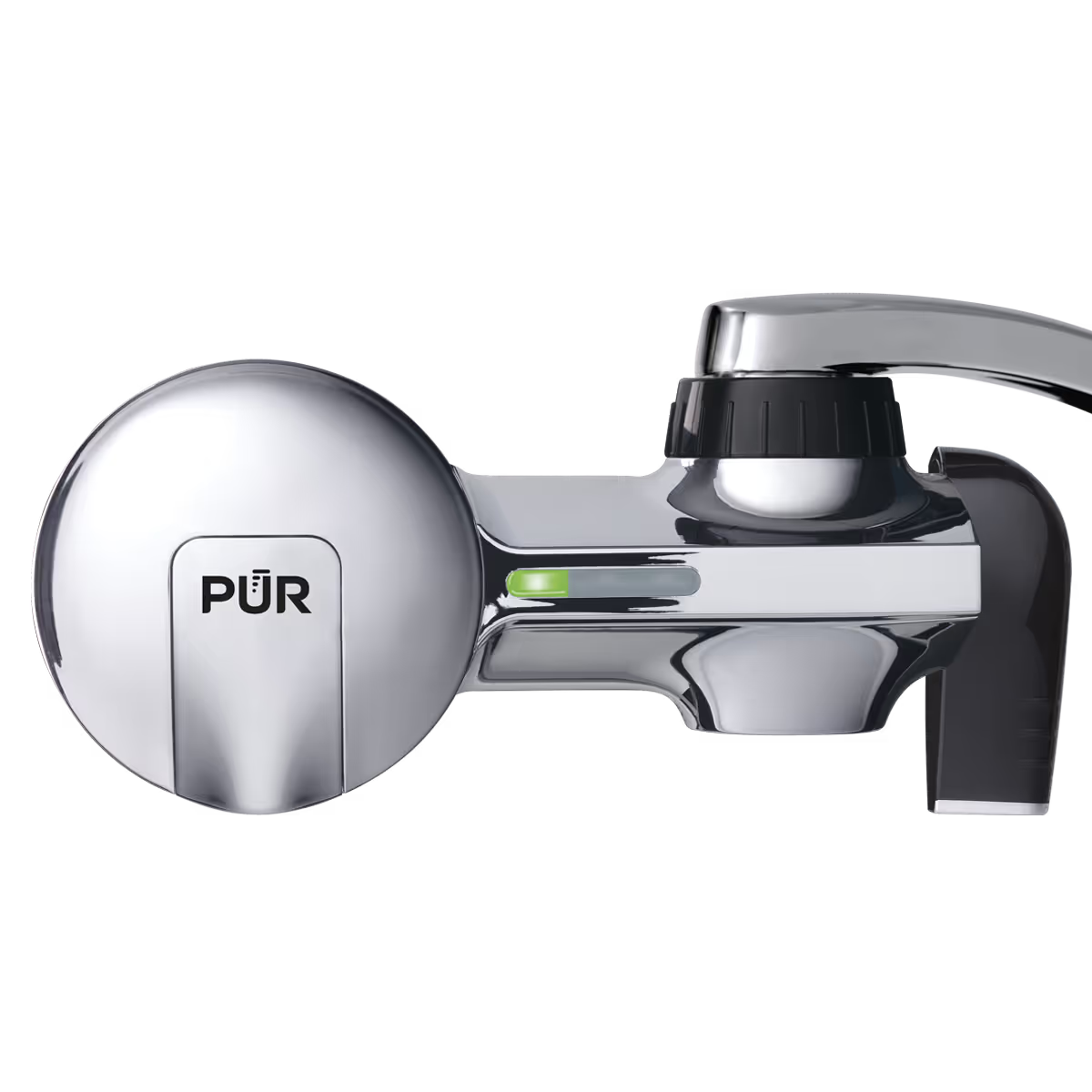
- Certified by NSF and WQA to reduce lead and chlorine under NSF/ANSI 42 and 53.
- Costs about $25 to $35 for the unit, with a change-light that tracks the cartridge.
- Cartridge is rated for 100 gallons, roughly three months for an average household.
- Reduces dozens of substances beyond lead and chlorine, per its NSF listing.
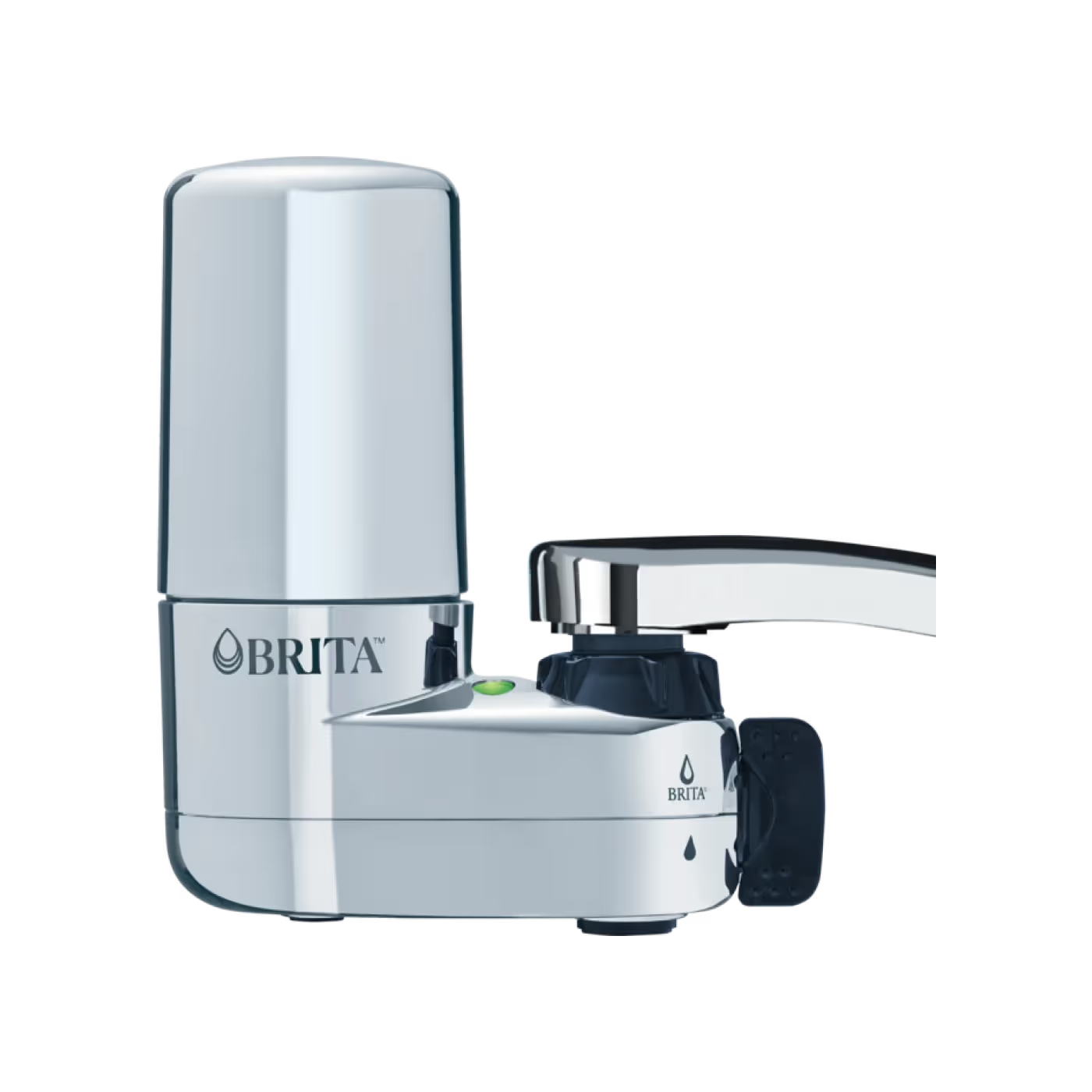
- Certified by NSF and WQA under NSF/ANSI 53 to reduce 99% of lead.
- Also certified to reduce chlorine, benzene, and asbestos.
- Cartridge is rated for 100 gallons, about four months of typical use.
- Lists for about $32 and installs tool-free onto a standard faucet.
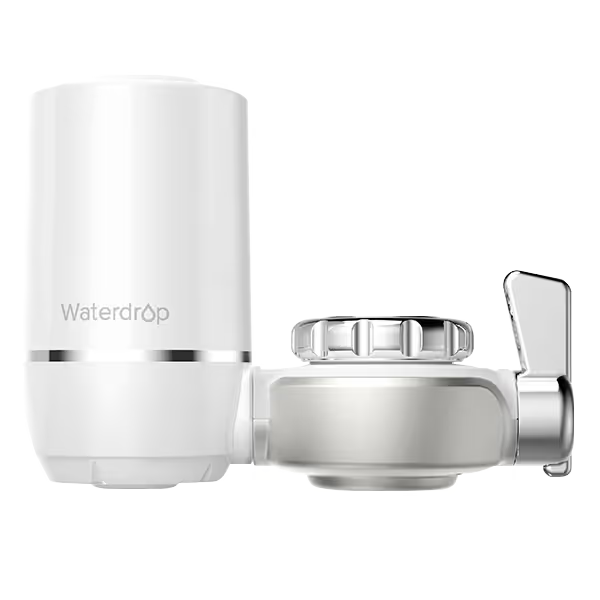
- Certified to NSF/ANSI 42 for chlorine reduction and NSF/ANSI 372 for lead-free materials.
- Cartridge lasts 320 gallons, more than three times the PUR or Brita cartridge.
- Costs about $30 for the unit, the cheapest per gallon of the three picks.
- Holds no NSF 53 lead certification, so it’s a chlorine-and-taste filter only.
A faucet water filter is the cheapest way to get filtered drinking water without touching your plumbing.
It clamps onto your faucet spout in a couple of minutes, and a little lever switches between filtered and normal water.
Two things decide which one to buy, and most guides skip both.
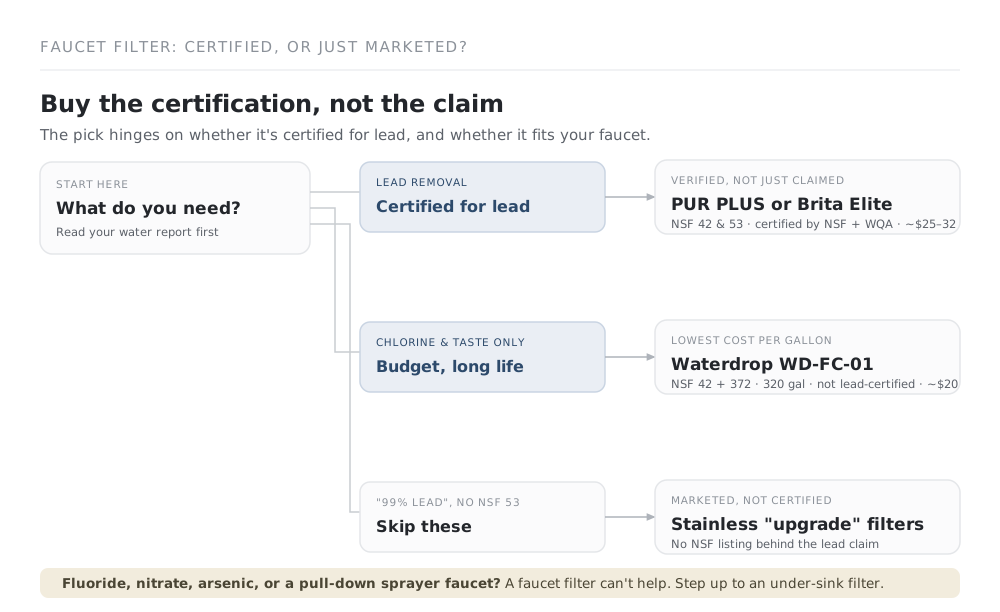
First, is it actually certified for lead, or just marketed for it? Both are common, and only one protects you.
Second, will it even fit your faucet? A whole class of faucets won’t take one at all.
Get those two right and the rest is detail. This guide covers both, then names a certified pick for each kind of buyer.
First, will it even fit your faucet?
This is the return nobody warns you about, so check it before you shop.
A faucet filter screws onto the threads where your aerator sits, at the tip of the spout. That works on a standard kitchen or bathroom faucet.
It does not fit these:
- Pull-out or pull-down sprayer faucets, the kind where the head detaches on a hose. There’s nowhere to mount the filter.
- Spray-style or handheld faucets for the same reason.
- Touchless or sensor faucets, which have no standard thread.
To check yours, look at the tip of the spout. If you can unscrew the aerator (the small mesh piece), a faucet filter will likely thread on, sometimes with an included adapter. (PUR)
Most US kitchen faucets use one of two standard aerator threads: 15/16 inch on the outside, or 55/64 inch on the inside. Faucet filters ship with adapters for both, so a plain threaded spout almost always works. (Waterdrop)
What the adapters can’t save is a faucet with no exposed thread at all, which is why the sprayer and touchless styles above are out.
If your faucet is a pull-down sprayer, stop here. Your drinking-water fix is an under-sink filter with its own small faucet, covered below.
What a faucet filter can and can’t remove
Every faucet filter uses activated carbon, and carbon has hard limits.
It’s good at chlorine, taste, and odor. A certified carbon block also reduces lead and some other health contaminants.
It does nothing for dissolved contaminants like fluoride, nitrate, arsenic, or high TDS. Those pass straight through carbon and need reverse osmosis. (CDC)
| Contaminant | Faucet carbon filter |
|---|---|
| Chlorine, taste, odor | Yes (NSF 42) |
| Lead | Only if certified to NSF 53 |
| Cysts, some VOCs | Only if certified to NSF 53 |
| Fluoride | No |
| Nitrate | No |
| Arsenic | No |
| High TDS / dissolved salts | No |
So the format only makes sense for city water, or for a well whose only drinking-water issue is taste. If your test flags a dissolved contaminant, skip to when a faucet filter is the wrong tool.
Certified for lead, or just marketed for it?
Here’s the split that separates a real lead filter from a hopeful one.
A product certified to NSF/ANSI 53 for lead has been tested by an accredited body, listed in a public database, and is audited to stay there. You can look it up. (NSF)
A product that says it “reduces up to 99% of lead” with no NSF 53 listing is quoting its own lab. That may be honest, but you have no independent proof and no ongoing audit.
Two badges get used to blur the line.
NSF/ANSI 42 covers chlorine, taste, and odor only. It is an aesthetic claim, and a filter can carry it while doing nothing for lead.
NSF/ANSI 372 certifies that the filter’s own parts are lead-free. That’s about the hardware, not about removing lead from your water. A 372 badge is not a lead-removal claim.
The Waterdrop WD-FC-01 is the clearest example. It carries NSF 42 and NSF 372, and it markets lead removal, but it holds no NSF 53 lead certification. (Waterdrop) The stainless-steel filters from brands like Engdenton go further and carry no NSF listing at all.
The rule is simple. If you’re buying a faucet filter because of lead, buy one certified to NSF 53 for lead, and confirm the model in NSF’s database before you check out.
The picks
PUR PLUS Faucet Mount
The PUR PLUS is certified by both NSF and WQA to reduce lead and chlorine, along with dozens of other substances. PUR is the faucet brand that leans hardest on carrying both certifications, and its listings cover NSF/ANSI 42 and 53. (PUR)
It runs about $25 to $35 for the unit, with a change-light that tracks the cartridge. The filter is rated for 100 gallons, roughly three months for an average household.
Why it scores 8.6i
Each sub-score is our assessment, weighted into the overall. It reflects published specifications, certification listings and warranty terms — not systems we ran ourselves. How we score
- Performance9/10
- Certified for lead and chlorine along with dozens of other substances, which is the fullest job any filter clamped to a spout can do. Short of a 10 because the cartridge holds only 100 gallons and the flow drops noticeably as it fills. Source ↗
- Value9/10
- Twenty-five to thirty-five dollars for a filter carrying both an NSF and a WQA listing, with a change-light that tracks the cartridge so the running cost is never a guess. Source ↗
- Ownership7/10
- It goes on tool-free in a couple of minutes. Then 100 gallons is roughly three months, many owners swap it sooner than the light says, and it will not fit a pull-down sprayer at all. Source ↗
- Trust9/10
- Certified by both NSF and WQA under NSF/ANSI 42 and 53. PUR leans harder on carrying both marks than any other faucet brand, so the lead claim is one you can look up rather than take on faith. Source ↗
Brita Elite Faucet System
The Brita faucet system is certified to reduce 99% of lead, tested and certified by NSF and WQA under NSF/ANSI 53, plus chlorine, benzene, and asbestos. It lists for about $32. (Brita, ABC12)
Its cartridge is also rated for 100 gallons, and Brita rates it for about four months of typical use. Installation is tool-free onto a standard faucet.
Why it scores 7.8i
Each sub-score is our assessment, weighted into the overall. It reflects published specifications, certification listings and warranty terms — not systems we ran ourselves. How we score
- Performance7/10
- Certified to cut 99% of lead, plus chlorine, benzene and asbestos. It filters slowly, and hard water shortens the cartridge below its 100-gallon rating — a limit Brita states itself rather than one you discover later. Source ↗
- Value8/10
- Around $32 for an NSF/ANSI 53 lead certification, from a brand stocked in every supermarket, so a replacement cartridge is never a special order. Source ↗
- Ownership8/10
- Tool-free onto a standard faucet, and Brita rates the cartridge for about four months of typical use — the longest stated interval among the certified faucet picks. Source ↗
- Trust9/10
- Tested and certified by both NSF and WQA under NSF/ANSI 53 for lead, which is the exact standard that matters for the contaminant most people buy a faucet filter to handle. Source ↗
Waterdrop WD-FC-01
The Waterdrop WD-FC-01 costs about $30 and its cartridge lasts 320 gallons, more than three times the PUR or Brita, which makes it the cheapest option per gallon here. It’s certified to NSF/ANSI 42 for chlorine reduction and NSF/ANSI 372 for lead-free materials. (Waterdrop)
Why it scores 8.0i
Each sub-score is our assessment, weighted into the overall. It reflects published specifications, certification listings and warranty terms — not systems we ran ourselves. How we score
- Performance8/10
- It handles chlorine, taste and smell well, and keeps doing it for 320 gallons. Judged against that job it is strong; judged against lead it has nothing to offer, because there is no NSF/ANSI 53 listing behind it. Source ↗
- Value9/10
- About $30, and the cartridge lasts more than three times the certified lead filters, which makes this comfortably the cheapest filtered water per gallon of any faucet pick here. Source ↗
- Ownership9/10
- Mounts on a standard faucet with a diverter, then runs close to a year between cartridges instead of a season — the lightest upkeep in the format. Source ↗
- Trust5/10
- NSF/ANSI 42 covers chlorine and 372 covers lead-free materials in the housing. Both are real listings, and neither one certifies lead removal, which is a distinction the marketing lets buyers blur. Source ↗
Skip the stainless “upgrade” filters that only market lead removal
Stainless-steel faucet filters from brands like Engdenton and Wingsol advertise “up to 99% lead” and a long list of contaminants, on the strength of their own testing. None of them appear in NSF’s certified-products database. (NSF)
Skip it because the durable metal housing is real, but the lead claim has no third-party certification behind it. If you want the contaminant removal, a $30 PUR or Brita gives you a claim you can verify; the metal one gives you a nicer-looking housing and a marketing number.
When a faucet filter is the wrong tool
A faucet filter is point-of-use, and a small one. It’s right for chlorine, taste, and certified lead removal at one tap, and wrong for a few common jobs.
- Fluoride, nitrate, or arsenic on your test needs reverse osmosis, not carbon. See our under-sink water filter guide to choose carbon or reverse osmosis by your report.
- A pull-down or sprayer faucet can’t take a mounted filter, so an under-sink unit with its own faucet is the fix.
- Drinking a lot of filtered water burns through 100-gallon cartridges fast; an under-sink filter holds a cartridge many times larger and costs far less per gallon.
- A problem all over the house, like scale or shower chlorine, needs whole-house treatment. Start with the home water filtration guide.
If any of those fits, a faucet filter is a stopgap. The next step up is under-sink.
What it really costs per gallon
Faucet filters win on the sticker and lose on the refill. The cartridges are small and need changing every few months, so the price per gallon is high.
Here’s the rough math for the three picks, using each maker’s rated cartridge life and typical replacement price.
| PUR PLUS | Brita Elite | Waterdrop WD-FC-01 | |
|---|---|---|---|
| Unit price | ~$25–35 | ~$32 | ~$30 |
| Replacement cartridge | ~$20 | ~$18 | ~$20 |
| Cartridge life | 100 gal | 100 gal | 320 gal |
| Cost per gallon | ~$0.20 | ~$0.18 | ~$0.06 |
| Certified for lead (NSF 53) | Yes | Yes | No |
The two lead-certified picks run about $0.18 to $0.20 for every gallon of filtered water, and their cartridges last only two to three months of steady use.
The Waterdrop is far cheaper per gallon because its cartridge lasts longer, but it buys you chlorine and taste, not lead.
For comparison, a certified under-sink carbon filter holds a cartridge rated for 800 gallons or more, which drops the cost per gallon well below any faucet filter. That’s why a heavy-drinking household usually graduates to under-sink once the refill bills add up.
Frequently asked questions
PUR or Brita faucet filter, which is better?
Both are certified by NSF and WQA to reduce lead under NSF/ANSI 53, so on the thing that matters most they’re a tie. PUR reduces the longer list of substances and has a change indicator; Brita is a touch cheaper and rated for slightly longer between changes. Pick on price and which one fits your faucet.
Do faucet filters really remove lead?
Certified ones do. A filter certified to NSF/ANSI 53 for lead, like the PUR PLUS or Brita, has independent proof it reduces lead. A filter that only markets “up to 99% lead” without an NSF 53 listing is quoting its own lab, so treat that claim with caution.
Will a faucet filter fit my pull-down or sprayer faucet?
No. Faucet filters thread onto a standard aerator at the spout tip, and pull-out, pull-down, spray, and touchless faucets have no such thread. If that’s your faucet, an under-sink filter with its own small faucet is the way to go.
Does a faucet filter remove fluoride?
No. Carbon doesn’t reduce fluoride, no matter the brand or the marketing. Fluoride needs reverse osmosis, which means an under-sink reverse osmosis system rather than a faucet-mounted one.
How long do faucet filter cartridges actually last?
Most certified faucet cartridges are rated for 100 gallons, roughly two to four months. Hard water and heavy use shorten that, and flow usually slows before the change light trips, so many people replace on feel.
Why is my faucet filter leaking or popping off?
The threaded connection is the weak point, especially under higher water pressure. Reseat it with the included washer or adapter and hand-tighten firmly. A cracked diverter valve, the lever that switches filtered and unfiltered, is the other common failure and usually means a replacement.
Faucet filter, pitcher, or under-sink, which should I get?
A water filter pitcher is cheapest and needs no faucet fit, but you refill it by hand. A faucet filter gives filtered water on demand at low cost, if your faucet takes one. An under-sink filter costs more up front but filters more, hides away, and costs far less per gallon over time.
Are the stainless-steel faucet filters better?
The metal housing is genuinely more durable. But brands like Engdenton and Wingsol carry no NSF certification behind their contaminant claims. For verified lead removal, a certified plastic PUR or Brita beats an uncertified metal one.
Not sure whether carbon is even enough for your water? Our under-sink water filter guide sorts you into carbon or reverse osmosis by your test.
Comparing every drinking-water format, from pitcher to reverse osmosis? See best drinking water filtration system.
Ready for reverse osmosis? Our under-sink reverse osmosis guide covers tank versus tankless and names certified picks.
How we researched this
We built this guide from the NSF/ANSI standards, NSF’s certified-products database, CDC and EPA guidance on home water treatment, and the manufacturer spec sheets and certification listings for each product named (PUR, Brita, Waterdrop).
We don’t run these filters ourselves yet, so we don’t claim first-hand testing. Flow-rate and taste findings we mention come from independent testers, and every number here is attributed to its source.
Prices, cartridge lives, and certifications change, so treat every figure as approximate and confirm the current spec and NSF/ANSI listing on the model before you buy.
When we name a merchant we may earn a commission if you buy through a link here, at no cost to you.
Sources
- NSF — Certified products database (verify a lead certification)
- NSF — Standards for water treatment systems (42, 53, 401, 372)
- CDC — Choosing home water filters & other treatment systems
- PUR — PLUS faucet filtration system (NSF/WQA certified)
- Brita — Faucet water filter system (NSF 53 lead certified)
- Waterdrop — WD-FC-01 faucet filter (NSF 42 + 372)