Best water filter pitchers: which water pitcher is certified for lead?
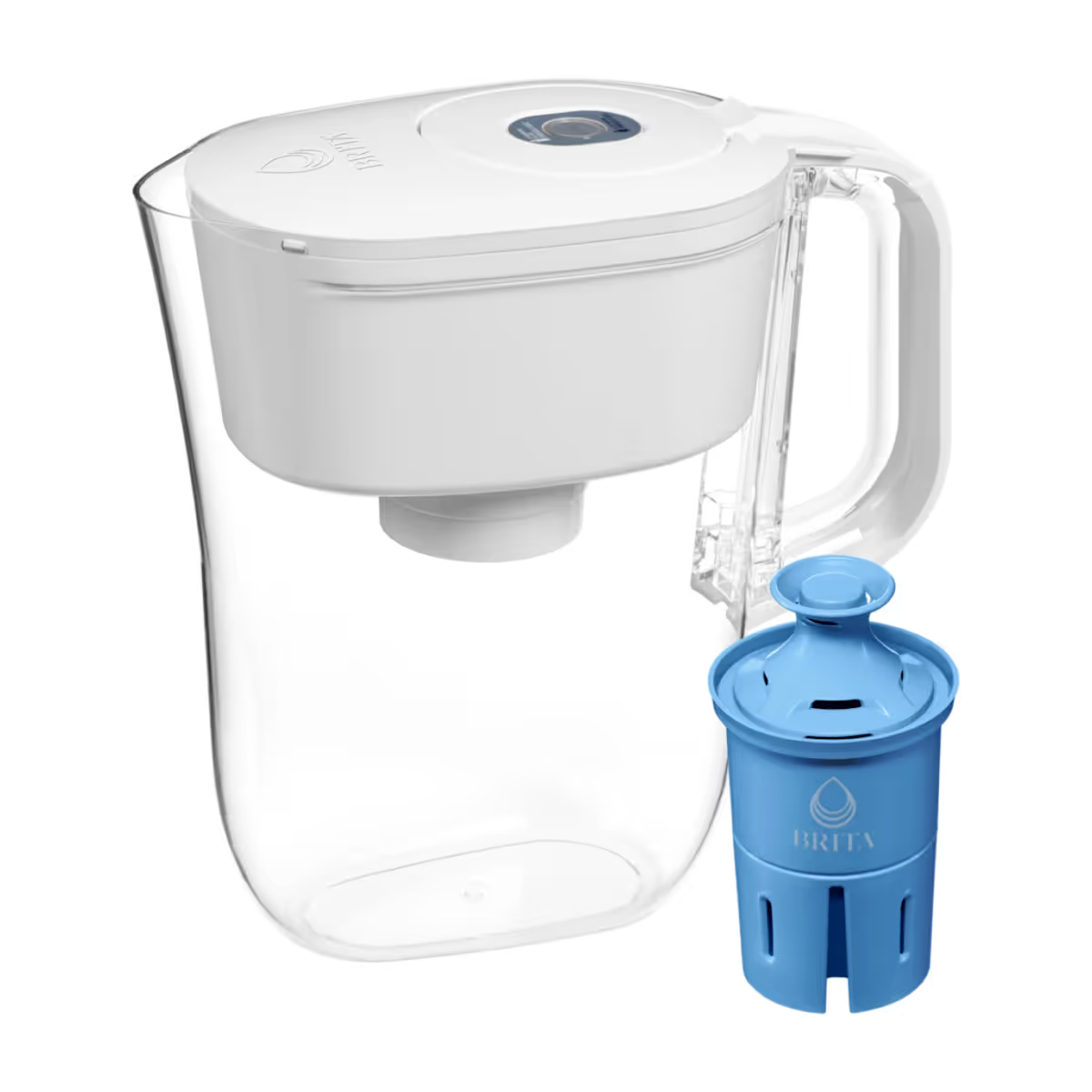
- Certified by NSF and WQA to NSF/ANSI 42, 53, and 401 to reduce 99% of lead, plus microplastics and about thirty other substances.
- The Elite (blue) filter is rated for 120 gallons or six months, three times the standard Brita filter.
- Works out to roughly $0.14 per gallon, the cheapest certified water of any pitcher here.
- Fits the common Brita pitchers you already see in stores, so replacement filters are never a special order.
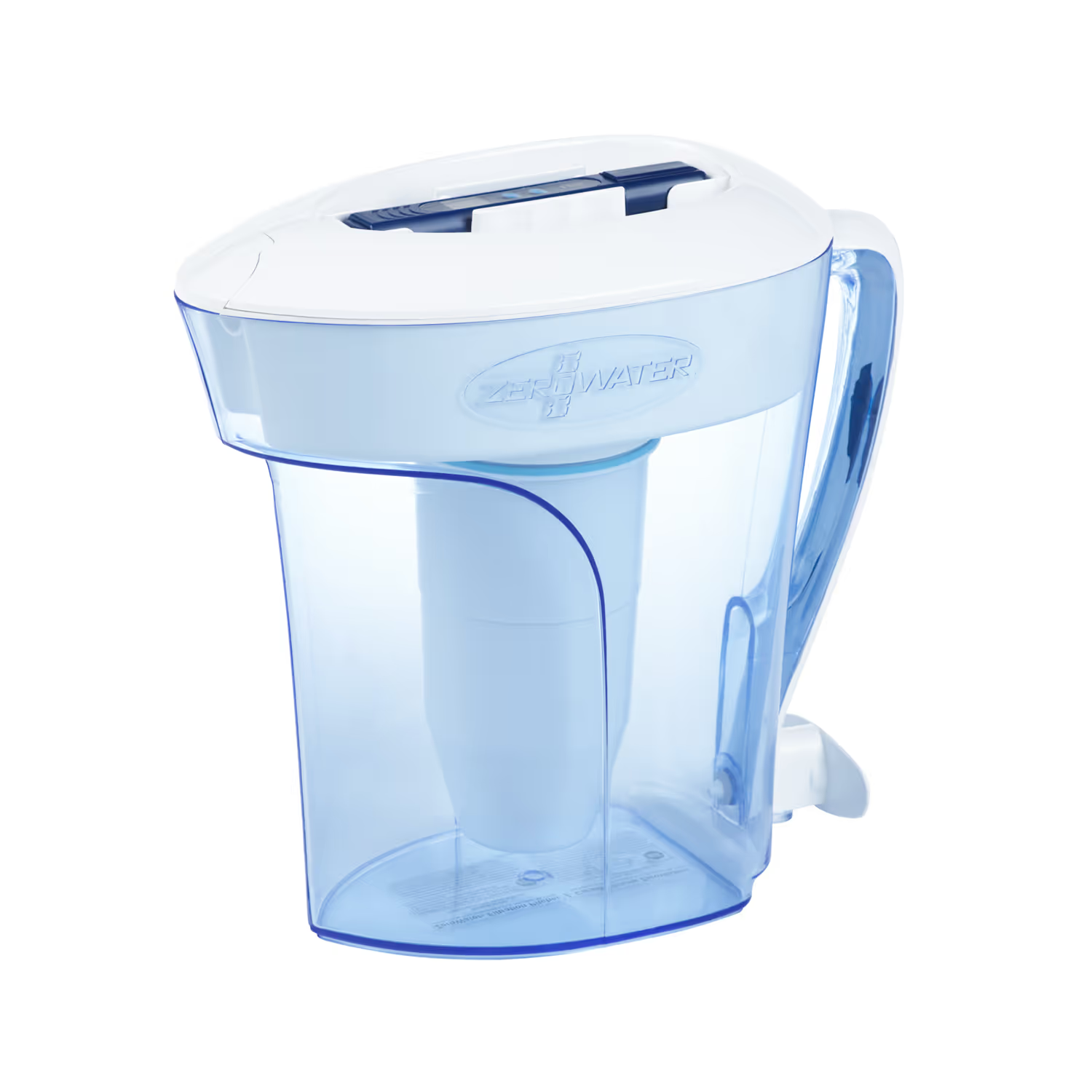
- The 5-stage filter is certified by IAPMO to NSF/ANSI 42 and 53 for lead, chromium, mercury, and PFOA/PFOS.
- Ion-exchange resin drives TDS to about 0 ppm, lower than any carbon-only pitcher.
- Comes with a handheld TDS meter so you can see exactly when the cartridge is spent.
- The only mainstream pitcher certified for both lead and PFAS in one filter.
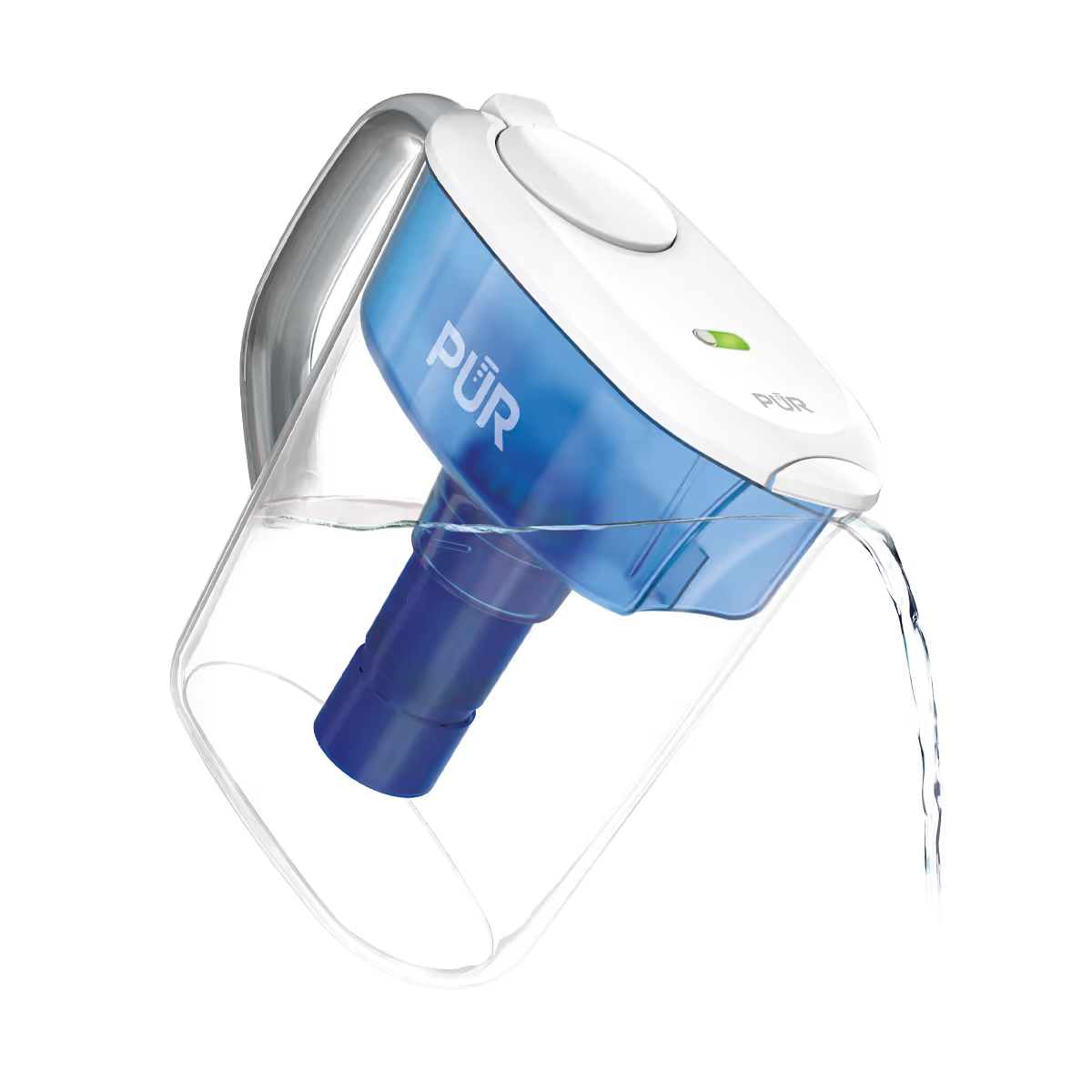
- The PUR Plus filter is WQA-certified to reduce lead and NSF-certified for microplastics, chlorine, and a longer list of metals than most pitchers.
- The pitcher itself is among the cheapest here, often under $30.
- Most models include a filter-change light so you don’t have to track it.
- Reduces mercury, copper, and dozens of other substances beyond lead.
A water filter pitcher is the cheapest way to get filtered drinking water. No plumbing, no install, just fill and pour.
The problem is that most pitchers on the shelf are certified for one thing only: taste.
They take the chlorine smell out of city water. That is worth doing. But it is not the same as removing lead or the “forever chemicals” a lot of people are actually worried about.
So two questions decide which pitcher to buy, and the marketing works hard to blur both.
First, is it certified for the thing you care about, or just marketed for it? Second, once you count the cartridges, what does it really cost?
This guide answers both, draws the line brand by brand, and names a certified pick for each kind of buyer.
The one thing that decides it: certified vs. “tested to”
This is the whole decision, so it goes first.
A pitcher certified to a NSF/ANSI standard has been tested by an accredited body like NSF, WQA, or IAPMO, listed in a public database, and audited to stay there. You can look up the model. (NSF)
A pitcher “tested to NSF/ANSI standards” is quoting a lab result the brand paid for once. That can be honest and the numbers can be real, but no independent body verifies the claim or re-checks it over time.
Both phrases sit next to each other on the box on purpose. Here is how to read them.
- “Certified to NSF/ANSI 53” means an accredited body confirmed the lead or PFAS claim and keeps confirming it. This is the strong one.
- “Tested to NSF standards” or “independently lab-tested” means the brand ran its own test. Trust it as far as you trust the brand, but you cannot verify it in a public listing.
- “NSF/ANSI 372” is a trap. It certifies that the pitcher’s own parts are lead-free. It says nothing about removing lead from your water.
When a claim matters for your health, buy the standard number you can look up, not the adjective.
What a pitcher can and can’t remove
Every pitcher runs your water through activated carbon, usually with an ion-exchange resin. That combination has hard limits.
Carbon is good at chlorine, taste, and odor. A certified carbon-and-resin filter also reduces lead and a handful of other health contaminants.
It does far less for dissolved contaminants like fluoride, arsenic, and nitrate. Those mostly pass through, which is why they need reverse osmosis. (CDC)
| Contaminant | Typical pitcher |
|---|---|
| Chlorine, taste, odor | Yes |
| Lead | Only if certified to NSF/ANSI 53 |
| PFOA / PFOS | Only a few certified or lab-tested models |
| Fluoride | No, except Clearly Filtered / Epic (tested) |
| Arsenic | No, except Clearly Filtered / Epic (tested) |
| Nitrate | No |
| Bacteria | No |
So a pitcher makes sense for city water, or for a well whose only drinking-water complaint is taste or mild lead. If your test flags arsenic, nitrate, or high TDS, skip to when a pitcher is the wrong tool.
Certification at a glance, pitcher by pitcher
This is the table the product listings never show you side by side.
| Pitcher | Certified for lead? | PFAS? | Fluoride / arsenic? | Filter life | Read this as |
|---|---|---|---|---|---|
| ZeroWater 5-stage | Certified (NSF 53) | Certified, PFOA/PFOS only | No | ~15 gal | Best certified lead + PFAS; dies fast |
| Brita Elite | Certified (NSF 53) | No | No | 120 gal | Best certified lead, cheapest to run |
| PUR Plus | Certified (NSF 53 / WQA) | Partial | No | 40 gal | Certified but short-lived |
| Brita Standard | No | No | No | 40 gal | Taste only; the “just a Brita” trap |
| Clearly Filtered | Tested, not certified | Tested | Tested | 100 gal | Broadest claims, priciest, tested not certified |
| Epic Pure / Pure XP | Tested, not certified | Tested | Tested | 100 gal | Fluoride + PFAS on a budget, tested |
ZeroWater, Brita Elite, and PUR Plus are the only three here with a lead certification you can actually verify. Everything else is either taste-only or relies on the company’s own testing.
The picks
Brita Elite Water Filter Pitcher
The thing that makes the Elite the default pick is boring but real: it is certified for lead and it is cheap to keep running. The 120-gallon filter means you buy cartridges half as often as most pitchers, and each one costs about $16. (Brita)
One catch worth stating up front. The blue Elite filter is the one certified for lead. The white Standard filter that ships with many cheaper Brita bundles is not, so check the box.
Why it scores 8.5i
Each sub-score is our assessment, weighted into the overall. It reflects published specifications, certification listings and warranty terms — not systems we ran ourselves. How we score
- Performance8/10
- Certified to cut 99% of lead plus microplastics, chlorine and about thirty other substances, which is as much as a carbon-and-ion pitcher does. It cannot touch fluoride, arsenic or nitrate, so it is a taste-and-lead tool rather than a fix for a bad water report. Source ↗
- Value9/10
- The Elite filter is rated for 120 gallons, three times the Standard, for about sixteen dollars, which works out to roughly fourteen cents a gallon. That is the cheapest certified drinking water of any pitcher on this site. Source ↗
- Ownership8.5/10
- Nothing to plumb, and the six-month cartridge interval is the longest of any certified pitcher here, so it is the one you forget about least often. It still filters slowly and fits a fridge shelf, the usual pitcher limits. Source ↗
- Trust9/10
- Tested and certified by NSF and WQA to NSF/ANSI 42, 53 and 401 for lead and microplastics, an actual listing you can look up, from a brand whose replacement filters sit on every supermarket shelf. Source ↗
ZeroWater 5-Stage Pitcher
ZeroWater earns its huge following honestly: it is the one pitcher certified to pull TDS down to zero, and it carries a real IAPMO lead-and-PFAS certification most pitchers can’t match. (ZeroWater)
The catch is the cartridge. ZeroWater’s filter is certified for just 15 gallons, and on hard or high-TDS water it exhausts far faster than that, sometimes in a week or two. When it is spent the water turns sour or fishy, which is the resin telling you to change it. On a well running 400-plus TDS, that can mean a new cartridge every few gallons.
Why it scores 7.6i
Each sub-score is our assessment, weighted into the overall. It reflects published specifications, certification listings and warranty terms — not systems we ran ourselves. How we score
- Performance7/10
- Certified reduction of lead, hexavalent chromium, mercury and PFOA/PFOS is more than the pitcher format usually manages. It holds a few cups, filters slowly, and cannot touch arsenic, nitrate or fluoride, so it screens rather than solves. Source ↗
- Value8/10
- About $40 is the cheapest certified entry to filtered drinking water anywhere on this site. The short cartridge life pulls the other way: on hard or high-TDS water the cost per gallon ends up the highest of any pick here. Source ↗
- Ownership7/10
- Nothing to plumb and nothing to drill, and the built-in TDS meter says plainly when the cartridge is spent. On hard water that is often, and refilling a pitcher is a daily job rather than a yearly one. Source ↗
- Trust9/10
- The filter family carries IAPMO certification to NSF/ANSI 42, 53 and 401 — an actual listing, where most pitchers on the shelf rely on "tested to" language instead. Source ↗
PUR Plus Water Filter Pitcher
PUR Plus does the same core job as the Brita Elite for a lower upfront price, and it reduces a slightly longer list of substances. (PUR)
Two honest notes. The filter is rated for only 40 gallons, about two months, so the low sticker is offset by buying cartridges more often. And PUR has moved its certified claims around by model over the years, so confirm the exact pitcher’s lead listing in NSF’s database before you rely on it.
Why it scores 7.5i
Each sub-score is our assessment, weighted into the overall. It reflects published specifications, certification listings and warranty terms — not systems we ran ourselves. How we score
- Performance7/10
- WQA-certified to reduce lead and NSF-certified for microplastics, chlorine and a longer list of metals than most pitchers. The catch is the 40-gallon filter: it does the job but you are back at the store every couple of months. Source ↗
- Value8/10
- About eight dollars a filter is fair for a certified lead claim, and the pitcher itself is cheap. The short 40-gallon life pulls the running cost up to roughly a quarter a gallon, more than double the Brita Elite. Source ↗
- Ownership7/10
- Pour-through, nothing to install, with a change light on most models. The two-month cartridge interval is short enough that owners who skip changes lose the certified protection they paid for. Source ↗
- Trust8.5/10
- Lead reduction is WQA-certified and microplastic reduction is NSF-certified, both listings you can verify. Because PUR has changed certified claims by SKU over the years, confirm the exact model against the NSF database before buying it for lead. Source ↗
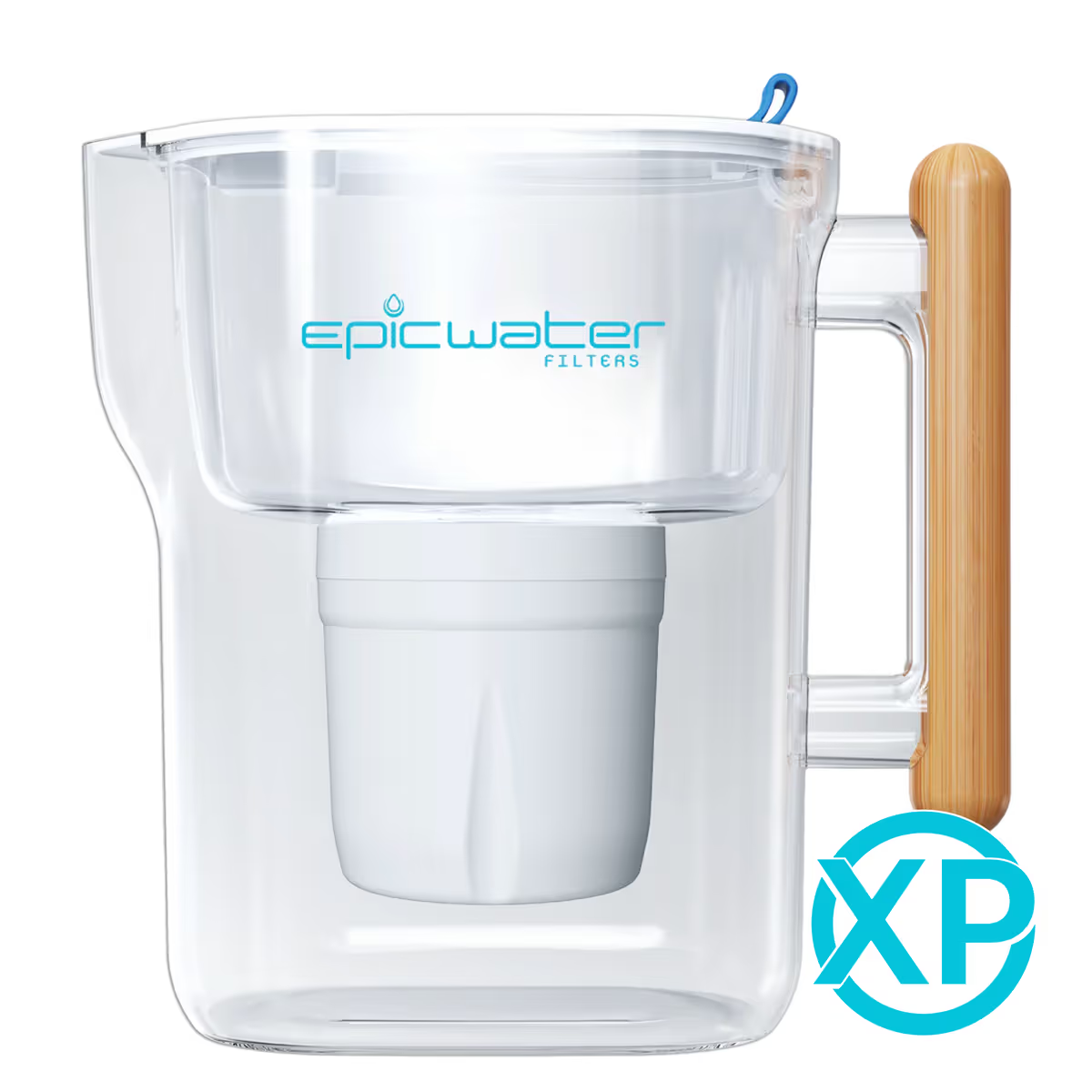
Epic Pure / Pure XP Water Filter Pitcher
Epic Pure (rebranded by the manufacturer as the “Pure XP” pitcher, same product) is the budget option in the fluoride-claiming tier. It doesn’t out-test Clearly Filtered, but it costs less to buy and less to run for a similar bet. (Epic Water Filters)
Skip the basic Brita Standard if you’re buying for lead
The standard white Brita filter, the one in most starter bundles, is certified to NSF/ANSI 42 only. That covers chlorine, taste, and odor, plus a little zinc and mercury.
Skip it because it is not certified for lead and does not meaningfully remove it. If lead is anywhere on your water report, the Standard is the wrong tool. Step up to the blue Brita Elite filter, or a certified ZeroWater or PUR Plus, which cost only a little more and give you a claim you can verify.
What a pitcher really costs per gallon
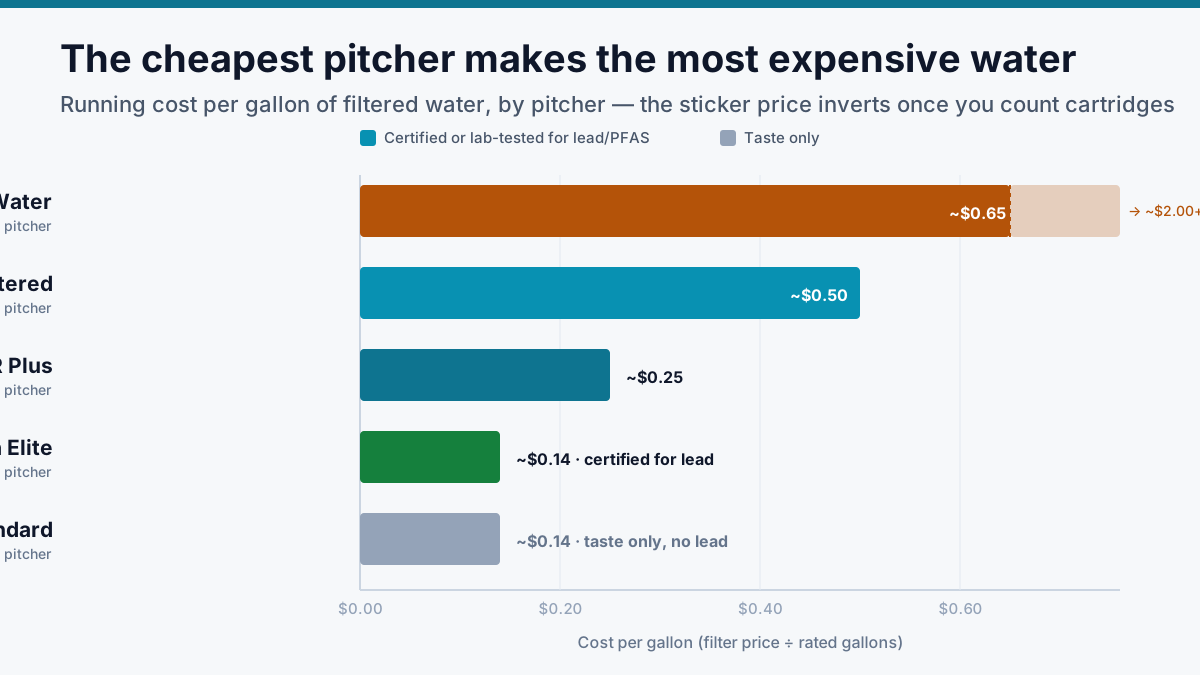
Pitchers win on the sticker and lose on the refill. The cartridges are small, and the cheapest pitcher to buy is often the most expensive water to make.
Here is the rough math, using each maker’s rated filter life and a typical replacement price.
| Pitcher | Replacement filter | Rated gallons | Cost per gallon |
|---|---|---|---|
| Brita Elite | ~$16.50 | 120 | ~$0.14 |
| Brita Standard | ~$5.50 | 40 | ~$0.14 (no lead) |
| PUR Plus | ~$8 | 40 | ~$0.20-0.27 |
| Epic Pure / Pure XP | ~$45 | 100 | ~$0.45 |
| Clearly Filtered | ~$49.50 | 100 | ~$0.50 |
| ZeroWater | ~$11 | 15 | ~$0.65-0.75 |
The number that surprises people is ZeroWater’s. Its filter is certified for only 15 gallons, so even at a moderate TDS the water costs more per gallon than a Brita Elite that removes lead just as verifiably.
And that is the good case. On hard or high-TDS well water, a ZeroWater cartridge can die after five gallons, which pushes the real cost past $2.00 a gallon. The pitcher that looks cheapest on the shelf ends up the priciest to live with, and it inverts hardest for exactly the hard-water households this site serves.
The Brita Elite sits at the other end: a bigger cartridge rated for 120 gallons drops it to about $0.14 a gallon while still being certified for lead. That is the quiet reason it is the overall pick.
Pitcher vs. countertop gravity filter
If you searched for a “gravity water filter,” you have probably seen tall stainless countertop units like Berkey. They work by the same idea as a pitcher, water falling through a filter by gravity, but they are a different tool, so it is worth a quick sort.
- A pitcher holds a few cups, uses a cartridge rated for 15 to 150 gallons, and mostly handles taste plus, on certified models, lead or PFAS. It is cheap, fits a fridge shelf, and you replace the filter every few months.
- A countertop gravity filter holds one and a half to six gallons, uses elements rated in the thousands of gallons, and claims a broader contaminant list with no plumbing. It costs more up front, takes counter space, and is slower to fill.
A pitcher wins for one or two people who mainly want cleaner-tasting, lower-lead city water in the fridge. A countertop gravity system wins for a larger household, off-grid or emergency use, or anyone who wants one unit that lasts years.
If that is you, read our Berkey and gravity filter guide for the full countertop comparison, including how its certifications actually stack up.
When a pitcher is the wrong tool
A pitcher is a point-of-use filter, and a small one. It is right for taste and certified lead at one spot, and wrong for a few common jobs.
- Fluoride, arsenic, or nitrate on your test needs reverse osmosis, not carbon. Only Clearly Filtered and Epic even claim fluoride and arsenic in a pitcher, and those claims are tested, not certified.
- Heavy or verified PFAS or lead deserves a certified RO system rather than a pitcher’s small cartridge. See our under-sink water filter guide to choose carbon or reverse osmosis by your report.
- Drinking a lot of filtered water burns through small cartridges fast; an under-sink filter holds a cartridge many times larger and costs far less per gallon.
- A problem you can taste at every tap, or scale and smell around the house, is a whole-house job, not a pitcher one.
If any of those fits, a pitcher is a stopgap. The next step up is a filter plumbed in at the sink.
Frequently asked questions
Do water filter pitchers remove lead?
Only the ones certified to NSF/ANSI 53 for lead do, with proof you can verify: the ZeroWater 5-stage, the Brita Elite (the blue filter), and the PUR Plus. The standard white Brita filter is certified for taste only and does not meaningfully remove lead.
Do Brita or ZeroWater filters remove PFAS?
ZeroWater is certified to reduce PFOA and PFOS, two of the most common “forever chemicals.” Most standard pitchers, including the basic Brita, remove little to none. Clearly Filtered and Epic publish strong PFAS numbers, but from their own testing rather than a certification.
Why does my ZeroWater filter die so fast and taste like fish?
The ion-exchange resin that drives TDS to zero also exhausts quickly, and much faster on hard or high-TDS water. The sour or fishy taste is the resin signalling it is spent. On a well running high TDS, a cartridge can last only a few gallons.
Is ZeroWater’s 000 reading actually pure water?
No. TDS measures dissolved solids, which is mostly a taste and mineral gauge. A 000 reading says nothing about bacteria and is not a safety score.
Which is better, Brita or ZeroWater?
ZeroWater gives you the lowest TDS and a certified lead-plus-PFAS filter, but it costs the most to run. The Brita Elite is certified for lead just as verifiably and costs a fraction as much per gallon. For most homes the Brita Elite is the better everyday buy; ZeroWater is for people who specifically want the 000 reading.
Do pitcher filters remove fluoride or arsenic?
Almost none do. Carbon and standard resin leave both largely in the water. Only Clearly Filtered and Epic claim to remove them, and those claims are independently tested, not NSF-certified.
What’s the difference between “NSF certified” and “tested to NSF standards”?
Certified means an accredited body verified the claim, listed it publicly, and audits it over time. Tested-to means the brand commissioned a one-time lab test and reports the result itself. Both can be legitimate; only one is independently accountable.
Do I need a pitcher or a reverse osmosis system?
A pitcher is right for taste and light, certified lead removal on city water. If your test shows arsenic, nitrate, heavy PFAS, or serious lead, you need reverse osmosis, which means an under-sink RO system rather than a pitcher.
Not sure whether a pitcher is even enough for your water? Our under-sink water filter guide sorts you into carbon or reverse osmosis by your test.
Comparing every drinking-water format, from pitcher to reverse osmosis? See best drinking water filtration system.
Want filtered water on demand without refilling a pitcher? A faucet-mounted filter is the next cheapest step up.
How we researched this
We built this guide from the NSF/ANSI standards, NSF’s certified-products database, CDC guidance on home water treatment, and the manufacturer spec sheets and certification listings for each pitcher named (ZeroWater, Brita, PUR, Clearly Filtered, Epic).
We don’t run these pitchers ourselves yet, so we don’t claim first-hand testing. Cartridge-life and taste findings we mention come from manufacturer ratings and user reports, and every number here is attributed to its source.
Prices, cartridge lives, and certifications change, and certified claims in particular have moved by model. Treat every figure as approximate and confirm the current spec and NSF/ANSI listing on the exact model before you buy.
When we name a merchant we may earn a commission if you buy through a link here, at no cost to you.
Sources
- NSF: Certified products database (verify a lead or PFAS certification)
- NSF: Standards for water treatment systems (42, 53, 401, 372)
- CDC: Choosing home water filters & other treatment systems
- ZeroWater: Filtration FAQs (IAPMO NSF 42/53, certified capacity)
- Brita: Elite replacement filters (NSF 42/53/401, 120 gal / 6 mo)
- PUR: PUR Plus pitcher replacement filter (WQA lead certification)
- Epic Water Filters: Pure XP pitcher (NSF/ANSI 42; fluoride/lead/PFAS reduction, company-tested)