Berkey water filter review: read this before you buy
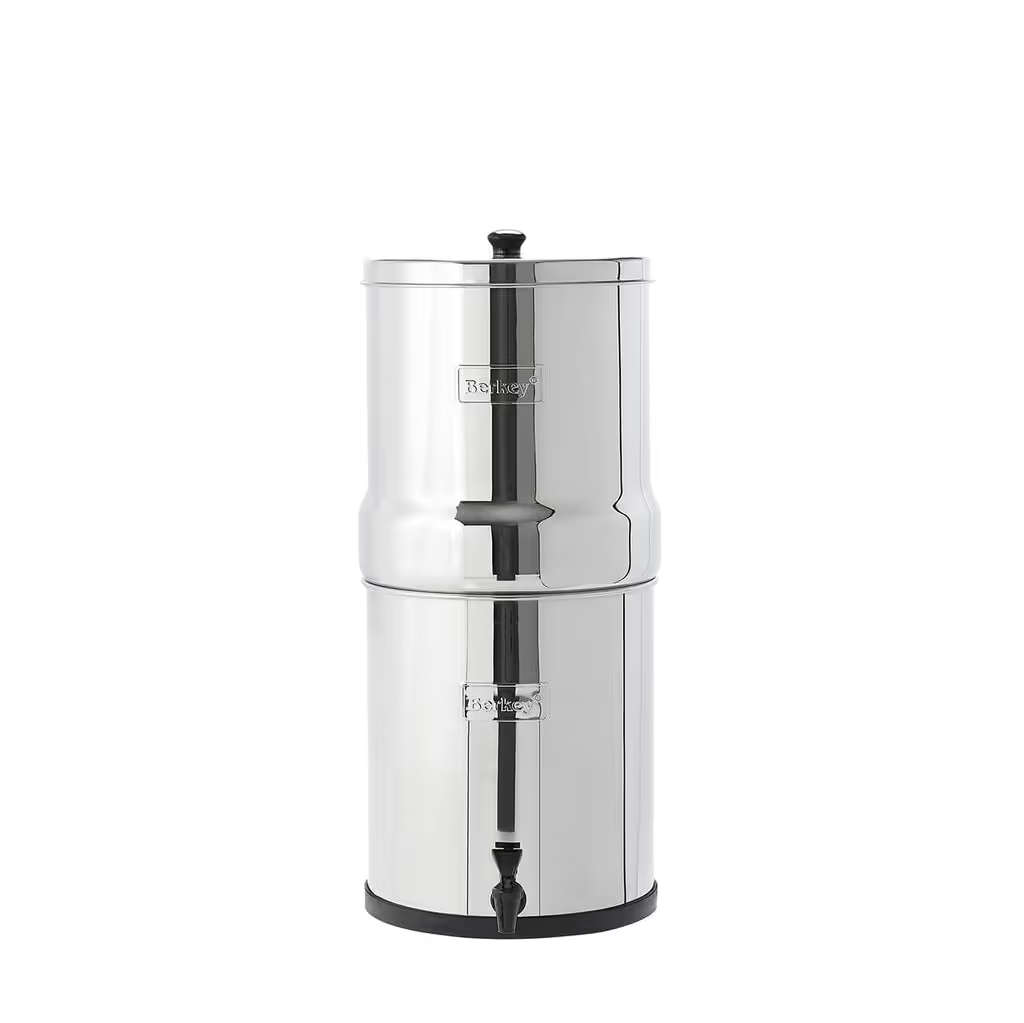
- Holds 2.25 gallons, sized for one to four people.
- Runs on the current Phoenix element, good for about 2,750 gallons each.
- Filters by gravity alone, with no power or plumbing needed.
- Costs about $367, and needs roughly 20 inches of counter clearance.
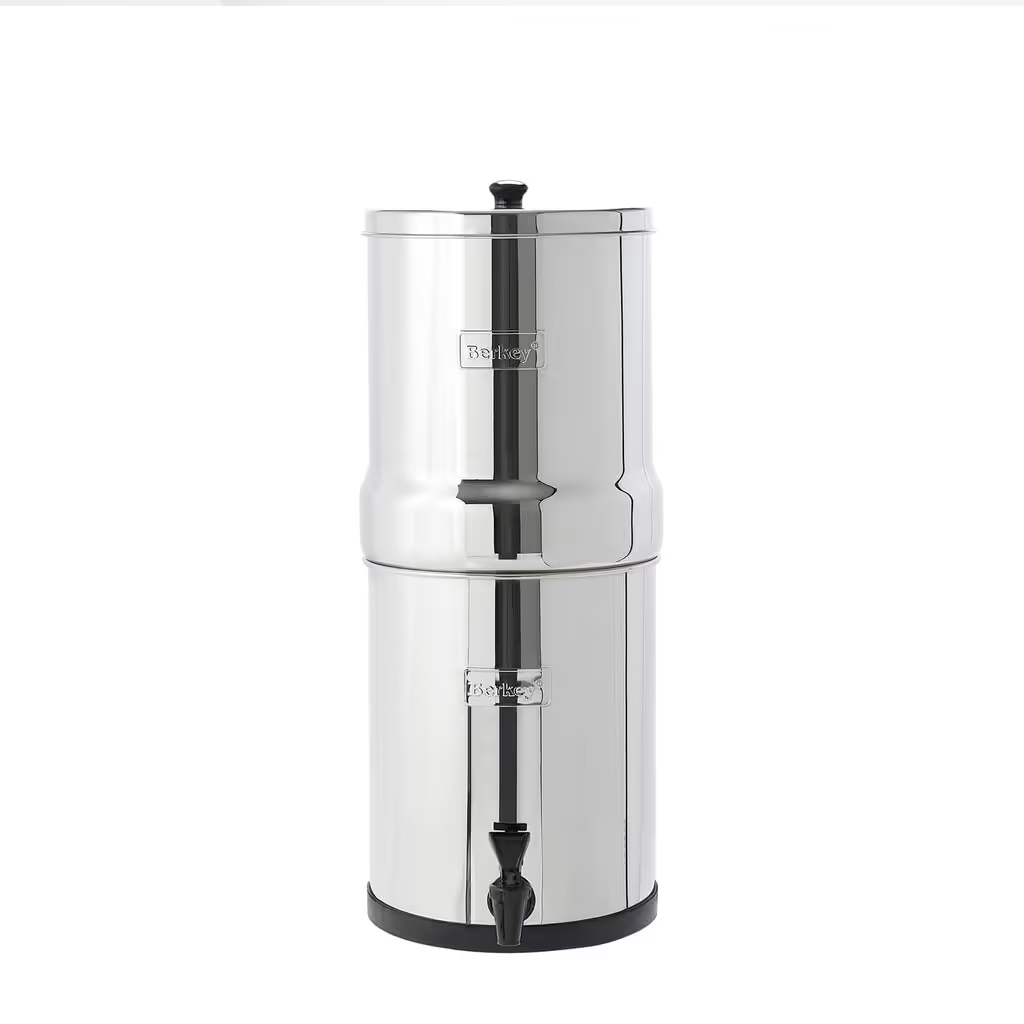
- Holds 1.5 gallons, right for one to three people.
- Uses the same Phoenix element, rated for about 2,750 gallons each.
- Priced around $327, less than the Big Berkey.
- Stacks in two stainless pieces, heavier than the name suggests for actual travel.
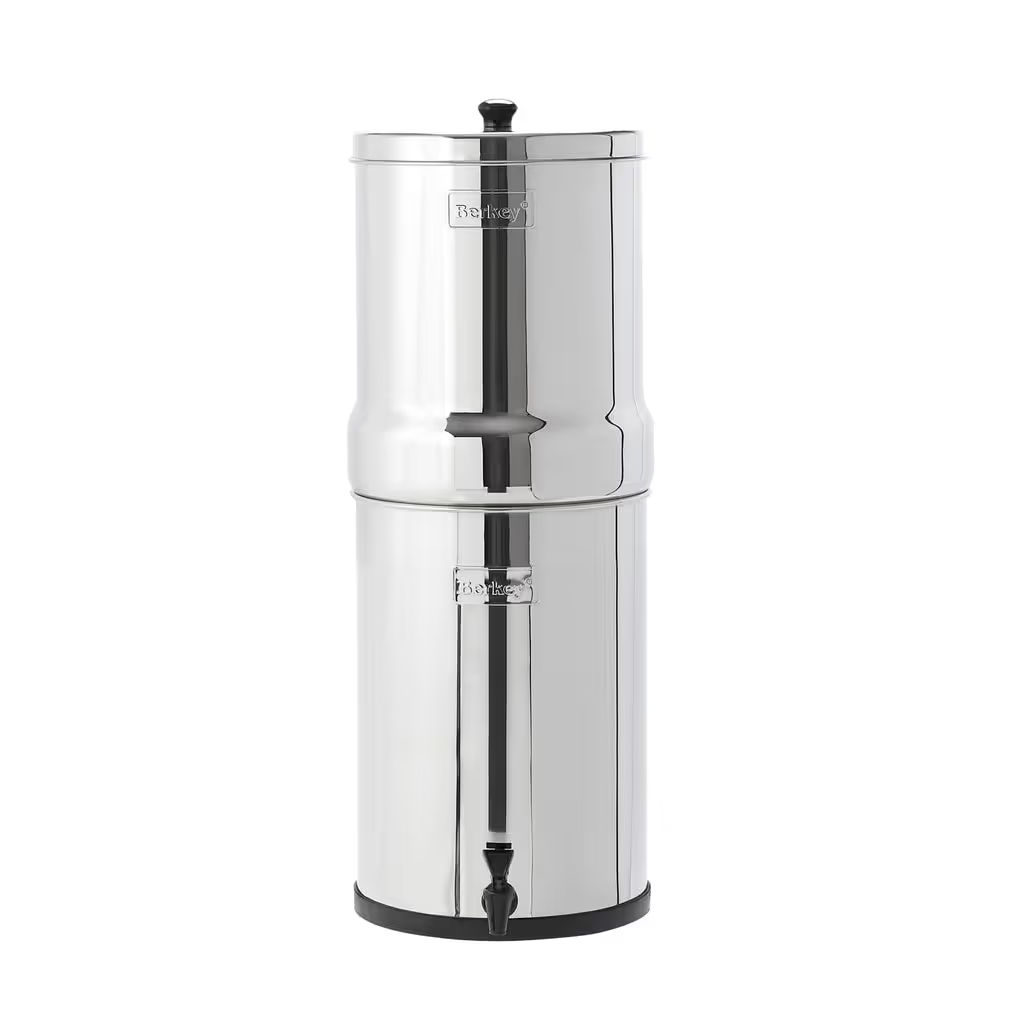
- Holds 6 gallons, sized for a group of 6 to 12 people.
- Ships with 2 elements standard, expandable to 8 for faster flow.
- Reaches about 26 gallons per hour with a full 8-element setup.
- Priced around $478, the largest and heaviest system in the lineup.
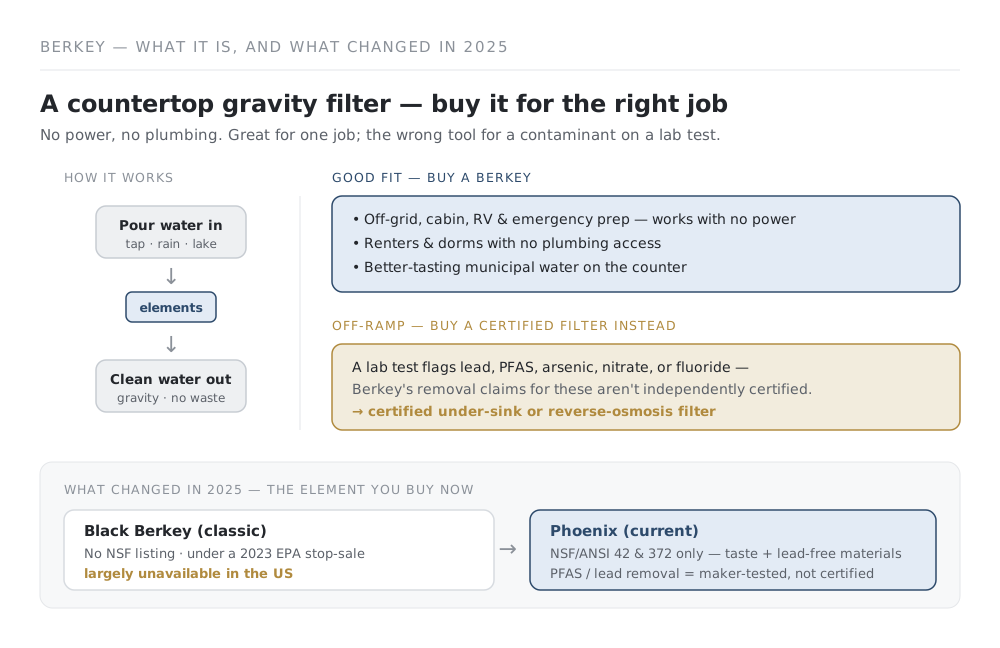
Berkey is a large stainless-steel countertop filter that cleans water using gravity alone. No power, no plumbing, no wastewater. You pour water in the top, and it drips through carbon elements into a lower chamber. For camping, cabins, renters, and emergency prep, that simplicity is the whole appeal.
But two things changed in 2025, and most “Berkey review” pages haven’t caught up.
First, the famous Black Berkey element, the one every older review rates, is under a 2023 EPA stop-sale and is largely unavailable in the US. What ships now is a different element called the Phoenix. So a review of the Black Berkey is a review of a filter you mostly can’t buy.
Second, the certification story is narrower than the marketing suggests. Berkey has never carried NSF certification on its classic element. The new Phoenix carries a real but limited NSF certification. Knowing exactly what that covers changes whether Berkey is right for you.
This review sorts that out honestly, then tells you which size to buy and when a different filter is the smarter choice.
The short answer
Berkey is a good buy for one specific job: a big, no-install gravity filter for off-grid living, emergencies, RVs and cabins, or a rental where you can’t touch the plumbing. It makes ordinary tap or source water taste clean, and it keeps working when the power is out.
It is not the right buy if a lab test flags a specific contaminant, like lead or PFAS, and you want a certified guarantee that it’s gone. Berkey’s removal claims for those are the maker’s own lab results, not independently certified. For that job, a certified filter is the safer choice, and we point you to one at the end.
If Berkey fits your job, the Big Berkey is the size most households should buy.
What actually happened: the EPA order and the Phoenix switch
This is the part to understand before you spend a few hundred dollars, so here it is plainly.
In 2023, the EPA (not the FTC) took the position that Berkey’s Black Berkey element had to be registered as a pesticide device under federal pesticide law, because of the antimicrobial silver it contains. The agency issued a Stop-Sale, Use, or Removal Order, which halted production of the Black Berkey element. (Berkey Water Systems)
Berkey’s maker, New Millennium Concepts, fought the order in court. A district court dismissed the company’s suit in 2024 on a jurisdiction technicality. The company appealed, a federal appeals court heard arguments in October 2025, and the case was still open in early 2026. (Berkey Water Systems)
A separate consumer class-action lawsuit, filed back in 2022, argued that Black Berkey elements don’t remove contaminants as well as the marketing claimed. That case also had no final ruling as of early 2026.
Two honest takeaways from all this:
- The dispute is about classification and unproven marketing claims, not a proven safety problem with the water Berkey makes. We’re not saying Berkey water is dangerous.
- The practical result is real: standalone Black Berkey elements are largely sold out at US dealers, and the company now sells the Phoenix element as its replacement. The Phoenix is what you’ll run in a Berkey you buy today.
What a Berkey is really certified for
This is the one section to read before you trust any removal claim, and it’s the part the product pages blur.
There’s a real difference between a filter an independent body certified and a filter the maker tested in its own lab. Certification means an accredited group like NSF verified the claim and keeps auditing the product. “Tested to” a standard means the company ran its own test. Both can be honest. Only one is independently proven. (NSF)
Here’s where Berkey’s two elements actually stand.
| Element | Independently certified for | Also claims (maker-tested) |
|---|---|---|
| Black Berkey (classic) | Nothing — no NSF/ANSI listing | Lead, PFAS, fluoride, many more |
| Phoenix (current) | NSF/ANSI 42 and 372 | PFAS, heavy metals, VOCs, pesticides |
What those Phoenix certifications mean in plain terms:
- NSF/ANSI 42 covers taste and odor, mainly chlorine. It does not cover health contaminants.
- NSF/ANSI 372 means the materials are lead-free, so the filter itself won’t add lead to your water.
Neither of those is NSF/ANSI 53, the standard for health-contaminant reduction, or NSF/ANSI 401, which covers emerging compounds like drug traces. So the Phoenix’s headline claims, that it cuts PFAS, lead, and heavy metals, are Berkey’s own lab results. They may well be accurate. They are simply not the same as an independent certification, and it’s fair to hold that distinction in mind. (berkeycleanwater.com)
The upshot: buy a Berkey for clean-tasting, convenient gravity water. If you need a proven removal number for a regulated contaminant, that certification doesn’t exist here, and you should buy a filter that carries it.
The picks
Berkey systems are all the same design: two stainless chambers, gravity flow, the same elements. They differ only in size and how many elements they hold. So the choice is mostly “how many people, how much counter space.” Every pick below runs the current Phoenix element, and the certification notes above apply to all of them.
Big Berkey
| Spec | Value |
|---|---|
| Capacity | 2.25 gallons |
| Typical household | 1–4 people |
| Elements | 2 (holds up to 4) |
| Element life | ~2,750 gallons each (Phoenix) |
| Price | ~$367 |
Travel Berkey
| Spec | Value |
|---|---|
| Capacity | 1.5 gallons |
| Typical household | 1–3 people |
| Elements | 2 |
| Element life | ~2,750 gallons each (Phoenix) |
| Price | ~$327 |
Crown Berkey
| Spec | Value |
|---|---|
| Capacity | 6 gallons |
| Typical household | 6–12 people |
| Elements | 2 standard (holds up to 8) |
| Flow (8 elements) | ~26 gallons per hour |
| Price | ~$478 |
Skip Berkey if you need certified contaminant removal
If a water test flags a specific contaminant and you want proof it’s handled, a gravity Berkey is the wrong tool. Its removal claims for these aren’t independently certified, and the stakes are too high to run on a maker’s lab result.
- Lead, PFAS, arsenic, or nitrate on a test. You want a filter certified to reduce that exact contaminant. See the best drinking water filtration systems for certified point-of-use picks.
- You want the strongest possible removal. Reverse osmosis pushes water through a membrane and removes far more than gravity carbon. A countertop reverse-osmosis unit needs no plumbing either.
- You’re deciding between carbon and reverse osmosis at the sink. The under-sink water filter guide routes you to the right certified type for your water.
Skip Berkey here because the whole point of testing is a certified answer, and gravity carbon can’t give you one for these contaminants.
Is Berkey worth it in 2026? The honest read
Berkey is worth it for the job it’s actually good at, as long as you buy it with clear eyes.
What it does well:
- It works with no infrastructure. No power, no plumbing, no drain. Pour water in the top from almost any source and it filters. For emergencies and off-grid living, nothing about a plumbed filter matches that.
- Filter cost is genuinely low. A Phoenix pair runs about $120 and lasts roughly 5,500 gallons, which is around 2 cents a gallon. A water filter pitcher costs many times that per gallon. (berkeycleanwater.com)
- The build lasts. The 304 stainless chambers hold up for years, so you’re mostly replacing cheap elements, not the system.
Where to be careful:
- The certification is narrow. The Phoenix is NSF-certified for taste and lead-free materials, not for the contaminant removal Berkey is famous for. Match that to what you actually need.
- The Black Berkey is in limbo. If you specifically want the classic element, its future depends on a court case that isn’t settled. The Phoenix is the safe assumption going forward.
- It’s a countertop appliance, not a whole-house fix. It treats the water you pour into it, one batch at a time. It does nothing for the water at your other taps, your shower, or your appliances.
What Berkey costs to run
The sticker price is only the start. Here’s the rough long-run picture. Treat these as general estimates; your real numbers depend on your water and how much you filter.
| Item | Cost | Notes |
|---|---|---|
| System (Big Berkey) | ~$367 once | 304 stainless, lasts years |
| Phoenix element pair | ~$120 | ~5,500 gallons of use |
| Cost per gallon (elements) | ~$0.02 | Elements only, once you own the system |
| Fluoride add-on (PF-2) | ~$60 pair | Optional; attaches under the main elements |
Hard or sediment-heavy source water clogs the elements faster than the rated life, and they need an occasional scrub to keep flowing. If your source water is rough, budget for elements a little more often than the gallon rating suggests.
One honest note on the fluoride add-on: Berkey sells PF-2 elements that clip onto the main filters to target fluoride and arsenic. They’re an add-on, and like the rest of the line they aren’t NSF-certified for that job. If fluoride or arsenic is your real concern, reverse osmosis is the better-proven route.
Frequently asked questions
Is Berkey NSF certified?
The classic Black Berkey element is not, and never has been. The current Phoenix element is certified to NSF/ANSI 42 (taste and odor) and NSF/ANSI 372 (lead-free materials) only. It is not certified to NSF/ANSI 53, the health-contaminant standard, so its lead and PFAS claims are the maker’s own lab results rather than an independent certification.
What happened with Berkey and the EPA? Is Berkey banned?
Berkey isn’t banned, and the company is still operating. In 2023 the EPA ordered a stop-sale on the Black Berkey element, saying it had to be registered as a pesticide device because of its antimicrobial silver. Berkey is fighting that order in court, and the case was still open in early 2026. In the meantime, Berkey sells the Phoenix element as its replacement.
Can I still buy Black Berkey elements?
Mostly no. Standalone Black Berkey elements are sold out or unavailable at authorized US dealers because of the EPA stop-sale. The Phoenix element is the current, in-stock replacement and fits the same systems.
Does a Berkey remove fluoride, PFAS, or lead?
Berkey’s lab tests claim reductions of PFAS and lead, and its optional PF-2 add-on targets fluoride and arsenic. None of those removals are NSF-certified. If you need a certified guarantee for one of these, buy a filter certified to reduce that specific contaminant, usually a reverse-osmosis system.
Is the Travel Berkey good for actual travel?
Not really. It’s heavy stainless steel that stacks in two loose pieces, so it’s awkward to pack. It’s better thought of as a small-household countertop filter. For genuine travel, Berkey’s Go kit or Sport water bottle are the products built for it.
Which Berkey size should I buy?
For most households, the Big Berkey (2.25 gallons) is the right size. One or two people in a small kitchen can go with the Travel (1.5 gallons). A large family, group, or off-grid setup wants the Royal (3.25 gallons) or Crown (6 gallons). Size by the number of people and your counter clearance.
Is a Berkey better than a reverse-osmosis filter?
They’re different tools. Berkey is a no-install gravity filter that’s great when you have no plumbing or power. Reverse osmosis removes far more, including certified reductions of contaminants like lead and PFAS, but it needs plumbing or at least a countertop hookup. If you have a real contaminant to remove, reverse osmosis is the stronger choice; if you value going without infrastructure, Berkey wins.
Need a certified filter for a contaminant on your test? Compare the best drinking water filtration systems.
No plumbing but want stronger removal than gravity carbon? See the best countertop reverse-osmosis units.
Deciding between carbon and reverse osmosis at the sink? The under-sink water filter guide routes you by your water.
Not sure which kind of system you need at all? The home water filtration guide sorts you by your water problem.
How we researched this
We built this review from Berkey’s own product pages and certification listings, the EPA and court filings on the Black Berkey stop-sale, the NSF/ANSI standards, and independent reporting and owner reviews across retailers and review sites.
We don’t run these systems ourselves yet, so we don’t claim first-hand testing. Every spec, certification, price, and legal detail here is attributed to its source, and we separate what’s independently certified from what the maker claims.
Prices, filter lives, certifications, and the legal status all change often here, so treat every number as approximate and confirm the current spec, NSF/ANSI listing, and case status before you buy.
When we name a merchant we may earn a commission if you buy through a link here, at no cost to you.