Best countertop reverse osmosis system: no plumbing, fully certified
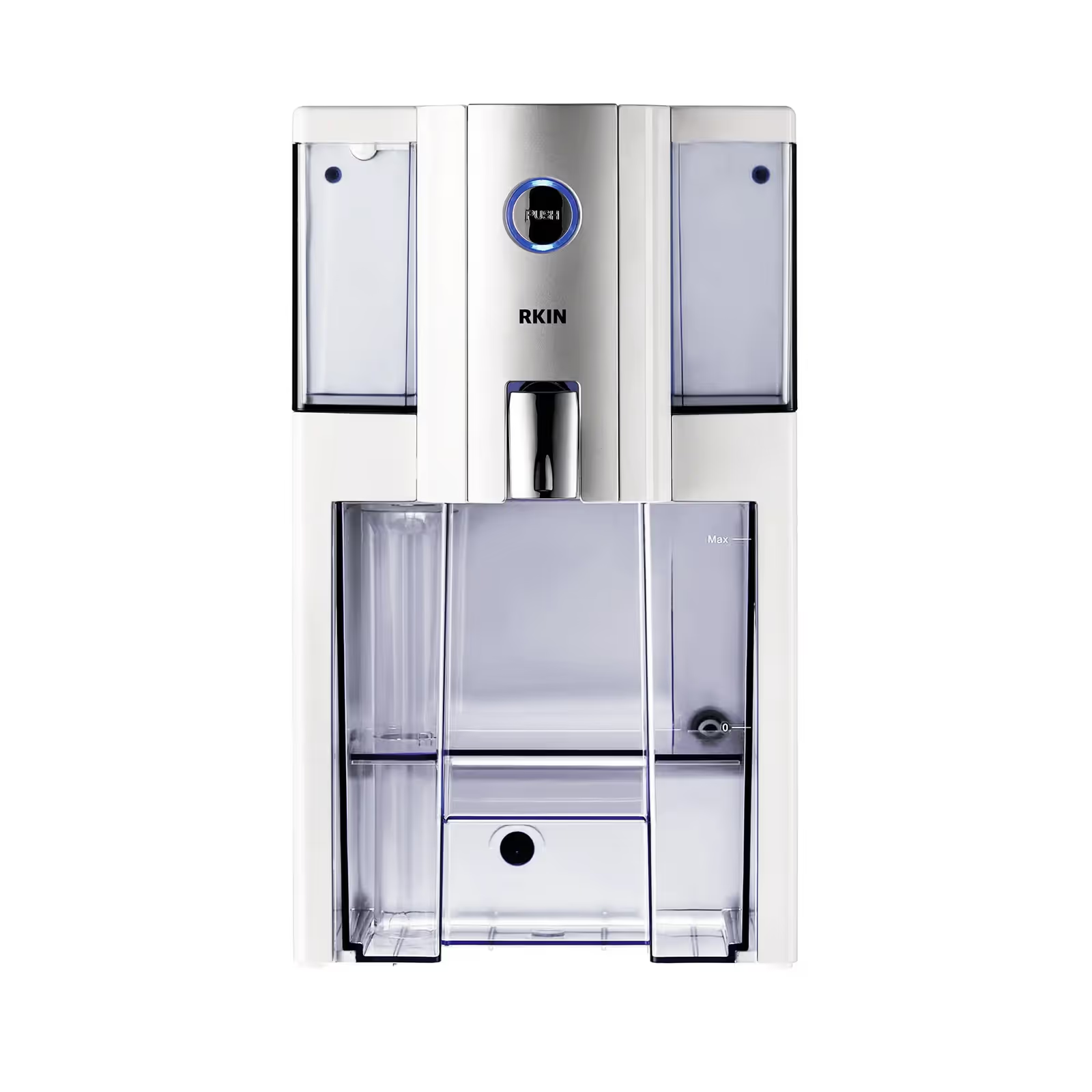
- Independently certified by IAPMO R&T to NSF/ANSI 58, the reverse osmosis standard.
- 4-stage system with an alkaline post-filter that adds calcium and magnesium back.
- Zero installation: two removable tanks, so you plug it in and fill from the tap.
- Costs about $370, under the AquaTru, with filters running about $80 a year.
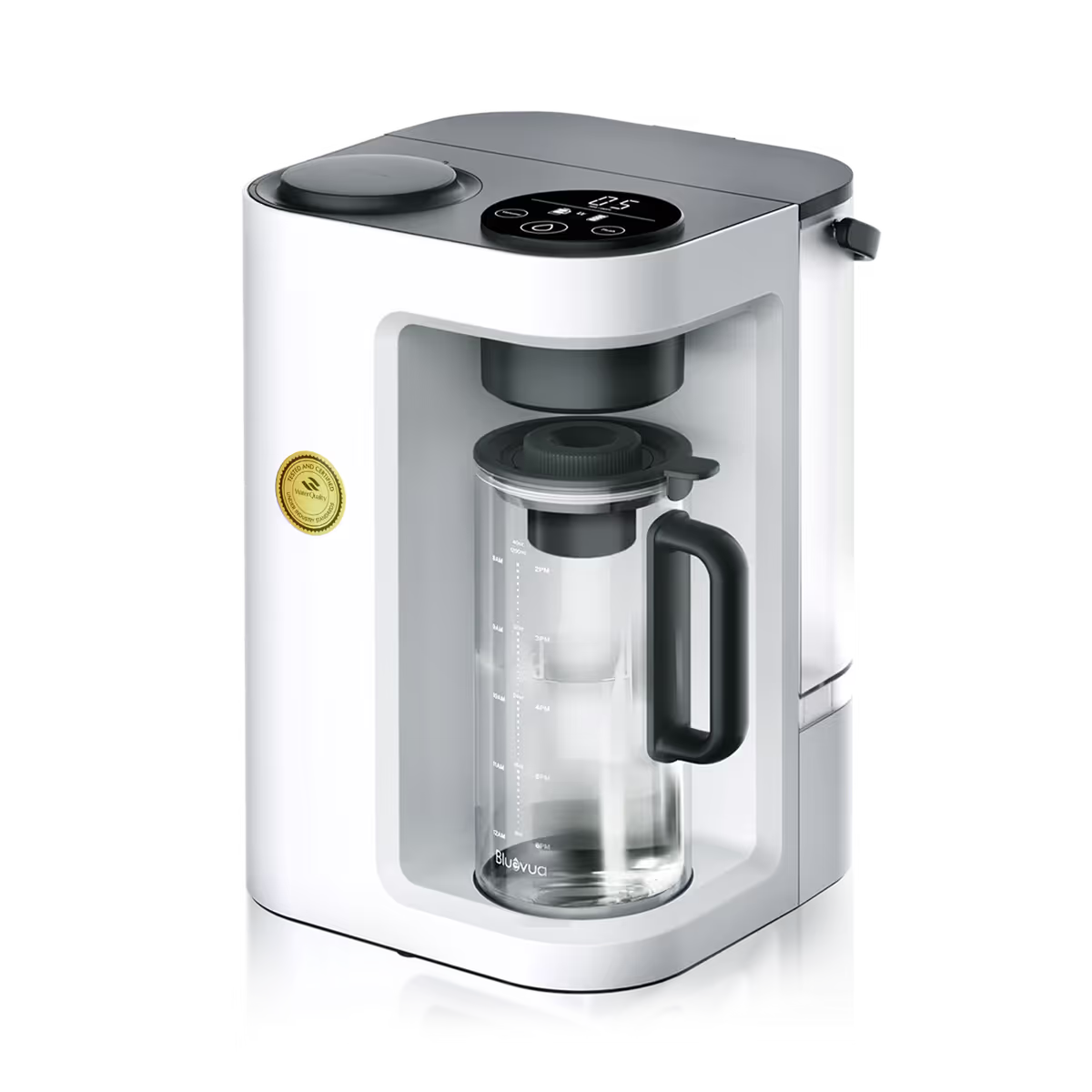
- 5-stage reverse osmosis with a remineralization filter that adds calcium and magnesium back.
- Certified by the WQA, with a built-in TDS display and a glass carafe.
- Runs a 3:1 pure-to-drain ratio for about $300.
- Certification is WQA rather than the broader NSF/ANSI 58 listing.
A countertop reverse osmosis system gives you the most thorough drinking water there is without touching your plumbing.
You plug it in, fill a tank, and pour. No drilling, no drain line, no landlord conversation.
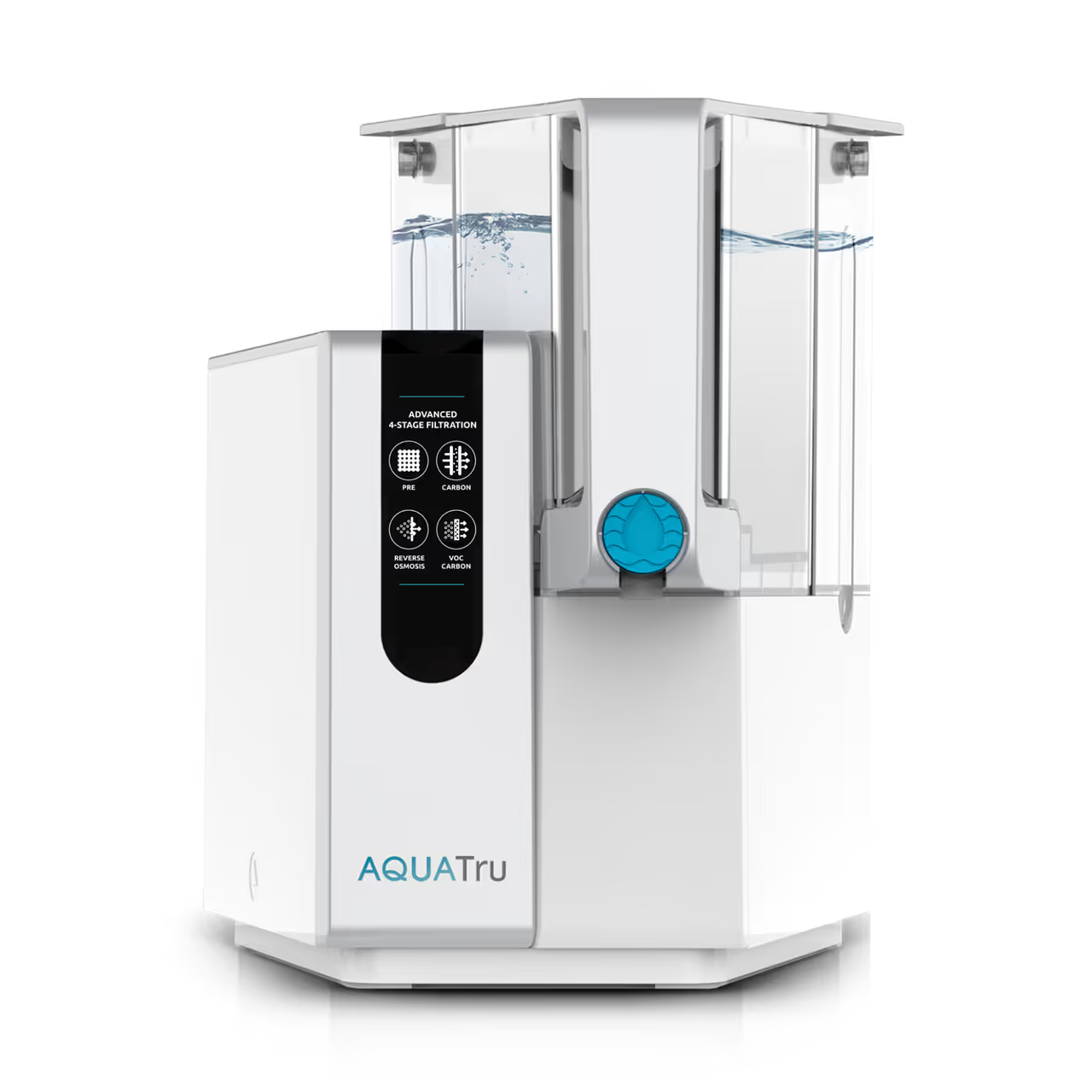
For most people, our pick is the AquaTru Classic, at about $449.
It’s independently certified to NSF/ANSI 42, 53, 58, and 401 for every contaminant it claims to reduce — certification few countertop units can match.
If you want the lowest price with a genuine independent certification, the RKIN Zero Installation Purifier is about $370.
If you want reverse osmosis water that tastes fuller from a glass carafe, the Bluevua RO100ROPOT puts minerals back and looks good doing it.
One rule matters more on the counter than anywhere else: buy by the NSF/ANSI 58 certification, not the stage count. Most countertop units don’t have it.
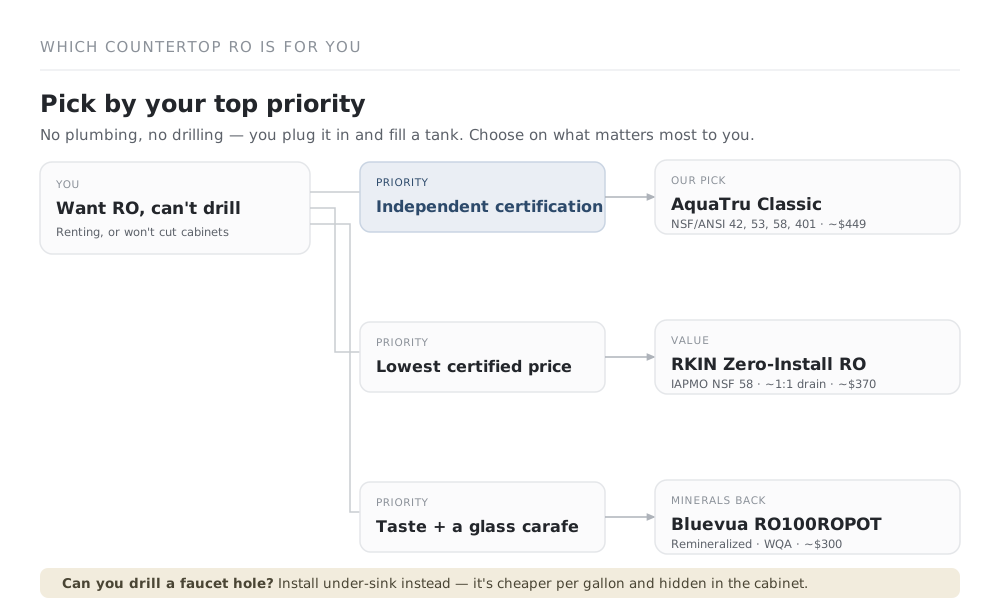
First: is a countertop system the right shape?
Every reverse osmosis system does the same job. The only question is where it lives.
A countertop system sits on your counter and needs nothing but a power outlet. You fill a tank from the tap, the system purifies it, and you pour from a spout or carafe. That’s the whole appeal: no installation, so a renter or anyone who won’t cut into their cabinets can have reverse osmosis water today.
An under-sink system hides in the cabinet, taps your cold line, and pipes clean water to its own little faucet. It costs less per gallon, holds more, and you never see it. But it means drilling and plumbing.
Here’s the quick read.
| Get a countertop system if… | Get an under-sink system instead if… |
|---|---|
| You rent, or won’t drill your cabinet | You own, and can drill a faucet hole |
| You want it running today, no plumbing | You want it hidden and out of the way |
| You move often and want to take it with you | You want the lowest cost per gallon |
| You have spare counter space | Counter space is precious |
If under-sink is fine for you, it’s usually the better buy. Our under-sink reverse osmosis guide covers those picks. If a countertop unit is what fits your life, read on.
Buy by the certification, not the stage count
This rule matters everywhere in reverse osmosis, but it matters most on the counter, because most countertop units skip the certification that counts.
NSF/ANSI 58 is the standard written specifically for reverse osmosis. A system certified to 58 has been tested as a whole unit for total dissolved solids reduction, plus whatever contaminants it claims. (NSF)
The other labels you’ll see mean different things:
- NSF 42 covers taste and odor, mainly chlorine.
- NSF 53 covers health contaminants like lead and VOCs.
- NSF 58 covers reverse osmosis and TDS reduction.
- NSF 401 covers emerging contaminants like pharmaceuticals and PFOA/PFOS.
Certification is always contaminant-specific. “NSF certified” on its own means nothing, because a unit can be certified for chlorine taste and remove none of your lead or arsenic. (NSF)
Here’s the catch with countertop units. Many are tested to a brand’s own numbers, or carry a narrower certification than full NSF 58. That’s not automatically bad, but it means you’re trusting the company’s lab instead of an independent one.
So the buying rule is simple. Get a water test first, then match the unit’s certified claim list to the contaminants you actually have. When a model carries full NSF/ANSI 58, that’s the strongest proof you can get.
The picks
AquaTru Classic
| Spec | Value |
|---|---|
| Certification | IAPMO to NSF/ANSI 42, 53, 58, 401 |
| Stages | 4-stage reverse osmosis |
| Recovery | 4:1 (1 gallon to drain per 4 made) |
| Tanks | 1 gal tap water in, 0.75 gal clean out |
| Price | ~$449 |
| The AquaTru Classic is the countertop unit to beat, because it’s certified across the standards that matter. It’s independently certified by IAPMO to NSF/ANSI 42, 53, 58, and 401 for every one of the 80-plus contaminants it claims to reduce, including lead, arsenic, fluoride, PFOA, and PFOS. (AquaTru) |
It’s a 4-stage system with a mechanical pre-filter, a reverse osmosis membrane, and a carbon block, and it runs a 4:1 recovery ratio, which is efficient for reverse osmosis. You fill the tap-water tank, and purified water collects in a separate clean tank you pour from.
Why it scores 8.3i
Each sub-score is our assessment, weighted into the overall. It reflects published specifications, certification listings and warranty terms — not systems we ran ourselves. How we score
- Performance9/10
- A genuine reverse osmosis membrane with no plumbing at all — lead, arsenic, fluoride, PFOA and PFOS among more than eighty contaminants, at a 4:1 recovery ratio that is efficient for the format. The ceiling is throughput: 0.75 gallons of clean water per tank fill. Source ↗
- Value7/10
- About $449, plus roughly $60 a year in proprietary filters, is more than a certified under-sink system that does the same job out of sight. That gap is the price of not drilling, which for a renter is the whole point. Source ↗
- Ownership7/10
- Nothing to install, no drain to tap and no faucet hole to cut. Against that, it is a large two-tank appliance holding real counter space, and both tanks are filled and emptied by hand. Source ↗
- Trust10/10
- Independently certified by IAPMO to NSF/ANSI 42, 53, 58 and 401 for every one of the contaminants it claims to reduce. That is the broadest verified claim list of any product on this site, and the reason it stays a safe answer when a test flags something serious. Source ↗
RKIN Zero Installation Purifier
| Spec | Value |
|---|---|
| Certification | IAPMO R&T to NSF/ANSI 58 |
| Stages | 4-stage reverse osmosis + remineralization |
| Output | ~45 gallons per day |
| Recovery | ~1:1 (its weak spot: wastes more than most) |
| Tanks | 0.5 gal tap in, 0.5 gal clean out |
| Price | ~$370 |
| The RKIN Zero Installation Purifier earns the value slot on its certification. It’s the cheapest countertop unit we found with a genuine whole-system NSF/ANSI 58 listing. IAPMO R&T, the same accredited body that certifies the AquaTru, lists it, so its core reduction claims carry third-party proof instead of a brand’s own lab number. (IAPMO R&T PLD, RKIN) |
It’s a 4-stage countertop dispenser with a remineralization post-filter that puts calcium and magnesium back after the membrane. It needs no plumbing: you fill the bottom tank from the tap, and pour purified water from the top. At around $370 it undercuts the AquaTru while clearing the same certification bar.
Bluevua RO100ROPOT
| Spec | Value |
|---|---|
| Stages | 5-stage reverse osmosis |
| Extra | Remineralization + TDS display |
| Certification | WQA (not NSF) |
| Drain ratio | 3:1 pure to drain |
| Price | ~$300 |
| The Bluevua RO100ROPOT is the one to get if flat reverse osmosis water bothers you. It’s a 5-stage countertop system with a remineralization filter that adds calcium and magnesium back after the membrane strips them out, a built-in TDS display, and a glass carafe instead of a plastic tank. (Bluevua) |
It’s certified by the WQA, a legitimate third-party body, and runs a 3:1 pure-to-drain ratio for about $300.
Why it scores 7.7i
Each sub-score is our assessment, weighted into the overall. It reflects published specifications, certification listings and warranty terms — not systems we ran ourselves. How we score
- Performance8/10
- Five stages at a 3:1 pure-to-drain ratio, with a remineralization filter that puts calcium and magnesium back after the membrane strips them, plus a TDS display to watch the result. That remineralization stage is the fix for flat reverse osmosis water. Source ↗
- Value8/10
- About $300 buys the remineralization stage, the TDS readout and a glass carafe. Plain reverse osmosis from a more broadly certified unit costs about the same, so you are paying for taste and looks rather than removal. Source ↗
- Ownership7/10
- No plumbing, and a carafe that earns its place on a counter. Glass breaks in a way a plastic tank does not, and filling and pouring stays a manual job. Source ↗
- Trust7/10
- WQA certification is a legitimate third-party mark, but it is tested here to a narrower claim list than the full NSF/ANSI set the certified countertop leader carries. Source ↗
Skip countertop reverse osmosis entirely if you can install under-sink
Skip it because an under-sink reverse osmosis system costs less per gallon, holds far more in its pressurized tank, hides in the cabinet, and the certified models like the iSpring RCC7 often cost less than a certified countertop unit. The only thing you give up is a couple of hours drilling a faucet hole and tapping the drain, and our step-by-step install guide walks you through it.
What a countertop system costs to run
The sticker price is only the start, so budget for the rest before you buy.
Filters need changing on a schedule. The sediment and carbon filters last about 6 to 12 months, and the reverse osmosis membrane usually lasts 1 to 2 years. In dollars, plan on roughly $50 to $80 a year, a bit more if you drink a lot of water. AquaTru’s own filter sets run about $60 for a year or $150 for two years with the membrane. (AquaTru)
There’s a water cost too. Every reverse osmosis system sends some water to the drain to flush the membrane, called the drain ratio. Good countertop units run about 3:1 or 4:1, meaning 3 to 4 gallons made for every gallon wasted. With a countertop unit you pour that reject water out of a tray or a second tank, so you see it, but the amount is small.
The last cost is counter space and effort. You refill a tank by hand, and a large unit like the AquaTru claims a real chunk of counter. That’s the trade for skipping installation.
Countertop vs under-sink reverse osmosis: the real trade
Countertop and under-sink reverse osmosis filter water the same way. They differ on the things you live with.
A countertop unit wins on one thing that can outweigh everything else: no installation. You can use it today, take it when you move, and never touch your plumbing. That’s why it’s the right answer for renters.
An under-sink unit wins on cost per gallon, capacity, and staying out of sight. Its pressurized tank pours a fast, full stream, and you never refill anything by hand.
So the choice isn’t about water quality. It’s about whether you can install, and whether you’d rather have counter space or cabinet space. Pick the shape that fits your home, then buy the certified model in that shape.
Frequently asked questions
Is a countertop reverse osmosis system worth it?
Yes, if you rent or won’t install plumbing and your water has contaminants a carbon filter can’t remove, like lead, arsenic, nitrate, fluoride, or high TDS. You get the most thorough drinking-water filtration with no drilling. If you can install under-sink, that’s usually cheaper per gallon.
Do countertop reverse osmosis systems really need no installation?
Correct. They plug into an outlet and you fill a tank from the tap, so there’s no drilling, no drain line, and no plumbing. That’s the whole reason to choose countertop over under-sink.
Which countertop reverse osmosis is actually NSF certified?
The AquaTru Classic, and its smaller Carafe, are independently certified by IAPMO to NSF/ANSI 42, 53, 58, and 401 across the contaminants they claim. Many other countertop units publish their own testing or carry a narrower certification like WQA, so check each model’s exact listing.
How much water does a countertop reverse osmosis system waste?
Some, to flush the membrane. Good countertop units run a 3:1 or 4:1 ratio, so 3 to 4 gallons are made for every gallon sent to the drain. You empty that reject water from a tray or tank yourself, and the total is modest at one unit.
How often do you change countertop reverse osmosis filters, and what does it cost?
Change the carbon and sediment filters every 6 to 12 months and the reverse osmosis membrane every 1 to 2 years. Budget roughly $50 to $80 a year in filters, a bit more with heavy use.
Does countertop reverse osmosis remove fluoride, PFAS, and lead?
Yes. Reverse osmosis reduces a broad range of contaminants, including fluoride, PFAS, lead, and arsenic. Removal rates vary by contaminant and model, so match the unit’s certified claim list to your water test.
Not sure reverse osmosis is the right tool at all? Start with best reverse osmosis system, which routes you by what’s in your water.
Can you drill a faucet hole? Compare the hidden option in our under-sink reverse osmosis guide, which is cheaper per gallon.
Specifically trying to get fluoride out? Reverse osmosis is one of the few methods that works; see our fluoride water filter picks and what removes it.
Don’t need reverse osmosis, and want a filter that runs with no power for off-grid or emergencies? A gravity system is the other no-plumbing route; see our Berkey water filter review.
Just want the right filter for your water problem? The home water filtration guide points you to the right system.
How we researched this
We built this guide from the NSF/ANSI standards, the IAPMO and WQA certification listings, and manufacturer spec sheets for each unit named (AquaTru, RKIN, Bluevua).
We don’t run these systems ourselves yet, so we don’t claim first-hand testing, and every figure here is attributed to its source.
Prices, certifications, and filter costs in this category change, so treat every number as approximate and confirm the current spec and certification listing on the model before you buy.
When we name a merchant we may earn a commission if you buy through a link here, at no cost to you.
Sources
- NSF — NSF/ANSI 58: Reverse Osmosis Drinking Water Treatment Systems
- AquaTru — Classic Countertop Reverse Osmosis Water Purifier (certifications, tanks, filter costs)
- IAPMO R&T — Product Listing Directory (RKIN, NSF/ANSI 58 certification listing)
- RKIN — Zero Installation Purifier countertop reverse osmosis (IAPMO R&T NSF/ANSI 58, ~45 GPD, remineralization)
- Bluevua — RO100ROPOT Countertop reverse osmosis with remineralization, WQA & NSF listing