Best under sink reverse osmosis system: tank, tankless, or neither?
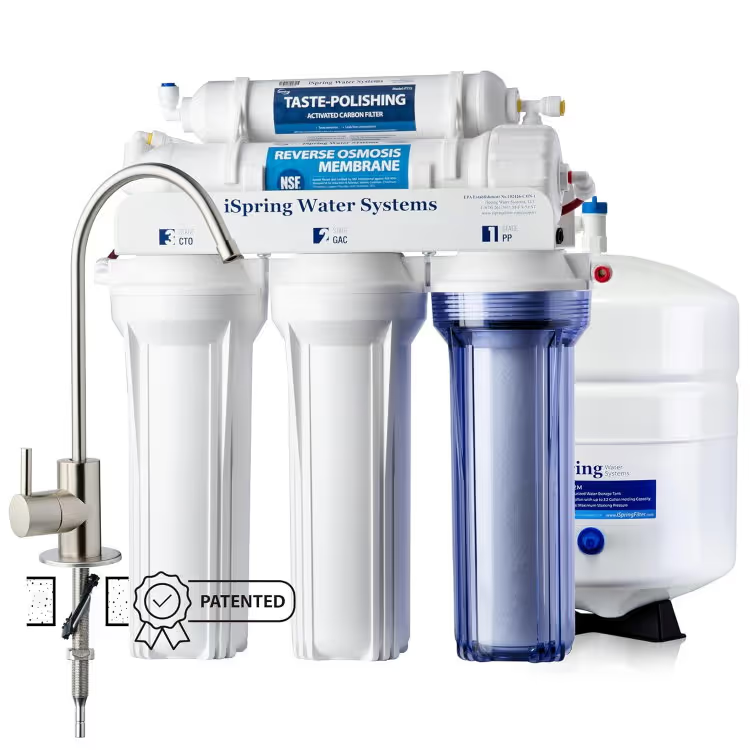
- 5-stage tank system certified to NSF/ANSI 58, the standard that matters for reverse osmosis.
- Rated at 75 gallons per day and lists for about $230.
- Reduces up to 99% of over 1,000 contaminants, including PFAS, fluoride, and arsenic.
- Installs under the sink with its own faucet, and most owners fit it themselves.
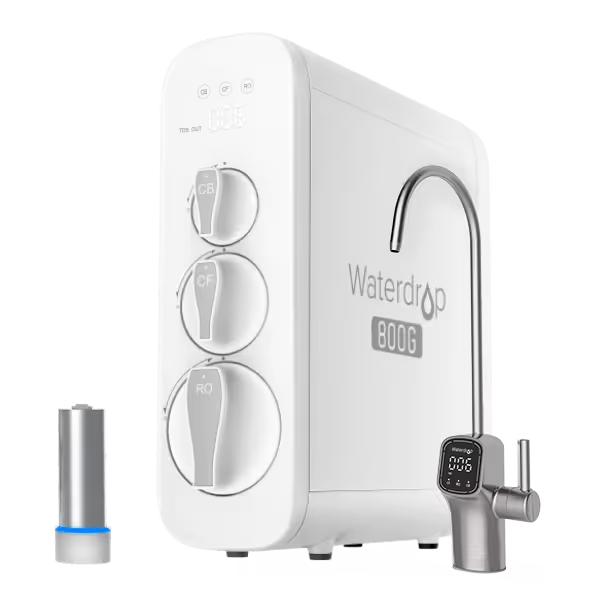
- Tankless system rated at 800 gallons per day, making water on demand with no storage tank.
- Certified to NSF/ANSI 42, 53, 58, and 372, a broad certified claim list.
- Runs a 3:1 pure-to-drain ratio, better than most tank systems.
- Lists around $900 and needs a power outlet under the sink.
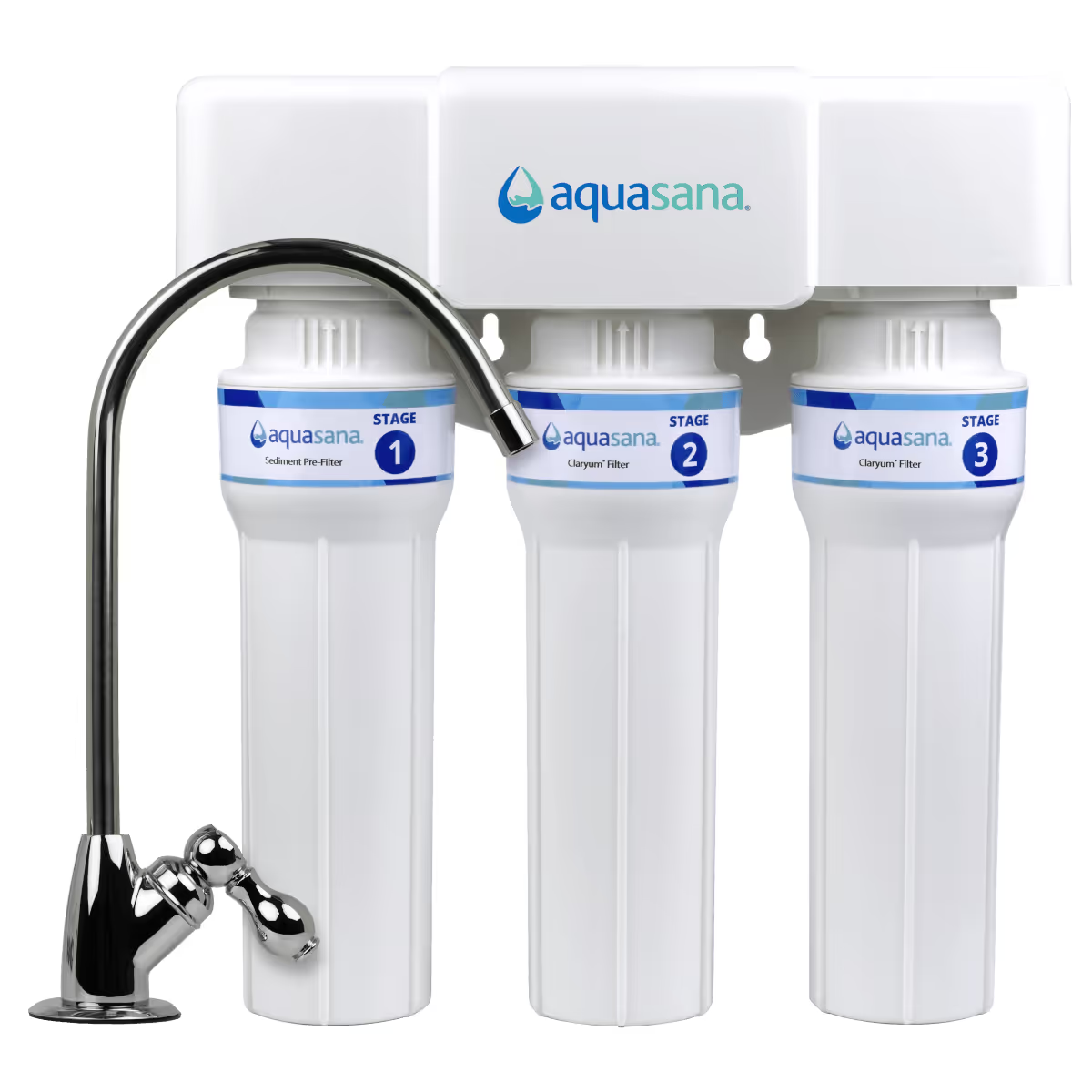
- 3-stage carbon and ion-exchange filter certified to NSF/ANSI 42, 53, and 401.
- Reduces more than 96% of chlorine and chloramine, and 99% of lead.
- Reduces 95% of PFOA and PFOS, and costs about $140 to $200.
- Keeps calcium and magnesium in the water and wastes nothing down the drain.
An under-sink reverse osmosis system is the right way to get clean drinking water for most homes, because it treats the one tap you actually drink from.
The choice that actually matters is tank or tankless, and whether you need reverse osmosis at all.
For most people, our pick is the iSpring RCC7: a simple 5-stage tank system certified to NSF/ANSI 58 for about $230.
If your under-sink cabinet is crowded and you want on-demand water, the tankless Waterdrop G3P800 is the better shape, for close to four times the price.
And if your only real problem is chlorine taste or lead on city water, you may not need reverse osmosis at all. A certified carbon filter keeps your minerals and wastes no water. Our lead water filter guide sorts the certified lead picks by format if that’s the reason you’re filtering.
One rule cuts through all the marketing: buy by the NSF/ANSI 58 certification, not the stage count or the big GPD number on the box.
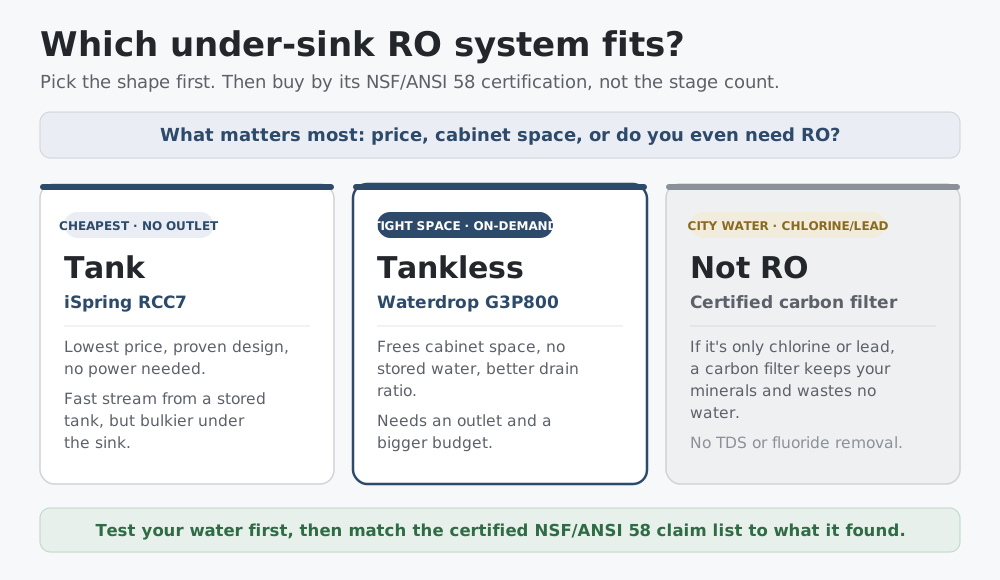
First: tank or tankless?
Every under-sink reverse osmosis system is one of two shapes, and this is the decision that matters most.
A tank system makes water slowly and stores a few gallons in a small pressurized tank under your sink. When you open the faucet, that stored water comes out in a fast, full stream. The tank is bulkier, but the design is simple, proven, cheap, and needs no power.
A tankless system skips the tank and makes water on demand with a high-output pump. It frees up cabinet space, there’s no stored water sitting around, and it usually has a better drain ratio. The trade-offs: it needs a power outlet, it fills a glass a little slower than a full tank dumps it, and it costs more.
Here’s the quick read.
| Get a tank system if… | Get a tankless system if… |
|---|---|
| You want the lowest price | Your under-sink cabinet is tight on space |
| There’s no power outlet under the sink | You have an outlet and a bigger budget |
| You want a fast stream from a stored supply | You want on-demand water and a better drain ratio |
| You’re fine with a bulkier tank | You’d rather not store water under the sink |
Once you know the shape, the next question is which one to trust. That comes down to certification.
Buy by the certification, not the stage count
Ignore “8-stage” and “600 GPD” for a moment. Those are marketing numbers. The membrane does the real work, and one label tells you it was verified.
NSF/ANSI 58 is the standard written specifically for reverse osmosis. A system certified to 58 has been tested as a whole unit for total dissolved solids reduction, plus whatever specific contaminants it claims. (NSF)
The other numbers you’ll see mean different things:
- NSF 42 covers taste and odor, mainly chlorine.
- NSF 53 covers health contaminants like lead and VOCs.
- NSF 58 covers reverse osmosis and TDS reduction.
- NSF 401 covers emerging contaminants like pharmaceuticals and PFOA/PFOS.
Certification is always contaminant-specific. “NSF certified” on its own means nothing. A system can be certified for chlorine taste and remove none of your lead or arsenic.
So the buying rule is simple: get a water test first, then match the system’s certified claim list to the contaminants you actually have.
The picks
iSpring RCC7
The RCC7 is a 5-stage tank system rated at 75 gallons per day and certified to NSF/ANSI 58, which is exactly the certification that matters for reverse osmosis. It lists for about $230. (iSpring)
iSpring says it reduces up to 99% of over 1,000 contaminants, including PFAS, fluoride, arsenic, and up to 98% of lead. It installs under the sink with its own faucet and a drain connection, and most handy owners fit it themselves.
Weighing it against the other popular budget system? Our iSpring RCC7 vs APEC ROES-50 comparison breaks down which wins for your household.
Discount codeuse REFISPRING at checkout to save on this order.
Why it scores 8.5i
Each sub-score is our assessment, weighted into the overall. It reflects published specifications, certification listings and warranty terms — not systems we ran ourselves. How we score
- Performance9/10
- A five-stage membrane that reduces the dissolved contaminants nothing else reliably touches — arsenic, nitrate, lead, fluoride, PFAS and total dissolved solids — at 75 gallons a day. Short of the top because it treats one tap and sends several gallons to the drain for each one it makes. Source ↗
- Value10/10
- About $230 for certified reverse osmosis is the value benchmark of the whole category: nothing else on this site removes as much for as little. The filters are commodity parts rather than proprietary cartridges, so the running cost stays low for the life of it. Source ↗
- Ownership6/10
- The most involved install of any drinking-water pick here: a faucet hole to drill, a drain saddle to tap and a pressurized tank to find room for. Then filters every six to twelve months and a membrane every two to three years. Source ↗
- Trust8/10
- Certified to NSF/ANSI 58, the standard written for reverse osmosis, and carrying the WQA Gold Seal against it. Held short of the top because iSpring's "over 1,000 contaminants" headline is broader than the certified claim list underneath it. Source ↗
Waterdrop G3P800
The G3P800 is a tankless system rated at 800 gallons per day, so it makes water fast without storing any. It’s certified to NSF/ANSI 42, 53, 58, and 372, which is a broad certified claim list, and it runs a 3:1 pure-to-drain ratio. (Waterdrop)
A smart faucet shows you the TDS reading, and Waterdrop offers a remineralization filter if you want minerals added back.
Weighing it against a cheaper tankless alternative? Our Frizzlife vs Waterdrop comparison breaks down a less-than-half-price tankless option certified the same way.
Why it scores 7.7i
Each sub-score is our assessment, weighted into the overall. It reflects published specifications, certification listings and warranty terms — not systems we ran ourselves. How we score
- Performance9/10
- Eight hundred gallons a day on demand with no tank to store, at a 3:1 pure-to-drain ratio. That is both the fastest output and the least wasted water of any reverse osmosis system on this site. Source ↗
- Value6/10
- A list price around $900 is close to four times the iSpring RCC7 for water that is not four times better. What the money buys is the tankless format and the cabinet space it gives back; it is frequently discounted, so check the current price. Source ↗
- Ownership6/10
- Twist-in cartridges and a faucet that reads TDS make the upkeep easy, but it needs a power outlet under the sink, which many cabinets do not have, and it carries electronics that a tank system has no way to fail at. Source ↗
- Trust9/10
- Certified to NSF/ANSI 42, 53, 58 and 372 — a broad published claim list, and specifically the 58 listing that reverse osmosis marketing so often substitutes a "tested to" phrase for. Source ↗
Aquasana Claryum AQ-5300+
This one isn’t reverse osmosis, and that’s the point. It’s a 3-stage carbon and ion-exchange filter certified to NSF/ANSI 42, 53, and 401. It reduces more than 96% of chlorine and chloramine, 99% of lead, and 95% of PFOA and PFOS, for about $140 to $200. (Aquasana)
Because it isn’t reverse osmosis, it keeps the calcium and magnesium in your water, sends nothing down the drain, and delivers a fast 0.72 gallons per minute with no tank and no pump.
Why it scores 8.2i
Each sub-score is our assessment, weighted into the overall. It reflects published specifications, certification listings and warranty terms — not systems we ran ourselves. How we score
- Performance8/10
- Better than 96% of chlorine and chloramine, 99% of lead and 95% of PFOA and PFOS, poured at a fast 0.72 gpm with no tank and no pump. It is carbon, so fluoride, nitrate, arsenic and total dissolved solids are outside what it can do at all. Source ↗
- Value9/10
- Roughly $140 to $225 for that certified claim list, with no wastewater and no drain to plumb. The Claryum filter set every six months is the whole running cost. Source ↗
- Ownership7/10
- A DIY under-sink fit with its own faucet, so a hole gets drilled, and then a filter set twice a year. Owner reports of the fittings weeping over time and damaging the cabinet are the recurring complaint against it. Source ↗
- Trust9/10
- Certified to NSF/ANSI 42, 53 including P473, and 401 — taste, health contaminants, PFAS and emerging contaminants, each an actual listing with a claim list you can read. Source ↗
Skip any “8-stage, 600 GPD” unit with no NSF 58 number
A high stage count and a big GPD number look impressive and tell you almost nothing. Extra “stages” are often just more carbon cartridges, and daily output past what a household uses is a spec, not a benefit.
Skip it because without a published NSF/ANSI 58 certification, you have no verified proof the membrane removes what the listing claims. Stage count is marketing. The certified claim list and the drain ratio are the facts.
What tank vs tankless really looks like
The two shapes differ on the things you live with every day: how much room they take, whether they need power, how fast they pour, and how much water they send to the drain.
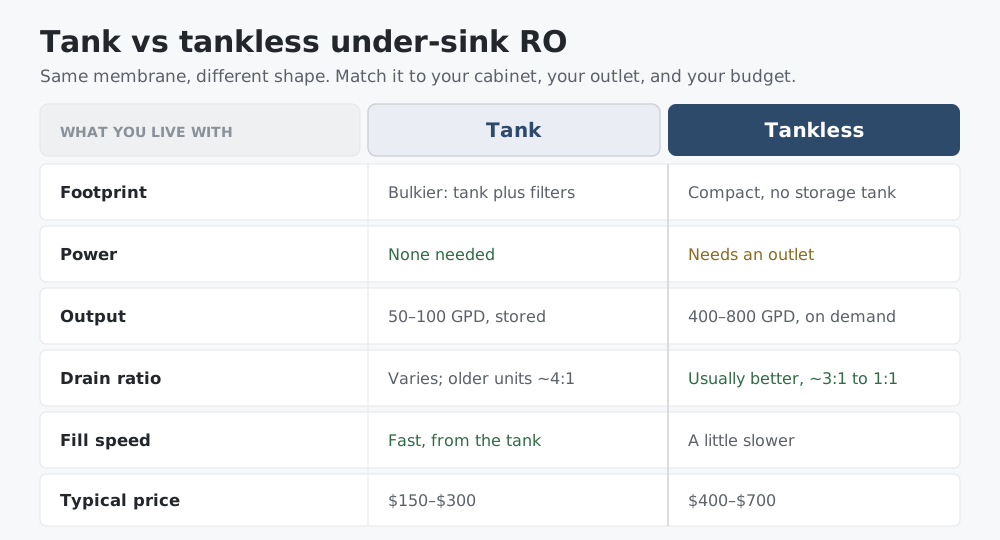
Neither shape is better across the board. A tank system wins on price and simplicity. A tankless system wins on space and on-demand output. Match the shape to your cabinet, your outlet, and your budget, then buy the certified model in that shape.
What it costs to run
The sticker price is only the start. Reverse osmosis systems have consumables, and you should budget for them before you buy.
The sediment and carbon pre-filters and the carbon post-filter need changing about every 6 to 12 months. The reverse osmosis membrane lasts longer, usually 2 to 3 years. In dollars, plan on roughly $50 to $80 a year in filters, plus about $100 to $150 for a membrane every few years.
There’s a water cost too. Every reverse osmosis system sends some water to the drain to flush the membrane, the drain ratio. Older units waste about 4 gallons for every gallon made. Modern under-sink systems do far better, from 3:1 down to about 1:1. At a single tap, that waste is small, and it’s the price of the thorough filtration reverse osmosis gives you.
Do you even need reverse osmosis?
Reverse osmosis is the most thorough drinking-water filter you can put under a sink, but thorough isn’t the same as necessary.
Reverse osmosis earns its place when your water has dissolved contaminants a carbon filter can’t remove: lead, arsenic, nitrate, fluoride, PFAS, or high TDS. A carbon filter does not remove arsenic, nitrate, or fluoride, so if your test shows those, reverse osmosis is the answer. (EPA) If forever chemicals are your main concern, our water filters for PFAS guide compares reverse osmosis against certified carbon options.
But if your only complaint is chlorine taste, and maybe lead, a certified carbon filter like the Aquasana Claryum above does that job for less. It keeps your minerals, wastes no water, and needs no tank or pump.
So test your water first. Let what’s actually in it decide whether you need the membrane or just good carbon.
Still weighing the two kinds of under-sink filter? Our best under sink water filter guide sorts you into carbon or reverse osmosis before you spend.
Frequently asked questions
Is an under-sink reverse osmosis system worth it?
Yes, if your water has dissolved contaminants a carbon filter can’t remove, like lead, arsenic, nitrate, fluoride, PFAS, or high TDS. It treats the tap you drink from for a few hundred dollars. If your only issue is chlorine taste, a cheaper carbon filter is enough.
Tank or tankless, which should I get?
Tank for the lowest price, no power outlet needed, and a fast stored stream. Tankless for a crowded cabinet, on-demand water, and a better drain ratio, if you have an outlet and a bigger budget. Both filter the water the same way.
Do I need a plumber to install an under-sink reverse osmosis system?
Usually not. Most under-sink systems are designed for DIY installation with a dedicated faucet and a drain connection, and they include the parts, and our step-by-step reverse osmosis installation guide covers each step. If you’re not comfortable drilling a faucet hole or tapping the drain line, a plumber can do it in about an hour.
Does under-sink reverse osmosis remove PFAS, lead, and fluoride?
Yes. Reverse osmosis reduces roughly 95 to 99% of TDS and a broad range of contaminants, including PFAS, lead, arsenic, and fluoride. Removal rates vary by contaminant, so check the model’s NSF/ANSI 58 claim list for the ones you care about.
How often do you change under-sink reverse osmosis filters, and what does it cost?
Change the carbon pre and post filters about every 6 to 12 months and the reverse osmosis membrane every 2 to 3 years. Budget roughly $50 to $80 a year in filters, plus about $100 to $150 for a membrane every few years.
Do I need a remineralization or alkaline stage?
Only if you want it. Reverse osmosis water tastes flat and is slightly acidic because the membrane strips out minerals. A remineralization stage adds calcium and magnesium back for taste and pH. It’s a taste preference, not a health requirement, since food supplies most of your minerals.
How much water does an under-sink reverse osmosis system waste?
Some, to flush the membrane. Older systems waste about 4 gallons per gallon made. Modern under-sink systems run 3:1 down to about 1:1. At one tap, the total is modest.
Not sure reverse osmosis is the right tool at all? Start with best reverse osmosis system, which routes you by what’s in your water.
Chasing fluoride specifically? It’s one of the contaminants only reverse osmosis and a couple of specialty media remove; see our fluoride water filter guide.
Think you need reverse osmosis at every tap, not just the kitchen? See whole-house reverse osmosis, and why most homes don’t.
Just want the right filter for your water problem? The home water filtration guide points you to the right system.
How we researched this
We built this guide from the NSF/ANSI standards, EPA guidance on point-of-use treatment, and manufacturer spec sheets and certification listings for each system named (iSpring, Waterdrop, Aquasana).
We don’t run these systems ourselves yet, so we don’t claim first-hand testing, and every figure here is attributed to its source.
Prices, GPD ratings, and certifications in this category change, so treat every number as approximate and confirm the current spec and NSF/ANSI 58 listing on the model before you buy.
When we name a merchant we may earn a commission if you buy through a link here, at no cost to you.
Sources
- NSF — NSF/ANSI 58: Reverse Osmosis Drinking Water Treatment Systems
- EPA — Reducing PFAS in Drinking Water with Treatment Technologies
- iSpring — RCC7 5-Stage Under-Sink reverse osmosis, Certified to NSF/ANSI 58, 75 GPD
- Waterdrop — G3P800 Tankless reverse osmosis, 800 GPD, NSF/ANSI 42/53/58/372
- Aquasana — Claryum 3-Stage Max Flow Under-Sink Filter (AQ-5300+)