iSpring vs APEC: which reverse osmosis system should you buy?
The iSpring RCC7 and the APEC ROES-50 Essence are the two systems most people land on when they want good, cheap reverse osmosis water under the kitchen sink.
They are more alike than the comparison posts make them sound.
Both are 5-stage tank systems, both install under the sink in an afternoon, and both carry the same WQA Gold Seal certification to NSF/ANSI 58, the standard that actually matters for reverse osmosis. (WQA)
So on water quality, this is close to a tie. Certified reverse osmosis from either brand strips out roughly 95 to 99% of dissolved solids.
For most buyers, the iSpring RCC7 edges it: 75 gallons a day, the option of an extended parts-and-labor warranty, and easy US phone support, for about $230. (iSpring)
Choose the APEC ROES-50 Essence if made-in-USA assembly and the lowest running cost matter more to you, and 50 gallons a day is enough. (APEC)
Stop comparing the TDS numbers
Most iSpring-vs-APEC posts hinge on a lab reading: this one hit 5 ppm, that one hit 12.
Ignore it.
Both systems are certified to NSF/ANSI 58, which is a whole-system test for total dissolved solids reduction. (NSF)
A few ppm of difference between two certified reverse osmosis systems is measurement noise, and it changes nothing you can taste or that matters to your health.
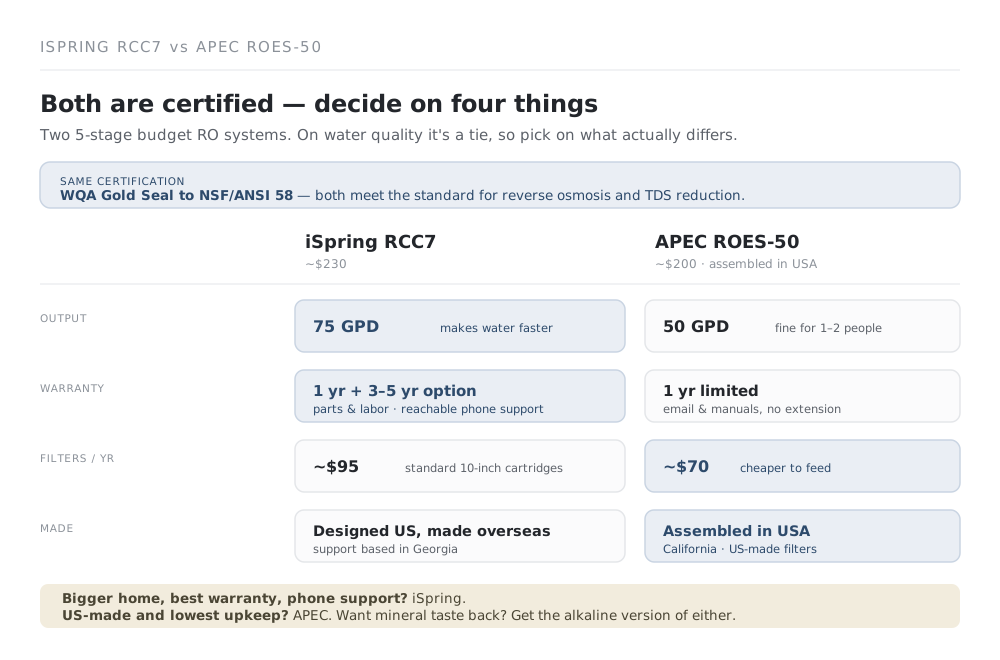
The four things that actually differ between these two are output, warranty and support, filter cost, and where each is made. Those are what this page compares.
The specs, side by side
Here’s the honest read on the two most popular models, the iSpring RCC7 and the APEC ROES-50 Essence.
| iSpring RCC7 | APEC ROES-50 Essence | |
|---|---|---|
| Stages | 5 | 5 |
| Output | 75 GPD | 50 GPD |
| Certification | WQA Gold Seal to NSF/ANSI 58 | WQA Gold Seal to NSF/ANSI 58 + 372 |
| Typical price | ~$230 | ~$200 |
| Filters per year | ~$95 | ~$70 |
| Waste (drain) ratio | ~3:1 (about 3 gal to drain per gal) | ~3:1 (about 3 gal to drain per gal) |
| Warranty | 1 year + optional 3–5 year extended (parts & labor) | 1 year limited |
| Support | Lifetime US phone/tech support | US-based email and manuals |
| Where it’s made | Designed in the US, produced overseas | Assembled in the USA (California) |
| Alkaline version | RCC7AK (6-stage) | ROES-PH75 / RO-PH90 |
One row people expect to differ doesn’t: waste water. iSpring lists the RCC7 at a 1:3 filtered-to-waste ratio with the tank, and APEC puts its undercounter systems at about 3:1, so both send roughly 3 gallons to the drain per gallon of filtered water. It’s a wash, not a tiebreaker. (iSpring, APEC)
Neither brand wins every row. iSpring takes output, warranty, and support; APEC takes price, filter cost, and US assembly.
Output: 75 vs 50 gallons a day
The iSpring makes water faster, at 75 gallons a day against the APEC’s 50.
This matters less than the number suggests, because both are tank systems.
The tank stores a few gallons of finished water, so when you open the faucet you get a fast stream either way. The GPD figure mostly tells you how quickly the tank refills after you draw it down.
For one or two people, 50 GPD is plenty; the APEC keeps up with normal drinking and cooking without you noticing.
For a busy household of four or more, or if you fill big pots and pitchers back to back, the extra output of the 75 GPD iSpring is the more comfortable choice.
Warranty and support: iSpring’s real edge
Both systems ship with a 1-year limited warranty on defects.
iSpring goes further, offering an optional extended warranty of 3 to 5 years that covers parts and labor, which APEC does not match.
Support is the bigger practical difference on installation day.
iSpring is known for quick, reachable US phone and tech support, which helps a first-timer working through the drain clamp or faucet hole. APEC has solid manuals and email support, but owners more often report waiting to reach a live person.
If it’s your first reverse osmosis install and you want someone on the phone, that tilts toward iSpring.
Running cost: APEC is cheaper to feed
The sticker price is close, but APEC costs a little less to run year after year.
A full set of APEC replacement filters runs about $70, against roughly $95 for the iSpring set.
Both brands use standard 10-inch by 2.5-inch cartridges, so you can also buy compatible sediment and carbon filters from other makers for $10 to $20 each and cut that cost further.
On either system the pre and post filters change about every 6 to 12 months, and the reverse osmosis membrane lasts 2 to 3 years.
Over a decade, APEC’s lower filter cost adds up to a modest but real saving.
Made in the USA: APEC’s calling card
APEC assembles its systems in California and uses US-made filters, and it leans on that as its main selling point. (APEC)
iSpring designs its systems in the US and produces them overseas to its spec, with support based in Georgia.
If buying American-made is something you weigh, APEC is the clearer pick.
If you care more about the warranty and phone support behind the product than where it was bolted together, that point goes back to iSpring.
The case for each system
iSpring RCC7: best for most households
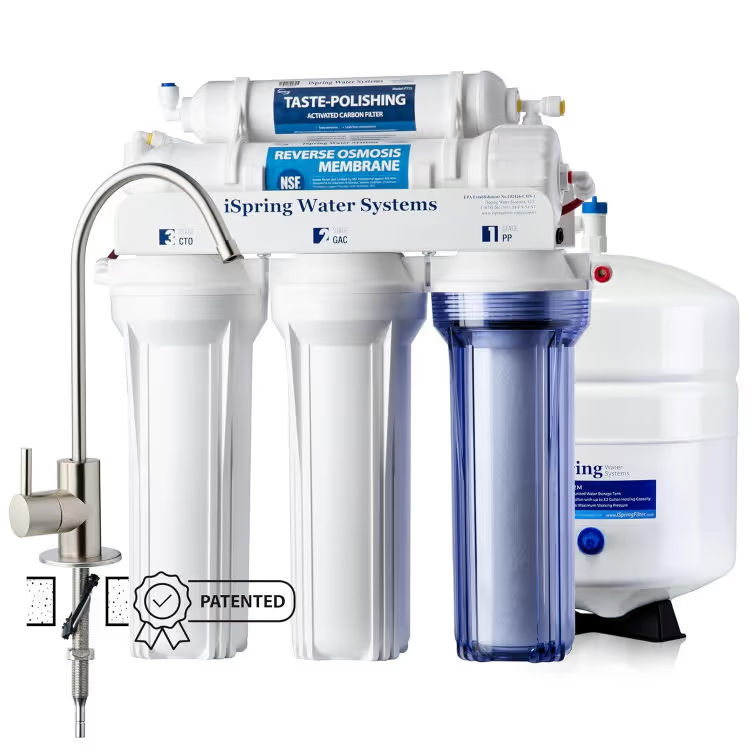
The RCC7 is the one to get if you have a bigger household, want water made faster, or want the strongest safety net on your first install.
It’s a 5-stage tank system rated at 75 GPD and certified with the WQA Gold Seal to NSF/ANSI 58, and it lists for about $230. (iSpring)
iSpring says it reduces up to 99% of over 1,000 contaminants, including lead, fluoride, arsenic, and PFAS, and it installs under the sink with its own faucet and a drain connection.
What sets it apart from the APEC is the optional extended parts-and-labor warranty and the reachable US phone support on install day.
The honest trade-off: its filters cost more per year, roughly $95 against APEC’s $70, and like all standard reverse osmosis the water tastes flat unless you add minerals back.
If you specifically want a US-assembled system, or you’d rather run it cheaper and 50 GPD is enough, the APEC is the better fit.
Discount codeuse REFISPRING at checkout to save on this order.
Check price at iSpring(opens on iSpring, external site)APEC ROES-50: best for made-in-USA and low upkeep
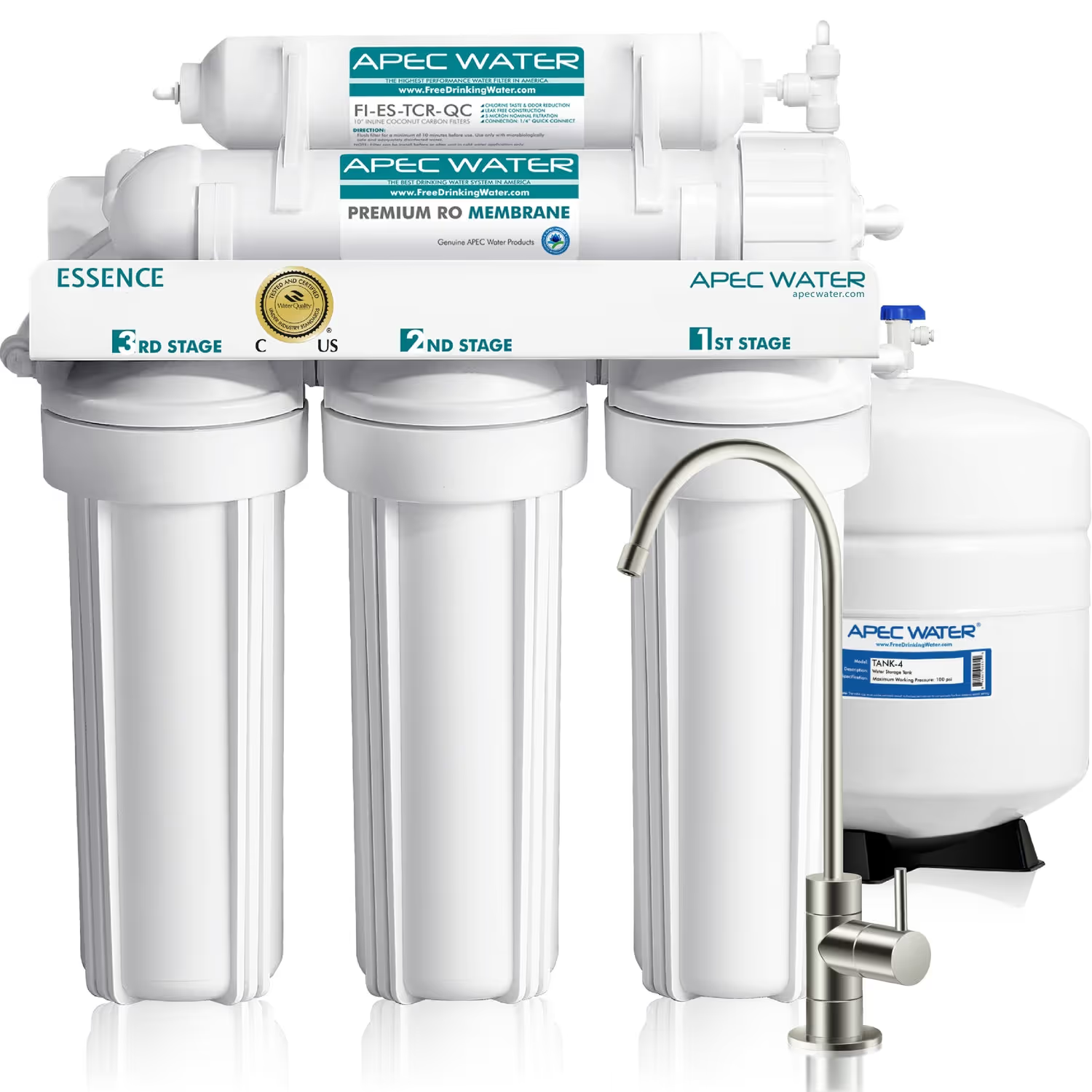
The ROES-50 is the one to get if US assembly and the lowest running cost matter to you, and 50 GPD covers your household.
It’s a 5-stage tank system rated at 50 GPD, assembled in California, and carries the WQA Gold Seal to NSF/ANSI 58 and 372. It lists for about $200. (APEC)
APEC says it removes up to 99% of contaminants including chlorine, fluoride, arsenic, and lead, and its replacement filters run about $70 a year, cheaper than iSpring’s.
The reason to choose it over the iSpring is the US-made filters and the California assembly.
The honest trade-off: it makes water more slowly at 50 GPD, its warranty is a plain 1 year with no extended option, and phone support is harder to reach.
If you have a big household, want the extended warranty, or want someone on the phone during install, get the iSpring instead.
Check the APEC ROES-50(opens in a new tab, external site)Want mineral taste added back? Get the alkaline version of either
If the flat taste of reverse osmosis water bothers you, both brands sell a version that fixes it.
Reverse osmosis strips out minerals, so the water tastes flat and sits slightly acidic. A remineralization stage adds calcium and magnesium back and nudges the pH up.
The iSpring RCC7AK adds a 6th alkaline stage; APEC’s ROES-PH75 and 90 GPD RO-PH90 do the same with US-made calcium carbonate. (iSpring, APEC)
It’s worth adding only if the taste bothers you, since remineralization is a taste and pH preference, and food supplies most of your minerals.
Choose iSpring if… choose APEC if…
| Choose the iSpring RCC7 if… | Choose the APEC ROES-50 if… |
|---|---|
| You have a bigger household or want water made faster (75 GPD) | You’re one or two people and 50 GPD is plenty |
| You want the extended parts-and-labor warranty | You want the lowest up-front and filter cost |
| You want reachable phone support on install day | US assembly and US-made filters matter to you |
| You might add the alkaline RCC7AK later | You’d rather feed it for about $70 a year |
Either way, you’re getting a certified 5-stage reverse osmosis system that will treat your drinking water well for years.
Are these even the right shape for you?
Both of these are budget tank systems, and that’s the right pick for most people.
But if your under-sink cabinet is crowded, a tankless system frees up the space the tank takes, at a higher price.
And if your only real problem is chlorine taste or lead on city water, a certified carbon filter may do the job without the drain water or the tank.
Our under-sink reverse osmosis guide walks through tank vs tankless and when to skip reverse osmosis entirely.
Frequently asked questions
Is APEC or iSpring better?
For most people the iSpring RCC7 is the slightly better all-round buy: 75 GPD, an optional extended parts-and-labor warranty, and easy US phone support for about $230. Choose the APEC ROES-50 if you value US assembly and the lowest running cost and 50 GPD is enough. Both are certified to the same standard, so water quality is close to a tie.
Are iSpring and APEC reverse osmosis systems NSF certified?
Both carry the WQA Gold Seal, which certifies them to NSF/ANSI 58, the standard for reverse osmosis and TDS reduction. The APEC ROES-50 is also listed to NSF/ANSI 372 for lead-free materials. Certification is the reason you can trust either one’s removal claims.
Is 50 GPD enough, or do I need 75?
For one or two people, 50 GPD is plenty for drinking and cooking, because a tank stores finished water and refills between uses. For a household of four or more, or if you draw large amounts back to back, the 75 GPD iSpring keeps up more comfortably.
Do iSpring and APEC use the same replacement filters?
Both use standard 10-inch by 2.5-inch cartridges, so replacements are cheap and easy to find, including compatible filters from other makers at $10 to $20 each. Use each brand’s own reverse osmosis membrane and post-filter for the certified performance; the sediment and carbon pre-filters are widely cross-compatible.
Which is easier to install?
Both are designed for DIY installation with a dedicated faucet and a drain connection, and most handy owners fit either in an afternoon. iSpring’s more reachable phone support is the practical edge if it’s your first install. Our reverse osmosis installation guide covers each step.
Do I need the alkaline version?
Only if the flat taste of reverse osmosis water bothers you. The iSpring RCC7AK and APEC ROES-PH add a remineralization stage that puts calcium and magnesium back for taste and a higher pH. It’s a preference, not a health requirement, since food supplies most of your minerals.
How much water do these systems waste?
Both send some water to the drain to flush the membrane, the drain ratio. Standard tank systems like these run around 3 to 4 gallons to the drain per gallon of filtered water. At a single drinking tap, that total is modest.
Still deciding on the shape? Start with our under-sink reverse osmosis guide, which covers tank vs tankless and when to skip reverse osmosis.
Not sure reverse osmosis is the right tool at all? The best reverse osmosis system guide routes you by what’s in your water.
Ready to fit it yourself? Our reverse osmosis installation guide walks through every connection.
Considering a tankless system instead? Our Frizzlife vs Waterdrop comparison covers the tankless matchup, at two very different price points.
How we researched this
We built this comparison from the WQA Gold Seal and NSF/ANSI certification listings, manufacturer spec sheets for the iSpring RCC7 and APEC ROES-50, and published owner-reported comparisons of warranty, support, and filter cost.
We don’t run these two systems side by side ourselves yet, so we don’t claim first-hand testing, and every figure here is attributed to its source.
Prices, GPD ratings, and certifications in this category change, so treat every number as approximate and confirm the current spec and NSF/ANSI 58 listing on the model before you buy.
When we name a merchant we may earn a commission if you buy through a link here, at no cost to you.
Sources
- WQA — Gold Seal Product Certification
- NSF — NSF/ANSI 58: Reverse Osmosis Drinking Water Treatment Systems
- iSpring — RCC7 5-Stage Under-Sink reverse osmosis, WQA Gold Seal to NSF/ANSI 58, 75 GPD
- iSpring — RCC7AK 6-Stage Alkaline reverse osmosis
- APEC — ROES-50 Essence 5-Stage 50 GPD, WQA Certified
- APEC — FAQ: rinse-to-product (waste) water ratio, ~3:1 undercounter
- APEC — RO-PH90 Ultimate 6-Stage Alkaline, WQA Certified