Best drinking water filtration system: clean water at the tap you drink from
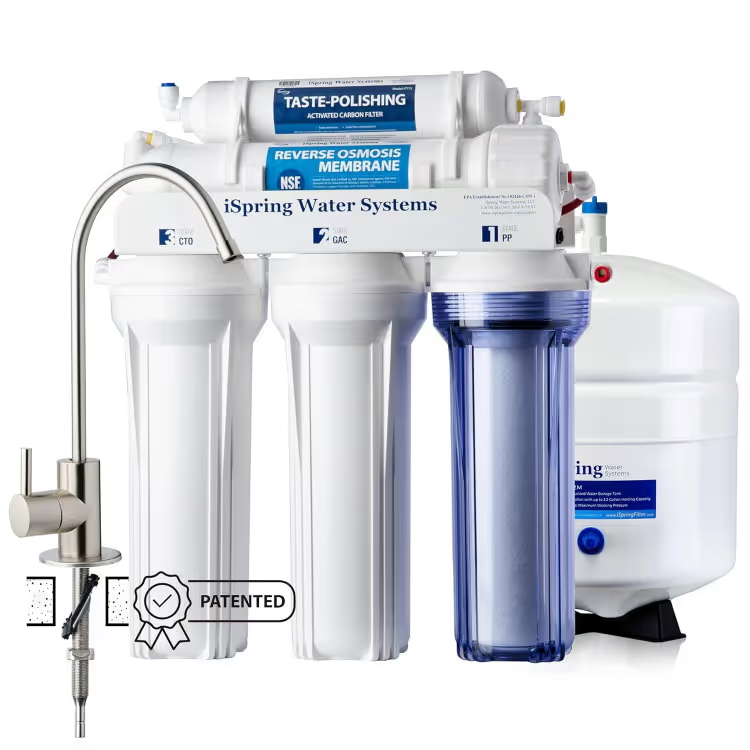
- Certified to NSF/ANSI 58, the standard specific to reverse osmosis.
- Reduces up to 99% of more than 1,000 contaminants, including PFAS, fluoride, and arsenic.
- Ships with a dedicated faucet and produces about 75 gallons per day.
- Costs about $230, with the membrane replaced every 2 to 3 years.
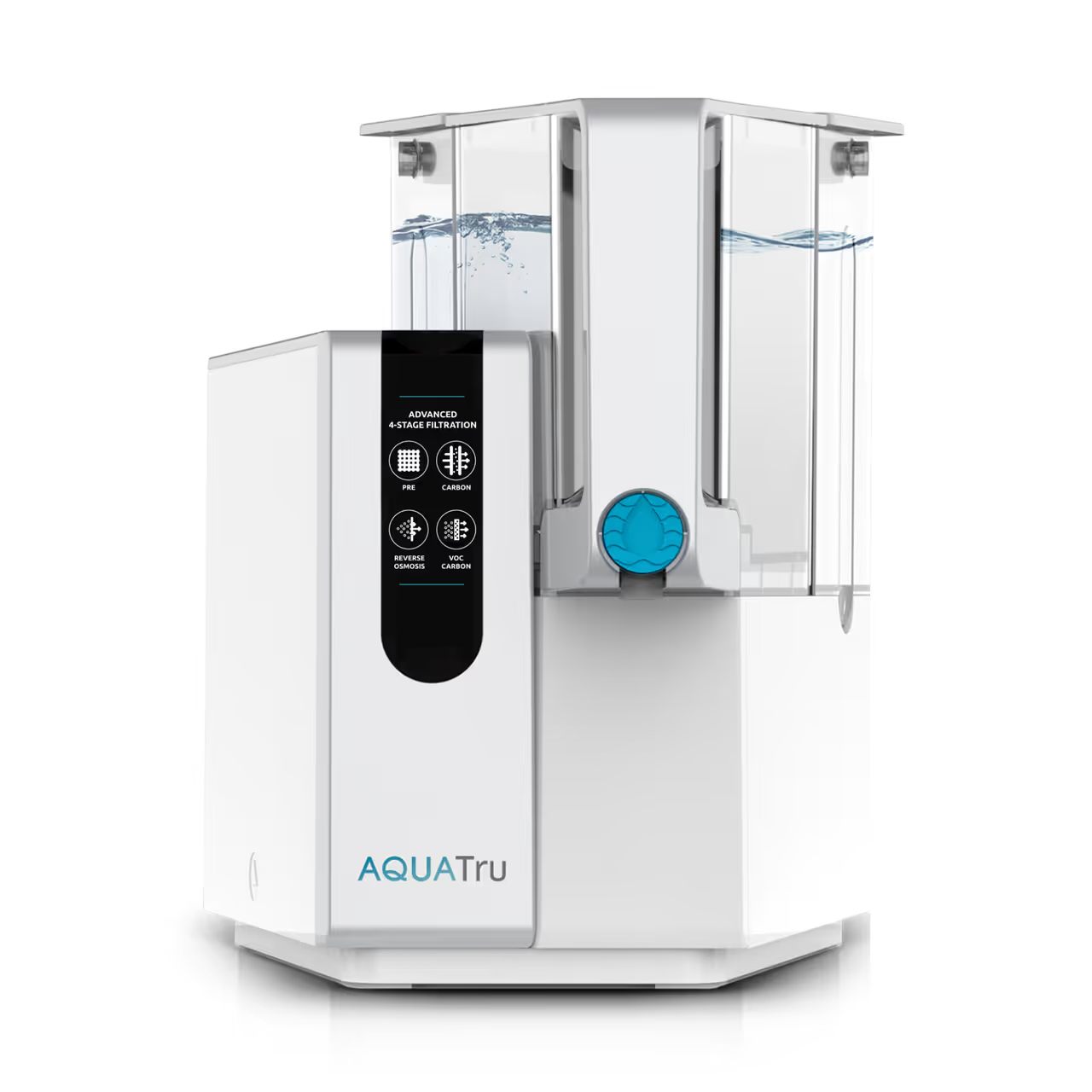
- Independently certified by IAPMO to NSF/ANSI 42, 53, 58, and 401.
- Covers every one of its 80-plus claimed contaminants, including lead, arsenic, and PFOA/PFOS.
- Plugs in and runs from two tanks, with no plumbing or drilling required.
- Costs about $449, with proprietary filters running roughly $60 a year.
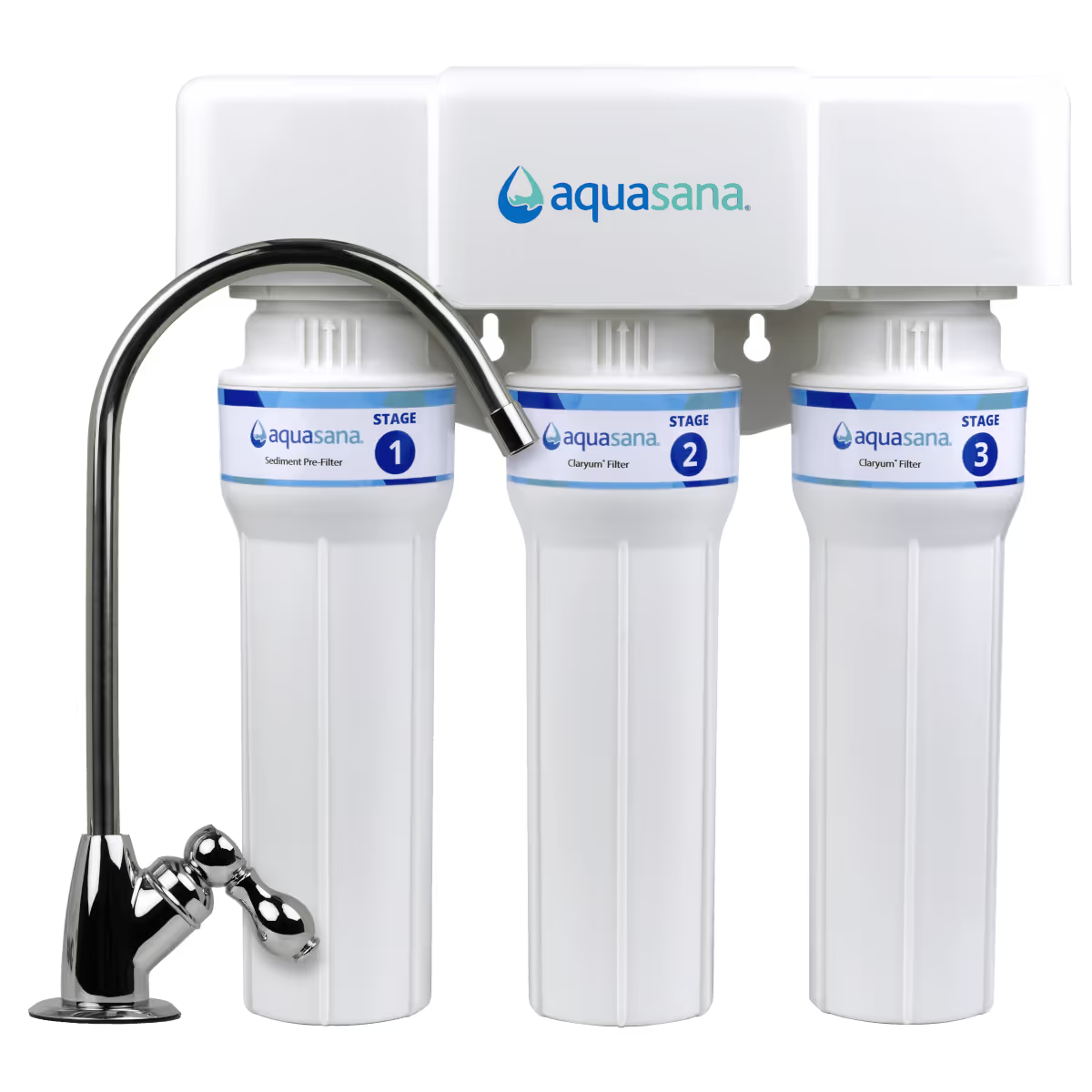
- Certified to NSF/ANSI 42, 53, and 401 for chlorine, lead, and PFOA/PFOS.
- Reduces more than 96% of chlorine and chloramine and 99% of lead.
- Runs at about 0.72 GPM with no tank, no pump, and no water sent to drain.
- Keeps calcium and magnesium in the water and costs about $140 to $200.
The best drinking water filtration system is a point-of-use unit at your kitchen sink, because the water you drink and cook with comes from one tap, and treating that tap is far cheaper and more thorough than filtering the whole house.
So this guide skips whole-house systems and ranks the formats that actually clean your drinking water: under-sink reverse osmosis, a countertop unit, an under-sink carbon block, and a filter pitcher.
For most homes that can install under the sink, our pick is the iSpring RCC7, a reverse osmosis system certified to NSF/ANSI 58 for about $230.
If you rent or won’t drill your cabinet, the countertop AquaTru Classic gives you certified reverse osmosis with no plumbing at all.
If your only real issues are chlorine taste, lead, or PFAS on city water, you may not need reverse osmosis. A certified carbon block like the Aquasana Claryum does that job for less and keeps your minerals.
And on a tight budget, a certified pitcher like the ZeroWater 5-stage reduces lead and PFAS for about $40, with the trade-off that you refill it constantly. If forever chemicals are your specific worry, our water filters for PFAS guide sorts the certified options from the ones that only claim to help.
Find the format that fits your kitchen and your test, then read the pick that matches.
Still weighing tap, bottled, and the different kinds of water before you filter anything? Start with the best water to drink guide, or read distilled vs purified water if those two labels are what’s tripping you up.
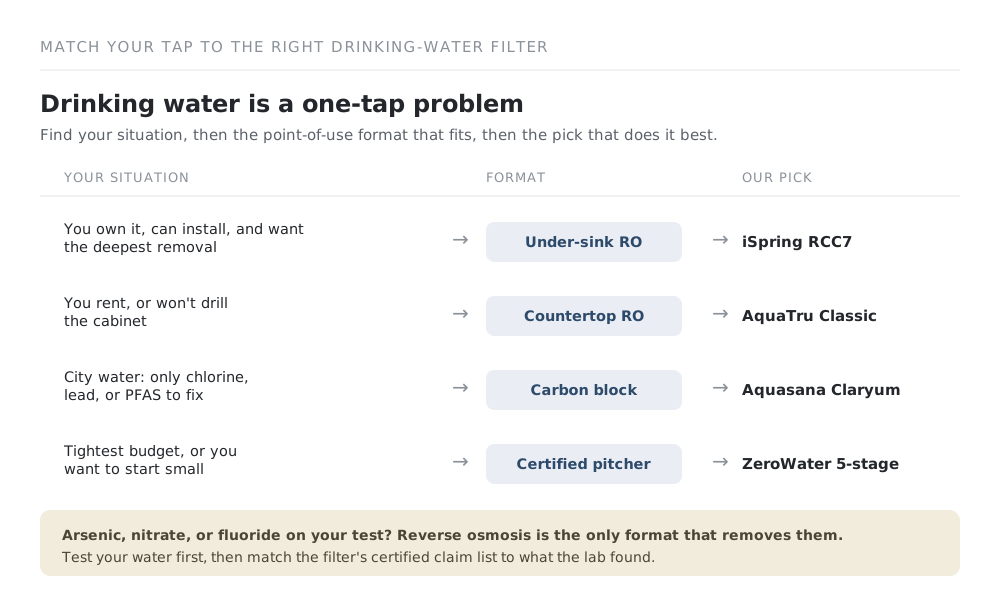
First: which drinking-water setup fits you?
Every pick below cleans the water at one tap. The right one comes down to what your test found and whether you can install anything.
Find the row that sounds like you, and the right column is the format that fits, with our pick below it.
| Your situation | The format that fits | Our pick |
|---|---|---|
| You own, can drill, and want the deepest removal | Under-sink reverse osmosis | iSpring RCC7 |
| You rent, or won’t cut into cabinets | Countertop reverse osmosis (no plumbing) | AquaTru Classic |
| City water, only chlorine, lead, or PFAS to fix | Under-sink carbon block | Aquasana Claryum |
| Tightest budget, or you want to start small | Certified filter pitcher | ZeroWater 5-stage |
| A test flags arsenic, nitrate, or fluoride | Reverse osmosis (nothing else removes these) | iSpring RCC7 or AquaTru |
Notice the pattern: reverse osmosis is the only format that removes dissolved contaminants like arsenic, nitrate, and fluoride, so a serious test result points you to reverse osmosis.
If your only complaint is taste, a carbon filter or a good pitcher is enough, and you keep the minerals reverse osmosis strips out.
If you want clean water at every tap, not just the kitchen, that’s a whole-house decision instead. See our home water filtration guide to route by your water problem, or the whole-house picks if you already know you want point-of-entry.
Test your water first, so you buy the right removal
This is the step that saves you the most money, and nearly every buying guide skips it.
A water test turns “my water tastes off” into a list of contaminants, and that list tells you whether you need reverse osmosis or just good carbon.
On city water, start with your utility’s annual water quality report, also called a Consumer Confidence Report, which is free and names your disinfectant and any known issues. Then test at the tap for lead if you have older plumbing. (EPA)
On well water, no one tests it for you, so test at least once a year for coliform bacteria and nitrate, plus arsenic if your area is prone to it. (EPA)
Use a certified lab or a well-reviewed mail-in kit for anything that affects health, like lead, arsenic, and nitrate. At-home strips are fine for a first read on taste and hardness, but not for health contaminants.
A test costs $30 to $50 and routinely prevents a wrong purchase. See well water testing for how to take a clean sample, and the best test kits for the kits themselves.
We don’t run these systems ourselves yet, so every figure here comes from a manufacturer spec, an NSF/ANSI standard, or a government source, and we say which.
What your test numbers mean, and which format handles them
A lab report is a list of numbers, so here’s how to read the common ones against the EPA’s limits, and which format actually removes each. (EPA)
| Contaminant | EPA limit | Removed by |
|---|---|---|
| Lead | 15 ppb action level | reverse osmosis, certified carbon block, certified pitcher |
| Arsenic | 10 ppb | Reverse osmosis only |
| Nitrate | 10 mg/L (as N) | Reverse osmosis only |
| Fluoride | 4.0 mg/L | Reverse osmosis only |
| PFOA / PFOS (PFAS) | 4 ppt | reverse osmosis, certified carbon block, some certified pitchers |
| Chlorine, taste, odor | Secondary (aesthetic) | Any certified carbon filter |
Limits are EPA National Primary Drinking Water Regulations; the PFOA/PFOS limit is the 2024 rule. (EPA)
If your only numbers over the line are lead, chlorine, or PFAS, a certified carbon block or pitcher clears them. The moment arsenic, nitrate, or fluoride shows up, you’re in reverse osmosis territory, because nothing else on this list removes them.
Buy by the certification, not the stage count
“8-stage” and “0 TDS” look impressive on a box and tell you almost nothing. One label tells you an independent lab verified the removal: the NSF/ANSI certification.
NSF/ANSI standards are numbered by what they cover, and four matter for drinking water.
- NSF/ANSI 42 covers aesthetics: chlorine, taste, and odor.
- NSF/ANSI 53 covers health contaminants like lead, VOCs, and cysts.
- NSF/ANSI 58 is reverse osmosis specifically, covering total dissolved solids reduction plus the contaminants the membrane is verified to remove.
- NSF/ANSI 401 covers emerging contaminants like pharmaceuticals and PFOA/PFOS.
Certification is always contaminant-specific, so “NSF certified” on its own means nothing. A unit can be certified for chlorine taste and remove none of your lead or arsenic.
Watch for the split, too: a certification can cover the whole finished unit or just one replaceable cartridge. A model “tested to NSF standards” without a listed certification is trusting you to take the brand’s word for it.
So the rule is simple. Match the unit’s certified claim list to the contaminants your test found, and treat a full NSF/ANSI 58 listing as the strongest proof for a reverse osmosis system.
The picks
iSpring RCC7
| Spec | Value |
|---|---|
| Type | 5-stage under-sink reverse osmosis |
| Certification | NSF/ANSI 58 |
| Removes | Lead, arsenic, fluoride, nitrate, PFAS, dissolved solids |
| Output | ~75 gallons per day (tank-fed faucet) |
| Maintenance | Pre/post filters every 6–12 months; membrane every 2–3 years |
| Price | ~$230 |
| The iSpring RCC7 is the one to get for most homes, because it’s a proven 5-stage reverse osmosis system carrying the certification that matters for reverse osmosis: NSF/ANSI 58. iSpring says it reduces up to 99% of more than 1,000 contaminants, including PFAS, fluoride, arsenic, and up to 98% of lead. (iSpring) |
It installs under most sinks with its own dedicated faucet and a drain connection, and it costs a fraction of a whole-house system while removing far more from the water you actually drink.
Discount codeuse REFISPRING at checkout to save on this order.
Why it scores 8.5i
Each sub-score is our assessment, weighted into the overall. It reflects published specifications, certification listings and warranty terms — not systems we ran ourselves. How we score
- Performance9/10
- A five-stage membrane that reduces the dissolved contaminants nothing else reliably touches — arsenic, nitrate, lead, fluoride, PFAS and total dissolved solids — at 75 gallons a day. Short of the top because it treats one tap and sends several gallons to the drain for each one it makes. Source ↗
- Value10/10
- About $230 for certified reverse osmosis is the value benchmark of the whole category: nothing else on this site removes as much for as little. The filters are commodity parts rather than proprietary cartridges, so the running cost stays low for the life of it. Source ↗
- Ownership6/10
- The most involved install of any drinking-water pick here: a faucet hole to drill, a drain saddle to tap and a pressurized tank to find room for. Then filters every six to twelve months and a membrane every two to three years. Source ↗
- Trust8/10
- Certified to NSF/ANSI 58, the standard written for reverse osmosis, and carrying the WQA Gold Seal against it. Held short of the top because iSpring's "over 1,000 contaminants" headline is broader than the certified claim list underneath it. Source ↗
AquaTru Classic countertop reverse osmosis
| Spec | Value |
|---|---|
| Type | 4-stage countertop reverse osmosis |
| Certification | IAPMO to NSF/ANSI 42, 53, 58, 401 |
| Removes | Lead, arsenic, fluoride, PFOA/PFOS, 80+ contaminants |
| Recovery | 4:1 (1 gallon to drain per 4 made) |
| Tanks | 1 gal tap water in, 0.75 gal clean out |
| Price | ~$449 |
| The AquaTru Classic gives you reverse osmosis water without touching your plumbing: you plug it in, fill the tap-water tank, and pour from the clean tank. It’s the one countertop unit independently certified by IAPMO to NSF/ANSI 42, 53, 58, and 401 for every one of the 80-plus contaminants it claims, including lead, arsenic, fluoride, PFOA, and PFOS. (AquaTru) |
That independent certification is why it’s the countertop unit to beat, and why it’s a safe choice even when a test flags something serious.
Why it scores 8.3i
Each sub-score is our assessment, weighted into the overall. It reflects published specifications, certification listings and warranty terms — not systems we ran ourselves. How we score
- Performance9/10
- A genuine reverse osmosis membrane with no plumbing at all — lead, arsenic, fluoride, PFOA and PFOS among more than eighty contaminants, at a 4:1 recovery ratio that is efficient for the format. The ceiling is throughput: 0.75 gallons of clean water per tank fill. Source ↗
- Value7/10
- About $449, plus roughly $60 a year in proprietary filters, is more than a certified under-sink system that does the same job out of sight. That gap is the price of not drilling, which for a renter is the whole point. Source ↗
- Ownership7/10
- Nothing to install, no drain to tap and no faucet hole to cut. Against that, it is a large two-tank appliance holding real counter space, and both tanks are filled and emptied by hand. Source ↗
- Trust10/10
- Independently certified by IAPMO to NSF/ANSI 42, 53, 58 and 401 for every one of the contaminants it claims to reduce. That is the broadest verified claim list of any product on this site, and the reason it stays a safe answer when a test flags something serious. Source ↗
Aquasana Claryum AQ-5300+
| Spec | Value |
|---|---|
| Type | 3-stage under-sink carbon + ion-exchange |
| Certification | NSF/ANSI 42, 53, 401 |
| Removes | 96%+ chlorine/chloramine, 99% lead, 95% PFOA/PFOS |
| Flow | ~0.72 GPM, no tank, no pump |
| Waste | None (not reverse osmosis) |
| Price | ~$140–200 |
| The Aquasana Claryum isn’t reverse osmosis, and for many city homes that’s the point. It’s a carbon and ion-exchange block certified to NSF/ANSI 42, 53, and 401, reducing more than 96% of chlorine and chloramine, 99% of lead, and 95% of PFOA and PFOS. (Aquasana) |
Because it isn’t reverse osmosis, it keeps the calcium and magnesium in your water, sends nothing to the drain, and pours fast from its own faucet with no tank and no pump.
Why it scores 8.2i
Each sub-score is our assessment, weighted into the overall. It reflects published specifications, certification listings and warranty terms — not systems we ran ourselves. How we score
- Performance8/10
- Better than 96% of chlorine and chloramine, 99% of lead and 95% of PFOA and PFOS, poured at a fast 0.72 gpm with no tank and no pump. It is carbon, so fluoride, nitrate, arsenic and total dissolved solids are outside what it can do at all. Source ↗
- Value9/10
- Roughly $140 to $225 for that certified claim list, with no wastewater and no drain to plumb. The Claryum filter set every six months is the whole running cost. Source ↗
- Ownership7/10
- A DIY under-sink fit with its own faucet, so a hole gets drilled, and then a filter set twice a year. Owner reports of the fittings weeping over time and damaging the cabinet are the recurring complaint against it. Source ↗
- Trust9/10
- Certified to NSF/ANSI 42, 53 including P473, and 401 — taste, health contaminants, PFAS and emerging contaminants, each an actual listing with a claim list you can read. Source ↗
ZeroWater 5-stage pitcher
| Spec | Value |
|---|---|
| Type | 5-stage filter pitcher (no install) |
| Certification | IAPMO to NSF/ANSI 42, 53, 401 |
| Removes | Lead, hexavalent chromium, mercury, PFOA/PFOS |
| Extra | Built-in TDS meter (reads 0 when fresh) |
| Filter life | Short; drops off as TDS climbs |
| Price | ~$40 (pitcher); filters recurring |
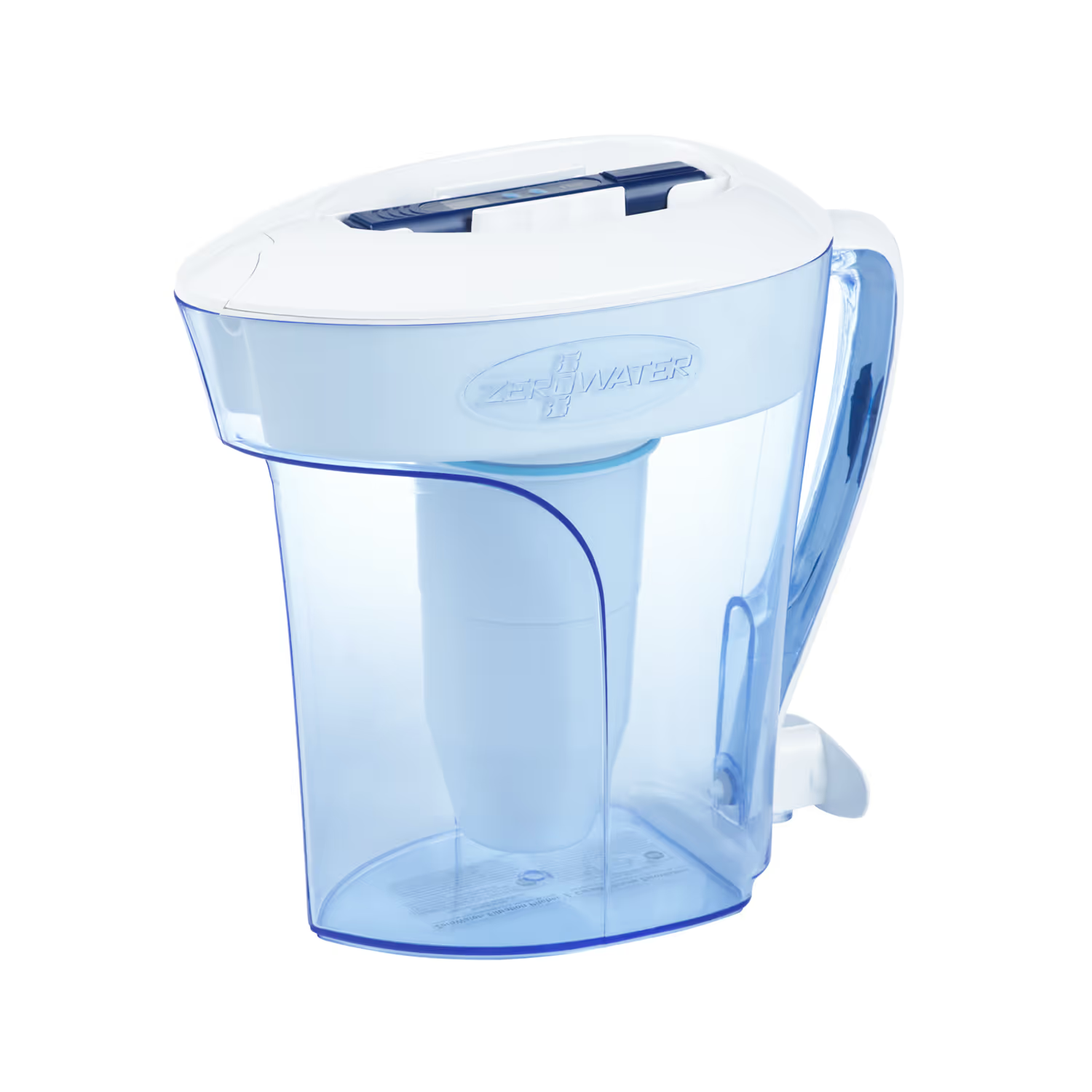
| The ZeroWater 5-stage is the honest budget pick, and unlike most pitchers it carries a real certification: the filter family is IAPMO certified to NSF/ANSI 42, 53, and 401 for chlorine taste, lead, hexavalent chromium, mercury, and PFOA/PFOS. (ZeroWater) |
It needs no plumbing and no counter space beyond the fridge, and the included TDS meter lets you see when the filter is spent.
Why it scores 7.6i
Each sub-score is our assessment, weighted into the overall. It reflects published specifications, certification listings and warranty terms — not systems we ran ourselves. How we score
- Performance7/10
- Certified reduction of lead, hexavalent chromium, mercury and PFOA/PFOS is more than the pitcher format usually manages. It holds a few cups, filters slowly, and cannot touch arsenic, nitrate or fluoride, so it screens rather than solves. Source ↗
- Value8/10
- About $40 is the cheapest certified entry to filtered drinking water anywhere on this site. The short cartridge life pulls the other way: on hard or high-TDS water the cost per gallon ends up the highest of any pick here. Source ↗
- Ownership7/10
- Nothing to plumb and nothing to drill, and the built-in TDS meter says plainly when the cartridge is spent. On hard water that is often, and refilling a pitcher is a daily job rather than a yearly one. Source ↗
- Trust9/10
- The filter family carries IAPMO certification to NSF/ANSI 42, 53 and 401 — an actual listing, where most pitchers on the shelf rely on "tested to" language instead. Source ↗
Skip “alkaline” and 8-stage units with no listed certification
Skip it because without a listed NSF/ANSI certification and its claim list, you have no independent proof the unit removes the lead, arsenic, or PFAS a listing promises. If your goal is safe drinking water, an unverified claim is the one thing you can’t afford.
Reverse osmosis, carbon, or a pitcher: how deep do you need to go?
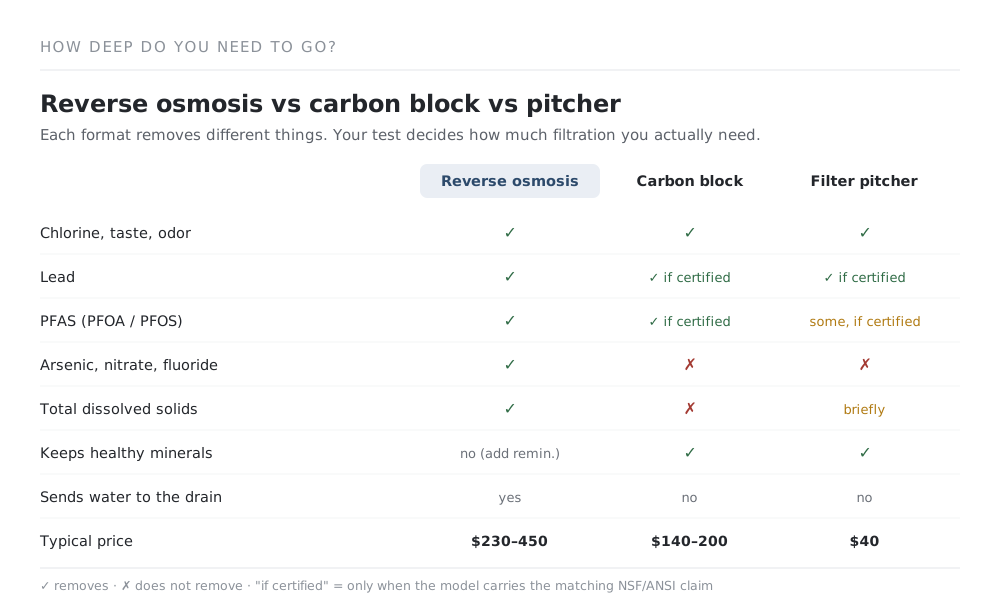
The three formats aren’t ranked best to worst. They remove different things, and the right depth is set by your test.
| Reverse osmosis | Carbon block | Filter pitcher | |
|---|---|---|---|
| Chlorine, taste, odor | Yes | Yes | Yes |
| Lead | Yes | Yes (if certified) | Yes (if certified) |
| PFAS | Yes | Yes (if certified) | Some (if certified) |
| Arsenic, nitrate, fluoride | Yes | No | No |
| Total dissolved solids | Yes | No | Reduces, briefly |
| Keeps healthy minerals | No (add remineralization) | Yes | Yes |
| Wastes water | Yes (drain flush) | No | No |
| Typical price | $230–450 | $140–200 | $40 |
Read it this way: if your test only flags taste, chlorine, or lead, a certified carbon block or pitcher is enough, and you keep your minerals and waste no water.
If it flags arsenic, nitrate, fluoride, or high TDS, only reverse osmosis reliably removes those, so the extra cost and the small amount of drain water are the price of the deeper filtration. (CDC)
What it really costs, up front and every year
The sticker price is only the start. Every point-of-use format has consumables, so budget for the filters before you buy.
| Format | Up-front cost | Yearly upkeep |
|---|---|---|
| Under-sink reverse osmosis | ~$230–450 | ~$50–80 filters; membrane ~$100–150 every 2–3 yrs |
| Countertop reverse osmosis | ~$300–450 | ~$60–150 in filters |
| Under-sink carbon block | ~$140–200 | ~$60–120 in filters |
| Filter pitcher | ~$40 | Highest per gallon; frequent cartridges |
Filter intervals and prices from each manufacturer’s own spec pages, cross-checked against current listings. These are estimates, not a quote.
The number people forget is the yearly one. A water filter pitcher looks cheapest on day one, but its short filter life makes it the most expensive per gallon over time, while an under-sink reverse osmosis system spreads its cost across years of use.
Professional installation for an under-sink unit is usually a couple hundred dollars if you’d rather not do it yourself. Our reverse osmosis installation guide walks through the DIY version, which most handy owners finish in an afternoon.
The mistakes drinking-water buyers make
These come up again and again, and every one is avoidable.
Buying before testing. The most common regret is a filter that didn’t touch the thing that bothered you, bought on a guess. Spend $40 on a test, then match the removal to the result.
Expecting a pitcher to remove everything. A certified pitcher handles lead and chlorine, but no pitcher removes arsenic, nitrate, or fluoride. Those need the reverse osmosis membrane.
Trusting “0 TDS” or “alkaline” as proof of safety. A low TDS reading means low dissolved solids, not the absence of a specific toxin, and an alkaline stage changes taste, not what’s removed. The certified claim list is the fact that matters.
Skipping the certification check. “NSF certified” with no standard number, or a claim covering one cartridge instead of the finished unit, tells you less than it looks like. Read which standard and what it covers.
Buying whole-house for a drinking-water goal. If you only want clean water to drink and cook with, a point-of-use unit does it for a fraction of a whole-house price and removes more at that tap.
Frequently asked questions
What is the best type of filter for drinking water?
It depends on your test. Reverse osmosis removes the widest range, including arsenic, nitrate, fluoride, and PFAS, so it’s the safest choice when a test flags dissolved contaminants. If your only issue is chlorine taste or lead, a certified carbon block or pitcher is enough and keeps your minerals.
Do I need reverse osmosis, or is a carbon filter enough?
Get reverse osmosis if your test shows arsenic, nitrate, fluoride, high TDS, or a mix of contaminants, because carbon can’t remove those. A certified carbon filter is enough if your concerns are chlorine, taste, lead, and PFAS on city water, and it wastes no water.
Is an under-sink or countertop system better for drinking water?
Under-sink is cheaper per gallon and hidden in the cabinet, but it needs drilling and a drain connection. Countertop needs no plumbing, so it’s the choice for renters or anyone who won’t cut into cabinets. Both can deliver certified reverse osmosis water.
Are filter pitchers good enough for drinking water?
A certified pitcher like the ZeroWater 5-stage genuinely reduces lead, chromium, and PFAS, so it’s a real option on a budget. Its limits are a short filter life, a small capacity, and no removal of arsenic, nitrate, or fluoride. For those, or for a heavy-drinking household, an installed system is better value.
How do I know a drinking water filter actually removes what it claims?
Look for an NSF/ANSI certification with a specific standard number and claim list, ideally verified in the NSF, WQA, or IAPMO database. NSF 58 is the standard for reverse osmosis; 53 covers lead and other health contaminants. “NSF certified” with no standard or claim list is not proof.
Does reverse osmosis remove healthy minerals from drinking water?
Yes, the membrane strips calcium and magnesium along with contaminants, which is why reverse osmosis water tastes flat. A remineralization stage adds minerals and taste back. It’s a preference, not a health need, since food supplies most of your minerals.
How much does a good drinking water filter cost to run each year?
Budget roughly $50 to $80 a year in filters for an under-sink reverse osmosis system, plus a membrane every few years; $60 to $150 for countertop reverse osmosis; $60 to $120 for an under-sink carbon block; and the most per gallon for a pitcher, because its cartridges run out fastest.
Should I filter drinking water at one tap or the whole house?
If your goal is clean water to drink and cook with, filter at the kitchen tap, where a point-of-use unit removes the most for the least. Filter the whole house when the problem is house-wide, like a chlorine smell in every shower or scale on fixtures.
Want reverse osmosis but not sure tank or tankless? Our under-sink reverse osmosis picks break down the shapes and certifications.
Renting, or short on cabinet space? See the best countertop reverse osmosis systems, all no-plumbing.
Want the cheapest way in, with nothing to install? Check which faucet water filters are certified for lead, and which only market it.
Off-grid, prepping, or want a filter that works with no power at all? A gravity system is a different category; see our honest Berkey water filter review for what it does and doesn’t certify.
Weighing the two budget reverse osmosis systems everyone lands on? Read iSpring RCC7 vs APEC ROES-50.
Worried about fluoride specifically? Most filters don’t remove it; see the methods that do in our fluoride water filter guide.
Not sure which type of system you need at all? The home water filtration guide routes you from your water problem to the right category.
How we researched this
We built this guide from EPA and CDC guidance on point-of-use water treatment, the NSF/ANSI standards documentation, and the manufacturer spec sheets and independent certification listings for each system named (iSpring, AquaTru, Aquasana, ZeroWater).
We don’t run these systems ourselves yet, so we don’t claim first-hand testing, and every figure here is attributed to its source.
Prices, certifications, and filter intervals change, and removal percentages come from each brand’s own or a certifier’s testing, so treat every number as approximate and confirm the current spec and NSF/ANSI listing before you buy.
When we name a merchant we may earn a commission if you buy through a link here, at no cost to you.
Sources
- EPA — National Primary Drinking Water Regulations (MCLs)
- EPA — Per- and Polyfluoroalkyl Substances (PFAS) drinking water limits
- EPA — Consumer Confidence Report (annual drinking water report)
- EPA — Protect Your Home’s Water (private wells)
- CDC — Guidelines for Treating Well Water
- iSpring — RCC7 5-Stage Under-Sink reverse osmosis, Certified to NSF/ANSI 58, 75 GPD
- AquaTru — Classic Countertop reverse osmosis, IAPMO to NSF/ANSI 42/53/58/401
- Aquasana — Claryum 3-Stage Max Flow Under-Sink Filter (AQ-5300+)
- ZeroWater — Filtration FAQs (NSF/ANSI 42/53/401 certification)