Well water testing: what to test for, how often, and how to do it
Yes, you need to test your well water, and the EPA’s baseline is to do it every year for total coliform bacteria, nitrates, total dissolved solids, and pH, using a state-certified lab, not a hardware-store strip.
Test sooner than that if your water changes taste, smell, or color, or if you’re buying or selling a home with a well.
Nitrate, arsenic, and bacteria have no taste, smell, or color at the levels that matter for health, so water that looks and tastes completely normal can still fail.
“It tastes fine” isn’t a test result; it’s a guess.
The rest of this guide covers what to add to that basic panel, how DIY kits stack up against a lab, how to actually take the sample, and what to do once your results are back.
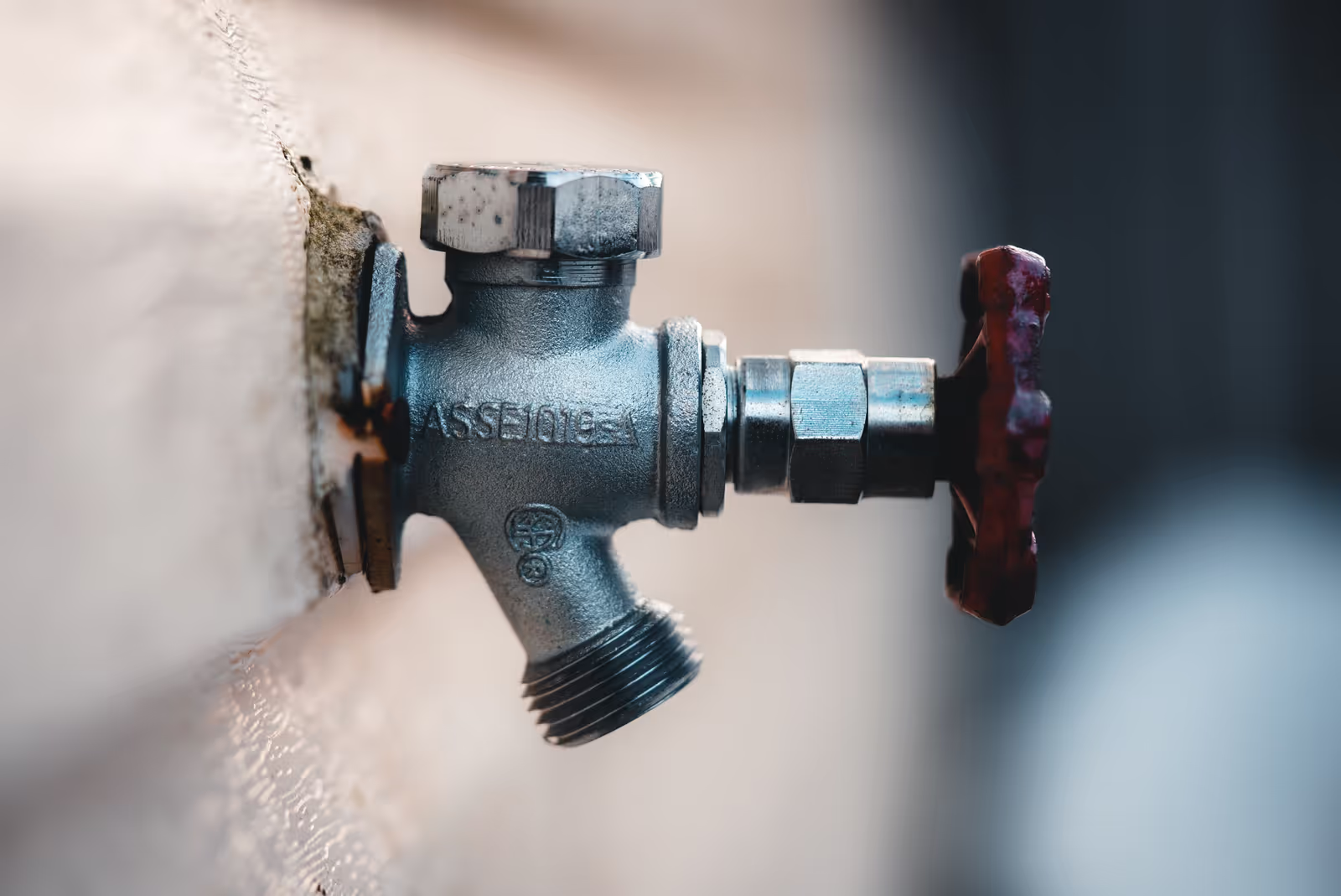
Why this is on you (and why it matters)
City water gets tested by a utility.
Well water doesn’t.
There’s no one checking it for you, no annual report showing up in the mail.
If you’re on a well, you’re your own water utility, and testing is the only way anyone finds out what’s actually in it. (EPA)
A rotten-egg smell tells you about sulfur, and rust staining tells you about iron, but the health-critical contaminants don’t announce themselves that way, which is exactly why testing exists instead of trusting your senses.
How often to test
- Every year, minimum: total coliform bacteria, nitrate, total dissolved solids (TDS), and pH. This is the EPA and CDC baseline for every private well, no matter how the water looks. (EPA, CDC)
- Every 3–5 years: a broader panel covering metals, VOCs, arsenic, and anything specific to your area (see the table below).
- Right away, off-cycle: if the taste, smell, or color changes; if there’s new construction, farming, or industrial activity near the well; if you repair or replace any well component; or if you’re buying or selling a home with a well. Penn State Extension’s clinic schedule breaks bacteria and mineral testing out slightly further: bacteria every 12–14 months, pH and TDS every three years, more often if a number is trending upward test over test. (Penn State Extension)
If you’re buying a home with a well, this isn’t optional homework.
FHA-insured loans require a water test on any home served by a private well, and most sales contracts are written contingent on the results.
Get the test done before closing, not after. (Water Systems Council)
Match your situation to the right test
The sections above cover how often and what, separately.
In practice you’re usually testing for one specific reason, and that reason decides the panel, the format, and the deadline all at once:
| Why you’re testing | What to run | Does a DIY strip count? | What it costs |
|---|---|---|---|
| Routine annual check, no symptoms | Bacteria, nitrate, TDS, pH | Only as a between-test spot check, not a replacement | ~$50–150 |
| New taste, smell, or color | The base panel, plus whatever matches the symptom (see the table below) | No, for anything health-relevant | ~$50–150, up to $200–500 if it’s a broader panel |
| Buying or selling a home with a well | Base panel at minimum; many lenders or inspectors ask for more | No — has to be a certified lab result | ~$50–150 to $200–500 |
| New construction, farming, or industrial activity nearby | Broader metals/VOC panel | No | ~$200–500 |
| Local health advisory for arsenic, lead, or radon | The specific flagged contaminant, targeted | No — strips can’t resolve the low concentrations these limits sit at | Varies by analyte, roughly $150–415 |
Same underlying tests as the rest of this guide; this just answers “which one, right now, for my situation” in one place instead of piecing it together from the sections above.
What to test for, and why
Start with the core four, then add based on what’s around your well.
| Test | What it catches | Why it matters |
|---|---|---|
| Total coliform bacteria | Fecal or surface-water contamination | Should be absent entirely; a positive result means something is getting into your well that shouldn’t be |
| Nitrate | Fertilizer, septic, or agricultural runoff | EPA limit is 10 mg/L; above that is a real health risk, especially for infants under six months |
| Total dissolved solids (TDS) | General mineral/solids load | Not a health number by itself, but a rising trend between tests flags that something new is getting in |
| pH | Acidity/alkalinity | Below 6.5 or above 8.5 corrodes plumbing and can leach lead or copper into your water |
That’s the annual minimum.
What you add on top depends on what’s near the well:
| What’s nearby | Add this to your test |
|---|---|
| Farmland, livestock, septic systems | Nitrate, nitrite, pesticides, coliform (you likely have these already in the base panel) |
| Gas or oil drilling | Chloride, sodium, barium, strontium |
| Industrial sites or a history of dumping | VOCs, TDS, pH, sulfate, chloride, metals |
| Older home plumbing | Lead, copper (alongside pH, since low pH makes both worse) |
| Buying/selling, or local health advisories | Arsenic, lead, radon; ask your local health department what’s common in your area |
(EPA — contaminants by nearby land use, CDC)
If you already know your problem, you don’t need to wait on the full panel to start narrowing it down.
A rotten-egg smell points straight at hydrogen sulfide.
See why your well water smells like rotten eggs for the fast diagnostic.
Rust or orange staining points at iron; see the best iron filter for well water to tell which type you have and match the fix.
DIY strip test vs. lab test vs. professional testing
These aren’t interchangeable, and picking the wrong one for the question you’re asking wastes money either way.
| DIY strip/kit | Certified lab | Professional (on-site) | |
|---|---|---|---|
| Good for | Quick check of pH, hardness, basic nitrate, between real tests | Anything that decides a health or purchase question | Sampling done correctly + interpretation, if you’d rather not DIY the collection |
| Bacteria sensitivity | Misses anything below ~100 CFU/100 mL | Detects down to ~1 CFU/100 mL | Same as lab; a pro just collects the sample for you |
| Covers arsenic, VOCs, radon, PFAS? | No | Yes, if ordered | Yes, if ordered |
| Legally usable (real estate, insurance) | No | Yes | Yes |
| Typical cost | $10–30 basic kit, $50–150 for a larger multi-parameter kit | ~$50–150 basic panel (coliform + nitrate); $200–500 for a comprehensive panel | Lab cost + a service fee |
A strip kit isn’t wrong to own.
It’s a fast way to check hardness or pH between real tests, or to get a rough read while you wait for lab results.
It’s the wrong tool for anything that decides whether your water is safe to drink or whether a home sale should close.
State-certified labs detect bacteria down to about 1 colony-forming unit per 100 mL; most home strips miss anything under roughly 100.
That’s the gap between catching a dangerous contamination and missing it outright. (Tap Score)
Only use a lab certified by your state to test drinking water, not just any lab that does water analysis.
Find one through the EPA’s state-certification directory, your county or state health department, or your State Certification Officer.
Check your county first: some offer free or subsidized basic testing, and a handful of states run this at real scale, not as a one-off pilot.
Iowa’s Private Well Grants Program, for example, provides free water sampling and analysis to private well owners and users, with nearly all of Iowa’s counties participating. (EPA, USGS, Iowa DNR)
Want the specific kit and lab picks, ranked? See best well water test kit: DIY strips vs. mail-in lab kits compared.
Need results faster than a week?
Standard mail-in turnaround is roughly a week total (lab processing plus shipping each way).
Rush processing exists but it’s a real premium, not a small upcharge: Tap Score’s RUSH tier cuts lab processing to about 3 business days and includes prepaid overnight shipping to the lab, for roughly double the price of the standard kit ($429 vs. $209 for their Essential panel). (Tap Score)
One test can’t be rushed no matter what you pay: total coliform bacteria needs a minimum 24 hours to incubate to a detectable level, a biological requirement, not a lab-policy choice, so a same-day bacteria result isn’t something any certified lab can promise. (South Carolina Well Service)
If you’re on a real deadline (a closing date, an offer contingency), pay for rush on everything except bacteria and build in that 24-hour minimum for that one result specifically.
What that premium buys, per day: rush saves roughly 4 days (a week down to 3 business days) for $220 more ($429 − $209).
That’s about $55 per day saved.
Against a real closing deadline, $55/day is cheap insurance.
Paying it just to get results a few days sooner with nothing riding on the date is paying $55/day for impatience.
How to take a water sample that gives you a real result
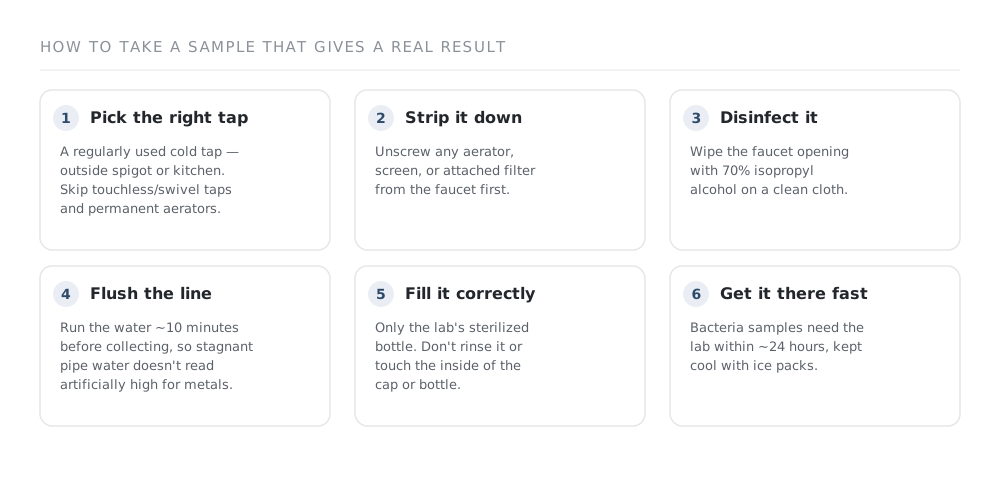
Bad sampling technique is the most common way people get a misleading result, usually a false positive on bacteria from a dirty tap, or artificially high metals from water that sat in the pipe too long.
The lab that sends you the bottles will include their own instructions; follow those over any general guide, since bottles, fill lines, and preservatives vary by test.
In general:
- Pick the right tap. Use a cold-water tap that gets used regularly, such as an outside spigot or a kitchen tap works. Skip touchless faucets, swivel faucets, and anything with a permanent aerator screen; those can harbor bacteria that skew a coliform result.
- Strip it down. Unscrew any aerator, screen, or attached filter from the faucet before you sample.
- Disinfect the opening. Wipe the faucet with 70% isopropyl alcohol on a clean cloth.
- Flush the line. Run the water for about 10 minutes before collecting. This clears out stagnant water sitting in the pipe, which can read artificially high for metals if you skip it.
- Fill the bottle correctly. Use only the sterilized bottle the lab sent you. Don’t rinse it, don’t touch the inside of the cap or bottle, and don’t use a cup or funnel. Fill straight from the tap.
- Get it to the lab fast, especially for bacteria. Bacteria samples typically need to reach the lab within about 24 hours, kept cool with ice packs. Many labs recommend collecting Monday through Wednesday so the sample doesn’t sit over a weekend before it’s processed.
One measurement gotcha worth knowing: hydrogen sulfide gas escapes a sample fast once it hits the air, so a mailed-in sample can read lower than what’s really coming out of your tap.
If you suspect sulfur, test it at the tap with a field kit rather than relying on a mailed lab sample for that one number.
What your results mean, and what to do next
Compare your numbers against the EPA’s health-based thresholds, not against how the water looks or smells:
- Total coliform bacteria: should be zero/absent. Any positive result means contamination is getting into your well and needs to be addressed before you keep drinking the water.
- Nitrate: EPA limit is 10 mg/L (10 ppm). Above that is a real concern, especially for infants.
- Arsenic: EPA limit is 0.010 mg/L (10 ppb).
- pH: stay between 6.5 and 8.5. Outside that range, your plumbing is at risk even if nothing else is elevated.
- TDS: no single health number, but track it. A jump between tests is the flag, not the raw reading.
These are the same Maximum Contaminant Levels the EPA sets for public water systems.
They’re not legally mandatory for a private well, but they’re still the right numbers to measure your results against. (EPA)
If everything comes back clean, you’re done until next year’s test, or sooner if anything changes.
If something’s elevated, what you do next depends on what it is:
- Bacteria positive: don’t wait on filtration shopping. Talk to your local health department about immediate steps (shock chlorination, retesting) before you address it with a permanent system.
- Iron, manganese, or sulfur elevated: you’re looking at an oxidation-based whole-house filter. See the best whole-house filters for well water to match a system to your actual ppm numbers, or start with the sulfur smell diagnosis if that’s your specific symptom.
- Nitrate, arsenic, or other dissolved contaminants elevated: these usually call for reverse osmosis at the point you drink and cook, in addition to or instead of a whole-house system. See arsenic in well water if that’s your result. A dedicated page on nitrates is coming.
- Hardness (not part of the EPA panel, but worth adding): that’s a water softener question, not a filter question. See well water filtration system for how softening fits into the full treatment picture.
Whatever the results say, don’t buy equipment first and test later.
A system sized for your neighbor’s water can be the wrong size, or the wrong type entirely, for yours.
Frequently asked questions
How often should I test my well water?
At minimum, once a year for total coliform bacteria, nitrate, TDS, and pH.
Run a broader panel every 3–5 years, or immediately if your water’s taste, smell, or color changes.
What should I test my well water for?
The annual baseline is bacteria, nitrate, TDS, and pH.
Add tests based on what’s near your well: pesticides and more nitrate near farmland, metals near industrial sites, lead and copper if your home plumbing is older, and arsenic or radon if your local health department flags them as common in your area.
How much does well water testing cost?
A basic lab panel (bacteria + nitrate) runs roughly $50–150.
A comprehensive panel covering 50 or more contaminants runs roughly $200–500.
DIY strip kits run $10–30 for a basic kit, up to $150 for a larger multi-parameter one.
Some counties offer free or subsidized testing, so check before you pay.
Are DIY well water test strips accurate?
For simple readings like pH or hardness, they’re a reasonable quick check.
For anything that decides a health or purchase question, such as bacteria, arsenic, or lead, they’re not sensitive or complete enough.
Certified labs detect bacteria at roughly 1 CFU/100 mL; most strips miss anything under about 100.
How do I take a water sample for testing?
Use a tap without an aerator or touchless head, wipe it with alcohol, flush the line for about 10 minutes, then fill the lab’s sterilized bottle directly without rinsing it or touching the inside.
Bacteria samples need to reach the lab within about 24 hours, kept cool.
Where do I find a certified lab to test my well water?
Through the EPA’s state-certified lab directory, or by contacting your county or state health department.
Check your county first, since some offer free basic testing.
Do I need to test my well water before buying a home?
Yes.
FHA-insured loans require it on homes with a private well, and most purchase contracts are written contingent on the results.
Get it done before closing.
Is my well water safe if it looks and tastes fine?
Not necessarily.
Nitrate, arsenic, lead, and bacteria have no taste, smell, or color at levels that still matter for health.
A clean-looking glass of water can still fail a coliform or nitrate test.
That’s exactly why testing exists instead of just checking by eye.
Once your results are in hand, the next step depends on what they show.
Rotten-egg smell confirmed as sulfur? See the fix, matched to your levels.
Iron elevated or staining showing up? See the best iron filter for well water to match the fix to your type.
Sand, grit, or cloudy water in the sample? See the best sediment filter for well water to pick the right micron rating.
Ready to shop for a whole-house system? See the best whole-house filters for well water.
Want the full five-step framework from test to installed system? See well water filtration system.
How we researched this
We built this guide from EPA and CDC private-well testing guidance, Penn State Extension’s testing clinic schedule, USGS guidance on finding a certified lab, and state sample-collection procedures, cross- checked against cost data from specialist water-testing sources (flagged separately since cost figures vary by region and aren’t a government number).
We don’t run a lab or sell test kits ourselves, so we don’t rank specific kit brands here; that comparison lives on its own page.
When we do name a next step, it’s the one that matches what your results actually show, and we may earn a commission if you buy a system through a link on the pages this one sends you to, at no cost to you.
Sources
- EPA — Protect Your Home’s Water
- CDC — Guidelines for Testing Well Water
- Penn State Extension — Safe Drinking Water Clinic
- USGS — Where can I get my well water tested?
- Water Systems Council — Buying a Home with a Well
- Tap Score — Lab Tests or Test Strips: The Best Water Test for You
- WQA — Nitrate/Nitrite and EPA MCLs
- Tap Score — RUSH Well Water Testing
- South Carolina Well Service — How Long Do Water Test Results Take?
- Iowa DNR — Private Well Program: Well Testing