Best water filtration system: match it to your water, not the brand
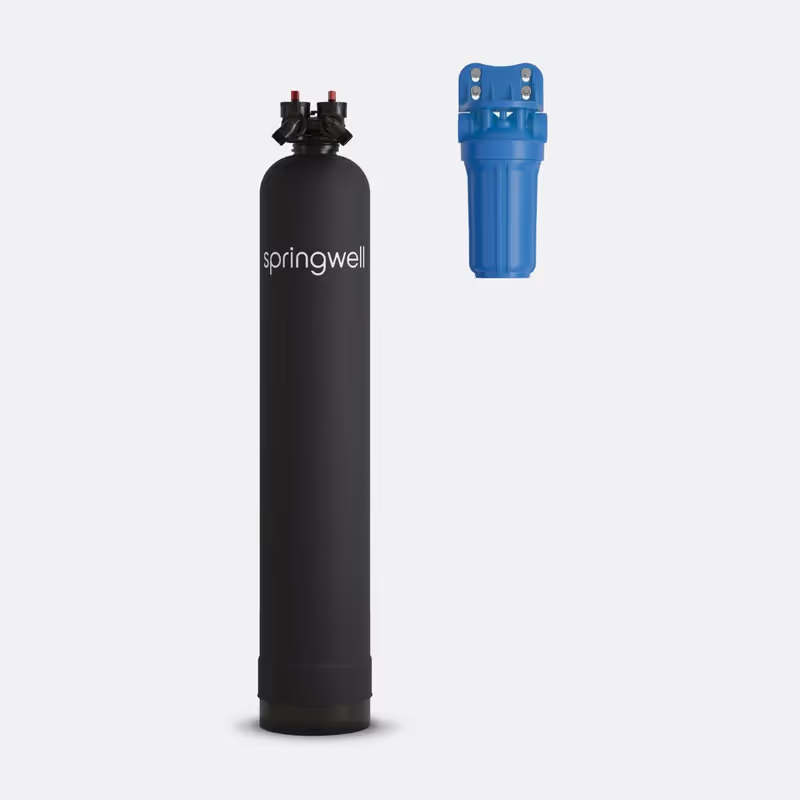
- Uses catalytic carbon plus KDF, effective on both chlorine and chloramine.
- Rated for about 1,000,000 gallons, roughly 10 years before a media change.
- Flow rate of about 9 GPM or more, with minimal pressure drop.
- Priced around $1,040; certification covers individual components rather than the full assembled system.
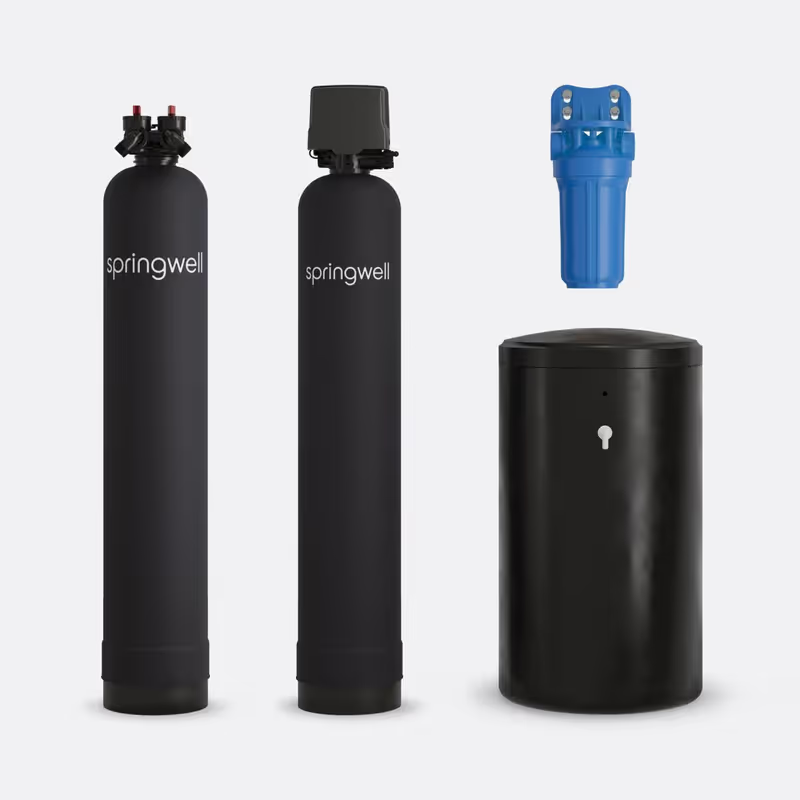
- Combines an air-injection filter with a salt-based softener in one setup.
- Removes iron, hydrogen sulfide, manganese, and hardness together.
- Rated for a flow rate of about 11 GPM.
- Costs roughly $2,500 to $3,000 for both stages installed.
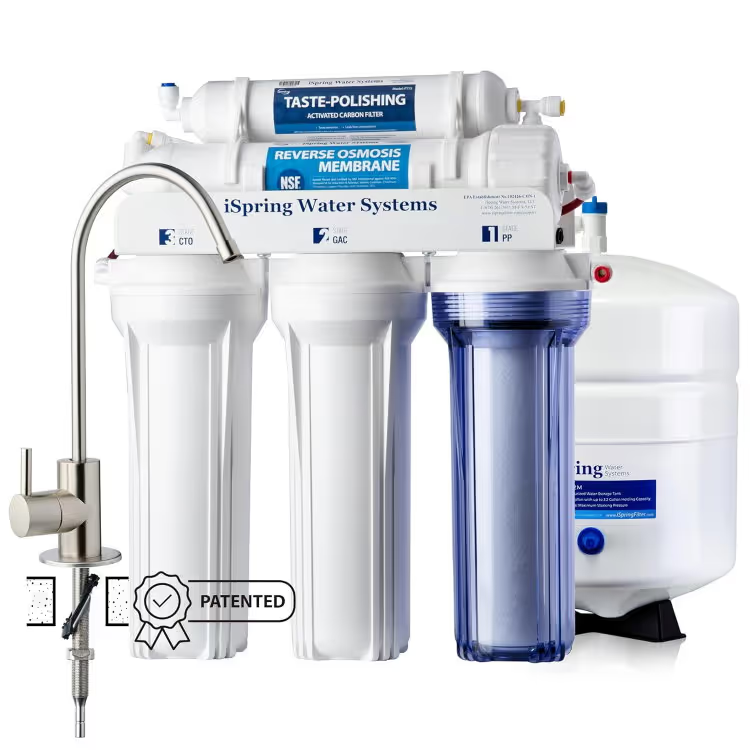
- A 5-stage reverse osmosis system that removes arsenic, nitrate, lead, fluoride, and PFAS.
- Produces about 50 gallons per day, tank-fed to a dedicated faucet.
- Filters need replacing every 6 to 12 months, the membrane every 2 to 3 years.
- Installs under most sinks in an afternoon, for about $210.
The best water filtration system is the one that matches your water, so the right pick depends on whether you’re on city or well water and what a test says is actually in it.
There’s no single box that does everything, and the most expensive mistake buyers make is choosing one before they know which problem they have.
So this guide skips the ranked-by-brand approach and does something more useful: it names the best-in-class system for each common water situation, states the one real downside on each, and points you to the cheaper fix when that’s the honest answer.
For a typical city home that wants chlorine and taste gone at every tap, our pick is the SpringWell CF1, at about $1,040.
For well water fighting iron and a rotten-egg smell, it’s an air-injection filter, or a filter-and-softener combo like the SpringWell WSSS if you also have hard water.
And for lead, arsenic, nitrate, or PFAS in your drinking water, the fix is a small under-sink reverse osmosis unit at the kitchen sink, not a whole-house system.
Find your situation first, then read the pick that matches it.
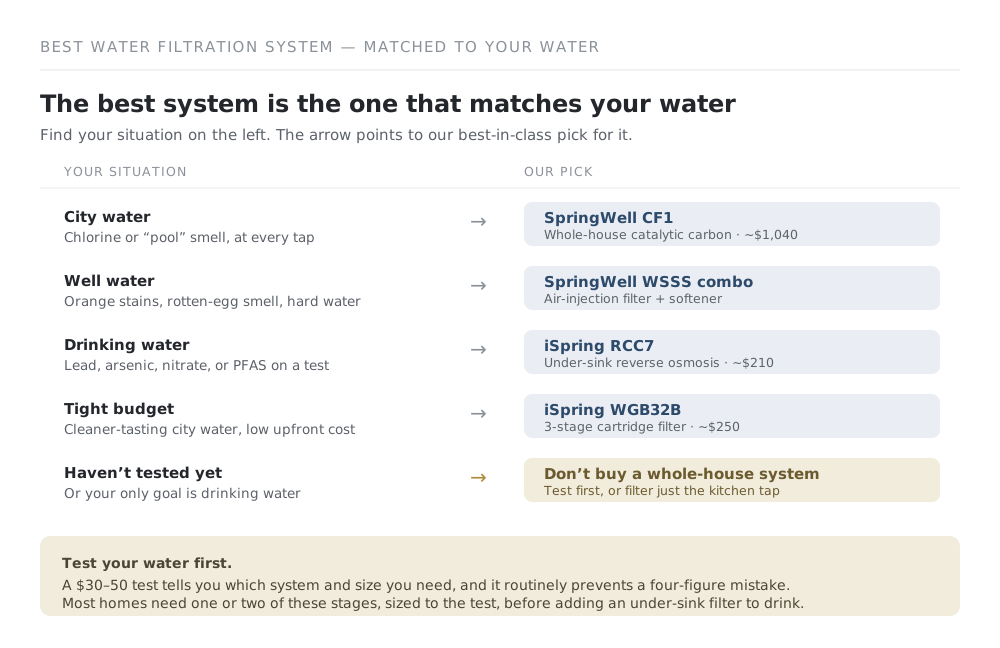
Start here: which situation are you?
Every good filtration decision starts from a symptom or a test result, not a product.
Find the row that sounds like your water, and the right column is the system that fixes it and the pick below that does it best.
| Your water situation | The system that fixes it | Our pick |
|---|---|---|
| City water, smells or tastes like chlorine, at every tap | Whole-house carbon filter | SpringWell CF1 |
| Well water, orange stains and a rotten-egg smell | Air-injection iron filter, plus a softener if it’s hard | SpringWell WSSS combo |
| Lead, arsenic, nitrate, or PFAS on a test, for drinking | Under-sink reverse osmosis | iSpring RCC7 |
| Spots on glasses, scale on fixtures, soap won’t lather | Water softener | See our softener picks |
| You just want cleaner-tasting water on a tight budget | Budget whole-house cartridge filter | iSpring WGB32B |
Most homes have more than one of these at once.
Well water especially tends to stack problems, like hardness plus iron, or iron plus a sulfur smell, and that just means your setup needs more than one stage.
If you’re still deciding which type of system you need before you compare products, start with our home water filtration guide, which routes you from your symptom to the right category.
Test your water first, because everything after this is a guess
This is the step nearly every buying guide mentions and then skips past, and it’s the one that saves you the most money.
A water test turns “my water smells funny” into a number, and that number tells you which system, and what size, you actually need.
On city water, start with your utility’s annual water quality report, also called a Consumer Confidence Report, which is free and names your disinfectant and known issues. Then test at the tap for hardness, and for lead if you have older plumbing.
On well water, no one tests it for you, so test at least once a year for coliform bacteria and nitrate, plus hardness, iron, manganese, hydrogen sulfide, and pH. (EPA)
Use a certified lab, or a well-reviewed mail-in kit, for anything that affects health, like arsenic, nitrate, and bacteria.
At-home strips are fine for a first read on hardness and iron, but not for health contaminants.
A test costs $30 to $50 and routinely prevents a four-figure mistake, which is why it’s the first line item in this guide. See well water testing for how to take a proper sample, and the best well water test kits for the kits themselves.
We don’t run these systems ourselves yet, so every figure here comes from a manufacturer spec, an NSF/ANSI standard, or a government or university source, and we say which.
The picks
SpringWell CF1
| Spec | Value |
|---|---|
| Type | Whole-house catalytic carbon + KDF |
| Handles | Chlorine, chloramine, VOCs, taste, odor |
| Capacity | ~1,000,000 gallons (~10 years) |
| Flow rate | ~9 GPM and up, minimal pressure drop |
| Certification | Component-level (housing, media); not full-system NSF |
| Price | ~$1,040 |
| The SpringWell CF1 is the one to get for most city homes, because it uses catalytic carbon, so it covers you whether your city disinfects with chlorine or the harder-to-remove chloramine. |
It pairs that carbon with KDF media and a sediment pre-filter, and the main tank is rated for roughly a million gallons, or about ten years, before a media change. It’s built to hold close to full house pressure, so your shower won’t suffer.
Why it scores 8.7i
Each sub-score is our assessment, weighted into the overall. It reflects published specifications, certification listings and warranty terms — not systems we ran ourselves. How we score
- Performance9/10
- It ships with catalytic carbon as standard, so it covers chlorine and the harder-to-strip chloramine without model-shopping, and pairs that with KDF media and a sediment pre-filter. Rated around 9 gpm with little pressure drop, and about a million gallons before the media is due — roughly a decade for a one-to-three-bathroom house. Source ↗
- Value9/10
- About $1,040 sold direct, with no dealer margin, for ten years of whole-house carbon. The only recurring cost is the sediment pre-filter, which puts the running bill in the tens of dollars a year rather than the hundreds. Source ↗
- Ownership9/10
- One permanent cut-in on the main line, then a pre-filter change and nothing else until the media is due about ten years later. No salt, no drain line and no chemical to refill. Source ↗
- Trust7/10
- The certification is component-level, on the housing and the media, rather than a full-system NSF/ANSI 42 or 53 listing, so the system-level reduction figures are SpringWell's own lab data. The lifetime warranty on tank and valve is the counterweight. Source ↗
SpringWell WSSS filter and softener combo
| Spec | Value |
|---|---|
| Type | Air-injection iron/sulfur filter + salt-based softener |
| Removes | Iron, hydrogen sulfide, manganese, hardness |
| Flow rate | ~11 GPM |
| Install | DIY or plumber; needs a drain and power |
| Certification | None published |
| Price | Roughly $2,500–3,000 (both stages) |
| Well water usually brings more than one problem, so the WSSS pairs an air-injection filter that oxidizes iron, sulfur, and manganese into particles it can catch, with a salt-based softener that removes the hardness behind your scale and spotting. |
The order matters, and this combo gets it right: the filter goes first, so raw iron never reaches the softener resin and fouls it, which is the single most common way well-water setups fail.
Why it scores 8.3i
Each sub-score is our assessment, weighted into the overall. It reflects published specifications, certification listings and warranty terms — not systems we ran ourselves. How we score
- Performance9/10
- Air injection oxidises iron, sulphur and manganese into particles the media catches, and the softener behind it takes the hardness — the two problems a well usually brings at once. It also puts the filter first, so raw iron never reaches the softener resin, which is the single most common way well setups fail. Source ↗
- Value8/10
- Roughly $2,500 to $3,000 for two systems sold direct and sized to work together, against a lifetime warranty. It is a real investment, and buying the stages separately from a dealer would cost more. Source ↗
- Ownership8/10
- DIY or plumber on the main line, with a drain and an outlet needed for both stages. Upkeep is a sediment pre-filter and keeping the brine tank in salt; the air-injection stage has no chemical to refill. Source ↗
- Trust7/10
- A lifetime warranty and a full published specification table, but SpringWell publishes no NSF/ANSI certification number for the line, so the iron and sulphide ceilings are the manufacturer's own ratings. Source ↗
iSpring RCC7 under-sink reverse osmosis
| Spec | Value |
|---|---|
| Type | 5-stage under-sink reverse osmosis |
| Removes | Arsenic, nitrate, lead, fluoride, PFAS, dissolved solids |
| Output | ~50 gallons per day (tank-fed to the faucet) |
| Install | DIY under-sink; needs a drain saddle and faucet |
| Maintenance | Filters every 6–12 months; membrane every 2–3 years |
| Price | ~$210 |
| Reverse osmosis pushes water through a membrane that removes the dissolved health contaminants nothing else reliably does, which is why the fix for lead, arsenic, and nitrate lives under the kitchen sink, not on the whole house. (CDC) |
The iSpring RCC7 is the value benchmark here, a five-stage unit that costs a fraction of a whole-house system and installs under most sinks in an afternoon.
If you’d rather have published certifications than the lowest price, the Aquasana Claryum AQ-5300+ carries real NSF/ANSI 42, 53, and 401 certifications for lead, PFAS, and chloramine. It’s a carbon block, though, so it does not remove arsenic or nitrate, which still need reverse osmosis. Our Aquasana water filter review covers how it compares to the brand’s whole-house and shower filters.
Discount codeuse REFISPRING at checkout to save on this order.
Why it scores 8.5i
Each sub-score is our assessment, weighted into the overall. It reflects published specifications, certification listings and warranty terms — not systems we ran ourselves. How we score
- Performance9/10
- A five-stage membrane that reduces the dissolved contaminants nothing else reliably touches — arsenic, nitrate, lead, fluoride, PFAS and total dissolved solids — at 75 gallons a day. Short of the top because it treats one tap and sends several gallons to the drain for each one it makes. Source ↗
- Value10/10
- About $230 for certified reverse osmosis is the value benchmark of the whole category: nothing else on this site removes as much for as little. The filters are commodity parts rather than proprietary cartridges, so the running cost stays low for the life of it. Source ↗
- Ownership6/10
- The most involved install of any drinking-water pick here: a faucet hole to drill, a drain saddle to tap and a pressurized tank to find room for. Then filters every six to twelve months and a membrane every two to three years. Source ↗
- Trust8/10
- Certified to NSF/ANSI 58, the standard written for reverse osmosis, and carrying the WQA Gold Seal against it. Held short of the top because iSpring's "over 1,000 contaminants" headline is broader than the certified claim list underneath it. Source ↗
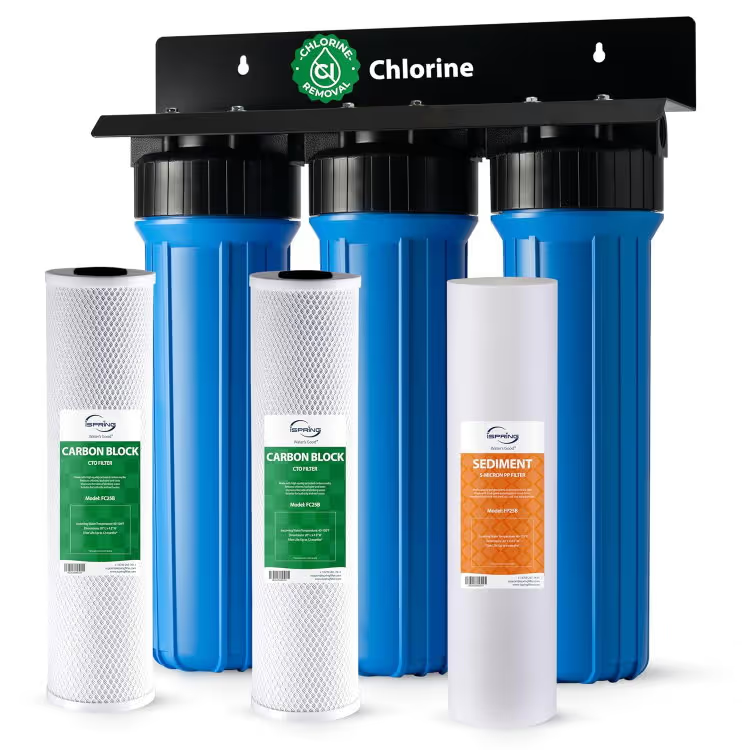
iSpring WGB32B
| Spec | Value |
|---|---|
| Type | 3-stage cartridge (sediment + 2 carbon block) |
| Removes | Up to 99% chlorine, sediment, taste, odor |
| Capacity | ~100,000 gallons (~1 year) |
| Flow rate | Up to 15 GPM |
| Price | ~$250 |
| The iSpring WGB32B is the honest budget pick, a three-stage cartridge system with a sediment filter and two carbon blocks that cut up to 99% of chlorine along with rust particles and odor. (iSpring) |
At around $250 it’s a fraction of a tank system, and the standard cartridges make it easy to service yourself.
Discount codeuse REFISPRING at checkout to save on this order.
Why it scores 7.8i
Each sub-score is our assessment, weighted into the overall. It reflects published specifications, certification listings and warranty terms — not systems we ran ourselves. How we score
- Performance8/10
- Up to 99% of chlorine along with sediment, rust and odour, at up to 15 gpm — the job it is built for, done well. It runs standard carbon block rather than catalytic, so chloramine largely passes through, and the cartridges hold about 100,000 gallons. Source ↗
- Value9/10
- About $250 buys whole-house chlorine and sediment removal, a fraction of what a tank system costs, and the cartridges are standard Big Blue parts rather than proprietary ones. Source ↗
- Ownership7/10
- Three cartridges anyone can swap with the wrench supplied, but that is a job roughly once a year rather than a media change once a decade. It mounts on a bracket and needs no drain or power. Source ↗
- Trust6/10
- iSpring publishes reduction percentages for the cartridges, and no full-system NSF/ANSI listing is published for the WGB32B, so the whole-house figures rest on the manufacturer's own data. Source ↗
Skip a whole-house system entirely if you haven’t tested, or your only goal is drinking water
And skip whole-house reverse osmosis specifically, which nearly nobody needs: it’s expensive, wastes water, and strips minerals, so keep reverse osmosis under the sink and treat the rest of the house with the filter its problem calls for.
What “certified” actually means before you trust a number
You’ll see “NSF certified” on nearly every product page, and it means less than it looks like, so it’s worth two minutes.
NSF/ANSI standards are numbered by what they cover, and three matter for these systems.
- NSF/ANSI 42 is aesthetic only: chlorine, taste, and odor. Most whole-house carbon filters carry a 42 claim, which improves your water house-wide but is not a health-contaminant certification.
- NSF/ANSI 53 is health effects: lead, certain heavy metals, VOCs, and cysts. You want this if you have lead plumbing or a test showing VOCs.
- NSF/ANSI 58 is reverse osmosis specifically, covering dissolved-solids reduction plus the health contaminants the membrane is verified to remove. This is the number that matters for an under-sink reverse osmosis unit.
Here’s the trap: a certification can apply to the whole device, or to just one replaceable part like a cartridge or a fitting.
A system marketed as “NSF” may only have a component certified, or be “tested to NSF standards” without carrying the actual certification.
So read past the badge: check which standard, and whether it covers the finished system or one part, in the NSF, WQA, or IAPMO database. A brand that publishes specific standards and numbers is telling you more than one that just prints “certified.”
What it really costs, installed and every year
The purchase price is only part of the picture, so plan for installation and yearly filters before you commit.
| System type | Installed cost | Yearly upkeep |
|---|---|---|
| Whole-house filter (sediment/carbon) | ~$850–5,400 | ~$300–800 in filters |
| Salt-based softener | ~$1,200–3,800 | Salt, a few bags a year |
| Filter + softener combo (well) | ~$2,500–3,500 | Salt + sediment pre-filter |
| Under-sink reverse osmosis | ~$300–950 | ~$100–250 in filters |
| Whole-house reverse osmosis (rare) | High; service ~$160/visit | ~$300+ in service |
Ranges from HomeGuide, Angi, and This Old House, cross-checked against current manufacturer pricing. These are estimates, not a quote.
For a typical whole-house system, HomeGuide puts the all-in range at about $850 to $5,400, averaging near $2,300, before you add a separate under-sink reverse osmosis for drinking water. (HomeGuide)
The number people forget is the yearly one.
Owners of big multi-stage setups routinely report several hundred dollars a year in cartridges, and a full stack with an under-sink reverse osmosis can run past $1,000 a year, so add the filters to your budget alongside the purchase price.
Professional installation is usually a few hundred dollars on top, and a DIY plumber comfortable cutting into the main line can save that fee.
The ten-year picture: cheap to buy can be costly to own
The sticker price hides half the story, because a system’s real cost is what you pay to keep it running for a decade.
Here’s a rough ten-year total for each pick type, built from the ranges above (a typical purchase plus ten years of filters or salt). Treat it as a planning estimate, not a quote.
| Pick type | Buy | ~10-year filters/salt | ~10-year total |
|---|---|---|---|
| Whole-house tank carbon (SpringWell CF1) | ~$1,040 | ~$500 (sediment pre-filters) | ~$1,840 with install |
| Budget cartridge (iSpring WGB32B) | ~$250 | ~$1,500 (cartridges yearly) | ~$1,750 |
| Salt-based softener | ~$1,500 | ~$600 (salt) | ~$2,100 |
| Well filter + softener combo | ~$2,800 | ~$1,200 (salt + sediment) | ~$4,000 |
| Under-sink reverse osmosis (iSpring RCC7) | ~$210 | ~$800 (filters + membranes) | ~$1,010 |
The line that surprises people is the budget cartridge system.
Its $250 sticker looks like a bargain, but yearly cartridge swaps push its ten-year cost to roughly $1,750, which is about the same as the tank carbon system that costs four times as much up front.
So over a decade the tank system costs about the same to own, and it front-loads the spending, then asks almost nothing of you after that.
If you’ll keep the house for years, weigh the ten-year total. If you might move soon, the low sticker wins.
The mistakes that cost buyers the most
These come up again and again from people who’ve already bought, and every one is avoidable.
Buying before testing. The most common regret is a system that solved the wrong problem, bought on a guess. One owner described sinking $3,000 into a whole-house reverse osmosis system and not even wanting to pay to have it removed. Test first, then buy.
Expecting carbon to soften water. A carbon filter cleans up taste and chlorine, and it does nothing for hardness or dissolved iron. If your glasses spot and your soap won’t lather, that’s a job for a softener, which is a separate purchase.
Skipping the sediment pre-filter. On well water especially, particulates clog a fine filter fast and drop your house pressure. A sediment pre-filter ahead of the carbon or membrane is what keeps the whole train from choking, and it’s cheap.
Under-sizing for the house. Buyers with three or more bathrooms often report a pressure drop after install because the unit’s flow rate couldn’t keep up. Match the system’s flow rate in GPM to your home’s peak demand, and let that guide the size rather than the sticker price.
Confusing the numbers. People see a total-dissolved-solids reading and assume it’s hardness, then buy the wrong media. TDS, hardness, and specific contaminants are different measurements, which is exactly why a proper test comes before a purchase.
Whole-house or point-of-use: which scope you actually need
The last decision is scope, and it’s really a coverage-versus-cost tradeoff.
A whole-house system, installed where the water line enters, treats every tap, so your showers, laundry, and appliances all get filtered water. It’s the right call when the problem is house-wide, like chlorine smell, scale, or iron staining.
A point-of-use filter, under one sink, gives the deepest contaminant removal but only at that tap. It’s the right call when you mainly want safe, clean drinking and cooking water.
Plenty of homes run both: a whole-house carbon filter or softener for the house, and a small under-sink reverse osmosis at the kitchen for the water they drink.
Start from your test and your main complaint, and buy the scope that matches it rather than the biggest system on the shelf.
Frequently asked questions
Do I need a whole-house system or just an under-sink filter for drinking water?
If your problem affects the whole house, like scale, iron staining, or a chlorine smell in every shower, you want a whole-house point-of-entry system. If you only want better drinking water, an under-sink point-of-use filter is cheaper and enough. Many homes use both.
What’s the difference between a water filter and a water softener, and do I need both?
A softener removes hardness by swapping calcium and magnesium for sodium, and that’s all it does. A filter removes something else, like chlorine, iron, or sediment. If you have both hard water and a taste or contaminant problem, you need both, which is why the well pick above combines them.
Should I test my water before buying, and what test?
Yes, always. A certified lab test or a well-reviewed mail-in kit costs $30 to $50 and tells you which system and size you need. It’s the cheapest step and it prevents the most expensive mistake. Test at least annually if you’re on a well.
What does NSF 42 vs 53 vs 58 certify, and does “NSF certified” cover the whole system?
NSF/ANSI 42 covers aesthetics like chlorine and taste; 53 covers health contaminants like lead and VOCs; 58 covers reverse osmosis. “NSF certified” can apply to the whole device or just one component, so check which standard and what’s covered in the NSF, WQA, or IAPMO database before you trust it.
How much does a whole-house filtration system cost installed, and what are yearly filter costs?
A typical whole-house system runs about $850 to $5,400 installed, averaging near $2,300, plus roughly $300 to $800 a year in filters. A separate under-sink reverse osmosis for drinking water is another $300 to $950, with $100 to $250 a year in filters.
Does city water versus well water change what system I need?
Completely. City water usually needs carbon for chlorine and taste, maybe a softener, and an under-sink reverse osmosis for drinking. Well water is unregulated and needs a test first, then a stage matched to each problem it finds, like iron, sulfur, hardness, or bacteria.
Will a whole-house carbon filter remove iron, sulfur smell, or hardness?
No. Carbon handles chlorine, taste, and odor. Iron and a sulfur smell need an air-injection oxidizing filter, and hardness needs a softener. Trying to solve those with a carbon filter is a common and costly mismatch.
Does reverse osmosis waste water and strip healthy minerals?
It does send several gallons to the drain for each gallon it makes, though newer tankless units cut that. It also removes minerals along with contaminants, which is why some units add a remineralization stage. For drinking water, most people consider the tradeoff worth it.
Why does my filter clog fast or my water pressure drop after install?
Usually sediment. A whole-house filter without a sediment pre-filter clogs quickly on particulate-heavy water, and an under-sized unit can’t hold pressure across a bigger house. Add a sediment pre-filter and match the flow rate to your home.
Is a whole-house system overkill for city water that’s already treated?
It can be. City water is already disinfected, so a whole-house system is a taste-and-comfort upgrade unless a test shows a real issue like lead or high hardness. If you just want better drinking water, an under-sink filter is often all you need.
Not sure which type of system you need yet? The home water filtration guide routes you from your water problem to the right category.
On a private well? The complete well water filtration guide is your full roadmap.
Just need scale and spotty glasses gone? That’s hardness, and a water softener is the fix.
How we researched this
We built this guide from EPA and CDC guidance on home water treatment, NSF/ANSI standards documentation, published cost data from HomeGuide, Angi, and This Old House, and the manufacturer spec sheets and independent lab reviews for each system named (SpringWell, iSpring, Aquasana). We also read owner reports across water-treatment communities for the common regrets and mistakes.
We don’t run these systems ourselves yet, so we don’t claim first-hand testing, and every figure here is attributed to its source.
Prices, certifications, and capacities change, and removal percentages come from each brand’s own or a lab’s testing, so treat every number as approximate and confirm the current spec before you buy.
When we name a merchant we may earn a commission if you buy through a link here, at no cost to you.
Sources
- EPA — Protect Your Home’s Water (private wells)
- CDC — Guidelines for Treating Well Water
- iSpring — WGB32B 3-stage whole house filter (chlorine reduction, capacity, flow)
- HomeGuide — home water filtration system cost (2026)
- Angi — reverse osmosis water filter cost (2026)
- This Old House — reverse osmosis system cost (2026)