Hard water vs soft water: the real difference and how to tell which you have
Hard water carries dissolved calcium and magnesium, so it leaves scale on fixtures, film on glasses, and scum in the tub.
Soft water has most of that calcium and magnesium swapped out for a little sodium, so it leaves no scale, lathers with less soap, and feels slick to rinse.
That is the whole difference in one line: hard water is full of the minerals that build scale, and soft water is not.
Everything else follows from that one fact, and this guide walks through all of it.
What makes water “hard” in the first place
Hardness is just dissolved rock.
As groundwater moves through limestone and chalk, it picks up calcium and magnesium. (USGS)
Those two minerals are what “hardness” means, and the more of them your water carries, the harder it is.
They are harmless to drink, but they refuse to stay dissolved when water heats up or dries out.
That is when they turn into the white crust on your showerhead and the spots on a glass straight out of the dishwasher.
Soft water is simply water that carries little or none of that calcium and magnesium.
Some water is naturally soft because it never ran through much limestone. Most soft water in homes is made soft by a water softener.
The hardness scale: gpg and ppm
Hardness gets measured two ways, and they describe the same thing.
Parts per million (ppm), also written as milligrams per liter (mg/L), is what most lab reports use.
Grains per gallon (gpg) is what water softeners are sized by.
The conversion is fixed: 1 gpg = 17.1 ppm. (USGS)
The U.S. Geological Survey sorts water into four tiers, and here is each one in both units.
| Tier | ppm (mg/L) | Grains per gallon | What you notice |
|---|---|---|---|
| Soft | 0–60 | 0–3.5 | Nothing; soap lathers freely |
| Moderately hard | 61–120 | 3.6–7.0 | Faint spotting on glasses |
| Hard | 121–180 | 7.1–10.5 | Visible scale and soap scum |
| Very hard | over 180 | over 10.5 | Heavy crust, poor lather, fast staining |
The tiers come straight from USGS hardness classifications, converted to gpg at the standard 17.1 ppm per grain. (USGS)
Most private wells land in the hard or very hard range, and plenty of city supplies do too.
Say your test comes back at 20 gpg. Here is what that number is doing.
- In ppm: 20 gpg × 17.1 = 342 ppm, which is well into “very hard.”
- On your water heater: the Water Quality Research Foundation’s Battelle study found every 5 gpg costs a gas storage heater about 4% efficiency, so 20 gpg means roughly 16% more energy to heat the same water, and scale can shorten the tank’s life. (WQRF/Battelle)
- If you soften it: ion exchange adds about 7.5 mg of sodium per quart for each grain removed, so 20 gpg adds about 150 mg of sodium per quart. An 8-ounce glass carries roughly 37 mg, less than a slice of bread.
Run your own gpg through the same three lines and you can see exactly what hardness is costing you, and what softening would add.
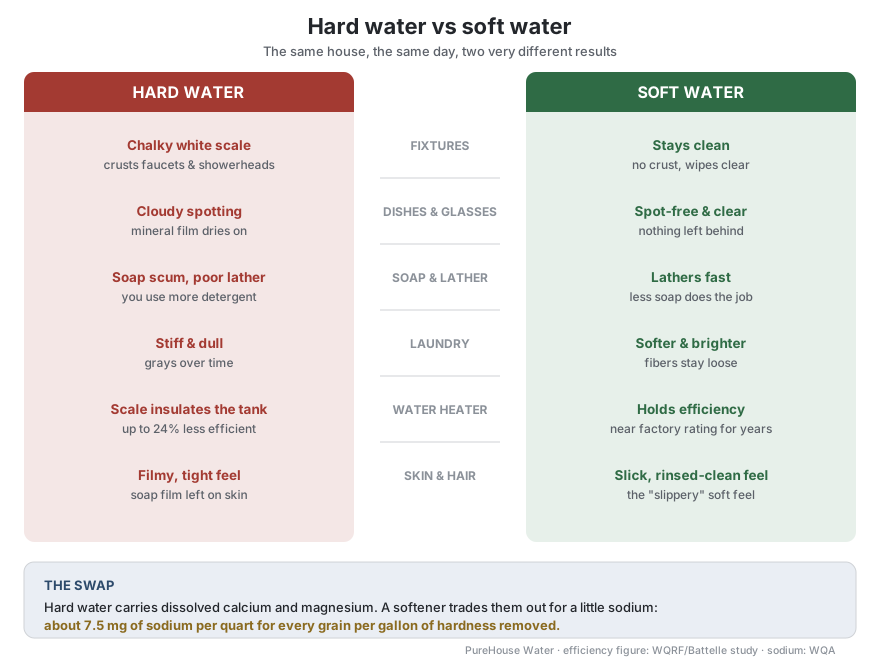
Hard vs soft water, side by side
The minerals in hard water touch almost everything water touches.
Here is how the two behave across the jobs water does in a house.
| Where you see it | Hard water | Soft water |
|---|---|---|
| Fixtures and pipes | Chalky scale crusts faucets, showerheads, and pipe interiors | Stays clear; no scale to build up |
| Glasses and dishes | Cloudy spots and film after drying | Dries spot-free |
| Soap and shampoo | Reacts to form scum; poor lather; you use more | Lathers fast; you use less soap |
| Laundry | Fabric feels stiff and dulls over time | Comes out softer and brighter |
| Water heater and appliances | Scale insulates the tank; up to 24% less efficient | Holds near its factory efficiency for years |
| Skin and hair | Soap film left behind; skin can feel tight | Slick, fully rinsed feel |
The 24% efficiency figure and the appliance wear are from the WQRF Battelle testing, which ran real water heaters on hard and softened water for 90 days. (WQRF/Battelle)
That “slick” feel of soft water throws people off at first.
It comes from clean rinsing. Hard water leaves a soap-and-mineral film on your skin, and without those minerals your own oils wash off instead of clinging.
Is soft water safe to drink? The sodium question
For most people, yes.
Softening swaps hardness minerals for sodium, and the amount is small at normal hardness levels. (APEC)
At 10 gpg, an 8-ounce glass of softened water carries only about 12 mg of sodium, far less than most foods.
Two groups should be careful, though.
If you are on a sodium-restricted diet, or mixing infant formula, the added sodium is worth avoiding.
The simple fixes are a potassium chloride softening salt instead of sodium, a reverse osmosis tap for drinking water, or a single unsoftened line at the kitchen sink. (APEC)
One more point people ask about: softening removes calcium and magnesium, but your water was never a major source of those minerals, so losing them from the tap barely moves your daily intake.
Softened, naturally soft, and filtered: three different things
These get mixed up constantly, so here is the plain-English version.
- Naturally soft water started soft, because it never picked up much calcium or magnesium on its way to you. No equipment involved.
- Softened water was hard, then run through an ion-exchange softener that traded the hardness minerals for sodium. It behaves like naturally soft water.
- Filtered water ran through carbon, sediment, or another filter. Filtering improves taste and removes many contaminants, but standard filters do not remove hardness.
That last line trips up a lot of buyers.
A whole-house carbon filter or a fridge filter can make water taste great and still leave it fully hard, because hardness is dissolved minerals a filter passes straight through.
Removing hardness takes softening (or a scale-control conditioner that changes how the minerals behave without taking them out).
Well water vs city water
Both can be hard, and both can be soft, so the source alone will not tell you.
Private wells often run hard, and they can also carry iron, manganese, and sulfur that ride along with the hardness. If you are on a well, hardness is usually one of several things worth testing for at once.
City water is treated for safety, but most utilities do not soften it, so plenty of municipal supplies arrive hard at your tap.
The only way to know your number is to test, which brings us to the fast home check.
How to tell which one you have
You can get a strong hint in five minutes, then confirm it with a number.
The soap test. Half-fill a clear bottle with water, add a few drops of pure liquid soap, cap it, and shake.
- Lots of fluffy lather and clear water underneath means soft.
- Little lather and cloudy, milky water means hard.
The look-around test. Scale crust on the showerhead, spots on dry glasses, and a ring in the tub all point to hard water.
Both of these tell you hard or soft, but not by how much.
For the actual gpg, which is what sizes any treatment, use a water hardness test kit or send a sample to a lab.
When converting hard to soft is worth it
Soft water is only worth the cost when it solves a problem you actually have.
Converting hard water to soft makes sense when:
- Scale and spotting are a daily annoyance on fixtures, glasses, and shower doors.
- Appliances are wearing out early, especially the water heater, dishwasher, and washing machine.
- Soap and detergent use is high, and skin or hair feels filmy after every wash.
- Your test reads hard or very hard (roughly 7 gpg and up), where the effects show up clearly.
If your water is already soft or only moderately hard, and nothing is bothering you, softening may not earn its cost.
When you do decide to treat it, the deep dive on symptoms, treatment options, and our pick lives on the hard water treatment guide, and the full how-it-works, sizing, and cost picture is on the water softener system guide.
Frequently asked questions
What is the main difference between hard and soft water?
Hard water carries dissolved calcium and magnesium; soft water has most of those minerals removed.
That is why hard water leaves scale and soap scum, and soft water leaves neither and lathers easily.
Is soft water better than hard water?
For your plumbing, appliances, and soap use, soft water is easier on all of them.
For drinking, both are fine for most people, though soft water carries a little added sodium and hard water carries a little more calcium and magnesium.
Is it safe to drink soft water?
Yes for most people, since softening adds only a small amount of sodium at normal hardness.
If you are on a sodium-restricted diet, use potassium chloride salt, a reverse osmosis tap, or keep one unsoftened line for drinking.
Why does soft water feel slippery?
Because the mineral film that hard water leaves on your skin is gone, so your skin’s natural oils rinse off cleanly.
Nothing is left on your skin, which is the feeling people describe as slick or slippery.
How do I know if my water is hard or soft?
Shake a little liquid soap in a bottle of your water: lots of lather means soft, and cloudy water with little lather means hard.
For the exact number in grains per gallon, use a hardness test kit or a lab, which is what any softener is sized from.
Does a filter make water soft?
No. Standard carbon and sediment filters improve taste and remove many contaminants, but they leave the calcium and magnesium in place.
Removing hardness takes an ion-exchange softener, not a filter.
Ready to fix hard water? Start with the hard water treatment guide for symptoms and options.
Want the full how-it-works, sizing, and cost picture? See the water softener system guide.
Need your number first? Use a water hardness test kit.
Comparing units? See the best water softeners.
How we researched this
We built this comparison from public water-science and standards sources: the U.S. Geological Survey for the hardness definition and tiers, the Water Quality Association’s sodium figure for softened water, and the Water Quality Research Foundation’s Battelle water-heater study for the efficiency numbers, cross-checked against the hardness facts already sourced elsewhere on this site.
We don’t test these systems in-house yet, so we don’t claim to.