Best water hardness test kit: strips vs. drop kits for sizing a softener
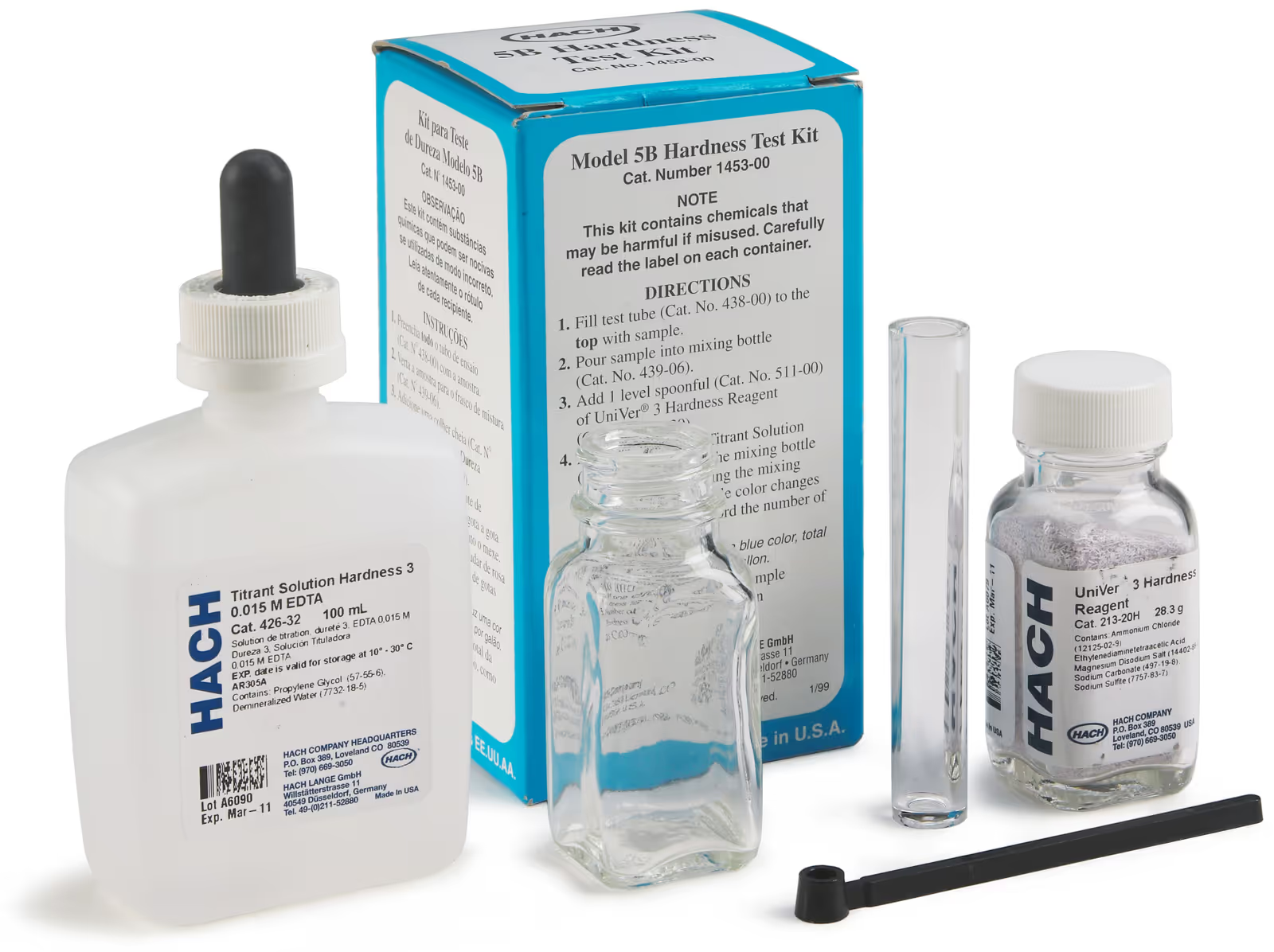
- Drop-count titration reads grains per gallon directly: one drop equals one grain per gallon.
- Covers a 1–30 gpg range and includes about 100 tests per kit.
- Gives a result in under 5 minutes and costs about $35.
- Read 14 gpg against a certified lab’s 14.3 gpg in one published comparison, under 3% off.
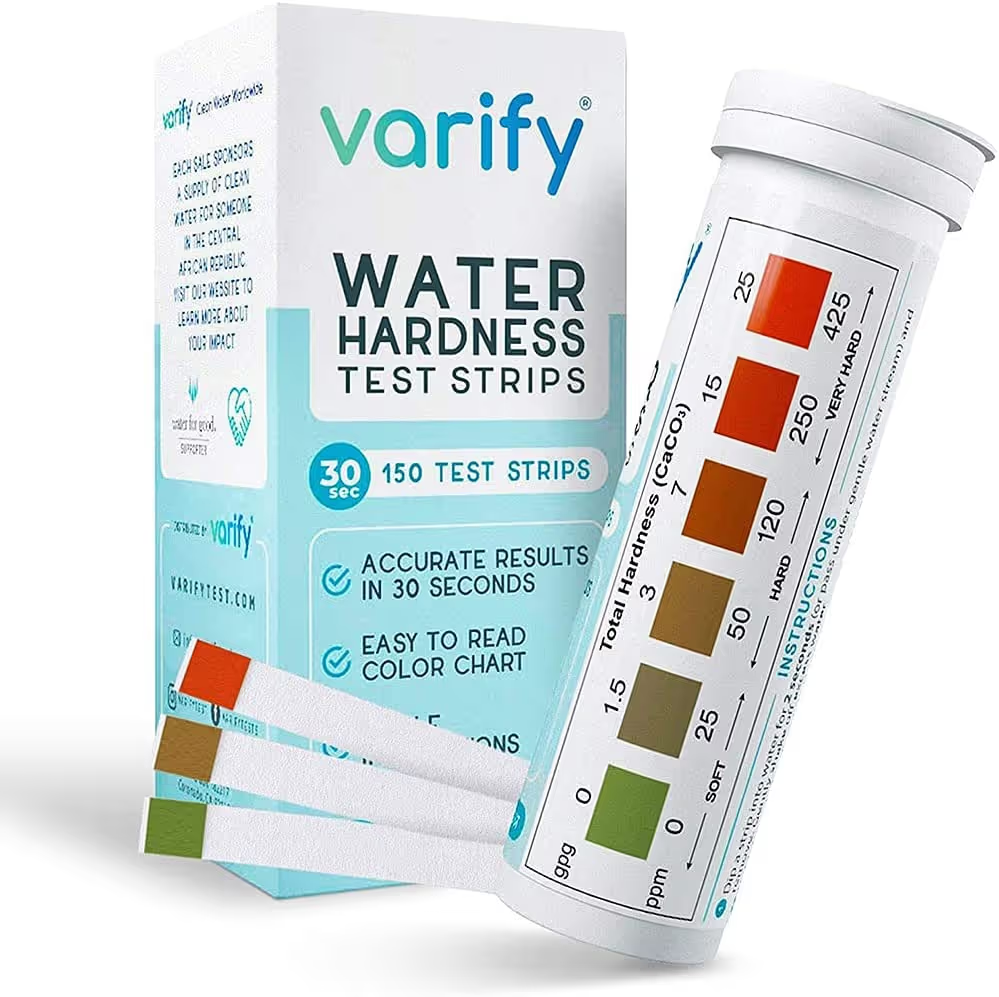
- Color-match strip reads both ppm and grains per gallon against a printed chart.
- Covers a 0–425 ppm / 0–25 gpg range and gives a result in about 30 seconds.
- Comes 150 strips to a pack for about $10.
- Reads within roughly 25–50 ppm, accurate enough to confirm a hardness category.
- Color-match strip reads hardness plus iron, pH, copper, nitrate, nitrite, and chlorine in one dip.
- Gives a result in about 10 minutes and costs under $25.
- Flags elevated iron on the same strip, useful since iron changes what softener you need.
- Every reading falls within a color-block range rather than an exact number.
The best water hardness test kit is the one that gives you the number you’ll actually use.
For a quick “is my water hard?” answer, a $10 strip kit (Varify or JNW Direct) reads a category in seconds.
For sizing or programming a water softener, you need a real grains-per-gallon figure, and that means a drop titration kit like the Hach 5-B (about $35), where one drop equals one grain per gallon.
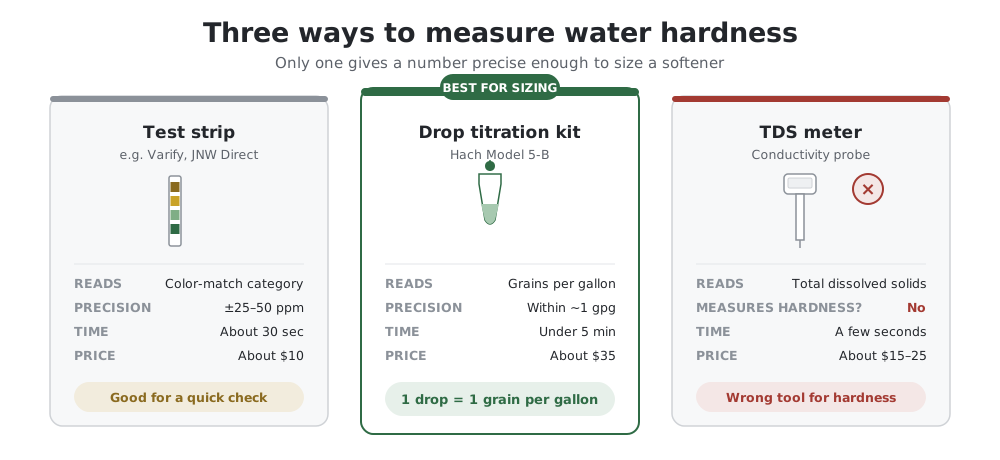
A strip and a drop kit measure the same thing to very different precision, and picking the wrong one for your decision either wastes money or gives you a number too rough to size a softener.
How we chose
We built this from manufacturer and lab spec sheets (Hach), the USGS water-hardness classification, and independent comparison round-ups that ran strips and drop kits against certified lab results.
We don’t run a lab or sell test kits, so we won’t pretend to rank them by hands-on results; every figure here is attributed to its source.
What we can do is match the kit to the decision you’re making.
One question decides which kit is right for you: what will you do with the number?
- Just want to know if your water is hard? A strip gives you the category (soft, hard, very hard) for about $10.
- Deciding on or sizing a softener? You need the actual grains-per-gallon number, and a strip’s range isn’t tight enough. Use a drop kit.
- Checking whether a softener is working? Test hardness before and after with a drop kit. A TDS meter can’t do this, for reasons covered below.
If you’re on well water, read the iron caveat before you buy anything, because a softener isn’t the whole story.
The picks
Hach Total Hardness Test Kit, Model 5-B
| Spec | Value |
|---|---|
| Type | Drop-count titration (EDTA) |
| Reads | Grains per gallon — 1 drop = 1 gpg (17.1 mg/L) |
| Range | 1–30 gpg (17–513 mg/L as calcium carbonate) |
| Tests per kit | About 100 |
| Result time | Under 5 minutes |
| Price | About $35 |
You add drops of a reagent to a water sample one at a time, and the drop that turns the sample from red to blue is your count.
That count is your hardness: one drop equals one grain per gallon.
It’s the same titration method water treatment pros use on site, and in one published comparison the Hach kit read 14 gpg against a certified lab’s 14.3, under 3% off, while no strip came within about 5 gpg of the lab.
That precision is the whole point when you’re sizing a softener, because the sizing math multiplies your hardness number by your daily water use.
A rounding error on a strip becomes a mis-sized system.
The mg/L version (Hach Model 5-EP) reads in parts per million instead of grains if that’s what your softener or lab uses.
Check price at Amazon(opens on Amazon, external site)Varify Water Hardness Test Strips
| Spec | Value |
|---|---|
| Type | Color-match strip |
| Reads | ppm and gpg, matched to a printed chart |
| Range | 0–425 ppm / 0–25 gpg |
| Strips per pack | 150 |
| Result time | About 30 seconds |
| Price | About $10 |
You dip a strip, wait a few seconds, and match the color to the chart.
At 150 strips for around $10, it’s cheap enough to test every tap in the house and still have most of the pack left.
The chart marks both ppm and grains per gallon, so you land in the right category (the full scale is below) without any math.
That’s fine for “yes, it’s hard,” and too rough to program a softener with.
JNW Direct’s strips are near-identical in price, count, and range if Varify is out of stock.
Check price at Amazon(opens on Amazon, external site)Health Metric Drinking Water Test Kit
| Spec | Value |
|---|---|
| Type | Color-match strip, multi-parameter |
| Reads | Hardness, iron, pH, copper, nitrate, nitrite, chlorine, and more |
| Result time | About 10 minutes |
| Price | Under $25 |
If you’re testing hardness because you’re weighing a softener, seeing iron and pH on the same strip is genuinely useful, since both change what you should buy.
Iron above a few ppm means a softener alone is the wrong tool, and this kit flags it in the same test.
a TDS meter
A TDS meter is the tool people most often reach for by mistake, so it’s worth naming here.
It measures total dissolved solids by electrical conductivity, which is every dissolved mineral in the water at once.
Hardness is only the calcium and magnesium.
A TDS meter can’t tell those two apart from sodium, chloride, sulfate, or iron, so two samples with the same TDS reading can have completely different hardness. (Sensorex)
It also can’t confirm a softener is working: softening swaps calcium and magnesium for sodium, so it removes the hardness while barely moving the TDS number.
A TDS meter is a fine tool for a reverse-osmosis system. It’s the wrong tool for hardness.
Comparison table
| Varify strip | Health Metric strip | Hach 5-B drop kit | TDS meter | |
|---|---|---|---|---|
| Type | Color strip | Color strip | Drop titration | Conductivity meter |
| Measures hardness? | Yes (category) | Yes (category) | Yes (precise gpg) | No |
| Reads gpg? | Yes | Yes | Yes (1 drop = 1 gpg) | No |
| Precision | ±25–50 ppm | ±25–50 ppm | Within ~1 gpg | N/A for hardness |
| Price | ~$10 | Under $25 | ~$35 | ~$15–25 |
| Good for sizing a softener? | No | No | Yes | No |
What your hardness number means
One grain per gallon equals 17.1 ppm (milligrams per liter as calcium carbonate).
To convert a ppm reading to grains, divide by 17.1.
Here’s how the number maps to the categories, using the USGS classification:
| Classification | Grains per gallon | ppm (mg/L) |
|---|---|---|
| Soft | Under 1 | Under 17 |
| Slightly hard | 1–3.5 | 17–60 |
| Moderately hard | 3.5–7 | 60–120 |
| Hard | 7–10.5 | 120–180 |
| Very hard | Over 10.5 | Over 180 |
Most people start thinking about a softener around 7 gpg, where scale, spotting, and soap-scum problems get noticeable.
Past 10.5 gpg, the case for treating the water is strong.
Below about 3.5 gpg, a softener usually isn’t worth it.
How to test your water hardness at home
With a strip: dip it in a fresh sample, hold it level for the time on the pack (usually 30–60 seconds), and match the color to the chart. Read the category.
With a drop kit: fill the sample tube to the line, add the first reagent, then add the titrant drop by drop, swirling after each one. Count drops until the color changes from red to blue. Your drop count is your hardness in grains per gallon.
Two things throw off a home test either way:
- Test the right tap. Sample from a cold tap that bypasses any existing softener or filter, so you’re measuring your raw water.
- Use fresh water. Let the tap run a few seconds first, and don’t test water that’s been sitting in the pipes overnight.
Turn your number into a softener decision
Once you have a real grains-per-gallon figure, you can size a softener instead of guessing.
The rough math: people in the house × about 75 gallons a day × your hardness in gpg = the grains your household removes per day.
You then pick a softener grain capacity that regenerates every 5–10 days with about 25% reserve, so it isn’t cycling constantly or running out.
Here’s that math with a real number.
Say your drop kit reads 12 gpg and four people live in the house.
That’s 4 × 75 × 12 = 3,600 grains a day, or 36,000 grains over a 10-day cycle, and adding 25% reserve lands you at a 48,000-grain softener.
Read 8 gpg instead of 12 and the same household needs a 32,000-grain unit, a full size smaller.
A strip that puts you in the “hard” bracket can’t tell 8 gpg from 12, which is the practical reason to spend the extra $25 on a drop kit before a $1,500 purchase.
For the full sizing method and real 2026 costs, see how a water softener system works and how to size it, then the best water softeners for the actual picks.
Well water? Test for iron too
If you’re on a private well, a hardness number alone can send you to the wrong machine.
A softener removes hardness, and nothing else.
But iron above about 3 ppm fouls the softener’s resin, so a well that’s both hard and high in iron needs a filter ahead of the softener, in that order. (iron and softeners)
So test hardness and iron together before you buy.
The best well water test kit covers the fuller picture, and well water testing walks through the whole baseline, including the bacteria and metals a hardness kit will never see.
Frequently asked questions
What is the best water hardness test kit?
It depends on what you’ll do with the number.
For a quick “is my water hard?” check, a strip kit like Varify (about $10 for 150 strips) reads the category in seconds.
For sizing or programming a water softener, the Hach 5-B drop titration kit (about $35) gives a precise grains-per-gallon number, the same method water treatment pros use.
How do I test water hardness at home?
With a strip, you dip it and match the color to a chart for a category.
With a drop kit, you count drops of reagent into a sample until it changes color; each drop equals one grain per gallon.
Test a cold tap that bypasses any existing softener, and run the water a few seconds first.
Can a TDS meter measure water hardness?
No.
A TDS meter reads total dissolved solids by conductivity, which is every dissolved mineral at once, so it can’t separate the calcium and magnesium that make water hard from sodium, chloride, or iron.
Two samples with the same TDS can have very different hardness. Use a strip or a drop kit instead.
How accurate are water hardness test strips?
Accurate enough to place your water in a category, and not precise enough to size a softener.
Strips read within roughly 25–50 ppm, so a strip can show 150 ppm when your water is actually 130.
For a number you’ll program a softener with, use a drop titration kit, which reads within about one grain per gallon.
What water hardness is too high and needs a softener?
Water is generally classed as hard at 7 grains per gallon (120 ppm) and up, and very hard past 10.5 gpg (180 ppm).
Most homeowners start considering a softener around 7 gpg, where scale and soap-scum problems get noticeable.
Below about 3.5 gpg, a softener usually isn’t worth it.
How do I convert ppm to grains per gallon?
Divide the ppm number by 17.1.
One grain per gallon equals 17.1 ppm (mg/L as calcium carbonate), so 171 ppm is 10 gpg.
Where can I get my water hardness tested for free?
If you’re on city water, your utility’s annual Consumer Confidence Report lists hardness.
Many softener companies test a mailed well sample for free as well, though for anything health-related you want a certified lab, not a free promotional test.
Do I need to test hardness before buying a softener?
Yes.
The sizing and programming both run off your grains-per-gallon number, so buying a softener without it means guessing at the capacity and the salt dose.
A drop kit for about $35 pays for itself by getting the sizing right.
Have your number? See how to size and cost a water softener and the best water softeners.
On a well, check iron before you buy and run the full well water test so a softener isn’t fixing the wrong problem.
How we researched this
We built this comparison from Hach’s product specifications for the Model 5-B drop titration kit, the USGS water-hardness classification, and independent comparison round-ups that tested strips and drop kits against certified lab results.
We don’t run a lab or sell test kits, so we don’t claim first-hand results here; every accuracy figure is attributed to its source.
We don’t currently have a confirmed affiliate relationship with any test kit brand, so the links above go to each product’s own listing, not an affiliate link.