Waterdrop water filter review: which one should you buy?
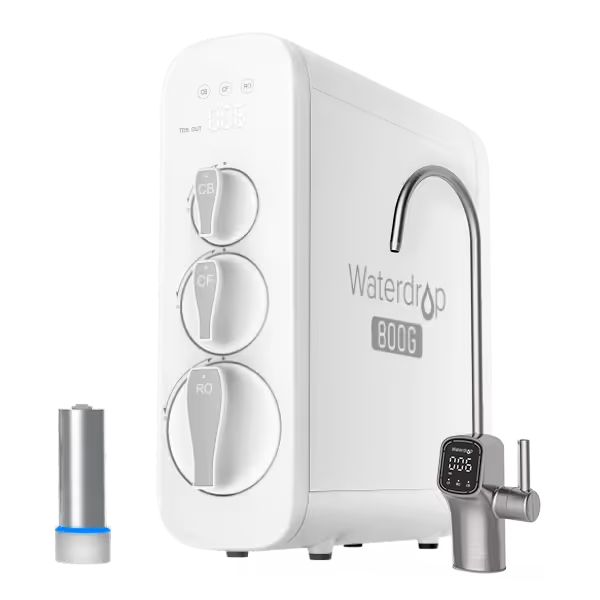
- Certified to NSF/ANSI 58, 53, 42, and 372, the broadest certified list in Waterdrop’s range.
- Tankless, so it makes filtered water on demand at 800 gallons a day with nothing stored.
- Runs a 3:1 pure-to-drain ratio, wasting less water than most reverse osmosis systems.
- Twist-in cartridges and a faucet that reads your TDS, so you can see when a filter is due.
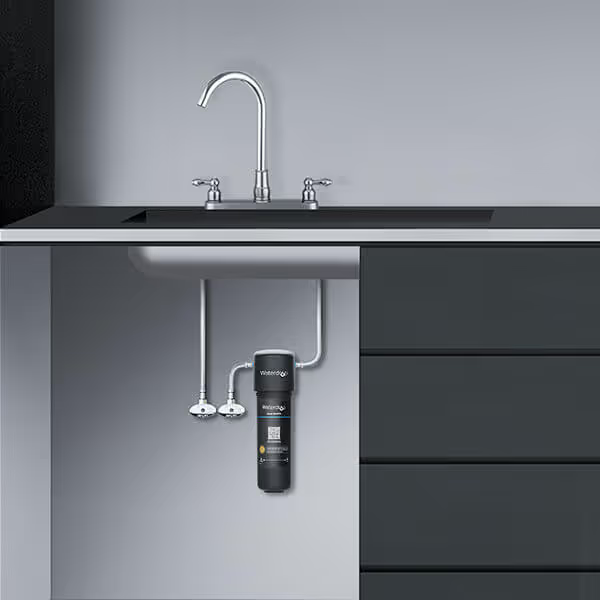
- Certified to NSF/ANSI 42 for chlorine and taste, and 372 for lead-free materials.
- Taps your existing cold-water line and runs through your normal faucet, so there’s no faucet to drill and no drain to tap.
- The cartridge lasts about 24,000 gallons, or roughly three years for many homes.
- Costs about $55, the cheapest certified way into filtered water here.
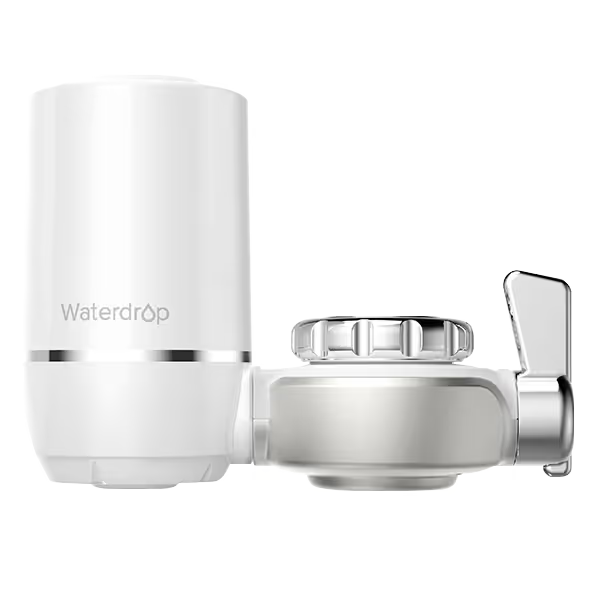
- Mounts on a standard threaded faucet in a minute, with a diverter to switch between filtered and tap.
- The cartridge lasts about 320 gallons, more than three times a typical pitcher filter.
- Costs about $30, the lowest entry price in Waterdrop’s range.
Waterdrop isn’t a single water filter. It’s a catalog of them, and the right answer depends on which problem you’re actually trying to fix.
That’s the part most “Waterdrop filters” pages skip. They rank the models against each other, when the models don’t compete. A reverse osmosis system, a direct-connect carbon filter, and a faucet filter do three different jobs.
So this review sorts you by your problem first, then names the Waterdrop unit that fits it, and tells you plainly when a different brand is the smarter buy.
The short version: Waterdrop is a strong point-of-use drinking-water brand. Its best product is the G3P800 tankless reverse osmosis system, because it carries the health certifications most rivals skip. Its cheaper under-sink and faucet filters are good for chlorine and taste, but their lead and PFAS claims are tested, not certified. And for heavy well-water iron or true whole-house softening, you want a specialist.
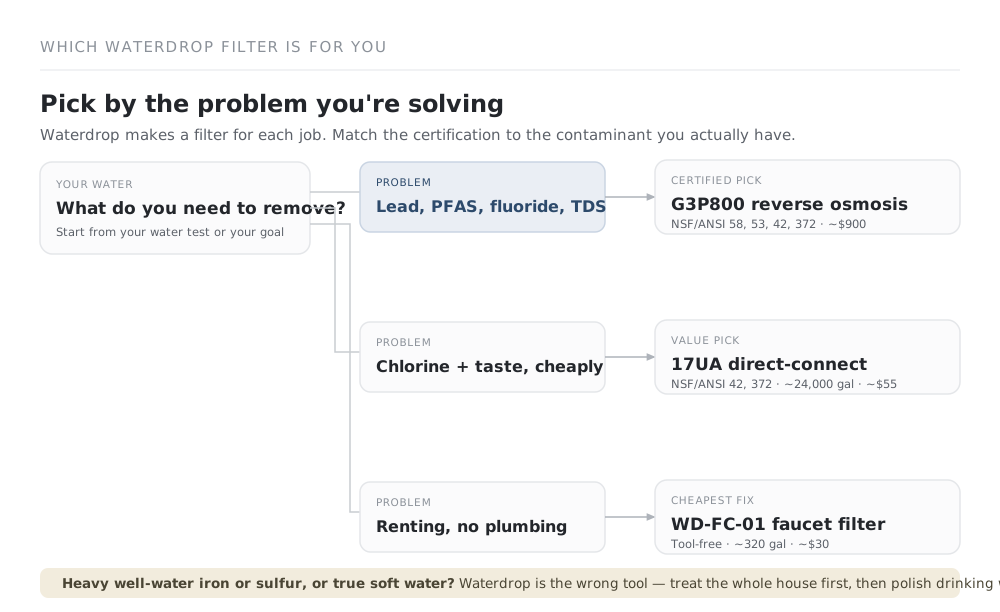
Match the Waterdrop product to your problem
Waterdrop sells three things a normal household shops for at the drinking tap. Each targets a different problem, and buying the wrong one is the usual regret. Find your problem in the left column.
| Your problem | The Waterdrop product | Honest verdict |
|---|---|---|
| Remove dissolved contaminants (lead, PFAS, fluoride, TDS) from drinking water | G3P800 tankless reverse osmosis | The standout. Certified to NSF/ANSI 58, 53, 42, 372. |
| Cheap chlorine, taste, and sediment polishing under the sink | 17UA direct-connect filter | Great value; certified for chlorine only, not lead. |
| A renter’s no-drill chlorine fix at the faucet | WD-FC-01 faucet filter | Cheapest per gallon; not on Waterdrop’s certified list. |
| Certified lead or PFAS removal on a budget carbon filter | None of the above | Buy a certified carbon or RO filter (see below). |
| Heavy well-water iron and sulfur, or true soft water | None of the above | Buy a purpose-built well or softener system (see below). |
If your problem is in one of the last two rows, Waterdrop doesn’t make the right tool, and the honest move is to send you elsewhere. We do that at the end.
What Waterdrop certifies versus what it only claims
This is the one section to read before you buy anything from this brand, and it’s the part the marketing blurs.
There’s a real difference between a filter an accredited body certified and a filter the maker tested in a lab. Certification means an independent group verified the claim against a written standard and keeps auditing the product. A “tested to” claim means the company ran its own lab test. Both can be honest; only one is independently proven. (NSF)
Two details trip up almost every Waterdrop buyer.
First, the certifier. Waterdrop’s point-of-use filters are certified by IAPMO R&T, an accredited certification body, against the NSF/ANSI standards, so they carry a real third-party certification even though they don’t appear in NSF’s own product database. (Waterdrop)
Second, and this is the big one: NSF/ANSI 372 only certifies that the filter’s own parts are lead-free. It does not mean the filter removes lead from your water. Removing lead is NSF/ANSI 53, a separate certification most of Waterdrop’s cheaper filters don’t carry. A filter can be “NSF/ANSI 372 certified” and do nothing about the lead in your pipes.
Here’s where each Waterdrop pick actually stands.
| Waterdrop product | Independently certified to | Claimed but only lab-tested |
|---|---|---|
| G3P800 reverse osmosis | NSF/ANSI 58, 53, 42, 372 | — (the certs cover the health claims) |
| 17UA / 15UA / 10UA under-sink | NSF/ANSI 42, 372 | Lead, PFAS, VOC reduction |
| WD-FC-01 faucet filter | Not on Waterdrop’s certified list | Chlorine, taste, materials |
The takeaway: only the reverse osmosis line carries the health-contaminant certifications (53 and 58) that back up a lead, PFAS, or fluoride claim. The direct-connect carbon filters are certified for chlorine and taste and use lab tests for everything else. So match the certification to the contaminant you’re actually worried about. (Waterdrop)
The picks
G3P800 tankless reverse osmosis
| Spec | Value |
|---|---|
| Type | Tankless under-sink reverse osmosis |
| Certified to | NSF/ANSI 58, 53, 42, 372 |
| Output | 800 gallons per day, on demand |
| Pure-to-drain | 3:1 |
| Price | ~$900 at Waterdrop, often discounted |
17UA direct-connect filter
| Spec | Value |
|---|---|
| Type | Direct-connect under-sink carbon |
| Certified to | NSF/ANSI 42, 372 |
| Filter life | ~24,000 gallons / ~3 years |
| Install | DIY; taps the cold line, uses your faucet |
| Price | ~$55 |
WD-FC-01 faucet filter
| Spec | Value |
|---|---|
| Type | Faucet-mounted carbon filter |
| Certified to | Not on Waterdrop’s certified list |
| Filter life | ~320 gallons |
| Install | Tool-free; standard faucet with diverter |
| Price | ~$30 |
Skip Waterdrop entirely if you have these problems
Waterdrop is a point-of-use drinking-water brand. Three common problems sit outside what it does well, and forcing a Waterdrop filter onto them wastes money.
- You need certified lead or PFAS removal on a budget filter. Waterdrop’s cheap carbon filters only test for those; they don’t certify them. For a certified carbon filter, see the best under-sink water filter picks.
- You’re on a well with iron or sulfur (orange stains, rotten-egg smell). That needs heavy-duty whole-house treatment Waterdrop doesn’t build. Start with well water filtration.
- You want a proven whole-house softener. Waterdrop sells a compact softener, but it isn’t in the class of a dedicated ion-exchange system. For true softening, see the best water softener picks.
Skip Waterdrop because the right tool for each of these is a different kind of system, and no point-of-use filter solves them.
Is Waterdrop a good brand? The honest read
Waterdrop is a legitimate, widely sold brand, and it does some things genuinely well. It also leans on marketing language that oversells what its cheaper filters do.
First, clear up a scare you may run into. Searching “Waterdrop” also surfaces alarming stock-fraud headlines about “Waterdrop Inc.” Those are about a different company: a Chinese insurance and crowdfunding firm that trades on the New York Stock Exchange under the ticker WDH. It has nothing to do with the water-filter maker, which is privately held.
The filter brand itself launched in California in 2015 and is made by Qingdao Ecopure Filter Co. in China. It holds more than 100 patents and sells through Amazon, Home Depot, Lowe’s, Best Buy, and Target. We found no product safety recalls for its water filters.
What it does well:
- Real certifications on the reverse osmosis line. The G3P800 publishes an NSF/ANSI 58, 53, 42, and 372 certification set, which is more than many rivals show. (Waterdrop)
- Genuine value on the cheap end. The direct-connect and faucet filters cost little and last a long time, so the price per gallon of filtered water is low.
- Tankless reverse osmosis done well. The G3P800 gives back the cabinet space a tank system eats, at a low drain ratio.
Where to be careful:
- “Certified” often means the materials, not the removal. NSF/ANSI 372 certifies lead-free parts; it is not a lead-removal certification, and the marketing lets buyers blur the two.
- Lead and PFAS claims on carbon filters are tested, not certified. Those are real Waterdrop lab results, but they stop short of independent certification, so read the label for the exact certified standard.
- It’s a drinking-water brand. Its whole-house and softener units are compact and less proven than the specialists built for heavy well water.
What each Waterdrop pick costs to own
Sticker price is only part of it. Every filter needs replacement cartridges, and those add up. Here’s the rough picture. Treat these as general estimates; your real numbers depend on your water and how much you use.
| Product | Upfront | Yearly filters | What you’re paying for |
|---|---|---|---|
| G3P800 reverse osmosis | ~$900 | ~$70–120 | Certified drinking water, tankless |
| 17UA under-sink | ~$55 | low (3-year cartridge) | Cheap certified chlorine and taste |
| WD-FC-01 faucet | ~$30 | ~$40 | The cheapest no-install chlorine fix |
The 17UA’s appeal is the long cartridge: about 24,000 gallons, or roughly three years for many homes, so its yearly running cost is the lowest here even though it does the least. The reverse osmosis system costs the most to run because it has more filters to change, but it’s the only pick certified for the contaminants you can’t taste. (Waterdrop)
Frequently asked questions
Are Waterdrop filters actually NSF certified, or just tested?
Both, depending on the model. Waterdrop’s point-of-use filters are certified by IAPMO R&T against the NSF/ANSI standards, so they carry a real third-party certification even though they aren’t in NSF’s own database. But the certification is often narrower than the marketing suggests: the cheaper carbon filters are certified for chlorine and lead-free materials (NSF/ANSI 42 and 372), while their lead and PFAS reduction is only lab-tested. The G3P800 reverse osmosis system is the one certified to the health standards, NSF/ANSI 53 and 58.
Does the Waterdrop 17UA or 10UA really remove PFAS and lead?
Waterdrop’s own lab tests report high reduction of both, but the filters are not certified to remove them. They carry NSF/ANSI 42 (chlorine and taste) and 372 (lead-free materials) only. If lead or PFAS is your reason for buying, choose the certified reverse osmosis system or a certified carbon filter instead.
Which Waterdrop should I buy: reverse osmosis, under-sink, or faucet?
Match it to your problem. If your water test flags dissolved contaminants like lead, PFAS, fluoride, or high TDS, buy the G3P800 reverse osmosis system. If you just want cheaper, better-tasting water and clean chlorine reduction, the 17UA under-sink filter does it for far less. If you rent or want the cheapest possible fix at one tap, the WD-FC-01 faucet filter is the entry point.
How long do Waterdrop filters last?
It varies widely by product. The WD-FC-01 faucet cartridge lasts about 320 gallons. The 17UA under-sink cartridge lasts about 24,000 gallons, or roughly three years. Reverse osmosis systems like the G3P800 have several filters: the carbon and sediment stages last 6 to 12 months, and the membrane 2 years or more.
Is Waterdrop a Chinese company, and is it trustworthy?
The filter brand launched in California in 2015 and is manufactured by Qingdao Ecopure in China, which is common for the category. It’s a legitimate, widely retailed brand with real IAPMO certifications on many products and no water-filter recalls we could find. The separate “Waterdrop Inc.” stock lawsuit is an unrelated insurance company, not the filter maker.
Does Waterdrop reverse osmosis add minerals back to the water?
Not by default. Reverse osmosis strips minerals along with contaminants, so the water tastes flat. The G3P800 offers an optional remineralization filter that puts minerals and taste back, which is worth adding if flat water bothers you.
Is Waterdrop good for well water?
Only for the drinking-water stage, and only after the hard problems are handled. Waterdrop doesn’t build the heavy-duty iron, sulfur, or sediment treatment a high-iron well needs. Treat the well water first with a whole-house system, then a Waterdrop reverse osmosis unit can polish your drinking water at the tap.
Want the certified drinking-water picks across every brand, not just Waterdrop? See the best under-sink water filter guide.
Comparing tankless against tank reverse osmosis? Start with under-sink reverse osmosis.
Renting or can’t drill a faucet? The countertop reverse osmosis and faucet water filter picks need no plumbing.
Not sure which kind of system you need at all? The home water filtration guide routes you by your water problem.
How we researched this
We built this review from Waterdrop’s own product and certification pages, the NSF/ANSI standards, IAPMO’s certification listings, and independent owner reviews across retailers (Home Depot, Amazon, Lowe’s).
We don’t run these systems ourselves yet, so we don’t claim first-hand testing. Every spec, certification, and price here is attributed to its source, and we separate what’s independently certified from what the maker only claims.
Prices, filter lives, and certifications change often in this category, so treat every number as approximate and confirm the current spec and certification on the model before you buy.
When we name a merchant we may earn a commission if you buy through a link here, at no cost to you.