Culligan vs SpringWell: which water softener should you buy?
For most homeowners who are comfortable buying online, SpringWell is the better value: a published price, a lifetime warranty on the tanks and valves, and a system you can install yourself or hand to any plumber.
Choose Culligan if you’d rather a local company test your water, size the system, install it, and service it for years, and you never want to touch a wrench.
Here’s the thing most comparison posts miss. Both brands soften water the same proven way, so the choice comes down to how you want to buy. And the price gap between those two ways is large.
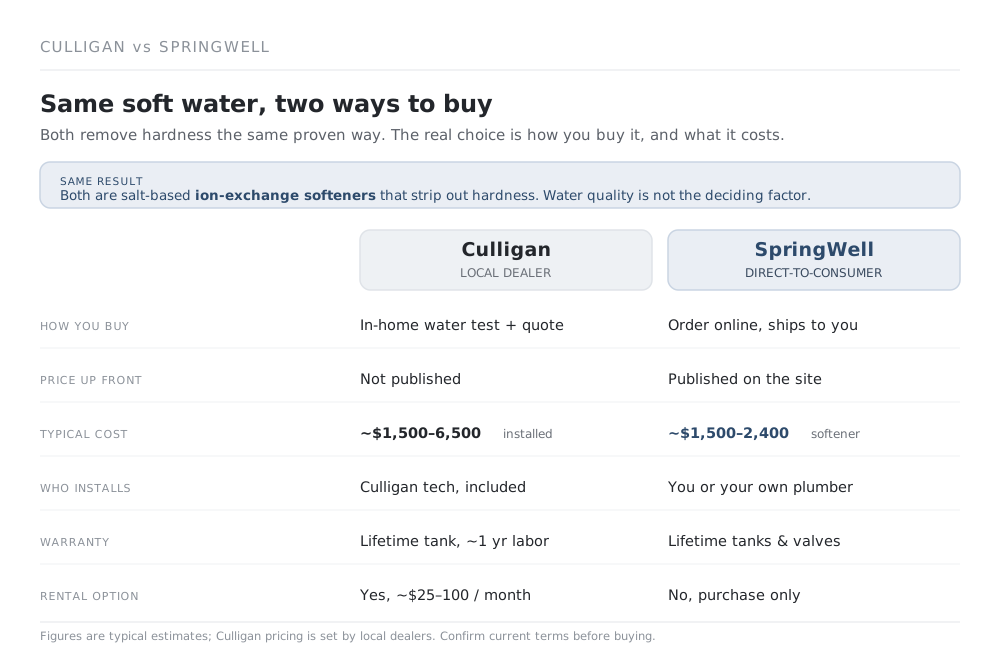
The real difference is how you buy, not how the water turns out
Both companies sell salt-based ion exchange softeners, the standard technology that actually removes hardness minerals from your water.
Run either one correctly and your spotty glasses, scaly showerheads, and crusty faucets go away.
So set water performance aside. The two brands sell in completely different ways, and that shapes the price, the warranty, and who does the work.
Culligan is a local-dealer model. You book a free in-home water test, a rep sizes a system for your water, and you get a custom quote with professional installation included. (Modernize)
SpringWell is a direct-to-consumer model. The price is published on the website, the system ships to your door, and you install it yourself or hire your own plumber. (SpringWell)
Neither model is wrong. They fit different buyers, and the rest of this page helps you tell which one is you.
Culligan vs SpringWell at a glance
| Culligan | SpringWell | |
|---|---|---|
| How you buy | Local dealer, in-home quote | Direct-to-consumer, online |
| Price shown up front | No (quoted after a home visit) | Yes (published on the site) |
| Typical cost | ~$1,500–$6,500 installed | ~$1,500–$2,400 for the SS softener |
| Who installs it | Culligan technician (included) | You, or a plumber you hire |
| Rental option | Yes, ~$25–$100/month | No, purchase only |
| Warranty | Lifetime tank, ~1 year labor | Lifetime tanks & valves |
| Trial period | Varies by dealer | 6-month money-back guarantee |
| Ongoing service | Local dealer, salt delivery available | You maintain it (add salt) |
| Where it’s made | National brand, dealer-installed | Assembled in the US (Florida) |
Sources: Modernize, SpringWell.
Price: a published number vs a quote in your living room
The clearest difference is that you can see SpringWell’s price right now, and you can’t see Culligan’s.
SpringWell publishes its salt-based softener online at roughly $1,500 to $2,400, depending on the grain size your home needs. (SpringWell)
Culligan doesn’t publish a price list at all. Every system is sized and quoted after a free in-home water test, so the number you find online is only an estimate. (Modernize)
In practice, most Culligan softeners land between about $1,500 and $6,500 installed, with entry units near $1,500 and larger twin-tank systems climbing past $8,000. (Modernize, HomeBuddy)
Part of that higher number is real value: professional installation, a local service relationship, and the water test are bundled in.
Part of it is the cost of the sales visit itself. The rep, the appointment, and the dealer overhead all sit inside the quote.
With SpringWell, you skip that overhead and pay a plumber directly if you don’t want to install it yourself. Whatever you save is yours.
Should you rent from Culligan instead?
Culligan also rents softeners for about $25 to $100 a month, which usually includes service and salt delivery under a multi-year agreement. (Modernize)
Renting keeps the up-front cost near zero and hands all the maintenance to the dealer.
The catch is the math over time.
At even $40 a month, a rental crosses $2,400 in five years and keeps going, while a bought SpringWell softener is paid off and still under warranty.
Rent if you’re in the home short-term or you truly never want to deal with upkeep. Buy if you’ll be there for years and want the lower lifetime cost.
What you’ll actually pay over 10 years
Sticker price is only the start. The real number is what a softener costs you over its life, once you add salt and, for a rental, every monthly payment.
Here’s a rough 10-year picture using mid-range figures for each path. Treat it as an estimate: your grain size, salt use, and local dealer terms all move it.
| Over 10 years | Buy SpringWell (DIY) | Buy Culligan (installed) | Rent Culligan |
|---|---|---|---|
| Up-front | ~$1,900 | ~$3,500 | ~$0 |
| Install | $0 (DIY) or ~$300 plumber | Included | Included |
| Salt (~$100/yr) | ~$1,000 | ~$1,000 | Often included |
| Monthly rental (~$40/mo) | — | — | ~$4,800 |
| 10-year total | ~$2,900–3,200 | ~$4,500 | ~$4,800+ |
| You own it at the end | Yes | Yes | No |
Buying up front and installing it yourself is the cheapest path by a wide margin, and you own the system at the end. (Modernize)
Renting looks easy month to month, but over a decade it’s usually the most expensive way to soften your water, and you have nothing to show for it when you stop paying.
Culligan’s installed price sits in the middle, and part of that gap over SpringWell is the professional install and local service you’re buying with it.
Warranty: SpringWell’s is the stronger term
On paper, SpringWell backs its systems harder.
SpringWell gives a manufacturer’s lifetime warranty on the tanks, valves, heads, and bypass, and it isn’t tied to professional installation. (SpringWell)
It also adds a 6-month money-back guarantee, so you can run the system through real seasons and return it if it doesn’t deliver. (SpringWell)
Culligan covers the tank for life as well, but labor is typically warranted for about a year, and specific terms vary by dealer.
One honest caveat on SpringWell’s trial: owners report a restocking fee of around 25% on refused or uninstalled returns, plus you pay return shipping on the heavy 50-plus-pound tanks.
So the money-back guarantee is real, but sending a heavy system back costs you shipping plus that restocking fee.
Installation: the deciding factor for a lot of buyers
This is where the two models split most clearly.
With Culligan, a technician handles the whole install, and you never see the plumbing. That’s the main thing you’re paying extra for.
With SpringWell, the system is built for DIY, and the warranty holds whether you install it or a plumber does. (SpringWell)
A SpringWell softener connects at the main line where water enters the house, needs a nearby drain and a power outlet for the metered valve, and takes a handy homeowner a few hours.
If plumbing makes you nervous, hiring a local plumber for a few hundred dollars still lands you well under a full Culligan quote.
If the idea of cutting into your main line is a hard no, that’s a genuine reason to pay for Culligan’s done-for-you service.
Our water softener installation guide walks through the DIY-versus-plumber decision in detail.
What about well water, iron, or a rotten-egg smell?
Here’s a trap that catches buyers of both brands: a plain softener does not remove iron or the rotten-egg smell from a well.
A softener is built to remove hardness. Push raw well water full of iron through it and the iron fouls the resin and shortens its life.
If your water is from a well, test it first, then treat iron and sulfur with a filter ahead of the softener.
Culligan will size that combination for you through its dealer, at a dealer price.
SpringWell sells it as a single combined unit, an air-injection iron and sulfur filter paired with the softener, at a published price.
That filter is rated to remove up to 7 ppm of iron, 8 ppm of hydrogen sulfide, and 1 ppm of manganese. (SpringWell) Check those numbers against your well test first. Water above them needs extra pre-treatment before the softener.
Check price at SpringWell(opens on SpringWell, external site)Our guide to the best water softener for well water covers how to stage a filter and softener together.
The case for each brand
Choose SpringWell if you want value and a published price
SpringWell is the better pick for most homeowners who don’t mind buying online.
You see the price before you commit, you get a lifetime warranty on the tanks and valves plus a 6-month money-back trial, and you keep whatever a dealer’s markup would have cost you. (SpringWell)
The salt-based SS softener is the direct match for a Culligan hardness system, at a published price of roughly $1,500 to $2,400 by size. (SpringWell)
The honest trade-off: you arrange your own install, and returning a heavy system under the guarantee costs shipping and a restocking fee.
If you’d rather a local company do everything and never see the plumbing, Culligan is the better fit.
Check price at SpringWell(opens on SpringWell, external site)Choose Culligan if you want local, hands-off, done-for-you service
Culligan has no PureHouse score, and that’s deliberate. A score needs a named model and a published price, and Culligan publishes neither. What you pay depends on your dealer, your water test, and what you negotiate. That gap is the subject of this whole comparison, so leaving the number blank says more than inventing one would.
Culligan is worth the premium if service and convenience matter more to you than price.
You get a local dealer who tests your water, sizes the system, installs it, and comes back to service it, plus the option to rent instead of buy. (Modernize)
For an older homeowner, a busy household, or anyone who simply won’t do plumbing, that hand-holding is real value.
The honest trade-off: you won’t know the price until a rep is in your home, the installed cost runs higher, and labor is warranted for about a year rather than for life. (Modernize)
If you’re comfortable buying online and want the lower lifetime cost, SpringWell makes more sense.
Which is right for you?
| Choose SpringWell if… | Choose Culligan if… |
|---|---|
| You want to see the price before you buy | You’re fine getting a quote after a home visit |
| You’ll install it yourself or hire your own plumber | You want professional install included and done for you |
| You want the lowest lifetime cost | You’d rather rent or have a local service contract |
| You want a lifetime tanks-and-valves warranty | You want a local dealer to call when something breaks |
| You’re comfortable buying online | You prefer an established national brand in your town |
Either way, you’ll end up with soft water. The question is how much you pay, and who turns the wrenches.
Frequently asked questions
Is Culligan or SpringWell better?
For most homeowners comfortable with an online purchase, SpringWell is the better value: a published price of about $1,500 to $2,400 for its salt-based softener, a lifetime warranty on the tanks and valves, and a 6-month money-back trial. Culligan is the better choice if you want a local dealer to test your water, install the system, and service it, and you’d rather not do any plumbing.
Why won’t Culligan tell me the price online?
Culligan sells through local dealers and quotes each system after a free in-home water test, so it doesn’t publish a flat price list. That lets the dealer size the system to your water, but it also means you can’t compare a real number until a rep is in your home. Most installed systems land between about $1,500 and $6,500.
Is SpringWell hard to install yourself?
No, SpringWell designs its systems for DIY, and the warranty holds whether you or a plumber installs it. The softener connects at your main water line, needs a nearby drain and a power outlet, and takes a handy homeowner a few hours. If you’d rather not, a local plumber can fit it for a few hundred dollars and you’re still well under a Culligan quote.
Should I rent a softener from Culligan or buy one?
Rent if you’re in the home short-term or truly never want to handle maintenance, since a Culligan rental runs about $25 to $100 a month with service included. Buy if you’ll be there for years, because rental payments add up past the cost of a purchased system within a few years while a bought softener is paid off and still under warranty.
Which has the better warranty, Culligan or SpringWell?
SpringWell has the stronger written term: a lifetime warranty on the tanks, valves, and heads, plus a 6-month money-back guarantee, and it isn’t tied to professional installation. Culligan covers the tank for life too, but labor is typically warranted for about a year and exact terms vary by dealer.
Will a Culligan or SpringWell softener remove iron from well water?
Not on its own. A softener removes hardness, and raw well iron will foul its resin. For well water you need an iron and sulfur filter ahead of the softener. Culligan sizes that combination through a dealer; SpringWell sells it as a single combined filter-and-softener system at a published price.
Not sure a softener is even what your water needs? Start with our water softener system guide, which explains what softening does and doesn’t fix.
Comparing more than these two? Our best water softener guide ranks the systems worth buying, for city and well water.
Considering Kinetico too? It’s the other major dealer brand. Our Kinetico vs SpringWell comparison weighs whether its non-electric twin-tank is worth paying roughly double for.
On a well with iron or a smell? See the best water softener for well water.
How we researched this
We built this comparison from Culligan dealer cost data, SpringWell’s published prices and warranty terms, and independent brand comparisons of warranty length, pricing model, and installation.
We don’t install these two systems side by side ourselves yet, so we don’t claim first-hand testing, and every price, warranty term, and figure here is attributed to its source.
Culligan pricing is set by local dealers and SpringWell updates its lineup, so treat every number as approximate and confirm the current price and warranty on the model before you buy.
When we name a merchant we may earn a commission if you buy through a link here, at no cost to you.