Best salt-free water softener: what actually works
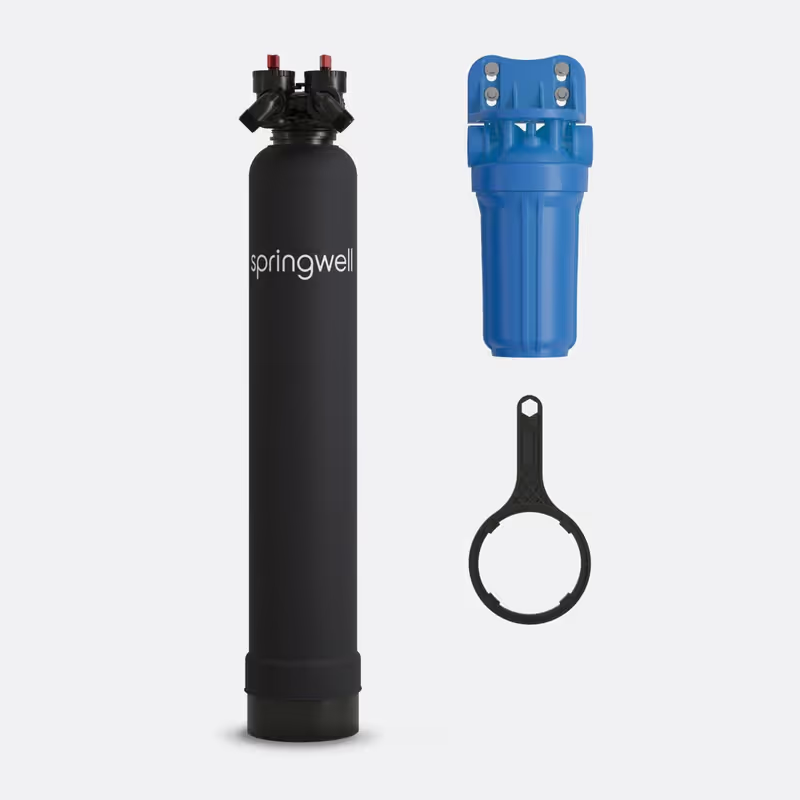
- Moves 12 to 20 GPM without dropping household water pressure.
- Needs no salt, drain line, or electricity to run.
- Only upkeep is a sediment pre-filter swapped about once a year.
- Backed by a limited lifetime warranty and a six-month money-back trial.
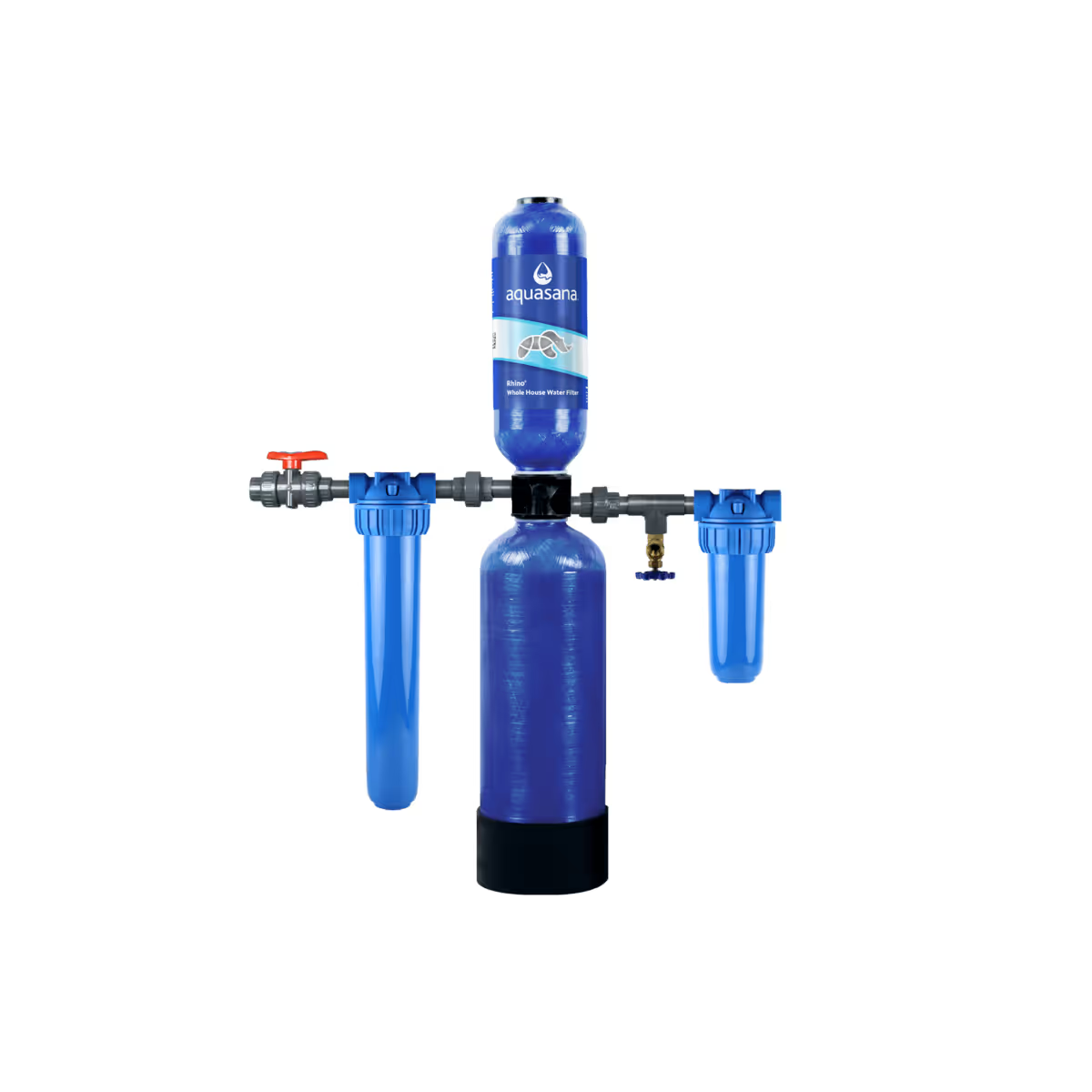
- Filters up to 97% chlorine plus VOCs and some heavy metals.
- Rated for 1 million gallons, about a 10-year filter life.
- NSF/ANSI 42 tested, with an NSF/ANSI 61-certified tank.
- Salt-free scale control comes from an optional SimplySoft add-on module.
- Runs about $1,250 to $1,800 and moves roughly 12 GPM.
- Backed by a lifetime warranty and a six-month trial.
- Uses the same TAC technology validated by university testing.
- A cartridge-based version costs less and installs even simpler.
The most useful thing to know before you spend a dollar: a salt-free “water softener” is a conditioner, not a softener.
It doesn’t remove the hardness minerals, calcium and magnesium, the way a salt-based system does. Instead it changes how those minerals crystallize, so they stay suspended in the water and don’t stick to your pipes and water heater as scale.
Your water still tests just as hard afterward — see hard water vs soft water for how that’s actually measured. A University of Nebraska extension guide is blunt about it: these are “descalant devices as opposed to hardness removing devices.” (UNL Extension)
That honesty up front saves the disappointment behind half the bad reviews, from people who expected the slippery soft-water feel and never got it.
Here’s the good news: within its lane, a salt-free conditioner works, and independent lab testing proves it. For a dedicated unit, the SpringWell FutureSoft is the pick; if chlorine taste is also on your list, the Aquasana Rhino bundles filtration with optional scale control.
How salt-free conditioning actually works
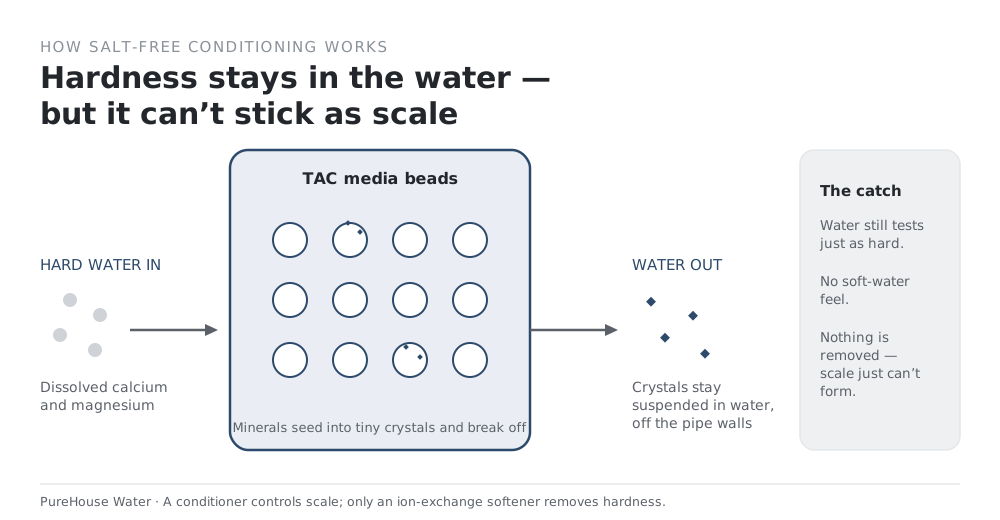
Salt-free systems run your water through a tank of special media beads, most often a technology called template-assisted crystallization, or TAC.
Each bead has a treated surface that acts as a seed point.
As hard water passes over it, the dissolved calcium and magnesium form microscopic crystals that break off and float away in the water as stable, harmless particles.
Because the minerals are now locked into crystals, they can’t bond to the inside of your pipes or heating element as scale.
The key difference from a real softener: a softener uses ion exchange to physically pull the calcium and magnesium out and swap them for sodium, so the water leaves soft.
A conditioner leaves the minerals in the water and just defuses them.
That’s why there’s no salt, no brine tank, no drain line, and often no electricity. There’s nothing to regenerate.
It also means no added sodium, which is the other reason people choose it.
Do salt-free water softeners actually work?
Yes, for what they’re built to do, and there’s real testing behind it.
The most cited study comes from Arizona State University, which ran salt-free TAC media through the German DVGW W512 scale-prevention protocol and measured 88–97% less scale, consistently above 90%. (ASU study summary)
So the scale-prevention claim isn’t marketing air. On low-to-moderate hardness, a good TAC unit keeps your water heater and fixtures noticeably cleaner.
One honesty note on the numbers: you’ll see manufacturers advertise figures like “99.6% scale prevention.”
Treat those as manufacturer claims, a notch above the 88–97% that independent testing supports. The real performance is excellent but not quite the brochure figure.
Now the limits worth knowing before you buy, because this is where the disappointment comes from:
- No soft-water feel. Your water still tests hard, so you won’t get the slippery feel, and soap won’t lather noticeably better.
- Spots don’t fully go away. Because the minerals are still in the water, glasses and shower doors can still show some spotting.
- It fades on very hard water. TAC works reliably up to about 25 grains per gallon; above that, a salt-based softener is the right tool.
- It does nothing for iron, and iron ruins it. Iron above about 0.3 ppm fouls the media and kills its performance, which matters a lot on well water.
One more distinction, since it gets lumped in unfairly: media-based TAC is not the same as a magnetic or electronic descaler.
TAC has the lab data above; the magnetic and electronic gadgets don’t, and our water softener system guide covers why the evidence says to skip them.
The picks
SpringWell FutureSoft
| Spec | SpringWell FutureSoft |
|---|---|
| Type | Salt-free TAC conditioner |
| Flow rate | 12–20 GPM |
| Scale prevention | Manufacturer claims 99.6% (independent TAC testing: 88–97%) |
| Salt / drain / electricity | None of the three |
| Maintenance | Yearly sediment pre-filter; media never replaced |
| Warranty | Limited lifetime (tanks, valves, media) |
| Price | ≈ $1,452 |
The FutureSoft is a purpose-built salt-free conditioner, and it’s the one to beat.
Flow rate is its strong suit: 12 to 20 GPM means it keeps up with a busy household without dropping pressure, which is where cheaper inline units struggle.
There’s no salt to haul, no drain to plumb, no electricity, and no wastewater, so once it’s installed you mostly forget it.
The media isn’t a consumable either; you swap a sediment pre-filter about once a year and that’s the upkeep.
SpringWell backs it with a limited lifetime warranty and a six-month money-back trial, which is a fair way to see whether conditioning is enough for your water.
At that point you either need a real softener or an iron filter first, and the FutureSoft alone won’t satisfy you.
Check price at SpringWell(opens on SpringWell, external site)Why it scores 7.9i
Each sub-score is our assessment, weighted into the overall. It reflects published specifications, certification listings and warranty terms — not systems we ran ourselves. How we score
- Performance7/10
- Rated to 81 gpg and 12 gpm on the FS1, which covers most homes, and the job it is sold for is preventing scale rather than removing hardness — so no slippery feel and no sodium, but also no softened water. The named limit that rules out a common case is iron: maximum 0 ppm, so any well needs an iron filter ahead of it. Source ↗
- Value8/10
- Priced close to a salt-based system, then almost nothing to run: no salt, no drain, no power, and media rated for five years or more. A sediment pre-filter is the only consumable, which puts the annual bill under $60. Source ↗
- Ownership10/10
- The easiest install and the lightest upkeep on this page. A DIY main-line cut-in with the bypass and fittings in the box, no drain line and no outlet, and one recurring job — change the pre-filter with the wrench supplied. The media soaks for two days before it goes in. Source ↗
- Trust7/10
- A lifetime warranty covering media, tanks, housings, valves and fittings, plus a six-month money-back guarantee, and no electronic head to carry a shorter term. The headline claim is the soft spot: "up to 95% scale prevention" is SpringWell's own figure, with no independent test report naming a lab and protocol behind it. Source ↗
Aquasana Rhino EQ-1000
| Spec | Aquasana Rhino EQ-1000 |
|---|---|
| Type | Whole-house carbon filter (+ optional SimplySoft salt-free module) |
| Capacity | 1,000,000 gallons / ~10 years |
| Flow rate | 7 GPM |
| Removes | Up to 97% chlorine, plus VOCs and some heavy metals |
| Certifications | NSF/ANSI 42 tested; NSF/ANSI 61 tank |
| Warranty | 10-year (pro install; DIY install drops it to 1 year) |
| Price | ≈ $999 base |
Here’s the important part, stated plainly: the base Rhino EQ-1000 is a carbon filter, not a conditioner.
Its job is chlorine, taste, and odor, and it’s genuinely good at that, with a real NSF/ANSI 42 test result and a million-gallon lifespan.
Salt-free scale control is a separate add-on, Aquasana’s SimplySoft module, which uses the same crystallization idea as TAC.
So the honest way to buy this: you’re choosing Aquasana for the whole-house carbon filtration first, with salt-free conditioning as a bolt-on, on city water where iron isn’t in the picture. For how the Rhino stacks up against the rest of the lineup, including the under-sink and shower filters, see our Aquasana water filter review.
It carries real certifications, which is a trust signal the pure conditioners don’t publish.
Check price at Aquasana(opens on Aquasana, external site)Why it scores 7.7i
Each sub-score is our assessment, weighted into the overall. It reflects published specifications, certification listings and warranty terms — not systems we ran ourselves. How we score
- Performance8/10
- Published NSF/ANSI 42 test results of up to 97% chlorine reduction across a million gallons are the strongest checkable numbers in the category. The base model manages only up to 83% on chloramine, so a chloraminated supply needs the separate Rhino Chloramines version, and the 7 gpm rating shows as pressure drop when two fixtures run at once. Source ↗
- Value7/10
- Around $999 for the base system, but the add-ons that make it complete — UV lamp, post filter, the salt-free module — can push the real spend past $2,000, and the ten-year warranty only applies if a professional installs it. Source ↗
- Ownership7/10
- A million gallons on the main tank means roughly a decade before a media change, offset by a pre-filter swap every six months and a warranty that drops from ten years to one if you fit it yourself. Source ↗
- Trust9/10
- Aquasana publishes independent NSF/ANSI 42 test figures rather than a marketing percentage, and the tank itself is certified to NSF/ANSI 61. Naming the 83% chloramine result in its own literature is the kind of disclosure most of this category avoids. Source ↗
Filtersmart or a cartridge TAC
A dedicated budget conditioner like the Filtersmart salt-free system runs roughly $1,250–$1,800, moves about 12 GPM, and carries a lifetime warranty with a six-month trial.
It cites the same University of Arizona TAC testing, so the underlying technology is the same as the pricier units.
A cartridge-based TAC system is the cheaper, simpler step down, easier to install and with the media swapped as a cartridge, best kept to city water under 25 gpg.
The trade-offs at this tier are usually flow rate and warranty terms, so match the GPM to your household and read the warranty before you buy.
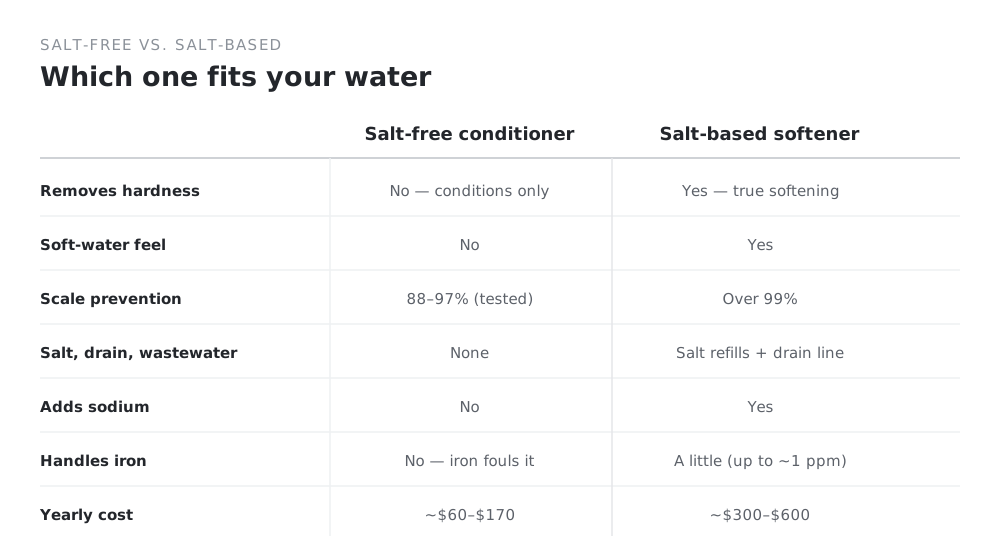
Salt-free vs. salt-based: which one you actually need
This is the real decision, so here it is without the marketing.
| Salt-free conditioner | Salt-based softener | |
|---|---|---|
| Removes hardness | No (conditions only) | Yes, true softening |
| Water tests | Still hard | Soft, near zero gpg |
| Soft-water feel | No | Yes |
| Scale prevention | 88–97% (independent) | Over 99% |
| Salt / drain / wastewater | None | Salt refills, drain line, water used to regenerate |
| Adds sodium | No | Yes |
| Handles iron | No | A little (up to ~1 ppm) |
| Yearly cost | ~$60–$170 | ~$300–$600 |
| Best hardness range | Up to ~25 gpg | Any, especially very hard |
Choose salt-free if you want no salt to haul, no drain to plumb, and near-zero maintenance; you’re fine keeping the hardness minerals in the water as long as scale is controlled; your hardness is low to moderate; or you live where brine-discharge softeners are restricted.
That last point is a real driver.
A California law, AB 1366, lets towns ban salt softeners that flush brine to the drain, and several have. Texas limits brine discharge in cities like San Antonio and Austin. (LifeSource)
Where salt softeners are restricted, a salt-free conditioner is often the only whole-house choice left.
Choose salt-based if you want the true soft-water feel and spot-free dishes; your water is very hard, above about 25 gpg; you care most about protecting your appliances and water heater; or you want the most scale prevention, which only true softening gives.
If that’s you, start with our best water softener rankings instead.
For the full head-to-head on one of each, see SpringWell vs. Aquasana.
What salt-free costs, and where it saves you
Salt-free wins the running-cost argument, and it’s not close.
A salt-based softener costs roughly $300–$600 a year in salt, with bags to refill every four to six weeks, plus the water it uses to regenerate, up to about 50 gallons per cycle.
A salt-free conditioner costs about $60–$170 a year, and that’s just an occasional sediment pre-filter.
Upfront, the two overlap: salt-free units commonly run about $800–$4,000, salt-based about $1,500–$3,000. (Angi)
Over ten years, that low upkeep adds up. Here’s the math on a representative unit of each type, using the midpoint of each one’s published running cost:
| Salt-free conditioner | Salt-based softener | |
|---|---|---|
| Representative unit | ~$1,452 (SpringWell FutureSoft) | ~$2,000 (mid-range) |
| Yearly upkeep | ~$115 (pre-filter) | ~$450 (salt) |
| 5-year total | ~$2,027 | ~$4,250 |
| 10-year total | ~$2,602 | ~$6,500 |
Upkeep midpoints from published ranges: salt-free $60–$170/yr, salt-based $300–$600/yr. Install is similar for both and left out.
Almost the entire ten-year gap is salt.
One caveat on the crossover: pit a cheap salt-based unit against a premium salt-free one and the upfront prices flip, so salt-free only pulls ahead later, usually after three to five years. The constant in every version is the yearly running cost, and it favors salt-free.
The honest counterweight: a salt-based system buys measurably better scale prevention and the soft feel for that higher running cost.
The money argument favors salt-free; the performance argument favors salt-based. Your water and your priorities break the tie.
A well-water warning before you buy
If you’re on a well, test your water before you choose any salt-free unit.
The reason is iron. Even a small amount, above about 0.3 ppm, fouls the conditioning media and destroys its performance.
A conditioner also does nothing about iron staining, sulfur smell, or sediment, which are usually the real complaints on a well.
So the well-water order is: test first, treat the iron and sulfur with a dedicated filter, and only then add a softener or conditioner for the hardness.
Our well water testing guide covers how to get those numbers, and hard water explains what hardness is doing to your home in the first place.
Frequently asked questions
Do salt-free water softeners actually work?
Yes, for scale control. Independent testing at Arizona State University measured 88–97% less scale using TAC media, so a good salt-free conditioner genuinely protects pipes and appliances on low-to-moderate hardness.
What it doesn’t do is remove hardness, so your water still tests hard and won’t feel slippery-soft.
Is a salt-free water softener the same as a water softener?
No. A true softener uses ion exchange to remove calcium and magnesium and swap in sodium, so the water leaves soft.
A salt-free system is a conditioner: it changes how the minerals crystallize so they don’t stick as scale, but it leaves them in the water.
Will a salt-free system give me the soft-water feel?
No. Because the hardness minerals stay in the water, you won’t get the slippery feel or the extra soap lather that true softening gives you.
If that feel is what you’re after, you want a salt-based softener.
Does salt-free work for well water?
Only after you deal with iron. Iron above about 0.3 ppm fouls the media, and a conditioner does nothing for staining, sulfur smell, or sediment.
Test your well first, filter out the iron and sulfur, then add a conditioner for hardness if you want one.
How hard is too hard for salt-free?
Salt-free conditioning works reliably up to about 25 grains per gallon.
Above that, effectiveness drops and a salt-based softener is the better buy.
What does a salt-free water softener cost to run?
About $60–$170 a year, mostly an occasional sediment pre-filter, with no salt and no wastewater.
That’s the main advantage over a salt-based system, which runs about $300–$600 a year in salt.
Are magnetic or electronic “salt-free softeners” the same thing?
No, and it’s an important difference. Media-based TAC has independent lab testing behind it; magnetic and electronic descalers don’t, and the evidence says to skip them.
Want the genuine soft-water feel or have very hard water? See the best water softener rankings.
Not sure how hard your water is, or what else is in it? Start with well water testing.
Want the big picture on how softening fits your whole system? Read the water softener system guide.
How we researched this
We built this guide from independent and university testing (Arizona State University’s DVGW W512 evaluation of salt-free media, University of Nebraska extension guidance), water-treatment references on how template-assisted crystallization works, manufacturer spec sheets (SpringWell, Aquasana), independent review labs, and cost data from water-treatment retailers.
We don’t run these systems ourselves yet, so we don’t claim first-hand testing, and every number here is attributed to its source.
Where a figure is a manufacturer’s own claim, like SpringWell’s 99.6% scale-prevention number, we’ve labeled it as a claim rather than an independent result.
When we name a merchant it’s SpringWell or Aquasana, and we may earn a commission if you buy through a link here, at no cost to you.