Best high efficiency water softener: what actually saves salt
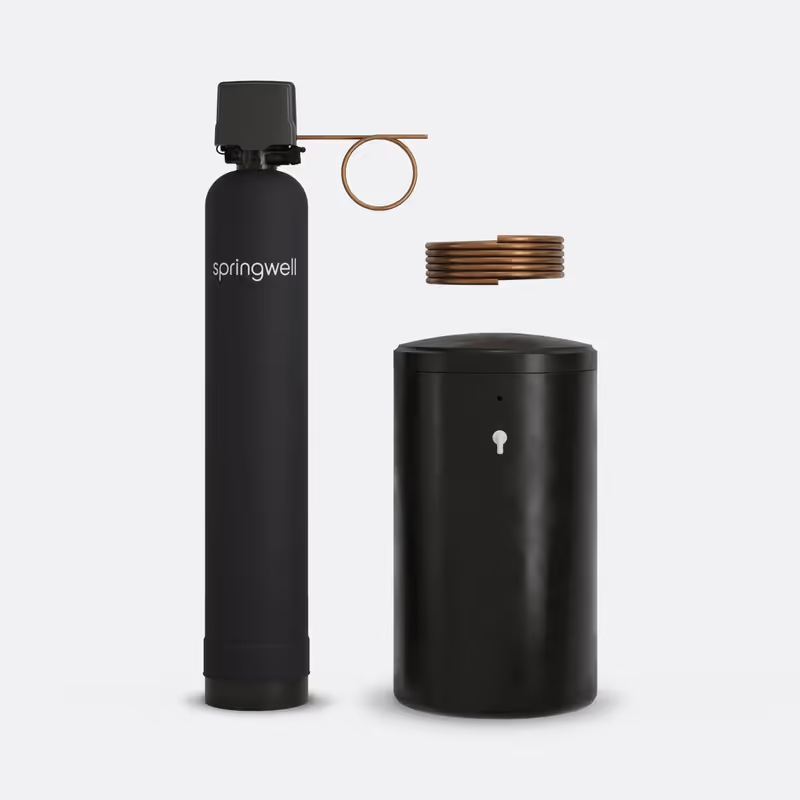
- Uses a Bluetooth-programmable head with smart metered regeneration.
- 10% crosslink resin resists chlorine and iron for longer-lasting capacity.
- Backed by a lifetime warranty on the tank and valve, plus a six-month trial.
- Handles well water iron up to about 1 ppm without added filtration.
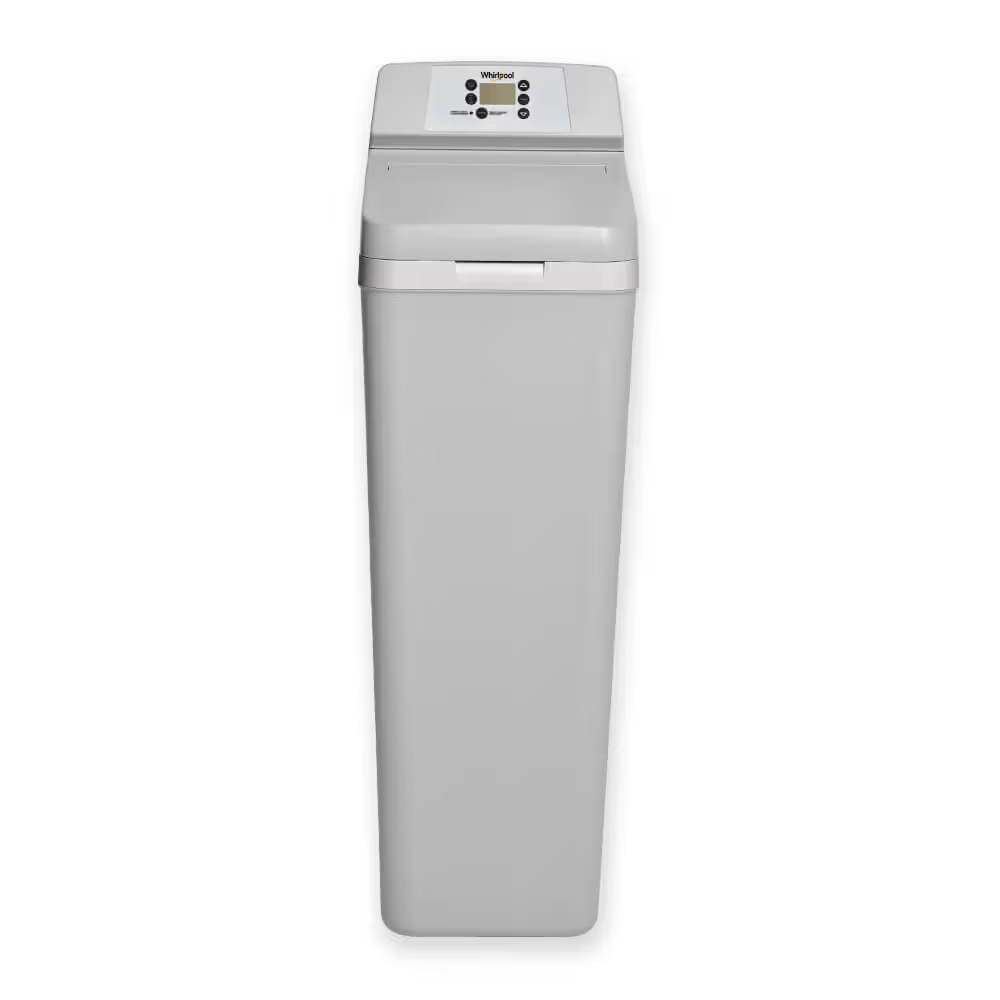
- Uses demand-initiated regeneration to save salt like pricier units.
- NSF certified, a mark many DIY-brand competitors don’t publish.
- Tolerates up to 10 ppm of clear-water iron, unusually high for its price.
- Costs about $550 to $700, with a 1-year parts and labor warranty.
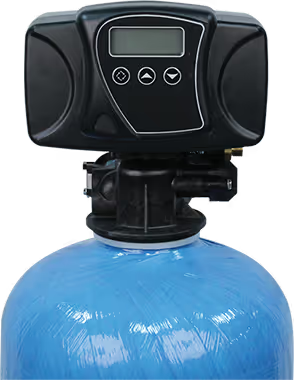
- Metered, on-demand digital valve is the industry’s rebuildable standard.
- You program your real hardness and salt dose for full control.
- A common 48,000-grain build runs about $765, with parts widely available.
- Backed by a 5-year valve warranty and a 10-year tank warranty.
A high-efficiency water softener is a salt-based, metered unit that removes the most hardness for each pound of salt and each gallon of water it uses.
It still softens by ion exchange, the same as any salt-based system. What makes it efficient is how it regenerates: it recharges based on the water you actually use, doses salt leanly, and flushes less water down the drain.
The one thing to get straight before you shop: a salt-free “softener” is not a high-efficiency softener. It removes no hardness at all, so there’s no salt-per-grain number to rate.
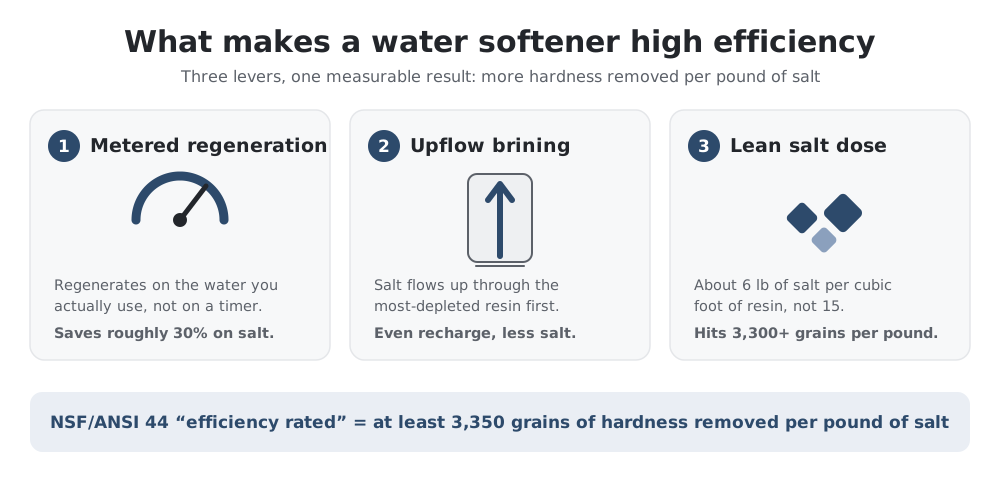
There’s a real, measurable bar for this. Under NSF/ANSI 44, a softener only earns the “efficiency rated” label if it removes at least 3,350 grains of hardness per pound of salt and uses no more than 5 gallons of water per 1,000 grains, and only metered units can qualify. (WaterWorld)
For most homes the best all-round efficient pick is the SpringWell SS; the honest budget pick is the NSF-certified Whirlpool WHES40E; and if you want smart-metered efficiency from a well-water specialist, the US Water Systems Matrixx is the one to look at.
What “high efficiency” actually means
Efficiency comes down to one specific number: grains of hardness removed per pound of salt. (WaterWorld)
The higher that number, the less salt you buy and the less sodium and brine go down your drain for the same soft water.
NSF/ANSI 44 sets the industry bar. To be listed as efficiency rated, a softener must clear three things at once:
- At least 3,350 grains of hardness removed per pound of salt. California’s standard is stricter, at 4,000. (WaterWorld)
- No more than 5 gallons of water per 1,000 grains of hardness removed.
- Demand-initiated (metered) regeneration. A time-clock softener can’t qualify, full stop. (WaterWorld)
For scale, a softener run at a full salt dose manages only about 2,133 grains per pound.
So the 3,350-grain bar sits well above what an ordinary full-dose unit manages, which makes it a real cut in salt use.
One honesty note on certification: several well-regarded units are efficient by design but aren’t necessarily on NSF’s efficiency-rated list. If an efficiency certification matters to you, confirm the exact model on NSF’s own database before you buy, rather than trusting a badge on a product page.
The three levers that make a softener efficient
Efficiency comes down to three parts of how the softener regenerates. Get these right and the grains-per-pound number takes care of itself.
1. Metered regeneration, not a timer
This is the single biggest lever.
A timer softener regenerates on a fixed schedule, say every three days, whether or not the resin is actually used up. That wastes salt and water on cycles you didn’t need.
A metered unit counts the gallons you use and regenerates only when the resin is nearly spent.
The saving is real. Switching from a timer to metered regeneration cuts salt by roughly 30% for a typical home; vendors advertise up to 40–60%, which is best-case.
In one vendor’s worked example, a family of four on hard water burns about 50 pounds of salt a month metered, versus about 80 on a three-day timer.
That’s about 30 pounds of salt and well over 100 gallons of water a month, not wasted.
2. Upflow brining, not downflow
How the brine moves through the resin matters almost as much.
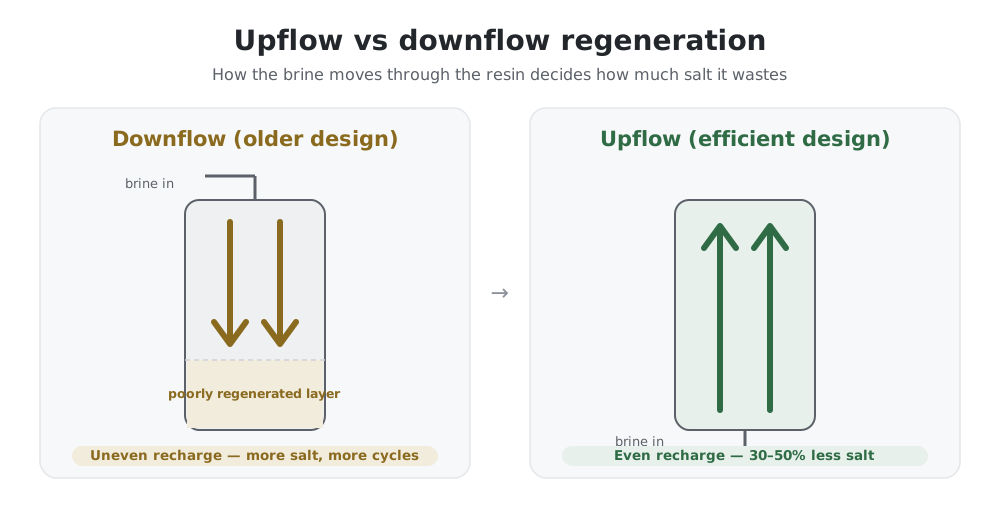
In an older downflow design, salt water enters the top of the tank and flows down. It hits resin that may still be charged, weakens as it goes, and can leave the bottom layer poorly recharged, which is the last resin your water touches on the way out. (Star Water Systems)
An upflow design sends the brine up from the bottom, so it hits the most-depleted resin first and recharges the bed more evenly.
Upflow is cited saving roughly 30–50% on salt and up to 40% on water versus downflow, and it works best at a leaner brine strength. (Star Water Systems)
Proportional brining is the refinement on top: the valve draws only as much salt as the measured exhaustion calls for, instead of a full dose every cycle. (WaterWorld)
Pair upflow with proportional brining and you have the most salt-efficient regeneration on the market.
3. A lean salt dose
You can dial in the salt dose, and this is where the honest tradeoff lives (more on that next).
Running a lean dose, around 6 pounds of salt per cubic foot of resin, hits the efficient 3,300-plus grains per pound.
Running a full dose, around 15 pounds, squeezes out maximum capacity but drops efficiency to about 2,100 grains per pound.
The efficient units default to the lean setting; a badly programmed one can waste salt no matter how good the hardware is.
The honest tradeoff: efficiency costs you capacity
Here’s the part the “60% less salt!” ads leave out.
Salt efficiency and grain capacity pull against each other. The leaner the salt dose, the fewer grains of hardness the resin holds before it needs to regenerate again.
The numbers on a single cubic foot of resin make it concrete:
| Salt dose | Capacity per regeneration | Salt efficiency |
|---|---|---|
| ~6 lb (lean) | ~20,000–24,000 grains | ~3,300+ grains/lb (NSF-efficient) |
| ~15 lb (full) | ~32,000 grains | ~2,133 grains/lb |
Salt-dose-to-capacity figures are typical water-treatment references for a single cubic foot of resin.
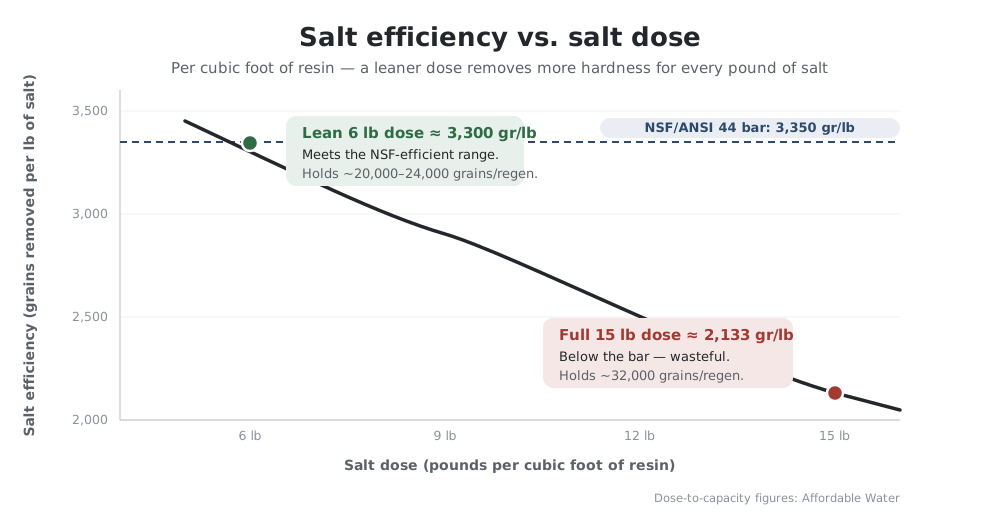
Running efficiently gets you about two-thirds of the capacity for under half the salt.
So an efficient unit holds less between regenerations, which means it regenerates a little more often, or you size the tank a step larger to compensate. That’s exactly why NSF measures the efficiency rating at the lean salt setting.
The practical takeaway: buy a metered, upflow unit and, if anything, size it slightly generously. You get the salt savings without regenerating every other day.
The picks
Every pick here is a genuine salt-based softener with metered regeneration. They differ in how hard they lean into efficiency, and in price.
SpringWell SS
| Spec | SpringWell SS |
|---|---|
| Type | Salt-based, metered smart regeneration |
| Control | Bluetooth head, programmable |
| Resin | 10% crosslink (tougher, longer-lived) |
| Sizes | 32,000 / 48,000 / 80,000 grain (SS1 / SS4 / SS+) |
| Iron tolerance | Up to ~1 ppm (softener alone) |
| Warranty | Lifetime (tanks and valve) |
| Price | ≈ $1,289 (SS1) to $2,219 (SS+) |
The SS is our anchor pick because it does the efficiency fundamentals well and lasts.
Its metered head regenerates on real water use, and you set it from your phone, so it’s easy to dial in the right hardness and a lean salt dose.
It uses 10% crosslink resin, a denser, tougher bead that resists chlorine and iron and holds its capacity longer than the standard 8% resin most units ship with.
Better resin matters for efficiency over time: a bed that keeps its rated capacity keeps hitting its grains-per-pound number for years instead of degrading and regenerating more often.
SpringWell backs it with a lifetime warranty on the tank and valve, plus a six-month money-back trial.
One straight-talk point: the SS is efficient by design, but we couldn’t confirm it on NSF’s efficiency-rated list, so buy it for the metering, resin, and warranty rather than an NSF efficiency badge.
Check price at SpringWell(opens on SpringWell, external site)Why it scores 8.9i
Each sub-score is our assessment, weighted into the overall. It reflects published specifications, certification listings and warranty terms — not systems we ran ourselves. How we score
- Performance9/10
- Three published sizes cover the whole household span — 32,000 grains and 11 gpm for one to three bathrooms, up to 80,000 grains and 20 gpm for seven or more — so there is a fit for almost any house. Short of a 10 because no clear-water iron tolerance is published and the manual asks you to call before installing on a well. Source ↗
- Value9/10
- Sold direct with no dealer margin, at a published price, with a lifetime warranty and a six-month money-back trial behind it. The one number you cannot check before buying is the salt bill: SpringWell publishes no rated efficiency. Source ↗
- Ownership9/10
- A DIY main-line cut-in with the drain line supplied, and then one recurring job for the life of the system — keep the brine tank in salt. No filters, no media change, no cleaning schedule. The bypass valve is an add-on at checkout rather than standard equipment. Source ↗
- Trust8/10
- A lifetime warranty on tanks, valves, housings and heads, plus six-month returns, is the strongest cover on this page. It is not NSF/ANSI 44 certified, though: the softening claims are SpringWell's own, backed by a full published specification table rather than an accredited listing. Source ↗
Whirlpool WHES40E
| Spec | Whirlpool WHES40E |
|---|---|
| Type | Salt-based, demand-initiated regeneration |
| Size | 40,000 grain |
| Iron tolerance | Up to 10 ppm clear-water (ferrous) iron |
| Certification | NSF certified (per Whirlpool listings) |
| Warranty | 1 yr parts/labor, longer on the tank |
| Price | ≈ $550–700 (approximate; confirm current) |
This is the pick that breaks the “efficient means expensive” assumption.
The WHES40E uses demand-initiated regeneration, so it saves salt the same way the premium units do, and it carries NSF certification, which the pricier DIY brands often don’t publish. (Whirlpool)
It also tolerates up to 10 ppm of clear-water iron, which is unusually high for its price and handy on light-iron well water. (Whirlpool)
The catch is the warranty, which is short next to the lifetime coverage from SpringWell: one year on parts and labor.
Check price at Amazon(opens on Amazon, external site)Why it scores 8.2i
Each sub-score is our assessment, weighted into the overall. It reflects published specifications, certification listings and warranty terms — not systems we ran ourselves. How we score
- Performance8/10
- 40,000 grains, 125 gpg maximum supply hardness and 10 ppm clear-water iron covers a four-person house comfortably on every dimension. The 7.6 gpm rated service flow is the class norm rather than headroom, and the cabinet comes in one size per model, so there is no sizing up. Source ↗
- Value9/10
- The cheapest way to get a certified softener, and it carries the lowest running bill on this page: 5,090 grains of hardness exchanged per pound of salt at the minimum dose is the best published efficiency in the group. Source ↗
- Ownership7/10
- A main-line cut-in with the bypass supplied, but it needs both a drain and a grounded outlet, and the manual sets three recurring jobs on three different schedules — salt every two to three weeks, cleanser every four months, and periodic nozzle and venturi cleaning. Source ↗
- Trust9/10
- Certified by NSF International to NSF/ANSI Standard 44 for hardness reduction and efficiency, to Standard 372, and by the WQA to CSA B483.1 — the strongest third-party backing here. The warranty is the weak half: ten years on the tanks but one year on parts and labour and three on the control board. Source ↗
Fleck 5600SXT
| Spec | Fleck 5600SXT |
|---|---|
| Type | Salt-based, metered on-demand digital valve |
| Sizes | 32,000 / 48,000 / 64,000 grain |
| Efficiency | Depends on programming (meter + lean salt dose) |
| Warranty | 5 yr valve / 10 yr tank |
| Price | ≈ $765 (48,000-grain build) |
The 5600SXT is the enthusiast standard, built around a metered, on-demand valve the whole industry uses and that you can rebuild rather than replace.
Because you program it yourself, its efficiency is in your hands: set your real hardness and a lean salt dose and it runs as efficiently as anything here.
A common 48,000-grain build runs about $765, and parts are everywhere, so you pay for hardware instead of a dealer’s markup.
A fine-mesh resin option makes it a reasonable choice for light, clear-water iron, though heavier iron still needs a filter first.
Check price at Amazon(opens on Amazon, external site)Why it scores 7.5i
Each sub-score is our assessment, weighted into the overall. It reflects published specifications, certification listings and warranty terms — not systems we ran ourselves. How we score
- Performance8/10
- Three builds from 11,000 to 23,000 grains, and the SXT metered head regenerates on actual water use rather than a clock, so it does not waste a cycle. The 2.0 cu ft build carries a four-person house at 15 gpg. No rated service flow and no iron tolerance are published for the assembled system. Source ↗
- Value8/10
- The cheapest route to a fully metered softener, and the Fleck valve is the most widely serviced in the category — parts are everywhere and cheap for decades, which is most of why these systems outlive their owners' interest in them. No published salt efficiency, so the running bill is an estimate. Source ↗
- Ownership6/10
- The most work on this page. You assemble and program it yourself, it needs a drain and an always-on outlet, and upkeep runs to four jobs on four schedules — salt, a brine tank clean-out every three years, sanitising, and clearing the injector and screen when flow drops. Source ↗
- Trust7/10
- Pentair publishes five years on Fleck valves and ten on the fibreglass tank, which is the class norm. There is no NSF/ANSI certification for the valve or the assembled system, and because these are built and sold by third-party assemblers, the cover you actually get depends on who put yours together. Source ↗
US Water Systems Matrixx
| Spec | US Water Systems Matrixx |
|---|---|
| Type | Salt-based, smart metered, StackFlow high-efficiency internals |
| Sizes | 35,000 / 53,000 / 70,000 grain (MXX-100 / 150 / 200) |
| Salt & water efficiency | Manufacturer states up to ~70% less salt and water |
| Iron tolerance | Small amounts only; maker recommends an iron filter ahead |
| Certification | WQA-certified, NSF/ANSI 61-compliant components |
| Warranty | Lifetime tank and resin, 10-year valve and electronics |
| Price | ≈ $1,232–$1,751 |
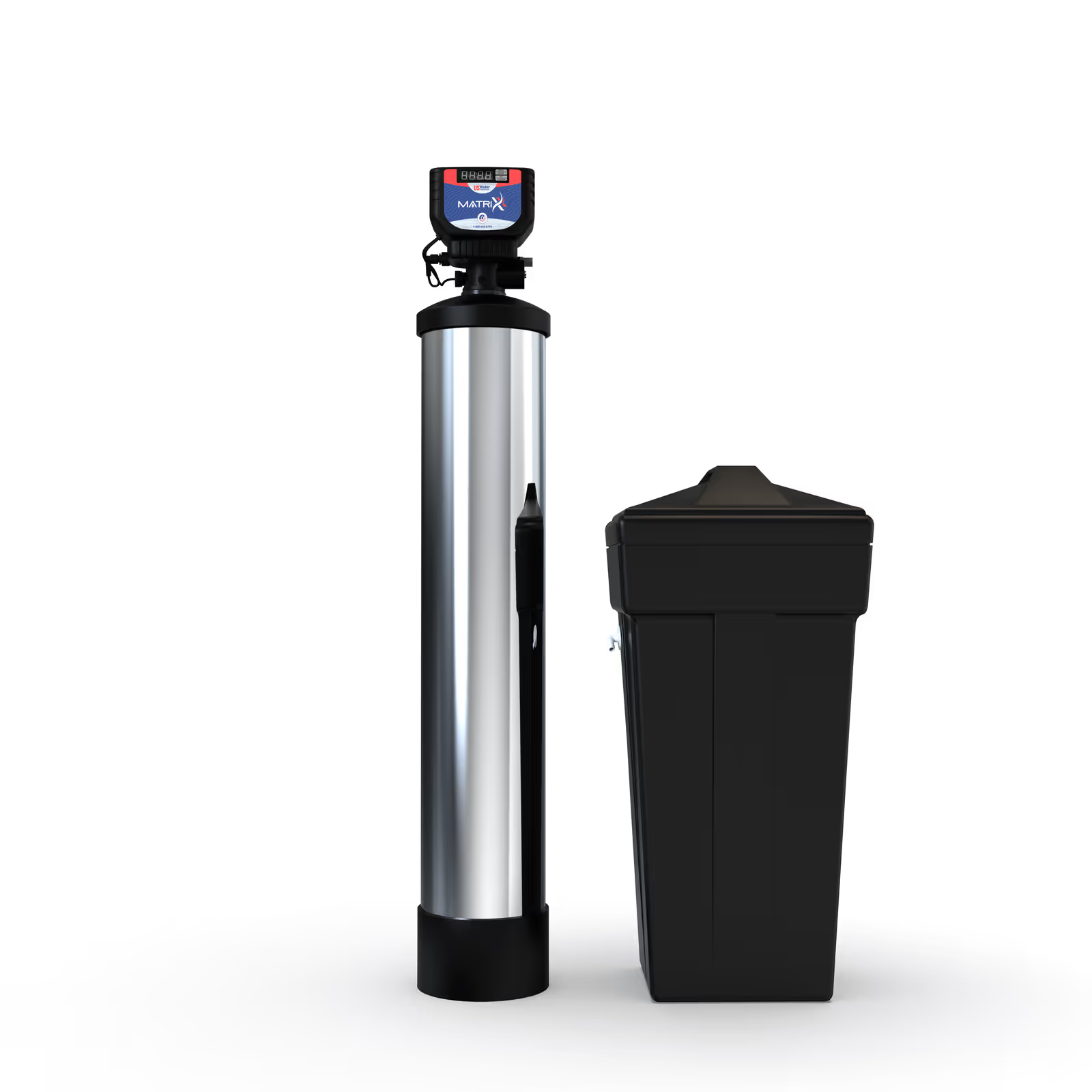
The Matrixx is the unit built around this page’s whole argument: regenerate on measured demand, and burn only the salt the actual hardness load needs.
Its smart meter tracks your real water use and regenerates by demand rather than a calendar, and the StackFlow internals are built to cut salt and water consumption by up to 70% against a conventional timer softener.
Treat that 70% as a manufacturer figure: it describes the design’s intent well, but we couldn’t independently verify it or find an NSF/ANSI 44 efficiency listing. What the Matrixx does carry is WQA certification and NSF/ANSI 61-compliant components, a third-party material-safety mark the direct-only efficiency specialists often lack.
Check price at US Water Systems(opens on US Water Systems, external site)Why it scores 8.3i
Each sub-score is our assessment, weighted into the overall. It reflects published specifications, certification listings and warranty terms — not systems we ran ourselves. How we score
- Performance9/10
- Smart metered regeneration across 35,000 to 70,000 grains, with StackFlow internals built to draw only the salt the measured hardness load needs. Held short of the top because it tolerates trace iron only — US Water Systems asks for an iron filter ahead of it on a well. Source ↗
- Value7/10
- Roughly $1,232 to $1,751 is a fair ask for a lifetime tank and resin warranty and a third-party mark. The headline "up to 70% less salt and water" is the manufacturer's own figure, with no NSF/ANSI 44 efficiency listing standing behind it. Source ↗
- Ownership8/10
- Keep the brine tank in salt and let the meter decide when to regenerate. Like any salt-based softener it needs a drain line and an outlet, so it is a utility-room install. Source ↗
- Trust9/10
- WQA certification with NSF/ANSI 61-compliant components, a lifetime warranty on tank and resin, and ten years on the valve and electronics — the strongest third-party position of any softener on this list. Source ↗
The picks compared
| SpringWell SS | Whirlpool WHES40E | Fleck 5600SXT | US Water Matrixx | |
|---|---|---|---|---|
| Regeneration | Metered smart | Demand-initiated | Metered on-demand | Smart metered, StackFlow |
| Resin | 10% crosslink | Standard | Standard (fine-mesh option) | Standard |
| Iron tolerance | ~1 ppm | Up to 10 ppm | Light (fine-mesh option) | Trace; add iron filter |
| Certification | Not listed NSF-efficiency | NSF certified | Valve widely certified | WQA / NSF 61 components |
| Warranty | Lifetime | 1 yr parts | 5 yr valve / 10 yr tank | Lifetime tank & resin |
| Price | ≈ $1,289–$2,219 | ≈ $550–700 | ≈ $765 (48k) | ≈ $1,232–$1,751 |
| Best for | All-round efficient + durable | Certified value | DIY, self-serviced | Metered high-efficiency |
The short version: SpringWell for durability and smart metering, Whirlpool for certified value, Fleck for the DIYer, and the US Water Matrixx for smart-metered efficiency from a well-water specialist.
How much a high-efficiency softener actually saves
The savings are in salt and water, and they compound every month.
A typical family of four on hard water uses about one 40-pound bag of salt a month with an efficient metered unit, which is roughly $50 to $150 a year in salt. (HomeGuide)
Run the same household on a three-day timer and salt use climbs by about half again, to the 80-pounds-a-month range in the vendor example.
Here’s the difference over a year, using that worked example:
| Metered, efficient | Timer, wasteful | |
|---|---|---|
| Salt per month | ~50 lb | ~80 lb |
| Salt per year | ~600 lb (~15 bags) | ~960 lb (~24 bags) |
| Water per regeneration | ~25–35 gal | up to ~65 gal |
| Extra salt vs efficient | — | ~360 lb/yr |
Salt-use figures are a vendor worked example; regeneration water figures are vendor ranges. Your numbers depend on your hardness and household.
At roughly $8 to $10 a bag, that wasted 360 pounds is about $70 to $90 a year in salt alone, plus a couple of thousand gallons of water not sent down the drain.
The efficient unit usually costs more up front, and vendor estimates put the payback at several years.
After that, it saves you money and salt every year you own it.
Make your current softener more efficient
You don’t always need a new unit. If yours is metered already, most of the efficiency is in the settings.
- Program your real hardness, not a guessed-high number. Set it too high and it doses salt for water that isn’t there. A water hardness test gives you the figure.
- Lower the salt dose toward the efficient range if your valve allows it. You’ll trade a little capacity for a real salt saving.
- Switch a timer to metered if you can. This is the single biggest gain, and on some valves it’s a control-head swap rather than a whole new system.
- Add a salt-free scale option only where it fits. It doesn’t soften, so it’s a different tool; our salt-free water softener guide covers when that’s the right call.
On a well? Do this first
If your water comes from a well, test it before you buy any softener.
The reason is iron. Iron fouls softening resin, so keep the iron feeding a softener below about 3 ppm; above roughly 5 ppm it needs a dedicated iron filter ahead of it or the resin stops recovering.
Fouled resin is also the fastest way to lose the efficiency you paid for, because it drops capacity and forces more regenerations.
A softener also does nothing for the sulfur smell, staining, or sediment that usually ride along with well water.
So the well-water order is: test first, filter out the iron and sulfur with a dedicated unit, then soften the hardness behind it.
We built the well-water side of this out in full:
- Get your numbers: well water testing.
- The iron stage that goes first: best iron filter for well water.
- Softeners ranked for wells: best water softener for well water.
Frequently asked questions
What makes a water softener high efficiency?
Metered (demand-initiated) regeneration, upflow brining, and a lean salt dose, which together let it remove the most hardness per pound of salt.
The measurable bar is NSF/ANSI 44’s efficiency rating: at least 3,350 grains of hardness per pound of salt, no more than 5 gallons of water per 1,000 grains, and metered operation.
How much salt should a water softener use?
About one 40-pound bag a month for a family of four at typical hardness.
If yours uses much more, it’s probably a timer unit or set to a rich salt dose, and switching to metered or trimming the dose will cut it.
Is a metered (demand) water softener worth it?
Yes for most homes. It saves roughly 30% on salt versus a timer and pays back over several years.
The main reason to skip it is a very small, steady household where a timer rarely over-regenerates anyway.
Upflow or downflow: which is more efficient?
Upflow. It sends brine through the most-depleted resin first, so it regenerates more evenly and is cited using 30–50% less salt than downflow.
Paired with proportional brining, which draws only the salt the resin needs, it’s the most efficient regeneration design.
Does a more efficient softener mean less soft water?
No, the water is just as soft; it means less capacity between regenerations.
A lean salt dose holds fewer grains before it recharges, so an efficient unit regenerates a bit more often or is sized slightly larger.
Are salt-free systems the most efficient softeners?
No. Salt-free conditioners remove no hardness, so there’s no salt-per-grain efficiency to measure; they’re a different product for scale control.
If you want no salt at all, read our salt-free water softener guide instead.
How much water does regeneration waste?
About 25 to 35 gallons per regeneration for an efficient modern unit, versus up to about 65 for an old or badly set one.
Fewer, leaner cycles are why an efficient softener saves thousands of gallons a year.
Want to compare softeners by type first? See best water softener.
Scale control without any salt? Read best salt-free water softener.
New to all this? The water softener system guide explains how softening works from the ground up.
How we researched this
We built this guide from the NSF/ANSI 44 efficiency thresholds as reported in independent water-industry sources (WaterWorld), USGS hardness data, manufacturer spec sheets (SpringWell, Whirlpool, Fleck/Pentair, US Water Systems), independent review labs, and salt-dose and cost data from water-treatment references and retailers.
We don’t run these systems ourselves yet, so we don’t claim first-hand testing, and every number here is attributed to its source.
Salt-savings percentages above about 30% and per-model efficiency figures, like the US Water Matrixx’s up-to-70% salt-and-water savings, are manufacturer or vendor claims, and we’ve labeled them as such rather than presenting them as independent results. We could not confirm an NSF/ANSI 44 efficiency-rated listing for the SpringWell SS or the US Water Matrixx, so we don’t claim one.
Prices move constantly; treat every dollar figure as approximate and confirm the current price before you buy.
When we name a merchant it’s SpringWell, and we may earn a commission if you buy through a link here, at no cost to you.