Best water softener: how to choose by type
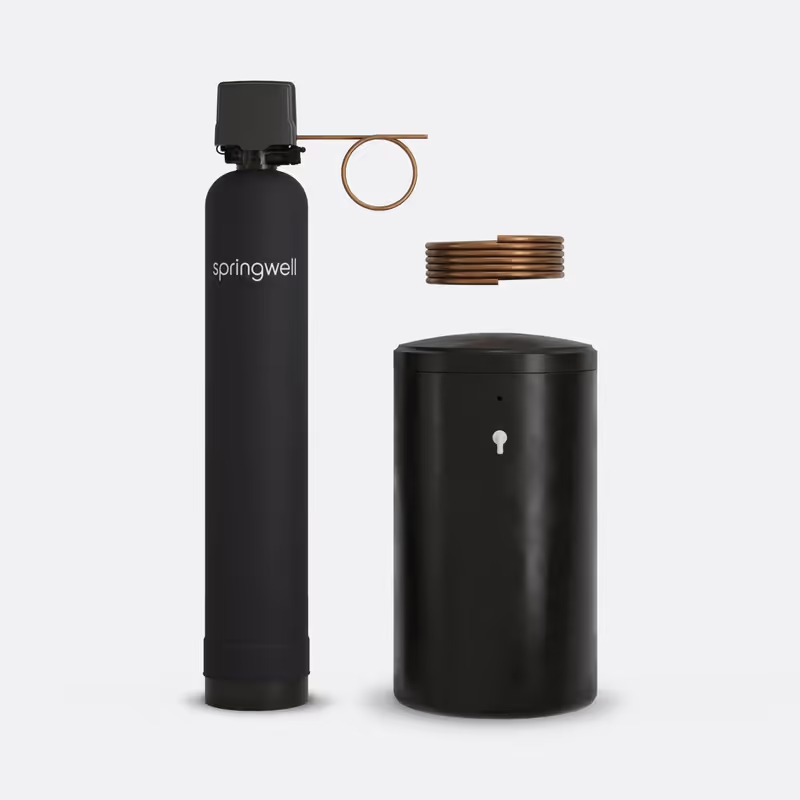
- Uses metered regeneration, recharging based on actual water use instead of a timer.
- Available in 32,000, 48,000, and 80,000-grain sizes.
- Backed by a lifetime warranty on the tanks and valve.
- Simple enough for most owners to install without a dealer.
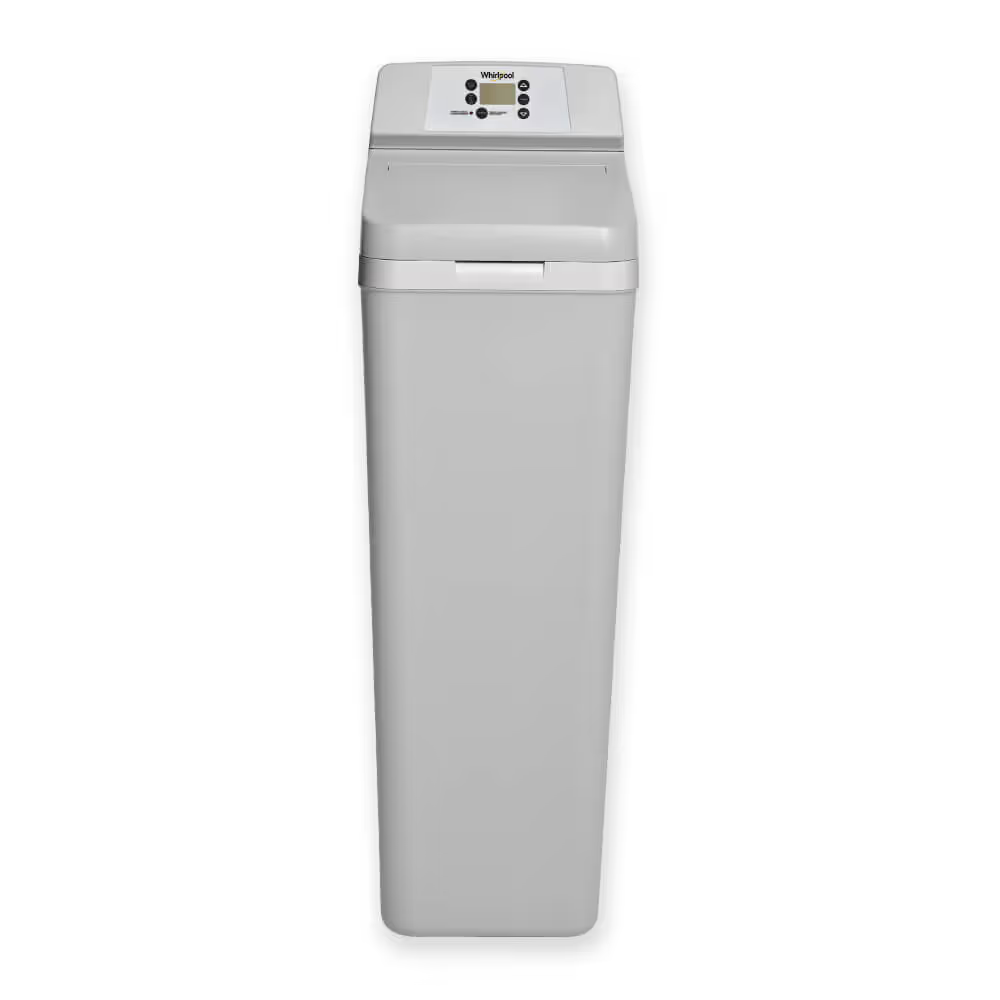
- A 40,000-grain salt-based softener with demand-initiated regeneration.
- Certified to NSF/ANSI 44 and by the WQA.
- Handles up to 10 ppm of clear-water iron.
- Usually priced a few hundred dollars, with a single-cabinet design.
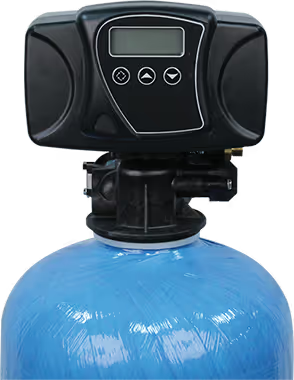
- Built around a metered, on-demand valve that’s an industry standard and fully rebuildable.
- Sold in 32,000, 48,000, and 64,000-grain builds.
- Includes a backlit display and a 48-hour power backup.
- A common 48,000-grain build costs about $700 to $800.
The best water softener isn’t one product. It’s the right type for your water, sized to your hardness.
For most homes with genuinely hard water that want the slippery-soft feel and spot-free dishes, a salt-based ion exchange system is the answer, and the SpringWell SS1 is our default pick.
If you want the honest value play, a budget Whirlpool WHES40E does the same core job, carries the NSF/ANSI 44 softener certification, and costs a fraction as much.
And if you want continuous soft water with no electricity, a non-electric twin-tank like a Kinetico is real engineering worth paying for, if you can stomach a dealer quote. (Weighing a dealer brand against buying online? See Culligan vs SpringWell.)
This guide sorts the picks by type, shows you how to size one from your own hardness number, and points well owners to the extra step their water needs first.
Start with the type, not the brand
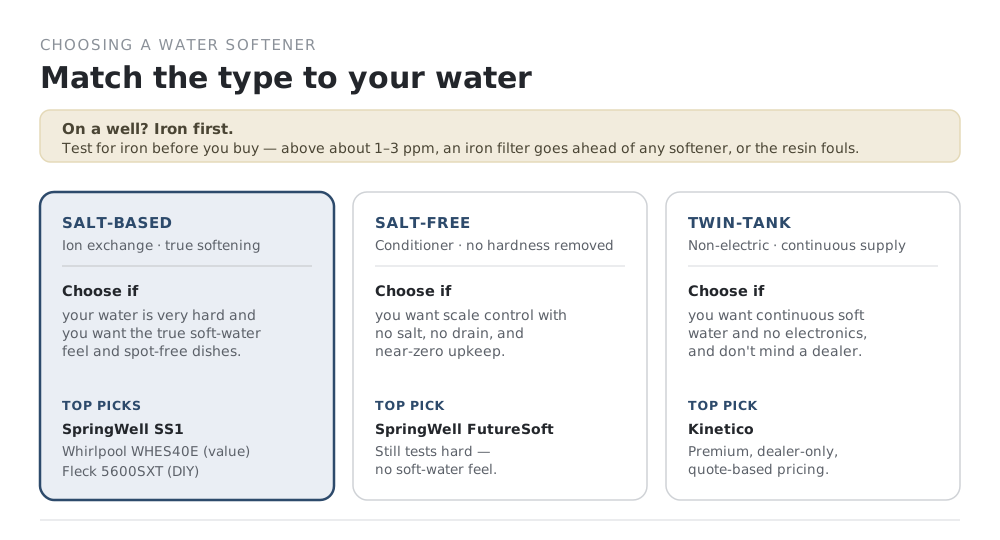
Three technologies get sold as “water softeners,” and only one of them actually softens. (Not sure whether your water counts as hard or soft in the first place? See hard water vs soft water.)
A salt-based system uses ion exchange to pull the calcium and magnesium out and swap in a little sodium, so the water leaves genuinely soft.
A salt-free system, usually template-assisted crystallization, leaves the minerals in the water but changes them so they don’t stick as scale. It’s a conditioner, not a softener.
A non-electric twin-tank system is still salt-based ion exchange, but with two resin tanks and no electronics, so one tank always delivers soft water while the other recharges.
Here’s how the three compare on the things that decide the buy.
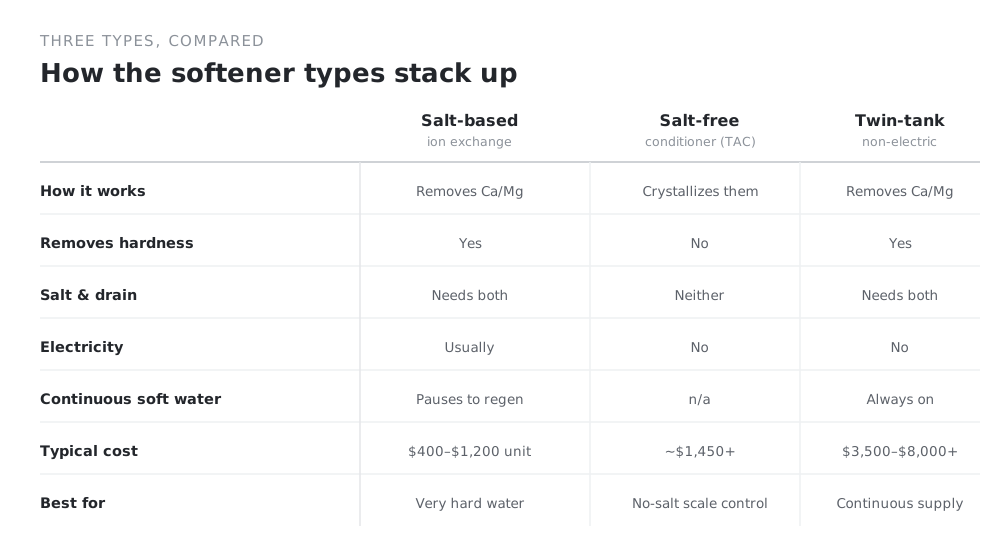
Salt-based is the right default for most hard water. Salt-free earns its place where you want scale control without salt or maintenance. Twin-tank is the premium upgrade for continuous supply and no power draw.
We go deep on the no-salt option separately in best salt-free water softener.
The picks
SpringWell SS1
The SS1 is a straightforward salt-based softener with metered regeneration, which means it recharges based on the water you actually use instead of a timer, saving salt.
It comes in 32,000, 48,000, and 80,000-grain sizes, so you can match it to your hardness and household, and SpringWell backs it with a lifetime warranty on the tanks and valve.
Most people can install it themselves, which keeps the all-in cost well below a dealer system.
Check price at SpringWell(opens on SpringWell, external site)Why it scores 8.9i
Each sub-score is our assessment, weighted into the overall. It reflects published specifications, certification listings and warranty terms — not systems we ran ourselves. How we score
- Performance9/10
- Three published sizes cover the whole household span — 32,000 grains and 11 gpm for one to three bathrooms, up to 80,000 grains and 20 gpm for seven or more — so there is a fit for almost any house. Short of a 10 because no clear-water iron tolerance is published and the manual asks you to call before installing on a well. Source ↗
- Value9/10
- Sold direct with no dealer margin, at a published price, with a lifetime warranty and a six-month money-back trial behind it. The one number you cannot check before buying is the salt bill: SpringWell publishes no rated efficiency. Source ↗
- Ownership9/10
- A DIY main-line cut-in with the drain line supplied, and then one recurring job for the life of the system — keep the brine tank in salt. No filters, no media change, no cleaning schedule. The bypass valve is an add-on at checkout rather than standard equipment. Source ↗
- Trust8/10
- A lifetime warranty on tanks, valves, housings and heads, plus six-month returns, is the strongest cover on this page. It is not NSF/ANSI 44 certified, though: the softening claims are SpringWell's own, backed by a full published specification table rather than an accredited listing. Source ↗
Whirlpool WHES40E
This is the pick that upends the “cheaper means worse” assumption.
The Whirlpool WHES40E is a 40,000-grain salt-based softener with demand-initiated regeneration, and it’s NSF/ANSI 44 certified and WQA certified, the softener industry’s own quality marks. (Whirlpool)
It also handles up to 10 ppm of clear-water iron, which is more than most standalone softeners tolerate, and its single-cabinet design saves floor space.
At a retail price that usually lands a few hundred dollars, it’s the honest value in the category.
The warranty is shorter than the premium brands: one year parts and labor, three years on electronics, ten on the tanks.
Check price at Amazon(opens on Amazon, external site)Why it scores 8.2i
Each sub-score is our assessment, weighted into the overall. It reflects published specifications, certification listings and warranty terms — not systems we ran ourselves. How we score
- Performance8/10
- 40,000 grains, 125 gpg maximum supply hardness and 10 ppm clear-water iron covers a four-person house comfortably on every dimension. The 7.6 gpm rated service flow is the class norm rather than headroom, and the cabinet comes in one size per model, so there is no sizing up. Source ↗
- Value9/10
- The cheapest way to get a certified softener, and it carries the lowest running bill on this page: 5,090 grains of hardness exchanged per pound of salt at the minimum dose is the best published efficiency in the group. Source ↗
- Ownership7/10
- A main-line cut-in with the bypass supplied, but it needs both a drain and a grounded outlet, and the manual sets three recurring jobs on three different schedules — salt every two to three weeks, cleanser every four months, and periodic nozzle and venturi cleaning. Source ↗
- Trust9/10
- Certified by NSF International to NSF/ANSI Standard 44 for hardness reduction and efficiency, to Standard 372, and by the WQA to CSA B483.1 — the strongest third-party backing here. The warranty is the weak half: ten years on the tanks but one year on parts and labour and three on the control board. Source ↗
Fleck 5600SXT
The Fleck 5600SXT is the enthusiast favorite, built around a metered, on-demand valve that the whole industry uses and that you can rebuild rather than replace.
It’s sold in 32,000, 48,000, and 64,000-grain builds, with a backlit display and a 48-hour power backup, and a common 48,000-grain build runs about $700 to $800.
The appeal is simple: you pay for the hardware instead of a dealer’s markup, and parts are everywhere.
A fine-mesh resin option makes it a reasonable choice for well water with light, clear-water iron, though heavier iron still needs a filter first.
Check price at Amazon(opens on Amazon, external site)Why it scores 7.5i
Each sub-score is our assessment, weighted into the overall. It reflects published specifications, certification listings and warranty terms — not systems we ran ourselves. How we score
- Performance8/10
- Three builds from 11,000 to 23,000 grains, and the SXT metered head regenerates on actual water use rather than a clock, so it does not waste a cycle. The 2.0 cu ft build carries a four-person house at 15 gpg. No rated service flow and no iron tolerance are published for the assembled system. Source ↗
- Value8/10
- The cheapest route to a fully metered softener, and the Fleck valve is the most widely serviced in the category — parts are everywhere and cheap for decades, which is most of why these systems outlive their owners' interest in them. No published salt efficiency, so the running bill is an estimate. Source ↗
- Ownership6/10
- The most work on this page. You assemble and program it yourself, it needs a drain and an always-on outlet, and upkeep runs to four jobs on four schedules — salt, a brine tank clean-out every three years, sanitising, and clearing the injector and screen when flow drops. Source ↗
- Trust7/10
- Pentair publishes five years on Fleck valves and ten on the fibreglass tank, which is the class norm. There is no NSF/ANSI certification for the valve or the assembled system, and because these are built and sold by third-party assemblers, the cover you actually get depends on who put yours together. Source ↗
Kinetico
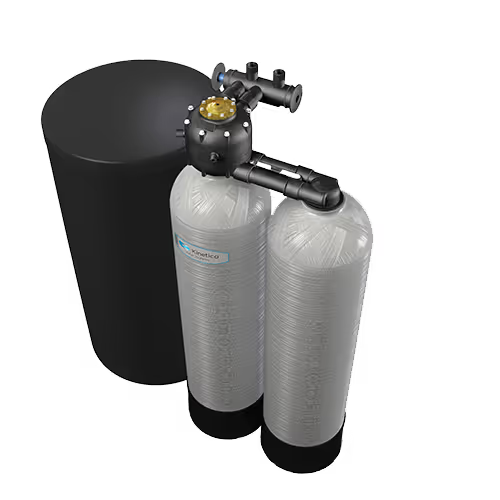
Kinetico’s signature design is genuinely different: it’s powered by the flow of the water itself, so it uses no electricity and has no timer to fail. (Kinetico)
Its twin-tank layout means one tank always delivers soft water while the other regenerates, so you never hit hard water mid-shower or during an overnight recharge.
Owners consistently praise how little salt it uses and that it keeps working through a power outage.
Here’s the honest catch: Kinetico is sold and installed through dealers, with no public pricing, and independent installers put a premier system in the range of roughly $3,500 to $8,000 installed. Treat that as an estimate, not a quote. To see whether the twin-tank is worth that premium for your home, read our Kinetico vs SpringWell breakdown.
See Kinetico dealers(opens in a new tab, external site)Why it scores 7.9i
Each sub-score is our assessment, weighted into the overall. It reflects published specifications, certification listings and warranty terms — not systems we ran ourselves. How we score
- Performance9/10
- Twin-tank and non-electric: it regenerates on measured water use with no timer and no power, and the second tank means the house never drops onto hard water mid-cycle. Rated to 40 and 60 gpg compensated hardness across the two sizes, and certified for barium and radium reduction on top of softening. Source ↗
- Value6/10
- Built to a standard that justifies a premium — but you cannot see the premium. Kinetico sells through dealers and publishes neither system price nor installed price, so putting it next to anything else on this page means getting a quote first. Grain capacity and salt efficiency sit on the dealer's data sheet too. Source ↗
- Ownership7/10
- A dealer installs it and a dealer services it, which takes the work off you entirely — at the cost of never being able to do any of it yourself, or shop the labour. Day to day it is salt, a pre-filter when household pressure drops, and an iron-cleaning additive on well supplies. Source ↗
- Trust9/10
- Certified by the Water Quality Association to NSF/ANSI Standard 44, to Standard 372 and to CSA B483.1, with five years on the valve body, brine valve, resin and tanks. The dealer network is the support model, which is a real strength where there is one nearby. Source ↗
SpringWell FutureSoft
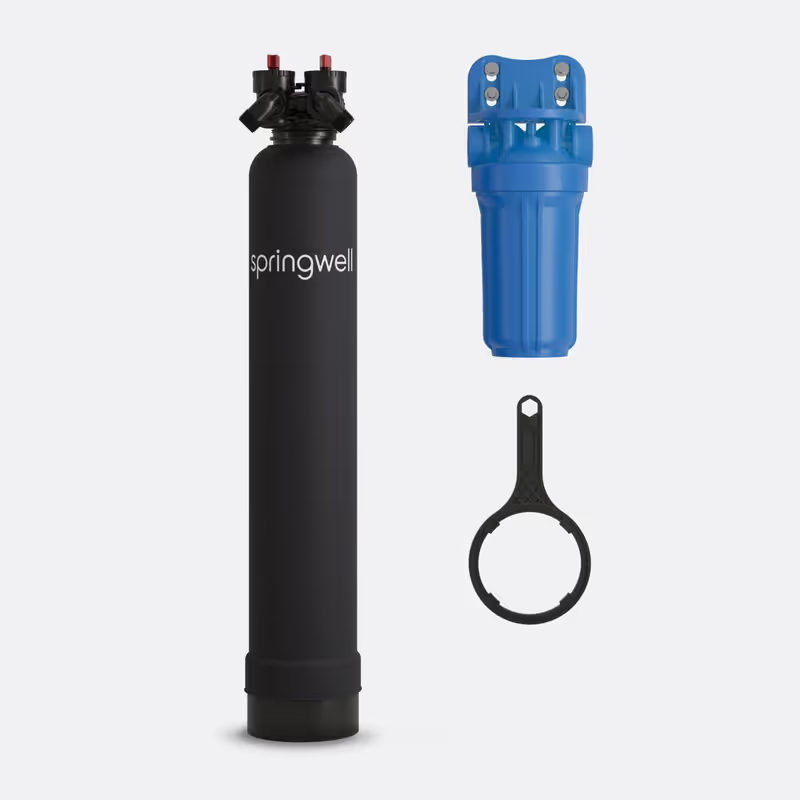
The FutureSoft is a salt-free conditioner, so it prevents scale without removing hardness, and it runs with no salt, no wastewater, and no electricity, at around $1,450 to $1,600.
Because it’s a conditioner rather than a softener, your water still tests hard and won’t feel slippery.
We compare the salt-free field in full, including who should and shouldn’t buy one, in best salt-free water softener.
Check price at SpringWell(opens on SpringWell, external site)Why it scores 7.9i
Each sub-score is our assessment, weighted into the overall. It reflects published specifications, certification listings and warranty terms — not systems we ran ourselves. How we score
- Performance7/10
- Rated to 81 gpg and 12 gpm on the FS1, which covers most homes, and the job it is sold for is preventing scale rather than removing hardness — so no slippery feel and no sodium, but also no softened water. The named limit that rules out a common case is iron: maximum 0 ppm, so any well needs an iron filter ahead of it. Source ↗
- Value8/10
- Priced close to a salt-based system, then almost nothing to run: no salt, no drain, no power, and media rated for five years or more. A sediment pre-filter is the only consumable, which puts the annual bill under $60. Source ↗
- Ownership10/10
- The easiest install and the lightest upkeep on this page. A DIY main-line cut-in with the bypass and fittings in the box, no drain line and no outlet, and one recurring job — change the pre-filter with the wrench supplied. The media soaks for two days before it goes in. Source ↗
- Trust7/10
- A lifetime warranty covering media, tanks, housings, valves and fittings, plus a six-month money-back guarantee, and no electronic head to carry a shorter term. The headline claim is the soft spot: "up to 95% scale prevention" is SpringWell's own figure, with no independent test report naming a lab and protocol behind it. Source ↗
How to size a water softener
The number that matters is grain capacity, and you can work it out from your own water.
Multiply the people in your home by about 75 gallons a day, then by your hardness in grains per gallon. (Lowe’s)
That’s the grains of hardness your softener removes each day.
A family of four at 15 gpg uses about 300 gallons a day, which works out to 4,500 grains a day, or about 31,500 grains over a healthy week between regenerations.
Add roughly 25% reserve and you land on a 40,000 to 48,000-grain unit, aiming to regenerate every 5 to 10 days.
Don’t have your hardness number yet? A well water test or your city’s water-quality report gives it to you; if the report is in mg/L, divide by 17.1 to get grains per gallon. (USGS)
For a full grain-capacity chart by hardness and household size, our best water softener for well water page has one you can read your size straight off.
What a water softener costs
A salt-based unit runs about $400 to $1,200 on its own, and roughly $840 to $4,120 installed for a mainstream system. (Angi)
Dealer brands like Kinetico and Culligan sit well above that, often $1,800 to $8,000 or more installed, and their pricing is quote-based rather than published.
Running cost is modest: most homes spend about $50 to $150 a year on salt, or $100 to $300 all in.
One feature pays for itself here: metered, demand-initiated regeneration uses about 25 to 35% less salt and water than an old time-clock unit, so it’s worth insisting on. (Whirlpool)
The certification worth checking: NSF/ANSI 44
If you want a quick quality filter, look for NSF/ANSI 44, the standard written specifically for cation-exchange water softeners. (NSF)
It verifies the softener’s material safety and puts the unit through a 100,000-cycle durability test, so the capacity claim is more than marketing.
Here’s the counterintuitive part: the budget box-store units, Whirlpool and GE, are the ones that carry NSF/ANSI 44, while many premium DIY and dealer systems don’t hold that certification on the assembled unit.
So certification cuts against price, not with it. If the cert matters to you, confirm the specific model’s listing with the seller rather than assuming a higher price buys it.
On a well? Do this first
If your water comes from a well, test it before you buy any softener.
The reason is iron. Above about 1 to 3 ppm, iron fouls softening resin and can kill it in a few years, so it has to come out first.
A softener also does nothing for the sulfur smell, staining, or sediment that usually come with well water.
So the well-water order is: test first, filter out the iron and sulfur with a dedicated unit, then soften the hardness behind it.
We built the well-water side of this out in full:
- Softeners ranked for wells: best water softener for well water, including the filter-plus-softener combo.
- The iron stage that goes first: best iron filter for well water.
- Get your numbers: well water testing.
Frequently asked questions
What is the best water softener?
For most homes with hard water, a salt-based ion-exchange softener is the best choice, and the SpringWell SS1 is our overall pick for genuine softening with efficient, metered salt use.
If value matters most, the NSF/ANSI 44-certified Whirlpool WHES40E does the same core job for far less.
What size water softener do I need?
Multiply your household size by about 75 gallons a day, then by your hardness in grains per gallon, to get grains removed per day.
Add about 25% reserve so it regenerates every 5 to 10 days; a family of four at 15 gpg fits a 40,000 to 48,000-grain unit.
Is a salt-free water softener better?
It’s not better or worse, it’s different. A salt-free system conditions water so scale won’t stick, but it doesn’t remove hardness, so you won’t get the soft-water feel.
Choose salt-free for low-maintenance scale control, and salt-based when you want truly soft water.
Are expensive dealer softeners like Kinetico or Culligan worth it?
Kinetico’s non-electric twin-tank design is genuinely distinctive and worth it if you value continuous soft water and no electronics.
Much of Culligan’s premium, by contrast, is the dealer and service network rather than better hardware, and a Fleck or Whirlpool unit does the same softening for far less. If you’re weighing that dealer model against a direct-to-consumer brand, Culligan vs SpringWell breaks down the real cost gap.
Do I need a water softener for well water?
Only for hardness, and only after you handle iron and sulfur first.
Test your well, filter out iron above about 1 to 3 ppm with a dedicated unit, then add a softener behind it for the hardness.
What certification should a water softener have?
Look for NSF/ANSI 44, the standard for cation-exchange softeners, which tests material safety and durability.
The budget Whirlpool and GE units carry it; confirm the listing on any specific model before you buy.
How much does a water softener cost?
About $400 to $1,200 for the unit and roughly $840 to $4,120 installed for a mainstream salt-based system, plus $50 to $150 a year in salt.
Dealer brands run higher, often $1,800 to $8,000 or more installed on a quote basis.
On a well? Start with best water softener for well water and well water testing.
Want scale control without salt? See best salt-free water softener.
New to all this? The water softener system guide explains how softening works from the ground up.
How we researched this
We built this guide from manufacturer spec sheets (SpringWell, Whirlpool, Kinetico, Fleck/Pentair), the NSF/ANSI 44 standard and NSF’s certification library, USGS hardness data, independent review labs, and cost data from water-treatment retailers.
We don’t run these systems ourselves yet, so we don’t claim first-hand testing, and every number here is attributed to its source.
Prices in this category move constantly and dealer brands don’t publish pricing, so treat every dollar figure as approximate and confirm the current price before you buy; the Kinetico and Culligan ranges are third-party installer estimates, not official quotes.
When we name a merchant it’s SpringWell, and we may earn a commission if you buy through a link here, at no cost to you.